09:00 28.10.2026
Amurous affairs: The taste, color, and smell of wellbeing in the Russian Far East
© Ruslan Marmazov
When I was getting ready fora business trip to Blagoveshchensk and sharingmy excitement with friends and colleagues while packing my travel bag, their reaction was more or less this: “That’s like flying to the Moon.”
Meaning, sure, you know places like that exist somewhere. But where exactly are they, and what on earth goes on there? Good luck figuring that out…
The map gently suggests that it’s a long way from Moscow and the rest of European Russia. A very long way, in fact. An unbelievably long way! And yet Blagoveshchensk is still a long, long way from the easternmost reaches of our great homeland, even if you fly. China, on the other hand, is just a stone’s throw away.
This is a distinctive and fascinating part of Russia, with a history that, to put it mildly, is packed with drama. Its people are so individual that you can’t help but marvel at them. The residents of the Amur Region have their own system of values and a collective mindset forged only in the harshest of environments.
How does life work at this outpost on the edge of the Russian ecumene? That, broadly speaking, was the question I set out to answer during my brief expedition on behalf of the Russian Arctic and Far East Development website.
Blagoveshchensk is the kind of place that stays with you long after you’ve left. For a long time afterward, it’s not so much that you don’t wantto make things up, exaggerate, or pass off fantasy as reality. It’s that you simply can’t. Perhaps the local atmosphere gives visitors an injection of truth. It even works on journalists, who, thanks to our professional deformation – let’s not pretend otherwise – are prone to makingthings up, stretching the truth, and eventually believing their own tall tales.
Take me, for example. I was all set to put on a serious face, perhaps even pass myself off as some kind of extreme traveler and intrepid explorer of the impenetrable taiga and unrulySiberian rivers. But I couldn’t do it. Myconscience wouldn’t let me.
Remember this: these days, traveling between European Russia and Blagoveshchensk is as convenient as it gets. It was much harder not so long ago, but we’ll come back to that later. Things once got so absurd that people from the Amur Region would travel to China just to catch a flight to Moscow. It was easier and cheaper that way.
A city where you can’t get lost
Of course, spending seven and a half to eight hours in an airplane seat is a challenge, but let’s be honest, it’s hardly insurmountable. The planes on these routes are quite comfortable, and the flight crews are attentive and caring. You read a book, watch a movie, grab a bite to eat, doze off, ponder life’s big questions – and beforeyou know it, there’s land in the window. All the while, you begin to grasp just how enormous our country is. It’s mind-boggling.
Blagoveshchensk is more than 5,600 kilometers from Moscow – that’s roughly 400 kilometers farther than Moscow to Lisbon, and a good 1,000 kilometers more than the distance between the East and West Coasts of the United States. Puts things in perspective, doesn’t it?
The moment you set foot on the blessed soil of the Amur Region, the locals take you in hand and waste no time making you fall in love with their Far Eastern way of life.
I swear, it all begins right in the baggage claim area of the brand-new Ignatyevo International Airport, named after Nikolai Muravyov-Amursky, which opened only in late March 2026. While you wait for your luggage, there’s not much else to do, so you read the information artfully displayed on the walls and brush up on your knowledge. Or, more accurately, you begin to remedy your own ignorance about the Amur Region, at least to some extent.
Of course, you can’t expect to become a real ethnographer while waiting for your bag to come around on the carousel. Still, you’re bound to leave with a few basic facts. For example, you’ll learn that Blagoveshchensk was laid out like an ancient Roman military camp: its streets run strictly north to south and west to east, intersecting at right angles.
The practical value of this information is obvious: Blagoveshchensk is a city where you can’t get lost.
And there’s no denying its contribution to the general knowledge of newly arrived visitors, either. Just try forgetting this: the idea for the capital of the Amur Region’s Roman-camp layout came from Count Nikolai Muravyov-Amursky, Governor General of Eastern Siberia, whose name the local airport now bears.
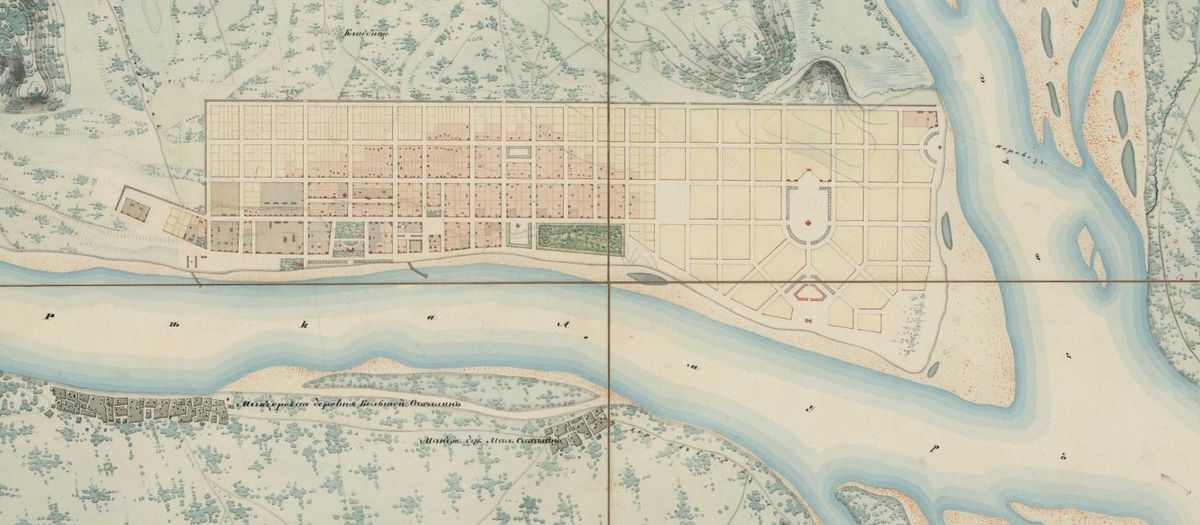
Governor of East Siberia, Nikolai Muravyov-Amursky, designed Blagoveshchensk’s city plan following the Roman concept. The city plan, painted and colored by hand, as approved on December 30, 1869
© Public domain
Space maps at the ready
The next thing Blagoveshchensk’s friendly yet all-pervasive propaganda (in a good sense, not as a pejorative; there’s no need to twist its meaning) will certainly drum into every visitor’s consciousness is the region’s cosmic prospects.
And “cosmic” here is no hyperbole but a simple statement of fact, made possible by the presence of the Vostochny Cosmodrome in the Amur Region – Russia’s gateway to the universe.
The message is not delivered bluntly but conveyed allegorically, in vivid strokes. An Amur beauty gazes intently at the airport terminal from a 100-meter mural that blends harmoniously into the facade of a nine-story apartment building. Her undeniable natural beauty is enhanced by a backdrop of rockets blasting off, star-shaped earrings gleaming in her ears, and a necklace blazing with Gazprom’s signature flame. Quite a sight.
Remember how we mentioned that the new terminal only began operating this year? Well, the mural was created a couple of years earlier, funded by the company that manages the airport and under the auspices of Amur Region Governor Vasily Orlov. They planned ahead! They spared neither effort nor expense: 100 liters of paint and two weeks of work by local born master muralist Pavel Orez.
“Strong and resolute, surrounded by symbolic objects representingthe region’s achievements in space, energy, and gas chemistry”– that is how the artist described the female figure he created. “At the top of the mural is the region’s flag, stylized but still readilyrecognizable.”
In short, the Amur Region, in the guise of the Motherland Calls statue, beckons us toward the stars and promises prosperity of every kind. Something like that. But what a sound approach, wouldn’t you agree? Thoughtful, unhurried, planned well in advance, and quite creative. Not to mention that when you leave the airport, it’s far more interesting to see a woman’s face, even a stern and pensive one, than the blank gray wall of an ordinary apartment block.
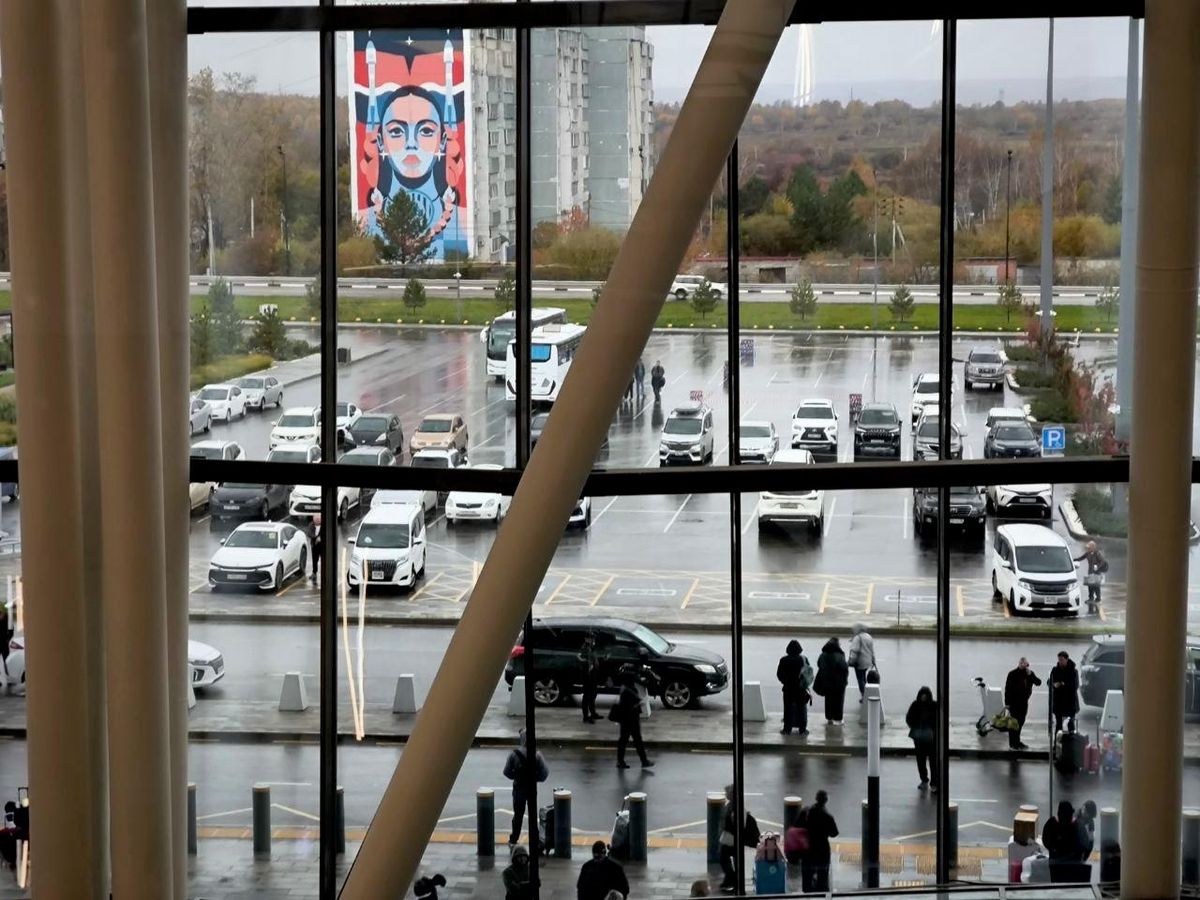
View from the Nikolai Muravyov-Amursky airport terminal on Pavel Orez’s painting. The first thing people coming to Blagoveshchensk see are the eyes of a pretty lady with space rockets firing off into the sky behind her
© Ruslan Marmazov
As for cosmic symbolism, Blagoveshchensk has plenty of it. The rockets behind the Amur beauty are just the beginning. Even on the drive from the airport to the regional capital, a distance of some 15 to 20 kilometers, it’s hard to miss a 12.5-meter model of the Angara-A5 launch vehicle at the center of one of the highway interchanges, emblazoned with the slogan: “Here, space is closer; here, the stars are lower.” Nicely put!
During my trip, I was repeatedly told about the closeness of space and the unexpected ways it affects the lives of people in the Russian Far East. After all, we live in a country of space romantics. How could it be otherwise, when our people have given the world Sergei Korolev, Yuri Gagarin, Valentina Tereshkova, and so many other remarkable figures of galactic stature?
In Blagoveshchensk, I also heard how engineers specializing in space technology had been tracked down across the country and brought to Vostochny: the last surviving remnants of the once-mighty Soviet school, all but reduced to dust in the 1990s. Fortunately, people realized what was needed before it was too late; there were still specialists and enthusiasts left. Without them, reviving Russia’s space industry would have been much harder.
By the way, residents of the Amur Region have another reason to envy the people who work at Vostochny. And it’s not their salaries, although those matter, too. What is it, then? You’ll never guess.
They know when spacecraft are scheduled to launch. But they won’t tell anyone, no matter how much you pester them with questions. It’s a state secret! Meanwhile, ordinary civilians are frustrated because there are places with a perfect view of a rocket launching into space – an extraordinarily beautiful sight. But you can’t just sit there waiting and hope to get lucky, can you?
Fortunately, I had plenty of time on the flight to Blagoveshchensk, so I read an interview I happened to come across with a talented young man, a young scientist who had left a promising career in Moscow and moved to Vostochny, drawn by a dream. He was eager to take part in the launch of the Angara rocket. Credit where credit is due: a dream like that is worth relocating for, even if it means leaving the capital for the Far East.

There will be a new park here, and the project to build it is already in its preliminary stage. The coverings stand out for their space designs created by children from Blagoveshchensk
© Ruslan Marmazov
More broadly, the question of where it was time to go – west to east, east to west, or nowhere at all, following the principle that “bloom where you’re planted” is the best advice – became one of the dominant themes of our reporting expedition.
The phrase “so-and-so went West and stayed there” means something quite different in Blagoveshchensk than it does in Moscow, for example. It doesn’t mean moving to Germany, France, or the United States at all. It means changing one’s place of residence from the Russian Far East to Kaliningrad, St. Petersburg, or even Omsk or Tobolsk. As far as Blagoveshchensk is concerned, everywhere else is the West. Except perhaps Khabarovsk, Vladivostok, Sakhalin, and Kamchatka.
The Chinese riverside – I don’t need it
Big geopolitics and reaching our planet’s orbit – this is all great and can inspire passion and mobilize us. But I have gone too far in my meanderings to take a closer look at the simple worldly pleasures and challenges people in the Amur Region face. During my stay in Blagoveshchensk, the taxi driver who took me from the airport to the hotel was also my first guide. This is how it must and does always happen.
In fact, taxi drivers are a great source of information on everyday life. However, one must exercise due caution and refrain from trying to get too much information of this kind… How should I put it? It is not uncommon for taxi drivers to know better than anyone else what’s wrong with the city, region, country, planet or the galaxy. And they could have shown the right way to anyone, if they had the time. But they don’t, since they’re busy driving people around.
But I found myself in a totally different situation. My driver, Gagik Peleshyan, said that the situation in the region had radically changed since he moved here 16 years ago, and it changed for the better. This came as a slight shock for me. Maybe I am simply not used to people openly praising changes, no matter how obvious or positive. I decided to double check with my driver. He confirmed and went even further by saying that there were major changes and that they were indeed headed in a positive direction.
People from the Caucasus and maybe also the Serbs with all their experience and wisdom have a very surefooted way of making their point when it comes to emphasizing something. When they talk about something changing “a lot” they really mean it, without having to prove their point or say something like “I would know better, considering my experience and what I have seen throughout my life.”
My taxi driver told me that many things have changed over the past 16 years. Take the road leading from the airport, for example. It was divided into sections and filled with pavement machines as part of a project to widen it from two bumpy lanes riddled with potholes into a modern four-lane highway. But why all these changes? There was no need for them before.
The airport used to be quite shabby and miserable too, and there were only a few flights serving the city. But now there are many, and the runway was rebuilt to handle any type of aircraft, including wide-body planes and without any weight restrictions. I got this latter fact from the Blagoveshchensk airport’s official website, not from Gagik the taxi driver.
People fly here to do business and explore opportunities the region has to offer considering its location on the border with China, while workers and engineers head to the gas plants in Svobodnoye. And the number of tourists has also increased.
In fact, 200,000 tourists visited the Amur Region in the first six months of the year, setting a record. They spent about 5.5 billion rubles, which is quite a good result. Of course, foreign tourists mostly come from China.
It was not the taxi driver who shared these tourist statistics with me either. It would have been strange for him to go that far in preparing for our meeting. I learned this information a little later when I turned on the TV in the hotel. News from the Amur Region gave me a fit of nostalgia. Touching and slightly naïve, they had exuded an appeasing vibe, evoking the memories of television the way it worked in my hometown in the late 1990s, minus crime, protest rallies, reports from brothels and about the criminal groups running the city. Here in the Amur Region, the news broadcast covered a pumpkin exhibition in a nearby village, followed by upbeat reports about the construction of a one-of-a-kind cable car line linking Blagoveshchensk to Heihe, China, with its expected annual passenger traffic of 2.5 million people. How amazing.
But with Gagik the taxi driver, we also discussed housing construction. He sounded calm and reasonable when telling me that the city is changing with new buildings popping up all over the place. Apart from apartment blocks, there were also new schools and urban infrastructure too. We were driving by a building belonging to a local university when the driver told me that having dual-language street signs in Russian and Chinese has become commonplace, since many students from the other side of the Amur River have been coming to Blagoveshchensk to study.
“Are there many Chinese in the city, in general?” I asked the driver, feeling that it would be impossible for me not to raise one of the most sensitive issues for Blagoveshchensk.
“There’s a lot of them,” he answered, and once again the way he said “a lot” said it all.
“But have you ever been to China? Travelling there is now as simple as it may get these days, as far as I can see.”
“No. Why would I, if there are already so many people from China in Blagoveshchensk?”
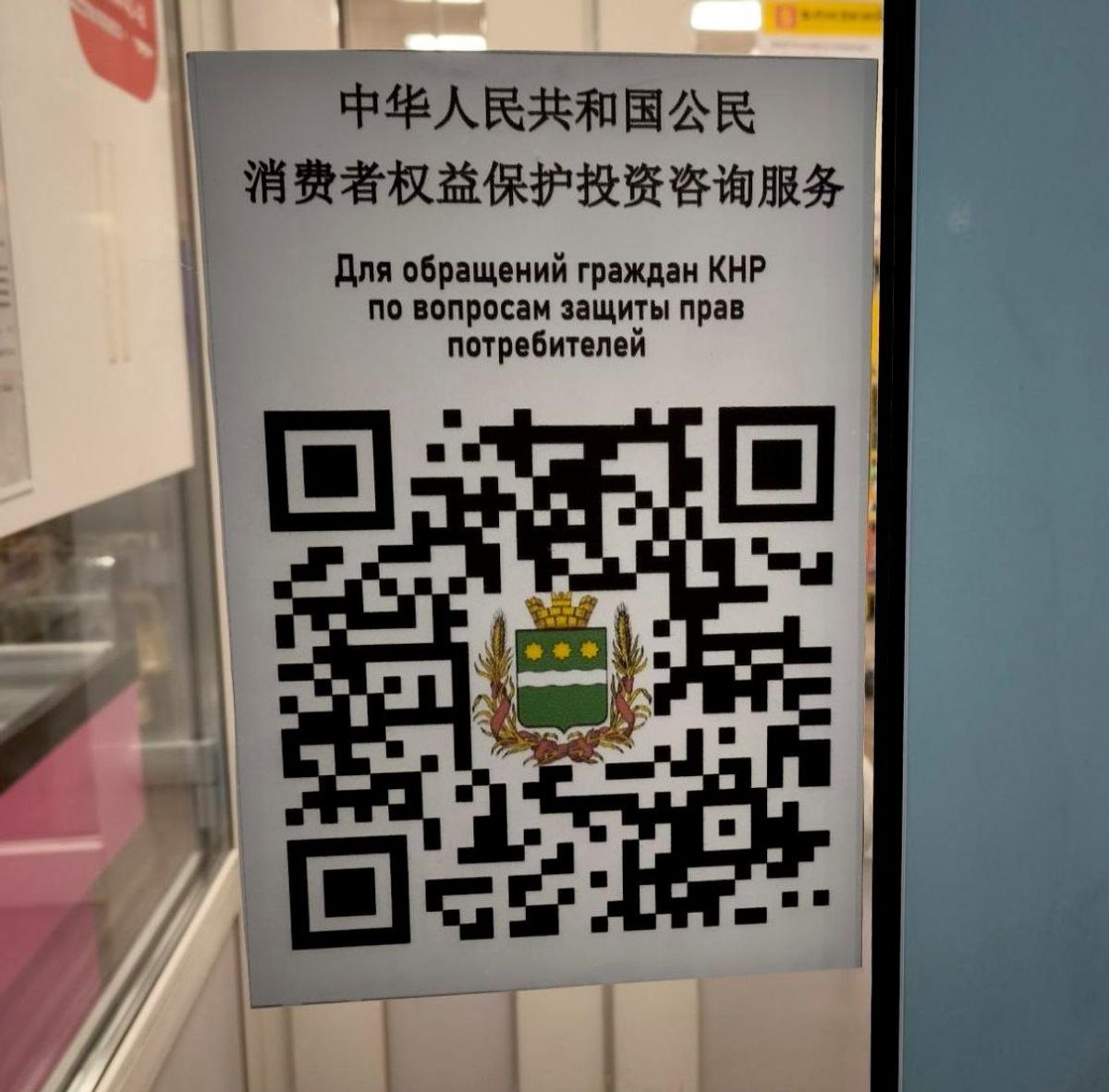
A sign on a food store in Blagoveshchensk. Chinese citizens will not have any trouble getting around in the Amur Region
© Ruslan Marmazov
The conversation turned to the popularity of right-hand drive cars from Japan in Russia’s Far East, with Gagik claiming that these cars accounted for 90 percent of vehicles here. Having said that we parted our ways after wishing each other all the best.
The ISS is closer than Khabarovsk
It’s probably worth explaining why I spent so long circling Blagoveshchensk’s airport – or, more precisely, circling the subject of its enduring significance for the region.
Your soul may yearn for the cosmos, but for most of us, the answers to the pressing problems lie closer to the ground – at the altitude where airliners fly. That’s especially true of a place like the Amur Region, so far from the Russian centers where the vital decisions get made.
In Blagoveshchensk I was lucky in many respects, but meeting one woman in particular was a highlight: energetic, engaging, deeply patriotic. Her name is Nadezhda Parkhunova, and she runs the House of Russian-Chinese Friendship – a unique and strategically important cultural center in the Amur Region. She brings years of experience from the Amur Region Legislative Assembly, the regional Ministry of Education and Science, and the Blagoveshchensk city administration. Her long stretch of work on youth issues has given her a sharp sense of the region’s character and its sorest points.
“The outflow of people – historically one of our most critical problems – has actually come to a halt. And why, you might ask?” Nadezhda says. “There was a time when we, in the Youth Parliament, raised the question of air travel. Not only were you stuck on some godforsaken contraption for eight or nine hours…”
“Good heavens. What do you mean, ‘godforsaken contraption’?”
“The planes they sent us here were, let’s say, the kind no one would mind losing. Along with us on board. It was all incredibly expensive and time-consuming. Something had to be done.”
“So what’s the real obstacle to reliable passenger service?”
“It will never be a big, profitable business. Simply because there aren’t enough of us.”
“A region larger than Germany, with a population of only 600,000 to 700,000 – a very narrow market, then?”
“And it wasn’t just true of air travel. Entrepreneurs would ask: ‘There are so few of you – how are we supposed to bring a business here? Who’s going to eat, drink, buy all this?’ But then state policy stepped in: however few we are, these are our people, and they live here. Airlines began to arrive. We still have our challenges, but the core problem has been solved. The region’s remoteness, and the difficulties that come with it, are now being addressed at the federal level. The state has taken an interest in the city itself, too – in making it a place people wouldn’t want to leave. You can live a wonderful life in Blagoveshchensk. You can buy a home, go to the theater – and we host some truly remarkable festivals.”
“When you mention the theater, do you mean local productions, or touring companies from Moscow?”
“Both. Just recently the Vakhtangov Theater came, and we got to see some of the country’s finest actors. I have plenty of friends in Moscow and St. Petersburg who haven’t set foot in a theater for years – they say they’re too busy with work, and at the weekend they just want to escape the city for the countryside. Blagoveshchensk is becoming a very attractive place. And people are staying. The outflow has stopped.”
“It’s heartening to hear such a passionate defense of your hometown.”
“And our embankment – I’ve been to Florence, and to many other beautiful cities in Europe and around the world, and none of them has anything close to our embankment.”
“I’ve spoken with various people in Blagoveshchensk, and it struck me – no, I’m certain of it now – that the locals are, in the best sense, fiercely devoted patriots of their own home. There’s a note of “Amur-centrism” about it: the sense that anything from the Amur Region is either the best, or at the very least deserves the closest attention. I find it quite appealing.”
“It’s real, and it comes from our psychology. Just imagine: the frosts start in October. We have a long winter, six or seven months, with temperatures down to minus 30 or 40. That kind of climate shapes a particular character – a sense of solidarity, if you like. We’re all in this together. In a crisis, honestly, there’s no one else to wait for; you can only rely on yourself. We truly love this land – it’s ours, through and through. Of course it’s the best. Just try growing a few humble tomatoes here – it’s no easy feat. But when we do, they’re the absolute best. And believe it or not, we even grow wonderful watermelons.”
“Seriously?”
“Amur watermelons are incredibly sweet. The trick is just waiting long enough for them to ripen.”
“So the best watermelons in the world, too… You probably shouldn’t mention that to people from Astrakhan or Kherson. Your attitude – and I don’t mean just yours, but the general outlook here – is truly heartening. Especially when you consider the strange, pervasive habit some people have of constantly grumbling – of being, if not outright miserable, then at least not entirely happy. In Moscow, for instance, you run into that on every corner.”
“Whenever someone starts badmouthing my beloved Mother Russia, I always say: ‘Take a look at the map first.’ Our government structures can be set up fairly quickly, but everything else moves at a very different pace. Things still have to travel long distances to reach their destination – especially by train. And then there’s the time difference with Moscow. The clock – that’s a whole story in itself.
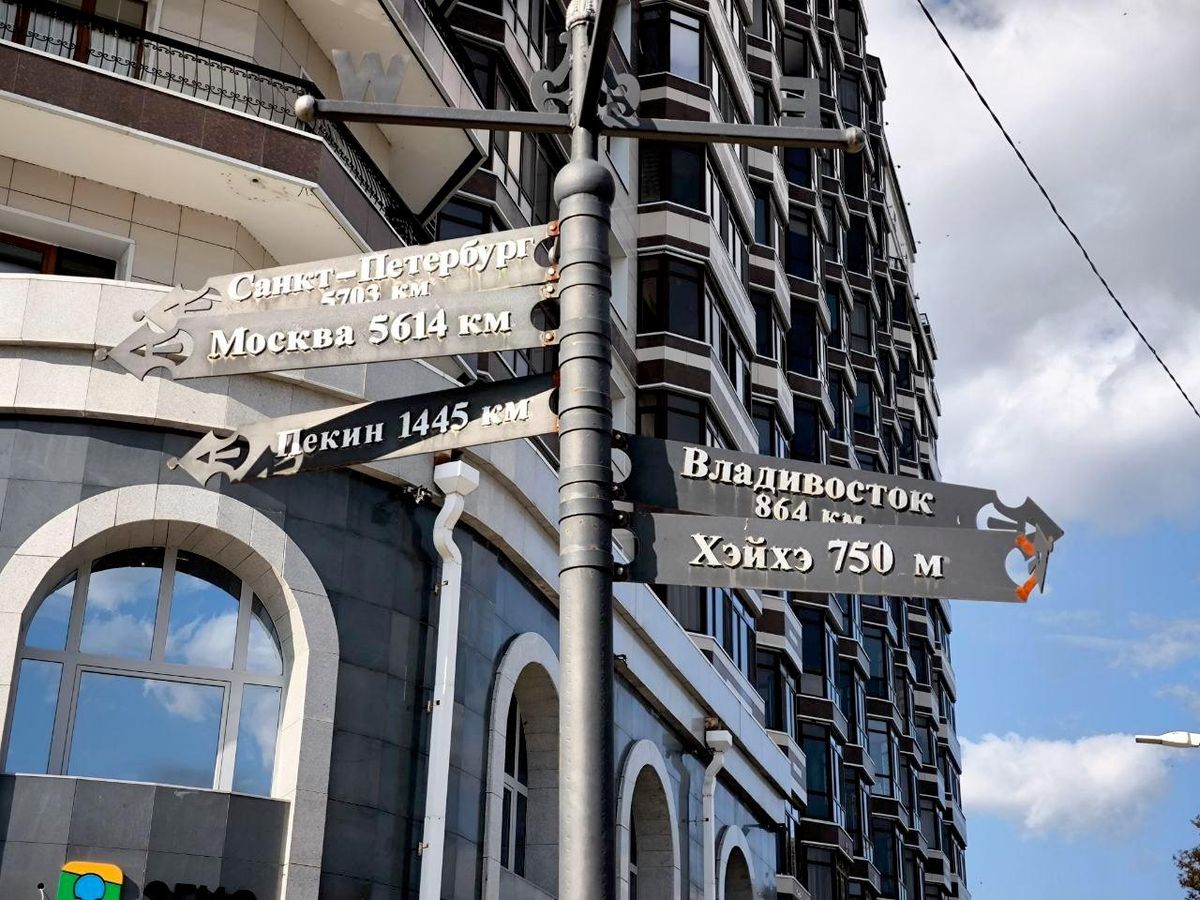
This pointer is one of the favorites for tourist photos. You get to feel Russia’s vastness in Blagoveshchensk better than anywhere else
© Ruslan Marmazov
“You beat me to it. I was just about to ask: what’s it like living six hours ahead of Moscow?”
“We wake up and start our workday, but Moscow is still asleep.”
“Moscow never sleeps."
“And yet it does. We often have to wait until three in the afternoon to resolve major, high-level issues. We used to have to wait – thankfully things work differently now – but back then we’d wait for Moscow to wake up. Just as their workday was getting into full swing and we’d start tackling problems, it would already be nine at night for us. We’d get calls from the capital asking us to do this or that, while we were practically asleep. That’s just how vast our country is. We understand that, and it motivates us. Besides, the other side of the river keeps us on our toes.”
“You mean the Chinese side?”
“Where you now see Heihe all lit up, there were only wooden shacks back in the 1980s. We watched a modern city rise up before our eyes. Naturally, we can’t afford to lose face.”
“Well, that’s not the worst kind of problem to have. Better that challenge than none at all.”
“Exactly. Right now all of Russia is taking a very serious look at the Far East. We can feel it, and it’s gratifying. It matters to us. In the Amur Region, people often say that space is close by…”
“Speaking of which – what’s the deal with that? Is it just a slogan, or is there more to it?”
“We’re actually closer to the ISS than to the nearest major city.”
“I see. So it’s not just a figure of speech – it’s simple math. The ISS is 400 kilometers away, while Khabarovsk is 600 or 700…”
“This proximity to space, combined with our distance from the more conventional hubs of civilization, puts us in a unique frame of mind. There aren’t many of us, but we feel like an outpost of Russia. We realize that, in a sense, we serve as the country’s calling card. That’s why we strive to make Blagoveshchensk even better. Ours is a clean, beautiful, well-laid-out city – a Roman grid of square blocks, you know?”
“I certainly do. Blagoveshchensk makes it impossible to miss that fact.”
“We’re also famous for the number of sunny days we get – that’s another of our hallmarks. Many people who leave the Amur Region end up missing that sunshine dearly. For those who have experienced our sun and our blue skies, it’s not the winter cold that’s hard to bear – it’s the gloom.”
“You mentioned earlier that people are no longer leaving the Far East. That might be the most significant thing I’ve learned on this trip.”
“Yes, the outflow is coming to an end. Once people feel they’re needed here, they don’t go anywhere, they stay home. Perhaps this spirit goes back to the original Cossack settlers who founded Blagoveshchensk. There were only a few dozen of them when they arrived. Many perished that first winter, and yet they didn’t turn back or leave. They stayed because they were needed. Others followed, and then more, and more…”
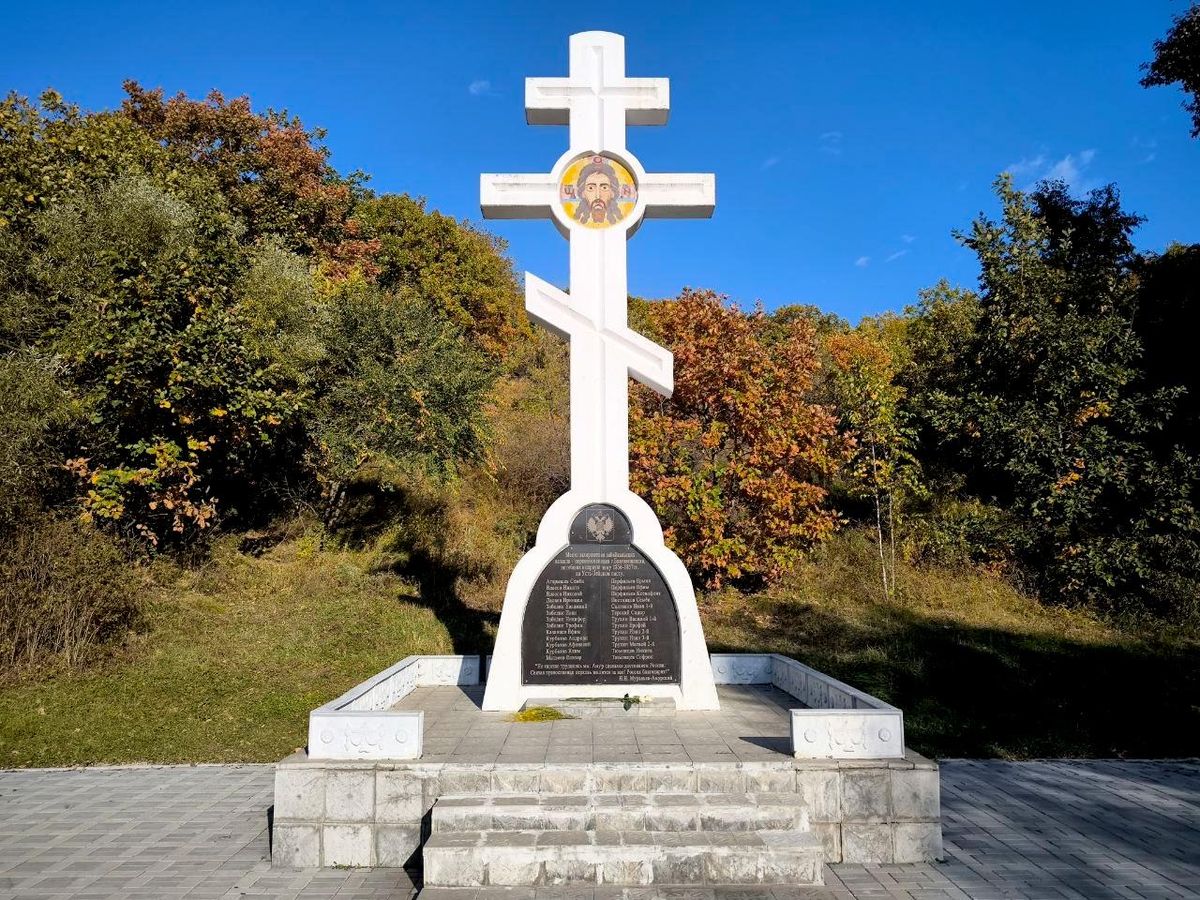
Cossacks did everything to hold on to the banks of the Amur River. Russia needed them, and all efforts to displace them failed. This memorial cross commemorates the trail blazing Cossacks who died during their first winter in the Amur region
© Ruslan Marmazov
“That’s true. We had some tough ancestors.”
“People are no longer leaving, and I see this, if you will, as a sign that our country is experiencing a rebirth. After all, that’s where Russia’s true strength lies – in its smaller towns, not just in the capital or a few megacities. I’d advise everyone: hop on a plane, fly out to Vladivostok, and get a sense of Russia’s true scale. The country doesn’t end at the Moscow Ring Road, or even at the Golden Ring. People live out here too. Some might be surprised, but the people here are highly educated, interesting, creative, patriotic. A hundred times more patriotic than many others. The people here truly love their land.”
The cornerstone logs of Blagoveshchensk
I left Nadezhda Parkhunova’s domain inspired. It was worth traveling to the Far East just to talk with such a radiant person, so firmly committed to doing good. Fortunately, she is not the only one like that in the Amur Region. I base that judgment both on remarks from people I happened to meet and on conversations with those I had planned to speak with while still in Moscow.
But even more than that, I trust my own impressions of the rhythm of life in Blagoveshchensk, its unhurried but palpable energy, and its business acumen, which translates into concrete actions and projects, both local and global.
I had the opportunity to speak with the ataman of the Amur District Cossack Society, Cossack Lieutenant Colonel Alexander Tyurin. After all, the Cossacks are, in essence, the ideological heirs of those very first settlers whose persistent passion, self-sacrifice, and enterprise laid the foundation on which this distinctive Russian city on the Amur River, Blagoveshchensk, later emerged from the Ust-Zeysky Cossack outpost.
As the ataman put it, he enjoys living here: “We have a quiet, unhurried merchant town.”
A curious combination, right? Quiet, yet businesslike. Unhurried, yet shrewd. That is Blagoveshchensk. Once you understand the mindset of its residents, you begin to see confirmation of this characterization everywhere, even with the naked eye.
Take this fact, for instance … Not every city can boast that it knows where and by whom its cornerstone was laid. Even fewer can show it to the public. In Blagoveshchensk, that is easy. True, the cornerstone consists of logs, but what logs they are!
The regional local lore museum houses an exhibit of unparalleled value and equally profound symbolism. These are the logs that originally formed one of the rafts on which the Cossacks traveled along the Amur River to the site where Blagoveshchensk was founded. They, of course, did not know that this would become Blagoveshchensk, and their initial task in these harsh, untamed lands was quite simple, yet at the same time incredibly difficult – to survive. Not everyone succeeded.
The rafts were dismantled, and their logs were put to use. These particular logs were used to build a provisions storehouse for the Ust-Zeysky outpost. The Cossacks’ very first winter, from 1856 to 1857, claimed nearly three dozen lives. Moreover, it was impossible to even give the dead a proper burial right away – the permafrost prevented graves from being dug. So, for a time, the bodies were kept in a “house of the dead,” the storehouse having been converted into one out of necessity. Later, the Cossacks were buried according to Orthodox custom. The structure was dismantled. Its logs were used to construct the future city’s first building, the Church of St Nicholas, Archbishop of Myra in Lycia.
Figuratively speaking, these original logs, steeped in the blood and sweat of the ancestors and sanctified by the prayers of generations, today lie at the foundation of every building in Blagoveshchensk.
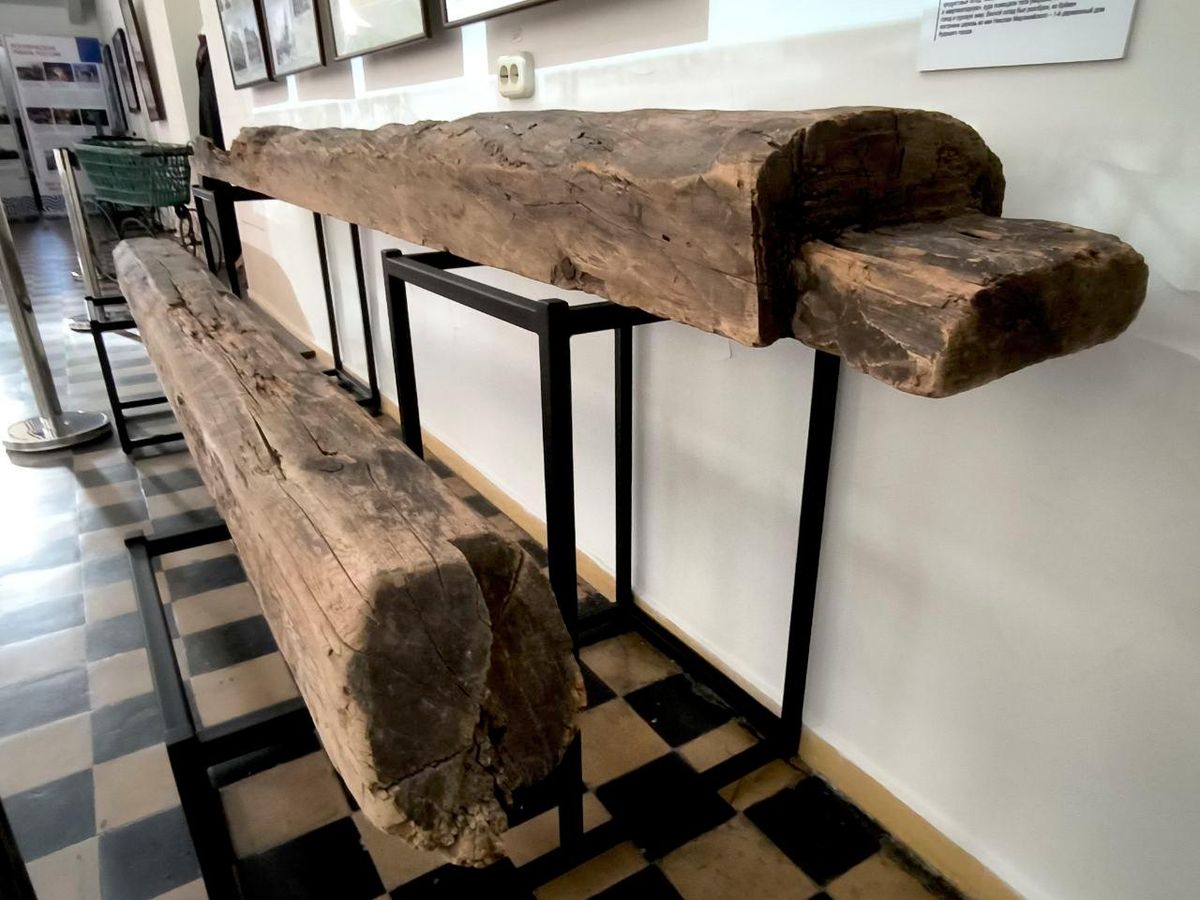
Blagoveshchensk was built on these logs. Exhibits from the Novikov-Daursky Amur Regional Museum of Local Lore
© Ruslan Marmazov
Even the most ultramodern ones, of which there are plenty as well. The city is expanding at a rapid pace, and the sight of cranes working nonstop and stylish new buildings gleaming with newness inspires justifiable pride among local residents.
Blagoveshchensk’s already famous, though still young, Golden Mile is growing rapidly – a hub of the city’s business activity, with the House of Russian-Chinese Friendship as its thematic centerpiece.
Very soon, a five-star hotel will open nearby, something the regional capital currently lacks (and that is not me saying that, but Blagoveshchensk residents), along with a fantastic cross-border cable car, the only one of its kind in the world. Here, too, the Russian tricolor flies proudly atop a 75-meter flagpole, leaving no doubt about the seriousness of Russia’s aspirations in the Amur Region. During the warmer months, magnificent fountains choreographed to light and music delight the eye, the ear, and, most importantly of all, the soul. When I first approached them, Sergei Prokofiev’s Dance of the Knights was playing. Majestic!
I asked old-timers whether the name “Golden Mile” was not a little too bold. After all, admit it, the name makes quite a grand claim…
They say it is not, it is just right. It probably also reflects the high value of the properties concentrated here, which is certainly true. But more important is their undeniable value, which cannot always be measured in rubles. In essence, Blagoveshchensk intends to bring together all the best it has in this compact space. Besides, it is a kind of tribute to the city’s history, in which the gold-mining industry once played a significant role in ensuring its prosperity and comfort.
But Blagoveshchensk’s ambitions are not limited to the Golden Mile alone; there is also the Silver Mile, at the opposite end of the regional capital’s truly luxurious embankment. Moreover, according to Blagoveshchensk residents, while the Golden Mile is “about business, new large-scale projects, and international ties,” the Silver Mile is “about tranquility, family recreation, sports, and the contemplation of nature.”
Nicely conceived, right? On the one side, the steady pulse of entrepreneurial activity; on the other, an area of comfortable, prestigious housing and places for wholesome recreation; and between them, a beautiful embankment that you will not want to leave. Incidentally, Blagoveshchensk became the first city in Russia to ban e-scooters, with their constant threat to pedestrians. And the embankment has become even more inviting as a result.
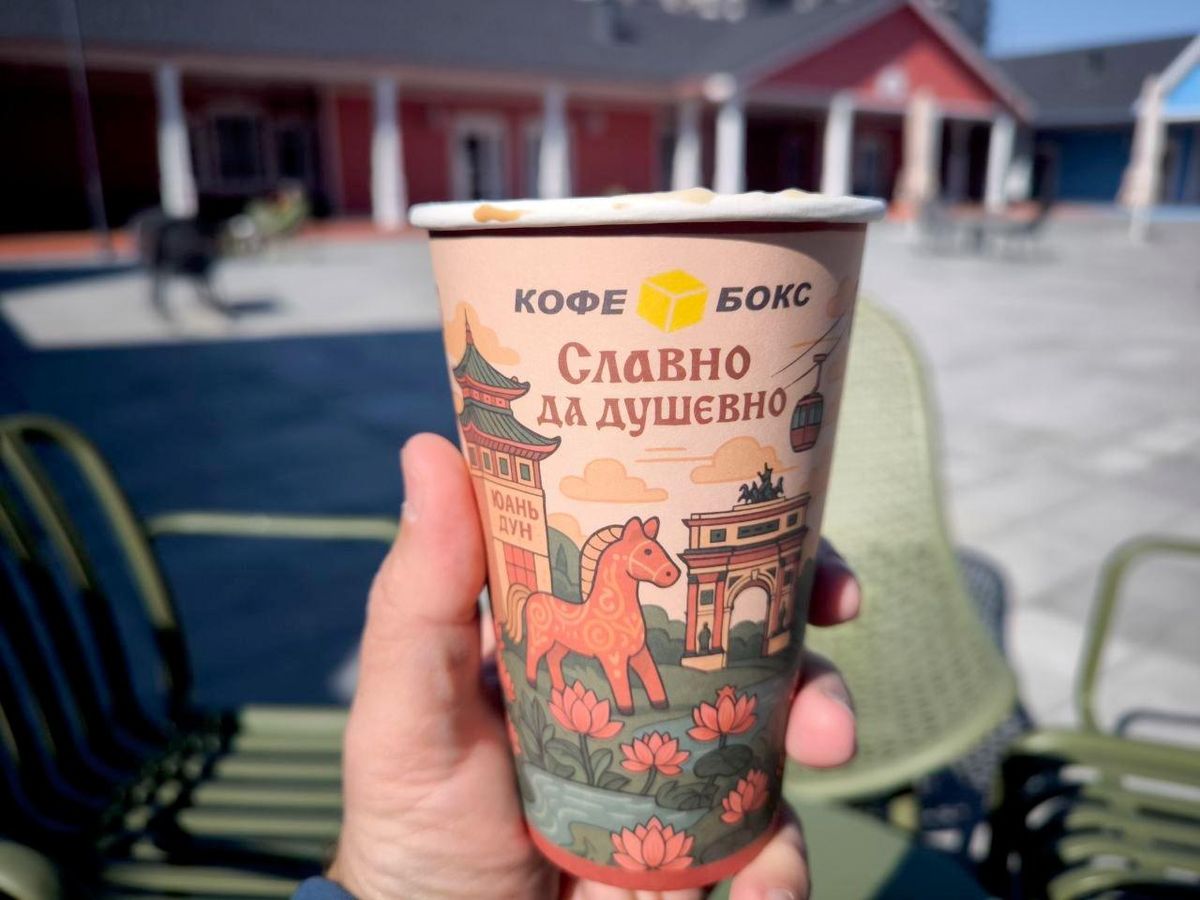
This glass encapsulates the symbols of Blagoveshchensk in their integrity
© Ruslan Marmazov
Nearby is the Amur River, beyond which China glows with neon signs. But the most important thing is that, just inland from the embankment, Blagoveshchensk is growing, with restored merchant mansions and modern residential blocks. Splendid and full of heart…
War veterans’ offensive on the real estate market
I hope this doesn’t sound too basic, but no matter how many wonderful public spaces, public offices, office parks and malls are built, ordinary people will primarily think about owning an apartment. That’s why it is logical for a caring traveler and, in a way, researcher to look at the local real estate market.
Judging by the media, it is growing dynamically here, and local prices per square meter can be impressive, or honestly, a bit intimidating.
I met with a local real estate agent, Mansur Nurgaleyev, who immediately said that I shouldn’t think the market was stagnating, and has barely started recovering. Nothing of the kind. The marked in the Amur Region has never been sluggish. People come and go, buying and selling property, which is an undeniable fact. The real estate market is in constant flux, and this elegant paradox is another hard fact.
It’s another matter, though, that a certain uptick in activity has been noticeable recently.
“What’s the reason for this? The Far Eastern mortgage program?”
“Yes, to a large degree. The Far Eastern mortgage program has become a major argument for many of those who would like to buy a flat, especially those who never stood a chance before. However, there is a side effect.”
“What side effect?”
“Prices have grown.”
“So, as soon as life has become better, it has also become more fun?”
“There is a certain logic in that. When there are people who can buy housing, there are people who want to profit from that.”
“I don’t know much about this subject, but according to available information real estate prices in Blagoveshchensk are comparable to those in Moscow.”
“Yes, the price can go up to 250,000 rubles per square meter.”
“I’m impressed.”
“Moreover, some people buy flats that cost 25 or even 30 million rubles. I was in a meeting with a developer when he received a call from a potential client, who asked him to hold an apartment for him that costs 25 million rubles.”
“What do you mean, hold an apartment?”
“That’s exactly what the developer asked. He said he should either buy it now, or take no offense if someone else buys it. It’s just business.”
“But this rise in purchasing power can hardly be connected with the Far Eastern mortgage program alone, right?”
“Certainly not. There are many factors at play. For example, the region is becoming a tourist destination and hence attractive in all senses. There are also circumstances that weren't even on the radar before.”
“Like what?”
“Like the special military operation. Veterans bring good money from the war, and the first thing they want is to improve their living conditions.”
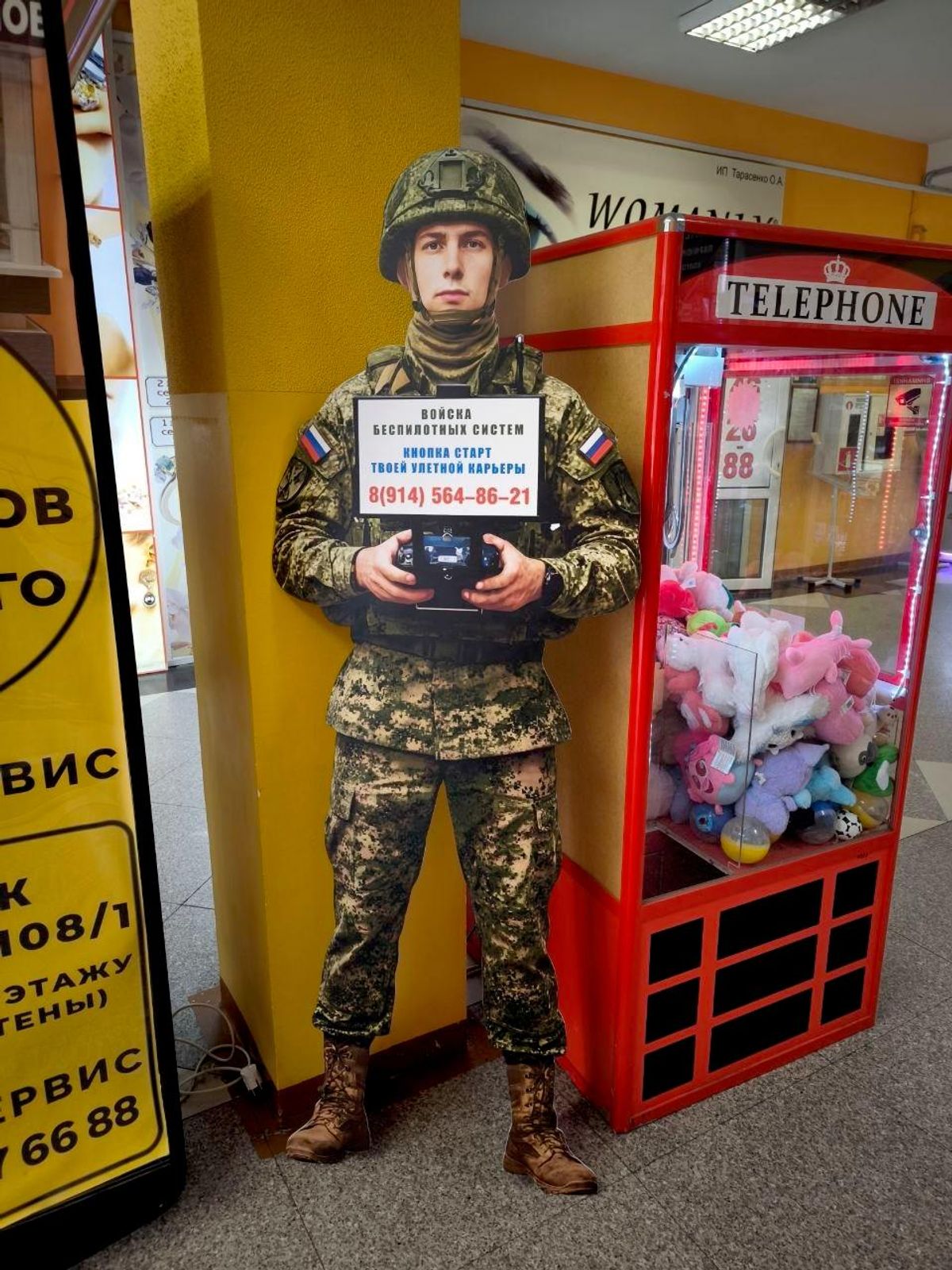
Fighters returning from the frontline had a major impact on the Amur Region’s housing market. A stand at a local trade mall in Blagoveshchensk invites people to “jump start an amazing career.”
© Ruslan Marmazov
“Is the highest demand for housing in the Amur Region in Blagoveshchensk?”
“No, the situation on the market in Svobodny is even more interesting.”
“Why?”
“Sibur and Gazprom are building their plants there and so buying flats for their personnel, who come from other regions."
“Yes, if it smells of gas, it always smells of money.”
If only I knew, I would have bought several flats in Svobodny and sell them at a profit now.”
“If only we knew, we would have bought flats – even expensive ones – in Moscow in 1990.”
“Yeah, that’s right.”
Taking his leave, my interlocutor acted like a true Far Eastern businessman – sharp but cooperative. He invited me to visit a mall where his relative sells good back-to-school items. He also asked me to recommend him to my acquaintances who were looking for property in the Amur Region, promising me to pay 20,000 rubles per client.
I bet the big bucks will probably start rolling in after this publication. I’ll buy a country house on the Zeya River, where I’ll get away from the Moscow hustle and bustle in summer, to enjoy the endless blue skies and gorge on the sweetest Amur watermelons in the world.
Land of incurable optimists
Joking apart… Who said this is a joke? Anyway, if people buy far from cheap apartments, it means that not only those who work at the space center or gas plants in the Amur Region can earn enough to buy them. Isn’t this logical? Where else can you earn enough? Experience and stereotypes say that this is also possible in small and medium-sized business.
There is also objective information and statistics to prove this. The region has a large territory with a lot of opportunities, and where there is a will there is a way.
This is what the newspaper Amurskaya Pravdasays: “The region is short of manpower: there are 47 job vacancies for every job seeker. In other words, there are 76,000 open positions per 1,600 officially unemployed.”
Frankly, this information shocked me. A surplus of jobs! What kind of capitalism is this, where they are practically screaming at potential employees, “We have vacancies. Come and join us, earn money.”? This, of course, is mostly about the working class. What about the lower grades of business, the small and medium-sized enterprises? I will tell you now.
I looked for an answer to my question at the My Business SME Support Center, a division of the Amur Region Small and Medium-Sized Business Credit Assistance Fund.
Before going there, I read its website that they are a modern platform where business people can receive a package of various services, from consultations on organizational matters to the promotion of SME services and products. Plus yet another invitation to come and enjoy. They talk a good game, I thought, but can they deliver?
I was put to shame the moment I set foot in the My Business center, probably, for my lack of faith. A modern and well-equipped office that opened its doors to everyone, even though the sign on the door said, “This is not a Multifunctional Public Services Center.” But the visual style is similar, which is why some people make the mistake.
Lost in these thoughts, I opened the door to the office of the center’s director, Tatyana Sitnikova. It is a bright and spacious room, with an artistically crafted map of the Amur Region on the wall, a neat and tidy desk, and a smiling host, even though I didn’t have an appointment. I wish journalists were always welcomed like this.
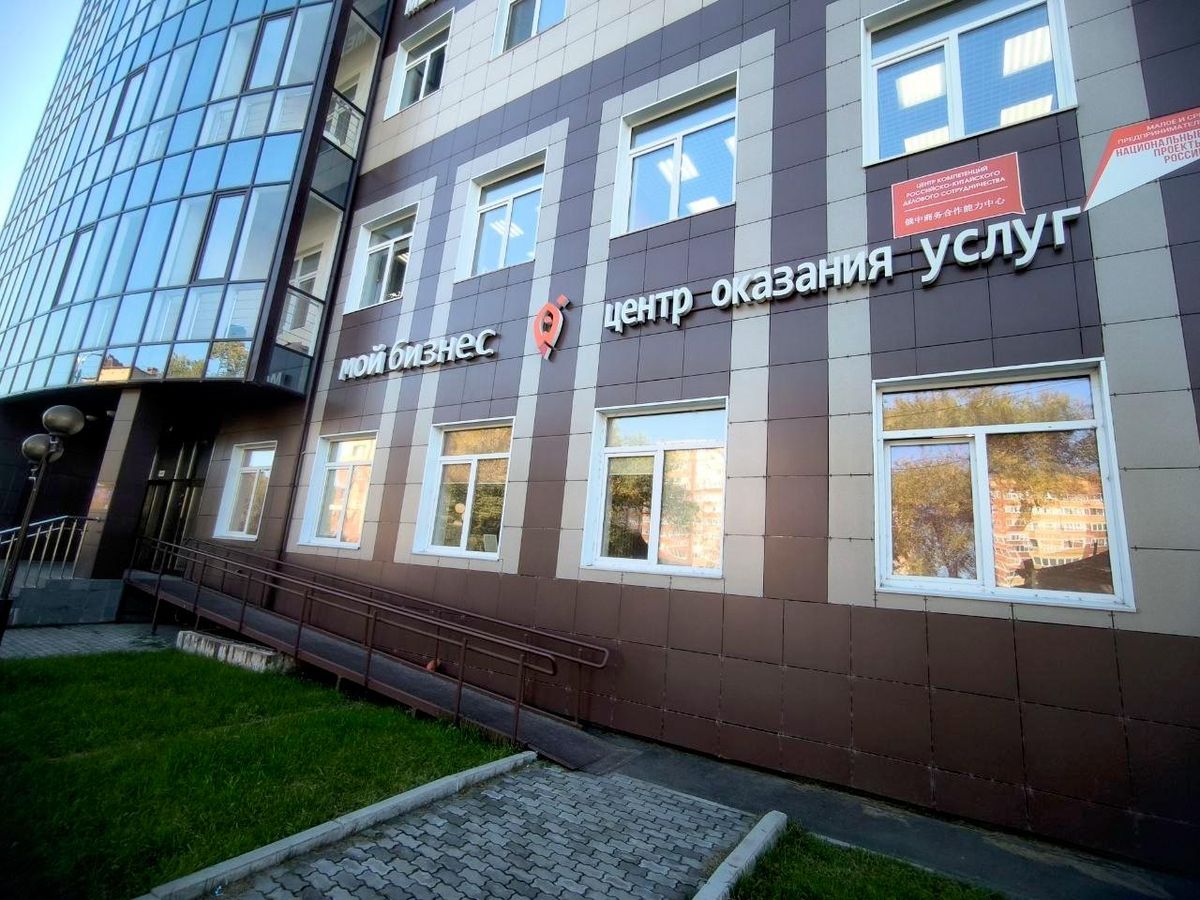
This is where small businesses from the Amur Region get propelled to the international stage
© Ruslan Marmazov
“Ms. Sitnikova, by and large, the only goal of my visit is to back up my layman’s impressions with expert commentary. Or overturn them, which will suit me too. I can look at business development in the region from your viewpoint. How is it doing?”
“First of all, I must tell you that the My Business center works with kids.”
“That’s extremely good. If I got you right, kids are not children but budding entrepreneurs, right?”
“There are also schoolchildren and very young people among them, who bring their ideas to us. We offer several stages of the program.”
“Who comes after kids?”
“Those who work with investment projects, and after them come advanced special economic zones, and small investment projects. It is a completely different level, as you can see."
“Yes, I can see that.”
“Those who build airports or cableways to China are not our clients. We work with really small projects… So, I’ve been working at the center for seven years, since the launch of the My Business project.”
“So, you were here from day one? What has changed over the past seven years?”
“When I came here, we most had agricultural projects in our portfolio. We helped farms to buy equipment, secure working capital for seeds, and the like. Everything has changed since then. We have virtually nobody from the agricultural sector among our clients now.”
“This sounds scary.”
“Not at all. This means that they have accumulated their own working capital.”
“Aha, and moved to the next level?”
“They no longer need loans, which is very good. Our agricultural clients now deliver high returns… They have really moved to a higher level, making way for the next generation of ‘kids.’ I would like to make special mention of this. Or take another track that deserves attention: in the past, our clients needed working capital, while today they need investments, equipment and modernization.”
“That is, they need s complete overhaul?”
“Yes. But we also see emerging enterprises. Our businesses are not afraid of investing in them, even though we have China with cheap manpower nearby.”
“Our business people don’t back down?”
“They are not afraid of competition. Some of those who came for small grants several years ago have grown sufficiently to emerge on the international stage. We register this trend as professionals, and people in the region can see this in their everyday lives.”
“Can you give me an example?”
“Here you are. Construction is booming, and the yards in our neighborhoods are being beautifully redeveloped in Blagoveshchensk. We now have a beautiful embankment. Taken together, this creates a level of comfort that makes us never want to leave. We want to stay and develop here. We are happy and comfortable here.”
“Have you guys formed a conspiracy or what? It’s nothing but talk about comfortable Blagoveshchensk.”
“What can we say if this is true? The region as a whole is changing. Our small team often travels across the Amur Region…”
“It’s a pleasant hobby.”
“I can tell you that the Chinese are breathing down our necks. They want to enjoy this beauty, breathe the clean air of the Amur Region, fish for spike, and visit the Bureya Reservoir too.”
“You can see their point.”
“Exactly. But the main thing is that our travel companies can see it too, and they are moving forward.”
“Does tourism fall under your remit as well?”
“We have a tourism and recreation center. We encourage entrepreneurs in the industry to look for opportunities and form clusters.”
“Clusters is an ambitious word. What does one actually look like in practice?”
“Well, imagine an area with a hotel, a few places to eat, perhaps some operators running recreation sites on the small islands, and so on. All of it should work seamlessly. We can see the region gradually building this kind of infrastructure – which, in turn, makes your stay more comfortable. It’s the sort of place you’d want to come back to, again and again.
“It all sounds almost too good to be true – nearly perfect. Are there really no problems?”
“How could there not be? This year – or arguably since the end of last year – we’ve noticed a certain unease.”
“What’s that down to?”
“Business owners tell us, for instance, that changes to the tax system have created a lingering sense of uncertainty. It’s not so much the tax changes themselves that worry them as the lack of clarity about what tomorrow might bring. That tends to wear down the entrepreneurial spirit – or, if you like, the “resilience” of the business owner. As a result, even we aren’t always sure which way to turn.
“So what conclusion are you coming to? Surely something needs to be done?”
“For now, we’re watching the entrepreneurs. The uncertainty is unsettling. Another point that comes up again and again in our conversations is that businesses would rather not have to deal with separate taxes for staff, social contributions, product labelling requirements, and so on – a fragmented system, too many reporting obligations. They say: ‘Give us a single tax, give us one transparent, easy-to-understand system.’ That way an entrepreneur would have a clearer picture of what to expect today, tomorrow, and further out – at least a reasonable forecast. As things stand, even we get confused; these are small businesses, after all, where the person in charge is often also the accountant, the strategist and the recruiter.”
“A jack-of-all-trades, in other words…”
“And more than that. They also have to attend trade shows, meet partners, and so on. Naturally, they try to cut costs by taking all of it on themselves. But it’s not always possible to shape an overall business strategy when you’re doing everything at once. Because of the uncertainty, they end up just trying to conserve resources while constantly putting out fires.”
“How would you describe your core approach to working with local entrepreneurs?”
“Our goal is to help businesses move into the formal, legal sector. It matters that entrepreneurs see the benefits and understand that if they commit to keeping proper records, we’ll be there to support them through it.”
“Legalizing businesses isn’t exactly a new issue – it’s been around for ages, hasn’t it? Operating ‘in the shadows’ is practically a time-honored tradition. Can anything really change here?”
“Well, for instance, we have a big project called Shores of Taste. Have you heard of it?”
“Of course. The Russian-Chinese gastronomic festival.”
“It’s been running for four years now. If you look back at how it began, you’d see food service businesses – some of them operating with no paperwork at all. Today the system is well-organized and running smoothly. We help entrepreneurs grow – raising their service standards and the quality of their paperwork, until they reach fully formalized, legal status.”
“So formalization is a barometer of progress – is that how it works?”
“Our core areas of work with businesses are formalization, scaling and development. At the same time, we never lose sight of those just starting out. We work with them and help them grow. An entrepreneur who might begin with us by receiving a small grant – say, around 350,000 – can go on to access our preferential loan programs, which offer favorable interest rates, and eventually reach even higher levels of development.”
“Ms. Sitnikova, you said that agricultural producers are no longer in your focus. Who is replacing them? Which industries are most popular now?”
“Public catering and processing industries. Our clients are small enterprises that produce ready-to-cook products, process meat, poultry, and eggs. In principle, they can also be described as agricultural producers at the next stage of the production cycle. There are also travel companies, and recreation and entertainment firms that constitute a relevant infrastructure. Incidentally, there are many medical firms among our clients.”
“Private ones?”
“Yes, certainly. We have a large pool of dental companies. There are also social businesses.”
“What do they do?”
“Some are engaged in additional education for children. Others offer physical training and sport services, including phygital sports.”
“What about souvenirs?”
“We have craftsmen and those who produce souvenirs among our clients. We are gradually conditioning them to operate their businesses legally. Overall, you can say that we don’t have priority spheres, trying to work upon application. For example, an entrepreneur comes to us, describes his or her interests, specifics and problems, and we try to help them. This year, for instance, creative industries have taken the lead.”
“Very interesting.”
“We have always had among our clients such firms as event organizers, the producers of souvenirs, artists, and filmmakers, including animation film makers, even if there were few of them. But we keep all of them in our sights.”
“Do you help register trademarks?”
“We do, and we also help businesses protect their intellectual property and business ideas.”
“I saw a touching monument to suitcase traders at the entrance to the Amur Fair, with the inscription: To the hard work and optimism of Amur entrepreneurs. It’s a kind of homage to those who managed to keep their head above water in the turbulent 1990s, and have even realized their talents, in a sense. It can even be said that current business people are the descendants of those optimists, a new generation of business people. Are they just as optimistic about working back home, or are they quietly looking for a way to move to Moscow or, say, Beijing?
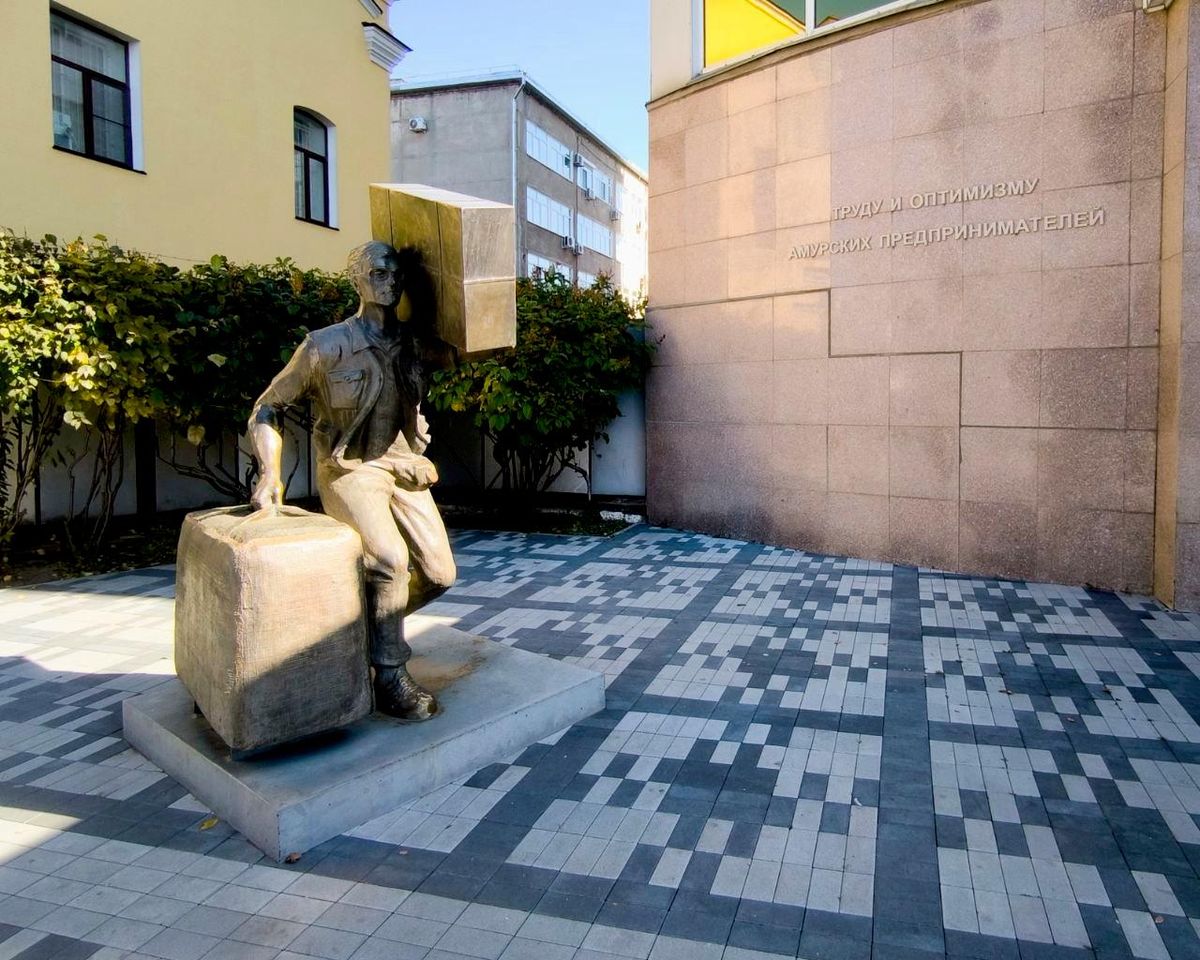
Monument to a suitcase trader in Blagoveshchensk as a gesture of paying tribute to the work and positive attitude of entrepreneurs from the Amur Region
© Ruslan Marmazov
“There are different people. Some have moved to the west, for example, Kaliningrad. Others are living in China. It depends on their business. This is a big question for the Amur Region, which is not very densely populated. Any population outflow creates a major problem. The number of population is only increasing thanks to professionals who come here to work at large construction projects, for example, gas facilities. But these people won’t stay in the Amur Region. And the local business people who see their businesses grow become aware of the limitations of the local market.”
“Is it more interesting for them to open a single outlet in Moscow than ten in Blagoveshchensk?
“Yes, or in Novosibirsk, or in St. Petersburg… Twenty percent of such efforts will generate 80% of the profit. It’s logical that they are tempted to move their business to a mega city than fight for each client here. Nevertheless, a large number of entrepreneurs remain in the Amur Region.”
“What is the ratio of businessmen aiming to leave to those who stay?”
“I would say that about 20% are thinking about leaving. The rest will stay. The situation is further complicated by major federal-scale retailers. They have the capability which small traders can’t rival. I would say that this is the specific feature of the Far Eastern market. It is interesting, though, that the entrepreneurs who have left the Amur Region for various reasons often return.”
“Yes, this is interesting. Do you have an explanation?”
“How can I put it? Life here is more comfortable, although simpler, and also calmer. Our region is attractive for various projects. Business people from other cities say that they see how fast the region is developing, and how palpable are the results of this. Everything that has been invested in the Amur Region has started yielding fruit. All of this is meant for the people. You don’t have to sit at home now when you can go outside, use new services, and enjoy life. At least, this is how I would describe the general mood, as I feel it.”
Bronze threads in the fabric of history
Being a journalist means finding oneself in all kinds of unexpected and surprising situations, and those who have devoted enough time to this trade usually learn to hope for the better while preparing for the worst. That said, once you adopt this mindset, but the negative part fails to materialize and, instead, things turn out even better than expected, everything becomes as good as gets.
Heading to the Amur Region, yours truly knew that this would at least make for an interesting trip. But it also proved to be a very heartwarming experience.
I really enjoy talking to people who really love their region. It may well be that I was just incredibly lucky to encounter this kind of people anywhere I went. Maybe I am just a lucky man, which, as you would probably agree, is not bad either. Still, I can assume and even believe that here on River Amur’s riverside there are more people compared to the national average who are romantic and patriotic, as well as hardened throughout generations by the harsh climate and historical challenges. This could be my subjective vision, of course, but I tend to trust my instincts in this regard and rarely miss the point.
People in the Amur Region have their own delicate and respectful and at the same time resolved way of introducing anyone coming their way, myself included, to the beauties, inventions and time-tested local brands this region has to offer. When a fourth or fifth person talking to you in various parts of Blagoveshchensk and in totally different situations asks whether you tasted the pelmeni (dumplings), Amur style, it becomes clear that they are asking this question for a reason. And when the other person gets an affirmative answer, there is always the follow-up question to check whether I enjoyed this meal at the right place. They won’t calm down until they make sure that I visited the right eatery to discover the star dish of the Amur Region gastronomy.
Do you see my point? For a good-hearted Blagoveshchensk resident, a guest must get a taste of the dish, since this is the only way to fully grasp the local identity. And they want the dear guest to try these Amur-style dumplings the right way by going to a place where all the traditions will be respected without any excessive innovative twists.
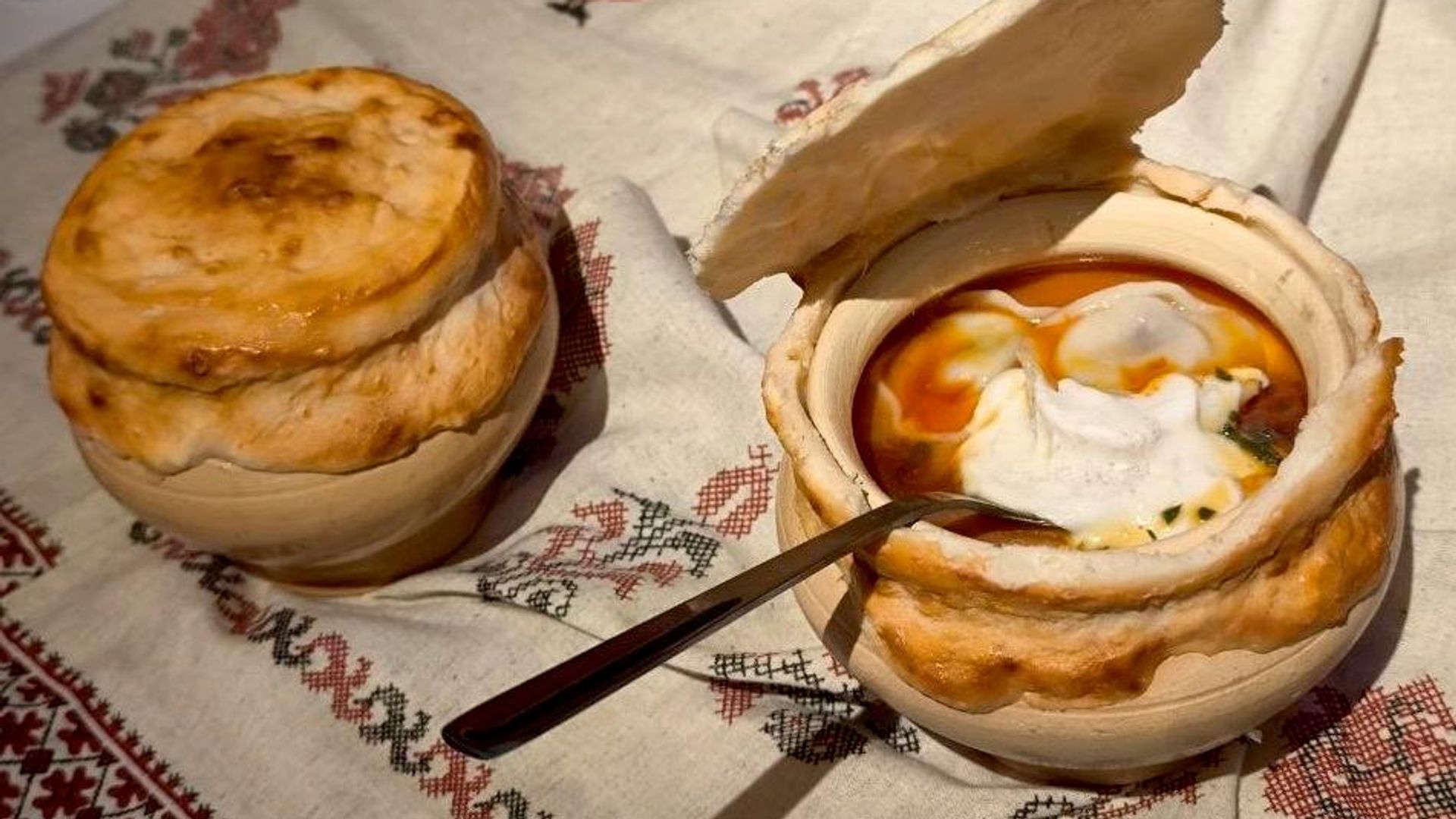
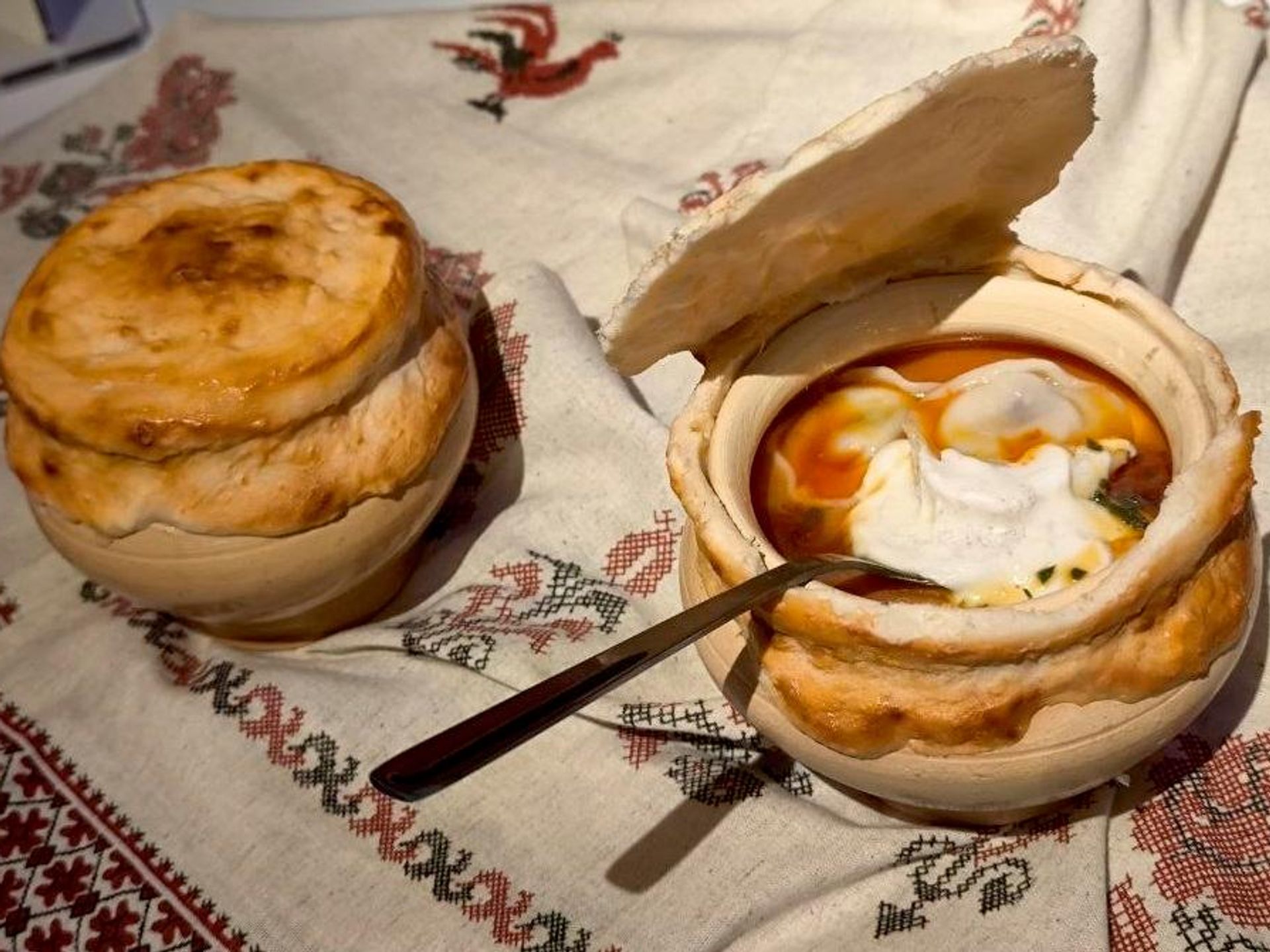
The dumplings were great, by the way. What sets them apart from the traditional pelmeni is the inclusion of tomato broth and pieces of liver. Served in a pot and covered with flatbread. Add sour cream to taste.
I had a conversation with Yaroslav Bylin, a historian, who said that these dumplings originated in Asia but in the Amur region the recipe evolved with the arrival of settlers from Malorossiya in late 19thand early 20th century. They brought the love for pot-baked dishes covered with flatbread. What an interesting hybrid. Here, even local dumplings have their own unique history and a legend.
People in Blagoveshchensk treasure their history, including what could seem as the most insignificant happenings. The city is very young, unlike, say, Derbent, Kerch or Veliky Novgorod. Founded just 170 years ago, Blagoveshchensk has a short history, but people here take special care to honor and remember their past.
With no historical heritage to speak of, people compensate by spreading urban legends, coming up with hero-like figures and inventing all kinds of allegorical images. This posture impacted the local monuments.
In that sense, everything is quite clear when it comes to the monuments to Count Nikolai Muravyov-Amursky or Innocent of Alaska (Ivan Popov-Veniaminov). They were the ones who founded Blagoveshchensk and were outstanding Russian statesmen who are still waiting to be recognized for their contribution to enriching our nation. But here in Blagoveshchensk everyone knows what their military and spiritual leaders of the past are worth.
Monuments to the Cossacks who settled here do not require any special explanation either, since these people were the ones who started the whole process. They came here, got this land and made sure that no one tries to take over the Russian land. They also built what later became this city.
There is a marvelous monument to Anton Chekhov, the writer. Standing on the embankment, it blends perfectly into the urban landscape. Local activists come here to hold public readings of Chekhov’s works. How wonderful. There are Chekhov monuments in many towns and villages even if he never visited them, but this is not the case for Blagoveshchensk. He stopped here on his way to Sakhalin in 1890 and spent two days in the city. Too short of a stay, you might say.
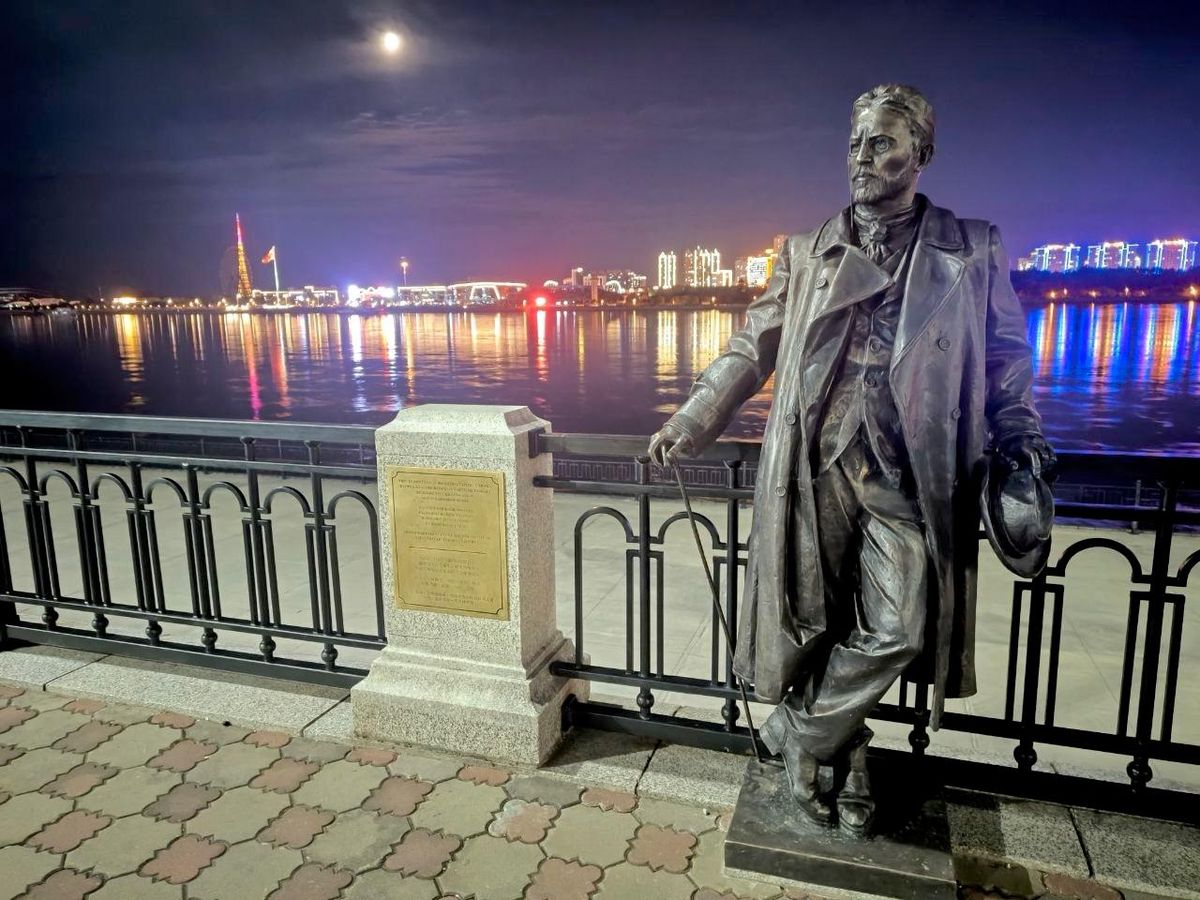
Monument to writer Anton Chekhov on Blagoveshchensk’s embankment
© Ruslan Marmazov
“There is a legend that he had his lunch in this building,” the guide will tell you during a bus tour of the city while pointing at an old building. This is a legend, nothing more.
“I fell in love with Amur, and would happily live there for a couple of years,” Anton Chekhov wrote. This was enough to earn him a monument in Blagoveshchensk. Locals loved him back, as you can see. Moreover, Chekhov unearthed quite an important aspect in the Far Eastern mentality: “People here are not afraid of speaking in a loud voice and saying what they mean. There is no one to arrest them and nowhere to send the convicts…”
The Soviet era has left major traces in the Amur Region, which are being carefully preserved because you can’t erase history. For example, you can find numerous mentions of Fyodor Mukhin in the city toponymy. I heard a funny description of that man in the local history museum: “A prominent revolutionary… or counterfeiter.” As if the two don’t go together.
In 1967, the Amur Region was awarded the Order of Lenin, and there is a city park with an inimitable memorial complex dedicated to that event.
They say that there are nine monuments of not just the Order of Lenin but Lenin himself in the city. I don’t know if this is true; I didn’t check. Personally, I saw only three of them. One is only 164 centimeters tall, which is Lenin’s true height, but the pedestal is disproportionately high. It was cast at the Putilov Plant and was unveiled in the park near the current Aesthetic Education Center on May 1, 1925. It is not the first but one of the first monuments to the leader of the world’s proletariat erected after his death.
These bronze casts and threads in the fabric of history are logical and even typical for the majority of Russian cities, adjusted to their specifics, but there are several really unique examples in Blagoveshchensk.
One of them is the monument to the suitcase trader I have mentioned above. However, I think the monument to a merchant camel, which was unveiled in the city this summer, is much more creative. It paid tribute to the animal that carried local entrepreneurship to success on its own back at the turn of the 20th century. Camels were used to transport everything needed to gold mines and gold from them. Incidentally, the monument was made at the famous Mitrofan Grekov Studio of Military Artists.
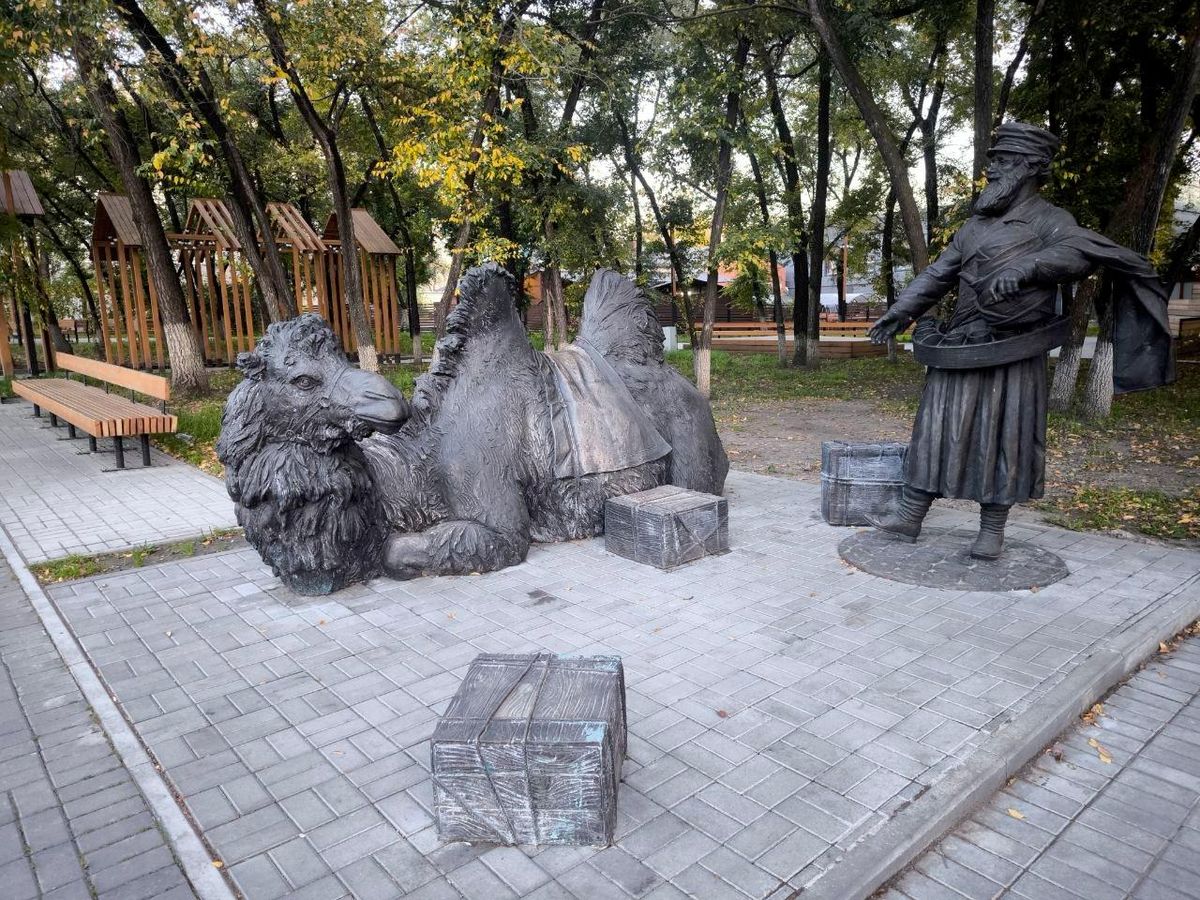
Monument to a merchant camel in the center of Blagoveshchensk
© Ruslan Marmazov
As for “cute” monuments, the local creative class has unleashed their imagination. The sculpture named The Imperturbable Cat, which I, as a cat person, affectionately call The Impudent Animal, leaves no one indifferent. People smile and take photos of the cat, who stands with a dog and a bird, even though they probably did this a dozen times before, because it’s so-o-o cute.
The Druzhok (Buddy) sculpture, which stand on the embankment as well, is different. It is not just cute but also fills you with a sense of pride. This story, cast in metal, is about the dog that stayed behind to guard his master’s house, up to his neck in cold water, during a flooding of the Amur River – and let me tell you, they are something else. Move over, Hachiko… With all due respect, of course.
There is also a monument to a dumpling and varenik (pierogi), a cozy symbol of the friendship of nations. And a monstrous metal bull – I don’t know what it symbolizes but you can’t go by without noticing it.
There is a real border pillar incorporated into a monument with a border guard and his dog. It looks nice and the meaning is clear too: the border is nearby, the city used to be an outpost, and the border is rightly sealed, for the exact same reason.
As for monuments to the generations of Russian warriors, there is a monument combining three figures – a Civil War solider, a solider of the Great Patriotic War, and a soldier of the special military operation, You won’t find such monuments in every Russian city so far. Of course, a time will come when the heroes of Russia’s modern history will take their rightful places on pedestals in many cities and villages. Blagoveshchensk didn’t wait for it to come, outlining its attitude to the special military operation and its heroes right now. I think this is important.
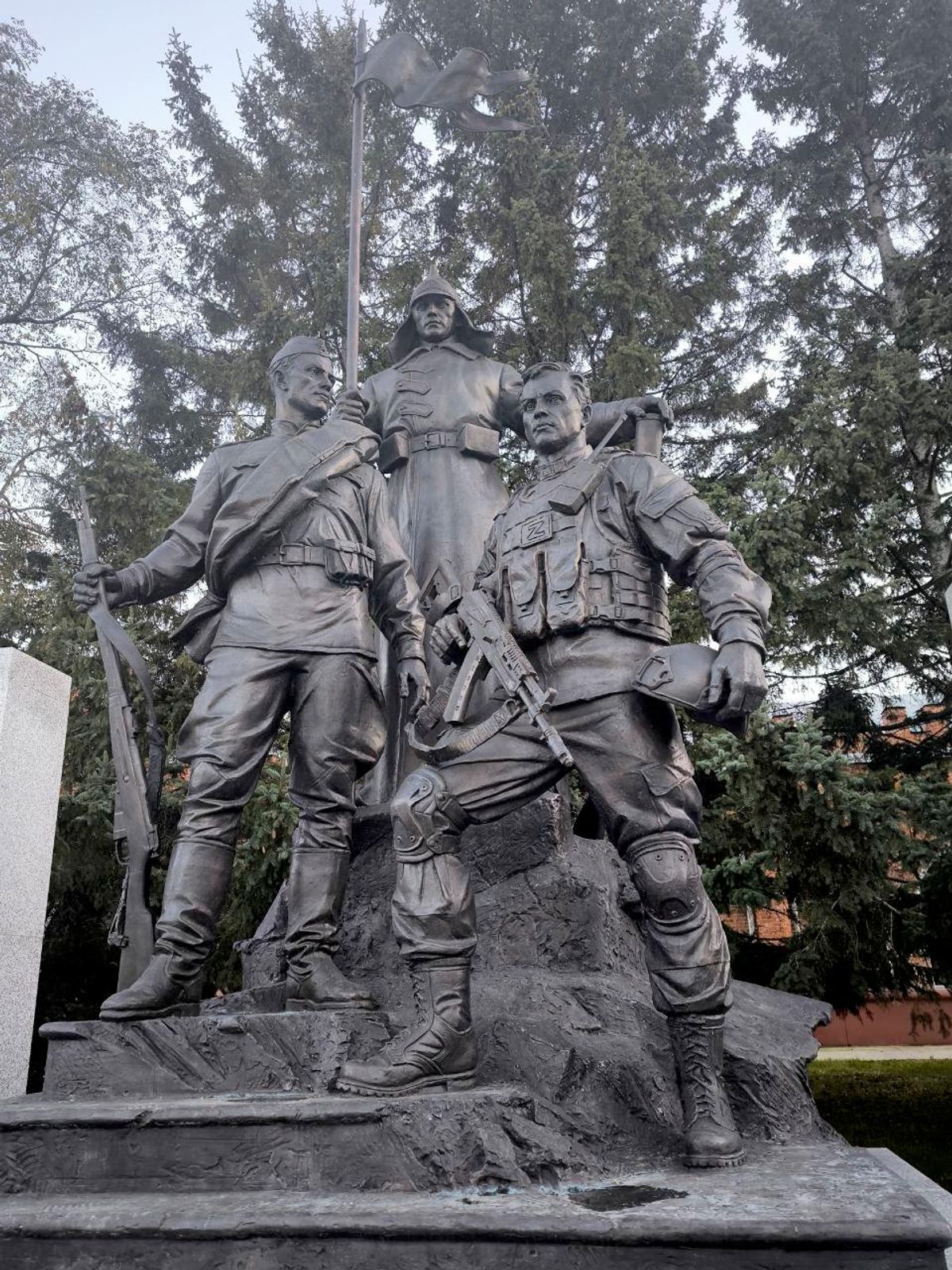
Generational continuity among Russian warriors. Blagoveshchensk has already paid tribute to the feats accomplished by the heroes of the special military operation
© Ruslan Marmazov
There are other interesting, eye-catching, entertaining, and instructive things on the straight “Roman” streets (which are straighter than Rome could ever dream of) and the beautiful embankment of Blagoveshchensk. Taken together, they create the unique color and atmosphere of that beautiful region, so that visitors will never forget them, telling their kith and kin: “That’s when I was on the Amur. You wouldn't believe how many amazing things I saw there!” Once they are certain that not everyone knew yet, they would without fail begin a slow, heartwarming tale.
Local residents probably need this more than visitors, so that they never consider leaving the region. Why go anywhere if you can live and love comfortably here, working to protect and further improve your native land?
“The Amur is about love.” The local creative team who invented this slogan have definitely hit the bull’s eye with the core meaning.
Ruslan Marmazov