09:00 16.10.2026
30 km of safety: Khabarovsk Territory gets new dam
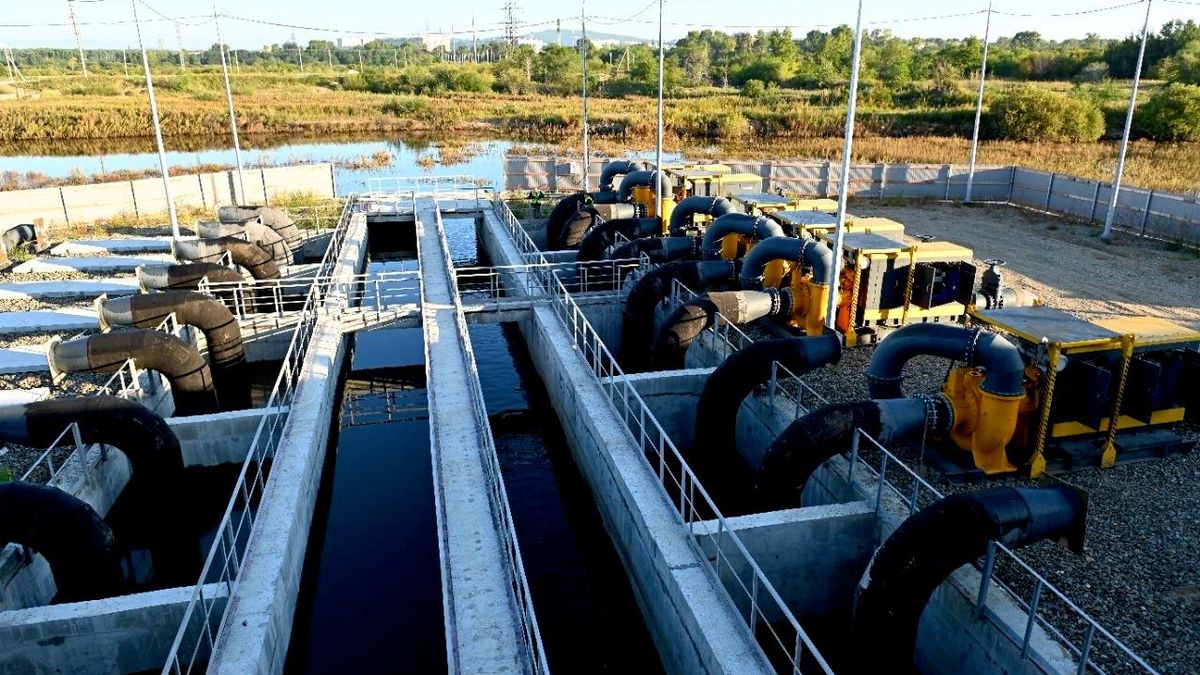
© Federal Agency for water resources (Rosvodresursy)
A complex of hydraulic structures built to shield the city from floodwaters has been completed in Komsomolsk-on-Amur. It is the second such project in Khabarovsk Territory, after a similar dam opened in Khabarovsk last year, Konstantin Tretyakov, head of the Land and Water Resources Department at the territory’s Ministry of Natural Resources, told the Arctic.ru portal.
The last major flood on the Amur near Khabarovsk came in 1984, when the river inundated the waterfront of one of the city’s districts. Nothing of the kind followed for nearly three decades, and so no new protective structures were built.
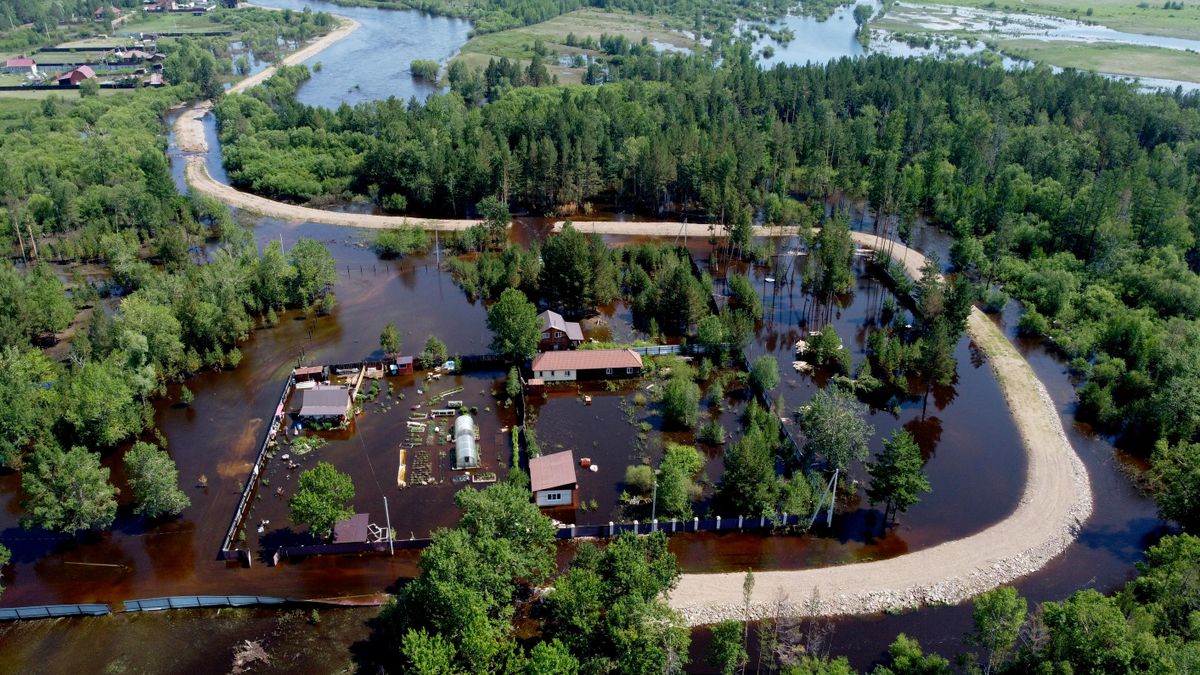
That changed with the large-scale flood on the Amur in 2013. According to the Russian Emergencies Ministry, the disaster affected five regions in the Far East, with the Amur Region, the Jewish Autonomous Region, and the Khabarovsk Territory suffering the worst.
“In Khabarovsk, the water reached a district with a population of more than 30,000 people, affecting kindergartens, schools, outpatient clinics, roads. In Komsomolsk-on-Amur, the situation was even worse,” Tretyakov said.
All told, the flooding touched 37 municipal districts, 235 settlements, and more than 13,000 residential buildings across the Far East. The inundated territory covered more than 8 million square meters.
Torrential rains are cited as the cause of the disaster. Near Khabarovsk, the river peaked at 804 cm; near Komsomolsk-on-Amur, it rose to 910 cm.
“What made it worse was the timing: the flood peak came in early September. The water only began to recede from the flooded areas in late October, once the frosts set in. Everything had to be restored in very difficult weather,” Tretyakov added.
After the flood, and acting upon instructions from President Vladimir Putin, work began on the design of protective structures. As Tretyakov noted, the Ministry of Natural Resources and Rosvodresursy (the Federal Agency for Water Resources), took on the task of securing federal co-financing for their construction.
“The dam in Khabarovsk was built in a single phase, whereas in Komsomolsk-on-Amur it went up in three phases. All three phases ran concurrently. That’s exactly what let the cities weather the floods of 2019 and 2021 without damage,” Tretyakov stressed.
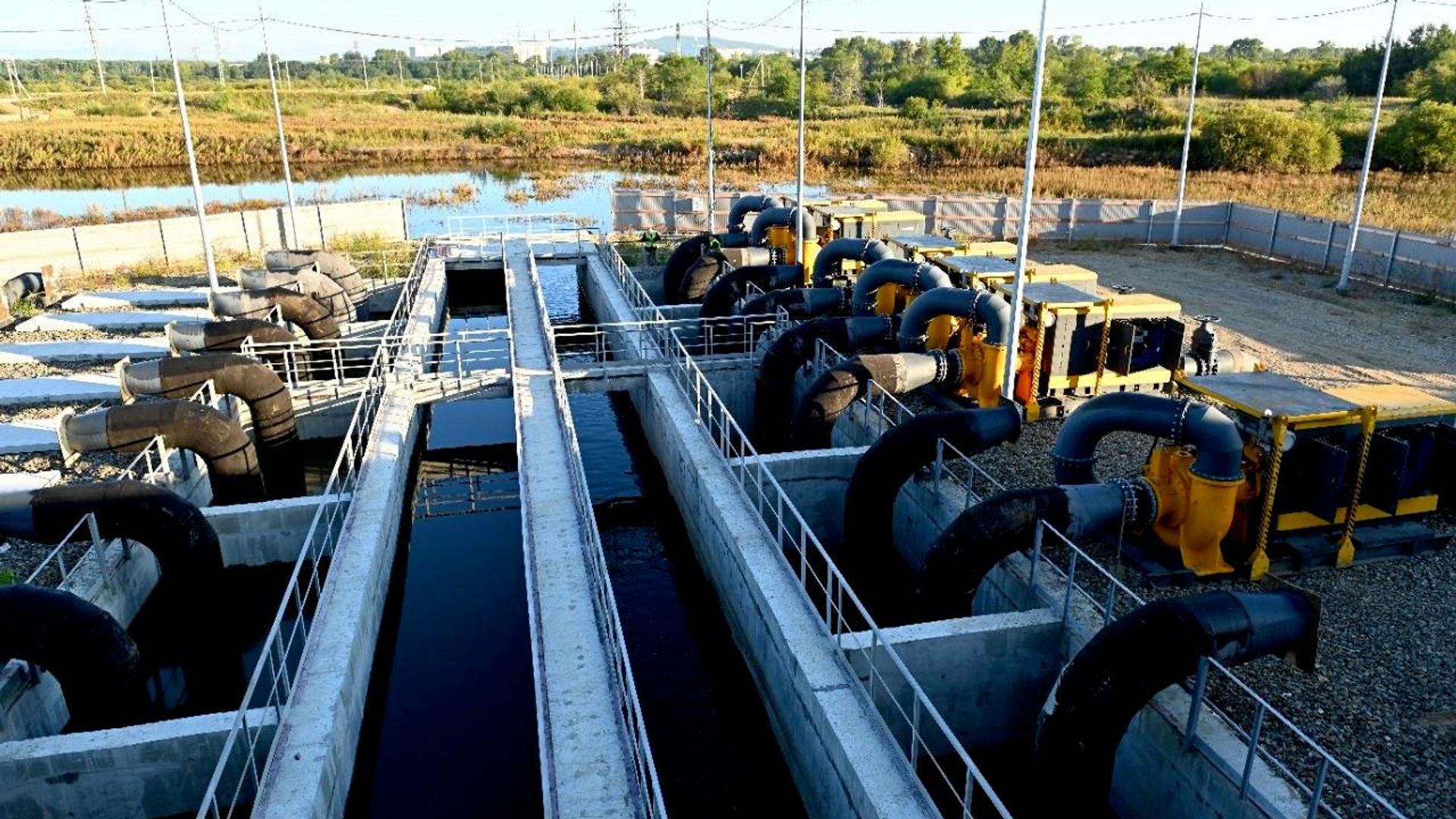
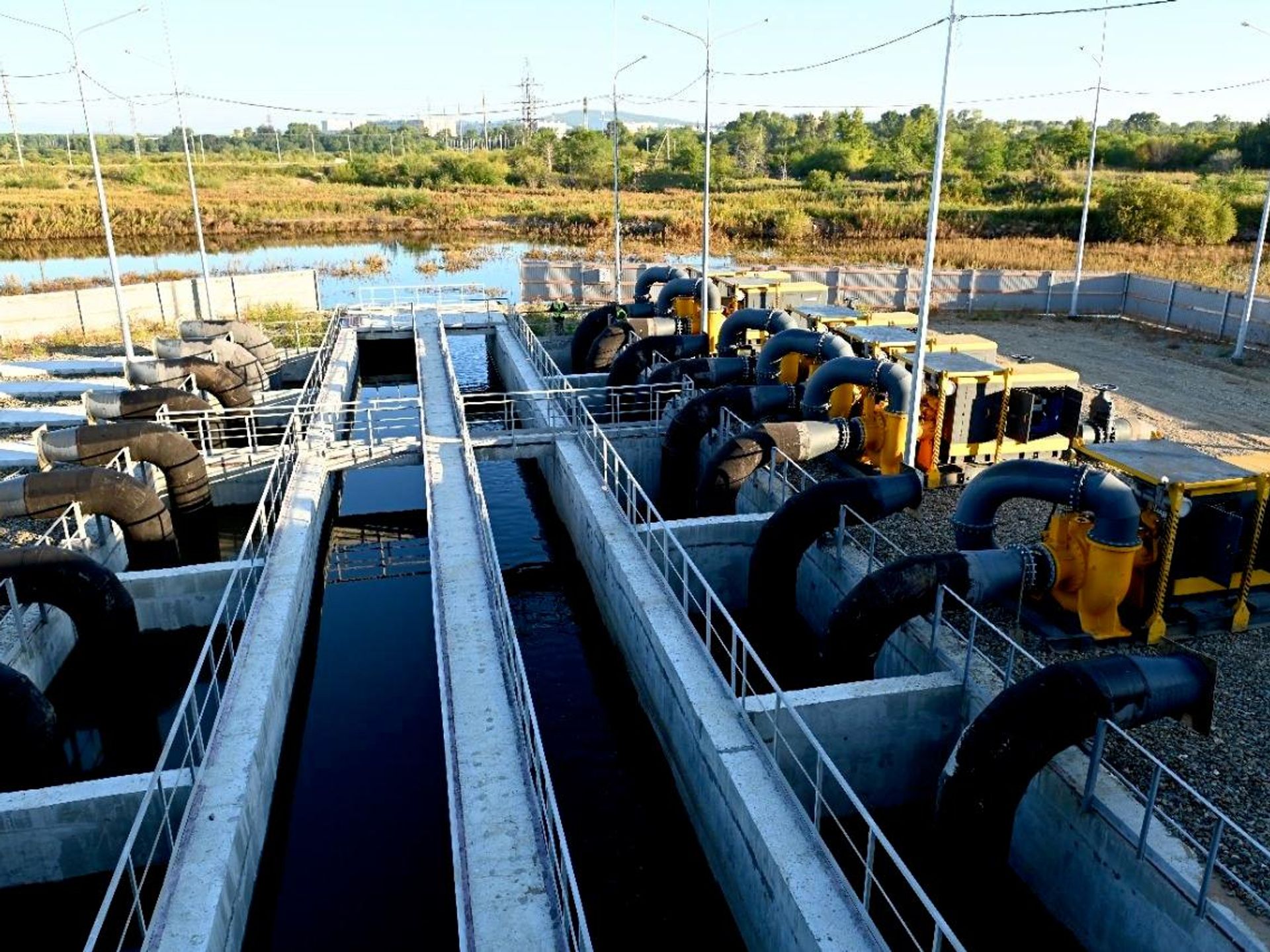
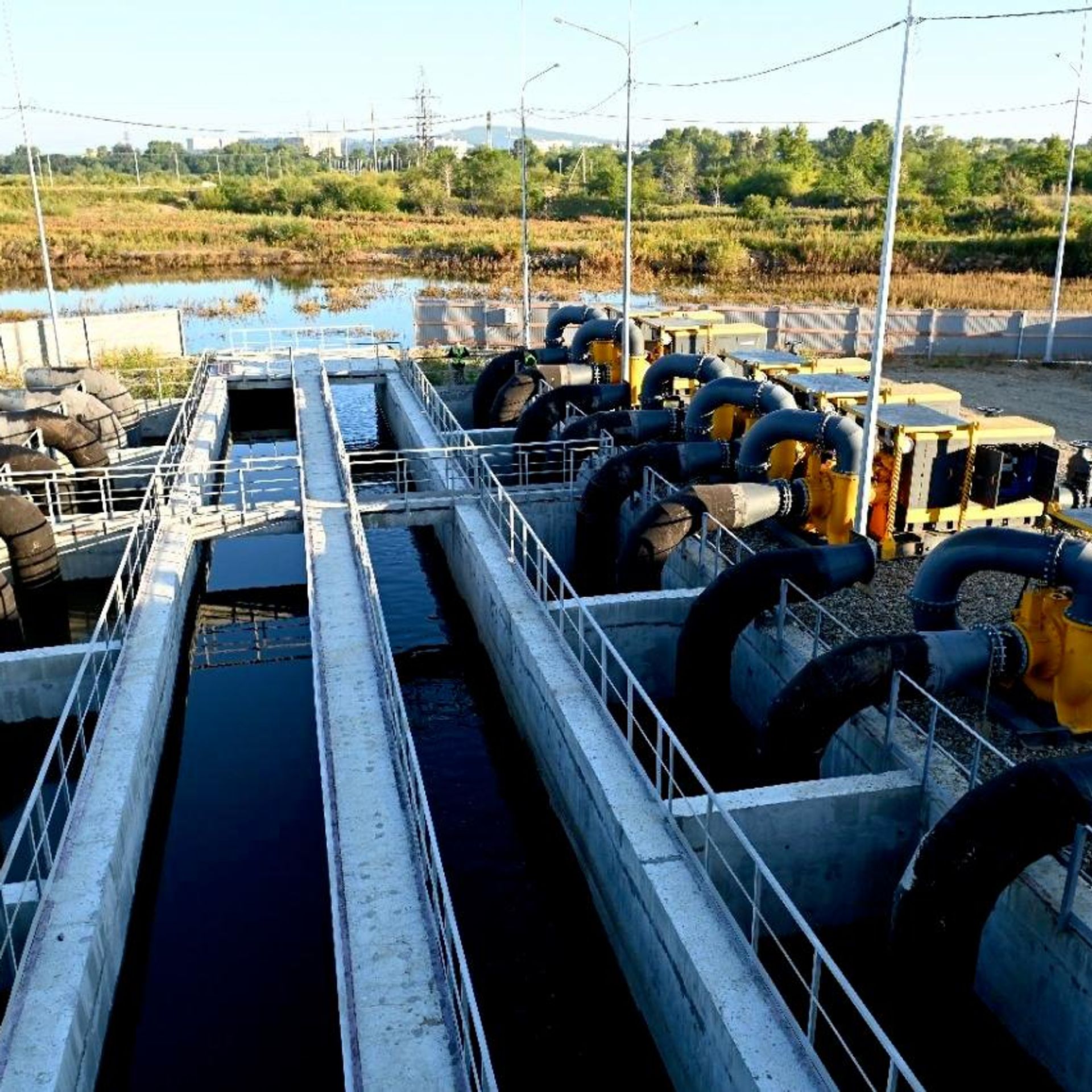
In Komsomolsk-on-Amur, the dam crest reaches elevations of 1,068 to 1,178 cm. Along its length, 17 stations equipped with 33 pumps have been installed, five of which run continuously. In Khabarovsk, the dam crest stands at 1,040 cm. But, as the head of the territorial ministry’s Land and Water Resources Department noted, each hydraulic structure has its own particular features.
“For the Khabarovsk dam, that feature is a navigation passage that normally lets ships through – a pontoon-type floating gate. When the water rises, the floating gate closes off the entrance to the backwater area. It’s the only structure of its kind in the country,” Tretyakov explained. “In Komsomolsk-on-Amur, the system of protective levees stands out for its length – 28 km.”
He added that the levees now protect the territory’s major cities, and that no incidents were recorded during this year’s flood season.
“People strolled along the city embankments and relaxed without a care. There was no anxiety, no worry that roads or homes would be flooded. And the utilities all kept working, without a hitch,” Tretyakov concluded.