10:00 07.10.2026
An Arctic Emergency Kit: How Russia Is Teaching People to Live in Peace Side by Side with Polar Bears
© Official website of the Clean Arctic Autonomous Non-Profit Organization
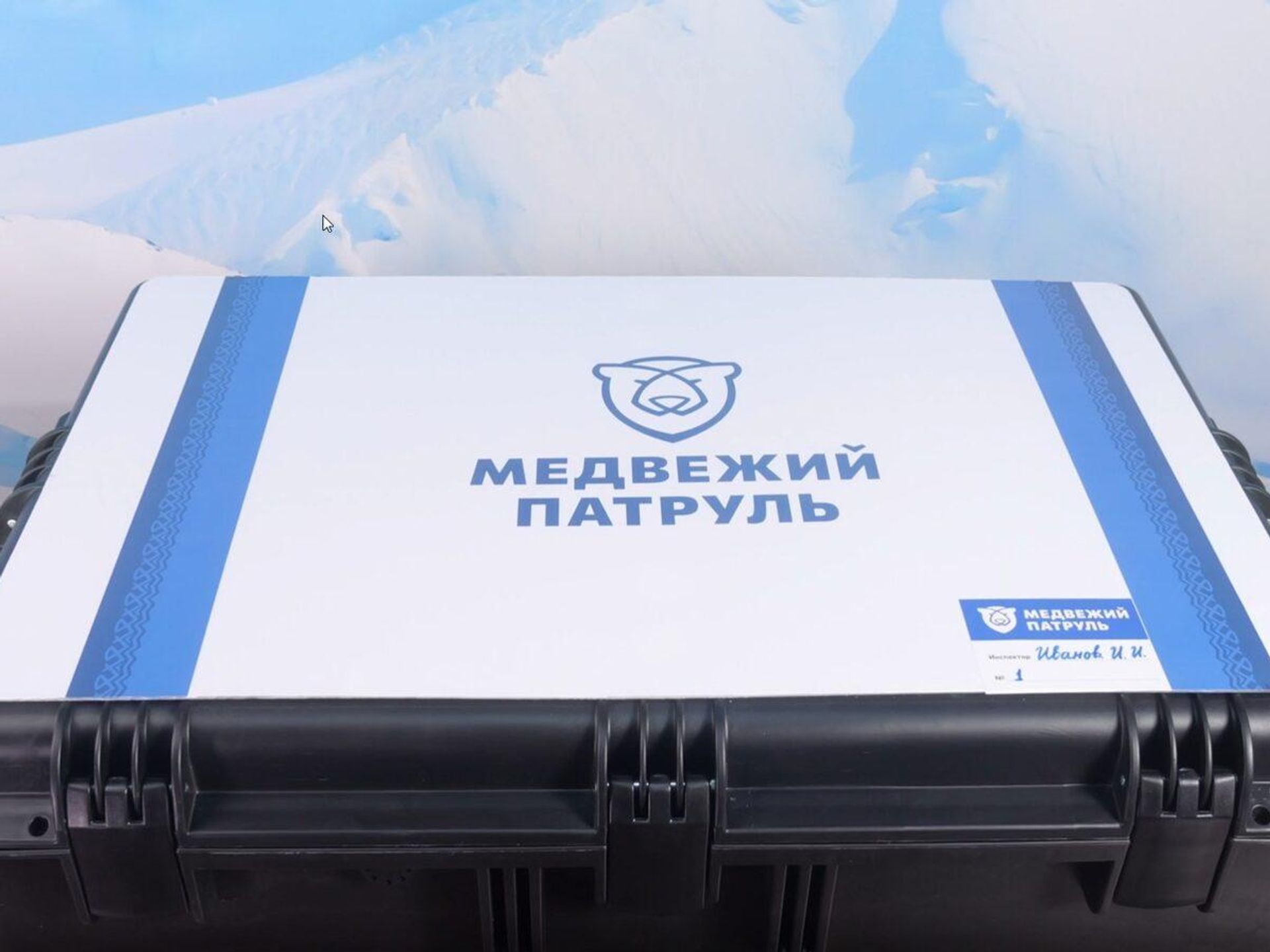
Encounters with polar bears have become increasingly common in Arctic localities. Climate change, melting sea ice and active development of the Arctic are forcing these carnivores to venture closer to humans. As part of the Bear Patrol project, the Clean Arctic specialists have developed a special emergency kit, namely, a set of non-lethal deterrents that drive animals away without harming them. Here is how the kit works and why it is already saving lives.
Bear Patrol: How It All Began
The Bear Patrol project has been operating since 2024 in six Arctic regions, including the Arkhangelsk Region, the Taimyr Peninsula in the Krasnoyarsk Territory, and Yakutia, as well as the Yamalo-Nenets, Nenets, and Chukotka autonomous areas. The project was initiated by Head of the Federal Service for Supervision of Natural Resources (Rosprirodnadzor) Svetlana Radionova and supported by President Vladimir Putin. The project is operated by the Clean Arctic Autonomous Non-Profit Organization.
The first official Bear Patrol was established in Ust-Kara off the Kara Gulf coast and included local residents, reindeer herders and the Emergencies Ministry personnel. Patrol members received training and were issued an emergency kit.
What’s Inside the Emergency Kit
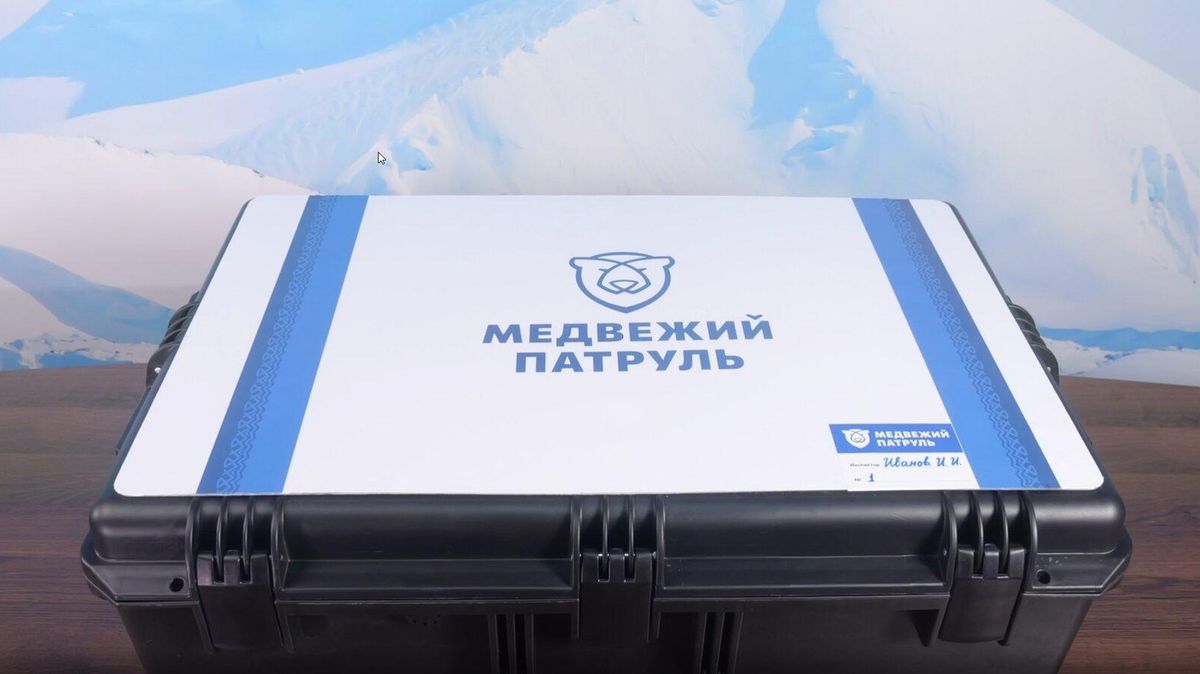
The kit - a portable set designed for three patrol members - was developed by specialists from the Clean Arctic in cooperation with the Emergencies Ministry.
It contains the following items:
• A fog horn, a pneumatic acoustic device that emits powerful signals to which the animal responds.
• A floating smoke canister, which produces a large cloud of smoke when activated. Since bears have poor eyesight but distinguish silhouettes well, the smoke screen creates the visual impression of a massive object, prompting the bear to leave.
• A red flare in the form of a blinding and hissing torch.
• Flash-and-sound and signaling cartridges, as well as a PU-4 launcher for firing them.
• Long-range flashlights and headlamps: powerful battery-operated lights capable of operating for up to 12 hours at low temperatures.
• A thermal backpack: a special backpack containing chemical warmers that generate heat when crushed thus helping keep batteries and equipment operational in subzero temperatures.
• A first-aid kit and information cards outlining what to do in the event of a bear encounter and how to provide first aid.
The main purpose of the emergency kit is to avoid harming the bear while giving humans a dependable tool for preventing dangerous situations.


1/3
Contents of the emergency kit
© Official website of the Clean Arctic Autonomous Non-Profit Organization
2/3
Contents of the emergency kit
© Russian Arctic and Far East Development
3/3
Fog horn
© Russian Arctic and Far East Development
Why These Particular Devices?
The kit was developed with the behavior of polar bears in mind. These animals live among drifting sea ice and are accustomed to loud noises resembling explosions. That is why scaring them off with a gunshot is not always an option. “These animals are primarily afraid of sudden bright flashes, the burning sound, and unusual and unpleasant smells,” Administrative Director of the project Dmitry Fedoseyev said.
Most of the equipment included in the kit was not specifically designed to deter bears and has long been used aboard vessels. A fog horn, for example, is used on small vessels to emit sound signals in fog when navigation lights cannot be seen. Red flares and smoke canisters are standard signaling equipment aboard ships as well.
“Everything in this kit is essentially the result of discussions with people who encounter polar bears, and takes into account the experience of tourists, hunters, and indigenous peoples. We worked closely with Moscow Zoo and its chief veterinary officer, and took into account the behavior that is typical of polar bears,” Dmitry Fedoseyev noted.
Testing: From St. Petersburg to the Tundra
Before being sent to Arctic regions, the kit was tested at the Academy of the State Fire Service of the EMERCOM of Russia in St Petersburg and was assessed as suitable for use. The kit received positive feedback from the Emergencies Ministry centers in the Arctic regions, and was approved by the St. Petersburg University of the EMERCOM of Russia, the Arkhangelsk and Vorkuta emergency rescue centers of the EMERCOM of Russia, and the St. Petersburg Association of Polar Explorers.
In December 2025, field testing was carried out in the Nenets Autonomous Area with the participation of representatives of the Ust-Kara Bear Patrol, local residents of Nenets descent, and EMERCOM personnel. The specialists tested procedures for using each device depending on the distance from the animal, its behavior, and weather. A reindeer herder who had personally encountered a polar bear was brought in to take part in the testing.
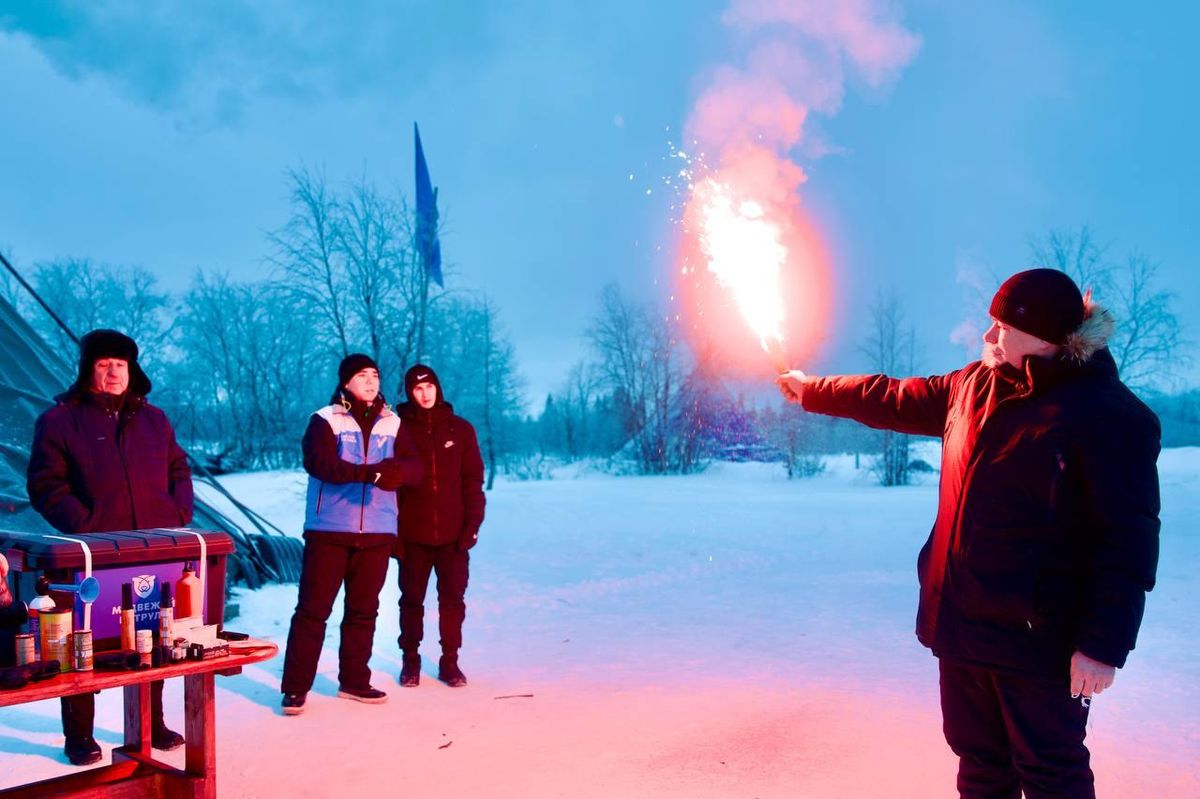
Field testing of the emergency kit designed to protect against polar bears
© Official website of the Clean Arctic Autonomous Non-Profit Organization
“I Was Walking Backwards Not to Turn My Back on Them”
Alexei Arteyev works as a watchman in Ust-Kara and is a member of the local Bear Patrol. He says polar bears show up frequently in that place. On one occasion, Alexei encountered a female bear with two cubs.
“I spotted a female bear and two cubs about a hundred meters away. One of the cubs almost ran after me. I slowly walked backwards so as not to turn my back on them. The mother bear would have pinned me down immediately. Once they were about 50 meters away, they stopped, and I ran off,” Alexei said.
Before the emergency kit was introduced, Ust-Kara residents had to fend off bears using their own devices. They used sticks to scare them away or started up tractors to drive the animals off with the engine noise. The patrol now has a reliable tool at its disposal. The Russian Arctic National Park, which covers the Franz Josef Land archipelago and part of Novaya Zemlya, has received the same equipment as well.
The next step will involve equipping the Arctic settlements located within the polar bear’s range, weather stations, and research expeditions. The Clean Arctic specialists will continue training patrol members.