https://en.arctic.ru
Russian Academy of Sciences archeologists study the condition of Pomor settlements in Spitsbergen
Russian Academy of Sciences archeologists study the condition of Pomor settlements in Spitsbergen
Arctic.ru: Discover how Russia implements its development goals in the Arctic and the Far East
2026-09-17T12:19
2026-09-17T12:19
2026-09-17T18:30
news
science and technology
/img/07ea/09/11/1760449_0:257:2730:1793_1920x0_80_0_0_aad7cf6484306673545fed72822f7d2e.jpg
An archeological survey, an assessment of the condition of known sites, and the development of a strategy for preserving Russian cultural and historical heritage in Spitsbergen (Svalbard) Archipelago were carried out as part of an expedition by the Institute of Archaeology of the Russian Academy of Sciences (RAS).According to the institute’s press service, Russian archeologists have completed their field season on the archipelago, covering western Spitsbergen and the northern tip of Prins Karls Forland. The work was conducted using non-invasive methods, as Norwegian law prohibits excavations and the removal of artifacts.During the survey, the Ebeltofthamna Pomor site and its cemetery were examined in detail. The researchers established that the western residential complex was used for domestic and economic activities and collected surface finds, including a pectoral cross, Dutch clay smoking pipes, ceramics dating from the 17th to 19th centuries, footwear fragments, and iron objects. The finds were documented on site by creating 3D models. Dating evidence indicates that the site was established in the late 17th century and remained in use until the first half of the 19th century. The site is being rapidly damaged by coastal erosion and permafrost thaw, prompting the archaeologists to prepare a report for the Governor of Spitsbergen.A partially exposed skull was discovered in one of the graves in the cemetery south of the settlement. The researchers created a 3D model of the skull and reconstructed the appearance of the person buried there.At Fuglehuken Cape, Prins Karls Forland Island, the archaeologists discovered 45 burials with stone surrounds, a feature that is not characteristic of Pomor burials. The remains of a wooden cross were also found at the site. Its affiliation has yet to be established.The researchers also documented new finds of ship timbers, including fragments of keels and frames, as well as planking sewn together with withies. Norwegian researchers previously found fragments of what is believed to be a Russian vessel at Kokerineset Cape. Russian archeologists are now negotiating access to the site to study the remains.Members of the Spitsbergen archeological expedition also organized a one-day, 60-kilometer hike along the western coast of the archipelago. During the hike, they assessed the condition of some of the oldest Pomor sites, at Stabbelva and Gravschoen. They also monitored one of the Pomor sites closest to the settlement of Barentsburg, at Kokerineset Cape.
https://en.arctic.ru/category_news/20250904/1045055.html
2026
Новости
ru-RU
https://en.arctic.ru/docs/about/copyright.html
https://xn--c1acbl2abdlkab1og.xn--p1ai/
/img/07ea/09/11/1760449_0:0:2730:2048_1920x0_80_0_0_4f9f0ee8fedb20ece09bef632135cfa8.jpgnews, science and technology
Russian Academy of Sciences archeologists study the condition of Pomor settlements in Spitsbergen
An archeological survey, an assessment of the condition of known sites, and the development of a strategy for preserving Russian cultural and historical heritage in Spitsbergen (Svalbard) Archipelago were carried out as part of an expedition by the Institute of Archaeology of the Russian Academy of Sciences (RAS).
According to the institute’s press service, Russian archeologists have completed their field season on the archipelago, covering western Spitsbergen and the northern tip of Prins Karls Forland. The work was conducted using non-invasive methods, as Norwegian law prohibits excavations and the removal of artifacts.
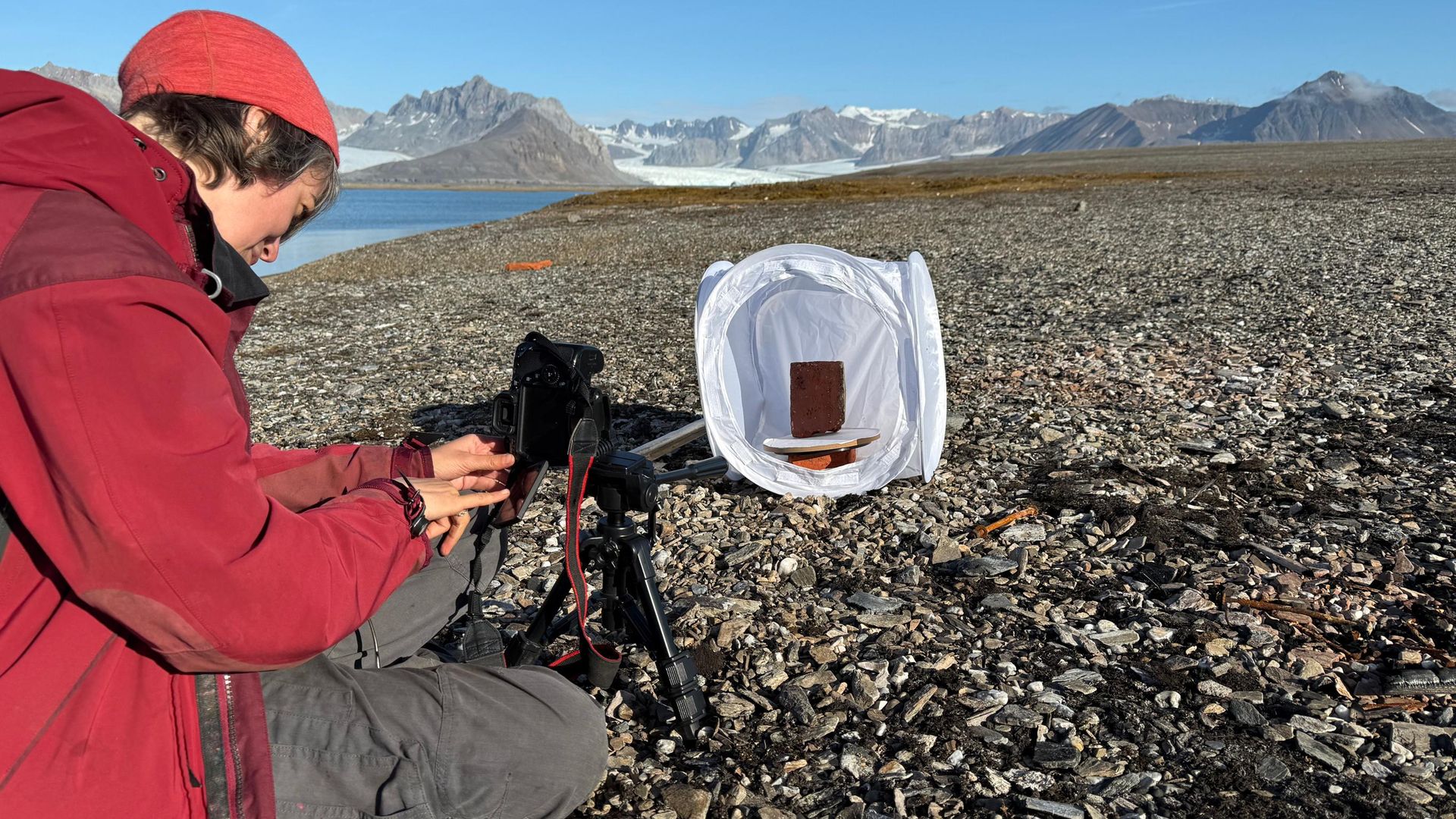
During the survey, the Ebeltofthamna Pomor site and its cemetery were examined in detail. The researchers established that the western residential complex was used for domestic and economic activities and collected surface finds, including a pectoral cross, Dutch clay smoking pipes, ceramics dating from the 17th to 19th centuries, footwear fragments, and iron objects. The finds were documented on site by creating 3D models. Dating evidence indicates that the site was established in the late 17th century and remained in use until the first half of the 19th century. The site is being rapidly damaged by coastal erosion and permafrost thaw, prompting the archaeologists to prepare a report for the Governor of Spitsbergen.
A partially exposed skull was discovered in one of the graves in the cemetery south of the settlement. The researchers created a 3D model of the skull and reconstructed the appearance of the person buried there.
At Fuglehuken Cape, Prins Karls Forland Island, the archaeologists discovered 45 burials with stone surrounds, a feature that is not characteristic of Pomor burials. The remains of a wooden cross were also found at the site. Its affiliation has yet to be established.
The researchers also documented new finds of ship timbers, including fragments of keels and frames, as well as planking sewn together with withies. Norwegian researchers previously found fragments of what is believed to be a Russian vessel at Kokerineset Cape. Russian archeologists are now negotiating access to the site to study the remains.
Members of the Spitsbergen archeological expedition also organized a one-day, 60-kilometer hike along the western coast of the archipelago. During the hike, they assessed the condition of some of the oldest Pomor sites, at Stabbelva and Gravschoen. They also monitored one of the Pomor sites closest to the settlement of Barentsburg, at Kokerineset Cape.