The Nenets Autonomous Area is a region with a northern soul where craftsmen make shamanic drums with the magic of the Arctic, women sew clothes with ethnic patterns in accordance with their forefathers’ traditions, and the chef of a local restaurant picks reindeer moss in the tundra for his signature dishes.Our correspondents visited the main cultural spots of the area, moving from its first capital to a workshop where shamanic drums are made. Their unanimous conclusion is that culture is woven into everything here.People usually begin their visit to the Nenets Autonomous Area in Naryan-Mar. But we broke this rule and went first to the village of Telviska located on the shore of the Gorodetsky Shar distributary.Established in 1574 as a trading post, Telviska was actually the first capital of the region. The first administrative authorities settled here in 1929, but the village soon became too small for them, and they gradually moved to a new workers’ settlement, Beloshchelye, which grew into the city of Naryan-Mar. Telviska lost its status as the capital, yet life didn’t come to a standstill here.Today, it is a cozy and clean village with a population of slightly more than 500 people, almost entirely surrounded by water. It’s not easy to get here in the absence of reliable land connection. People travel here by water in summer, and on an ice road in winter. However, this turns traveling there into an exciting adventure in the spirit of Arctic explorers.The first thing that catches your eye here is a building on the high bank overlooking the river. We learned its story from Vera Kudryashova, a Merited Culture Worker of the Russian Federation, who has been living in Telviska for half a century. She moved here for a work assignment after graduating from university, and stayed for good.This building is the first Nenets school for the children of the nomadic people. It opened in the former post office before moving here. No one studies here today because a new modern school opened in 2018, but the memory of the past still lives on.“Why don’t you stay and live here? You are young and full of energy. You’ll be placed on the housing waiting list, and you’ll receive it very soon. We have stage director and choreographer vacancies at our Culture House,” Vera Kudryashova said, smiling.People in Telviska are proud of their modern Prestizh social and culture center. It opened as a village reading room in 1925, and has turned into a powerful attraction for the local community nowadays.Local people say that they don’t go home after work but to the Prestizh center, where there are lots of things to keep you busy. The center is a home for over 15 creative groups. The guardian of this cultural hub, Director Galina Durkina, is especially proud of the Cherished Image project, where local women preserve the traditional fabrics and patterns of villages across the Nenets Autonomous Area, from Kurya to Makarovo, immersing you in the world of Lower Pechora culture.“People must shape themselves. You can learn everything here. Arts and culture professionals must work in a way that makes people proud of them,” Galina said.Four images of Naryan-MarWhen we returned from Telviska to Naryan-Mar, we met with Marina Kolovangina, a local lore expert with a PhD in History, who knows everything about that city. She was born here in 1958, and loves her region.We began our tour of Naryan-Mar at a viewpoint near the Pechora river port. This is where locals come to watch the ice breakup, and spring begins for them when the Pechora River clears of ice.“We come here to watch the spring coming. You stand here and see our vast expanses. When the mushroom and berry season ends in late August, people will come here to relax on the benches. There will be no gnats, and it is especially pleasant in sunny weather here. Don’t you think it looks like a painting by Isaac Levitan?” our guide said.Another place of attraction is the Viewpoint at the Kachgortinskaya Kurya Bay, with its 25-meter-tall flagpole. It opened in 2024 at people’s request.Next we moved to the heart of the city, the intersection of Smidovich and Pobeda streets, where a unique building, an architectural landmark and the unofficial symbol of Naryan-Mar stands. The Central Post Office is a regional cultural heritage site. This wooden building is far from simple. It has a conical tower, triangular windows and peaked roofs designed in the shape of a Nenets chum.Since its establishment, Naryan-Mar has gone through four look changes, from the wooden buildings moved here from nearby villages, to the pit-houses of the early 1930s, to two-floor buildings with stove heating.“We had a song about that city in the middle of the 20th century: Wooden houses, wooden sidewalks, this is our low but beloved city of Naryan-Mar,” Marina Kolovangina said brimming with enthusiasm.It remained like that until the late 1970s, when the construction of new brick two-floor districts began in the city. The first concrete high-rise houses were built here in the 21st century.“It looks like we are losing our wooden city, which old-timers remember with nostalgia. We don’t want this page in the history of Naryan-Mar to fade from people’s memory,” the local historian said with concern.Northern cuisine: Nenets ya’evey soup served with nyan bread and cloudberry cakeGastronomy is another essential part of discovering the region. At the Timan restaurant and museum, chef Pyotr Khmelenko transforms reindeer meat, fish and the bounty of the tundra into culinary works of art. Born in Orenburg, he moved to the North from the Moscow Region and, in just two years, has become an ambassador for Arctic cuisine.“It used to be a calling, and now it’s a way of life,” Pyotr says.The limited range of ingredients available locally means that products familiar in central Russia, such as stracciatella, burrata and avocado, are nowhere to be found, while working with the local selection of ingredients is more challenging.He notes that interest in Northern cuisine is currently growing. “A year ago, we were only beginning to see a rise in culinary tourism. People have had their fill of focaccia and sushi – now they want something local and truly authentic to the region.”The menu includes venison marrow bones, shulyum(a meat stew with vegetables), venison tartare, venison liver pâté, wild mushroom soup, sugudai (quick-marinated whitefish) and stroganina(thin shavings of frozen whitefish). According to the chef, the venison can even be eaten raw. The reindeer feeds exclusively on yagel (or reindeer moss), a northern lichen rich in vitamins A and C, iron, copper and iodine. The meat is tender, with no gamey aftertaste.“We collect the reindeer moss ourselves out in the tundra, choosing the best specimens before sorting and preparing them. We then dehydrate and dry the moss before soaking it in sugar syrup,” he explains.We also had an opportunity to try ya’evey, a traditional Nenets soup served with nyan bread. The broth is made with just three ingredients: venison, flour and reindeer blood. Locals traditionally drink reindeer blood as a way of boosting their immune system, and the chef says he does so himself. “I had high blood pressure, so I drank about 100 grams of reindeer blood. My pulse went back to normal, and even my gums stopped bleeding,” he recalls.Every part of the reindeer is put to use in the kitchen. The chef attributes this to a special, respectful attitude towards the animal.“For people here, reindeers are far more than livestock – they are at the heart of their culture and a vital part of life in the North. I’ve talked to reindeer herders in the tundra, and they have enormous respect for everything nature gives them. Nothing from the reindeer should go to waste – the hides are made into clothing, the antlers are used to make household items, and the blood and meat provide food. Every part of the animal is used,” the chef explains.For dessert, there is cloudberry cake. Known locally as the “royal berry” or “Arctic raspberry”, cloudberries grow in the harsh conditions of the region’s bogs. The restaurant has its own way of showcasing the berry: cloudberries are baked into the sponge cake, used to flavor the cream, and then brought together in a cloudberry cake.“In the tundra, I let my mind unwind”Pyotr Khmelenko recommends a trip to the tundra. “Everything there – mushrooms, berries – is right under your feet, and the place is teeming with life. Hares dart about, and partridges take flight. You experience a genuine sense of oneness with nature, and that’s why I can let my mind unwind in the tundra.”We take his advice and head to the Arctic Tourism Center, just 7 km from the city. Here, visitors can step inside a traditional chum(nomadic tent), see Nenets idols and a Wish Tree, try their hand at archery and tackle an obstacle course. We drink fragrant herbal tea brewed over a campfire and gather handfuls of local blueberries, known here as golubel.The only thing that puts a damper on our time in the tundra is the swarms of tiny biting flies. They get into your nose and eyes and their bites are painful. Locals tell us that the other summer months are no easier: gadflies are a nuisance in June, while July is mosquito season.Valery Gudyrev’s shamanic drumsOne of the most memorable discoveries on our trip into the tundra is Valery Gudyrev’s drum workshop. It all began when Gudyrev, then a KamAZ truck driver, started repairing worn-out drums for local shamans. Eventually, he decided to make one of his own from scratch. What began by chance turned into a labour of love that he has pursued for the past 15 years.“They are like children to me. They leave my hands and go out into the world,” the craftsman admits.He can currently make around 200 drums a month. A single large drum requires an entire reindeer hide, and each design is unique – sometimes depicting a map of the local area, sometimes a complete scene. In other regions, drums are made from goatskin or even stingray skin, but the Nenets craftsman is convinced that reindeer hide is the best material.“It’s like natural parchment – incredibly thin, but strong. And the reindeer itself is a symbol of strength,” he explains.The instrument has a comfortable handle shaped like Leonardo da Vinci’s Vitruvian Man, while the pointed elements around the frame symbolize the sun.“You see, we either go without the sun for almost two months, or in summer it simply circles the sky. People who come here for the first time, especially in summer, can’t tell where day ends and night begins,” the craftsman laughs.Valery strikes the drum, filling the air with a deep, resonant sound. He says every drum absorbs the atmosphere of its surroundings, its voice subtly shifting with the weather. There is something magical about its sound, he believes – something that can awaken both the body and also the mind, unlocking a hidden door to something deep within.“As you listen to the drum, you begin to understand the essence of things, their primordial nature,” the drum maker says enigmatically.Love at first sight As our journey through the Nenets Autonomous Area draws to an end, we cannot help but realize that there is no need to look for attractions in the conventional sense here. They are everywhere – in the buildings, the beat of shamanic drums, the flavors of Northern cuisine and, above all, in the people who call this land home. Speaking at the 2026 Youth Environmental Forum and Festival, The Arctic: The Ice Has Broken, Head of the Presidential Directorate for Social Projects Sergei Novikov said: “The most important thing for those of you visiting the Arctic for the first time is to fall in love with it and keep coming back.” For us, at least the first part has already come true.
https://en.arctic.ru/20260720/1619637.html
Арктика
info@#.ru
1
5
4.7
96
353
60
2026
Арктика
info@#.ru
1
5
4.7
96
353
60
Новости
ru-RU
https://en.arctic.ru/docs/about/copyright.html
https://xn--c1acbl2abdlkab1og.xn--p1ai/
Арктика
info@#.ru
1
5
4.7
96
353
60
Мастер по шаманским бубнам Валерий Гудырев – о своём ремесле
Мастер по шаманским бубнам Валерий Гудырев – о своём ремесле
The Nenets Autonomous Area is a region with a northern soul where craftsmen make shamanic drums with the magic of the Arctic, women sew clothes with ethnic patterns in accordance with their forefathers’ traditions, and the chef of a local restaurant picks reindeer moss in the tundra for his signature dishes.
Our correspondents visited the main cultural spots of the area, moving from its first capital to a workshop where shamanic drums are made. Their unanimous conclusion is that culture is woven into everything here.
People usually begin their visit to the Nenets Autonomous Area in Naryan-Mar. But we broke this rule and went first to the village of Telviska located on the shore of the Gorodetsky Shar distributary.
Established in 1574 as a trading post, Telviska was actually the first capital of the region. The first administrative authorities settled here in 1929, but the village soon became too small for them, and they gradually moved to a new workers’ settlement, Beloshchelye, which grew into the city of Naryan-Mar. Telviska lost its status as the capital, yet life didn’t come to a standstill here.
Today, it is a cozy and clean village with a population of slightly more than 500 people, almost entirely surrounded by water. It’s not easy to get here in the absence of reliable land connection. People travel here by water in summer, and on an ice road in winter. However, this turns traveling there into an exciting adventure in the spirit of Arctic explorers.
1/4
The shore of the Gorodetsky Shar distributary at the village of Telviska
The first thing that catches your eye here is a building on the high bank overlooking the river. We learned its story from Vera Kudryashova, a Merited Culture Worker of the Russian Federation, who has been living in Telviska for half a century. She moved here for a work assignment after graduating from university, and stayed for good.
This building is the first Nenets school for the children of the nomadic people. It opened in the former post office before moving here. No one studies here today because a new modern school opened in 2018, but the memory of the past still lives on.
“Why don’t you stay and live here? You are young and full of energy. You’ll be placed on the housing waiting list, and you’ll receive it very soon. We have stage director and choreographer vacancies at our Culture House,” Vera Kudryashova said, smiling.
People in Telviska are proud of their modern Prestizh social and culture center. It opened as a village reading room in 1925, and has turned into a powerful attraction for the local community nowadays.
Local people say that they don’t go home after work but to the Prestizh center, where there are lots of things to keep you busy. The center is a home for over 15 creative groups. The guardian of this cultural hub, Director Galina Durkina, is especially proud of the Cherished Image project, where local women preserve the traditional fabrics and patterns of villages across the Nenets Autonomous Area, from Kurya to Makarovo, immersing you in the world of Lower Pechora culture.
“People must shape themselves. You can learn everything here. Arts and culture professionals must work in a way that makes people proud of them,” Galina said.
Four images of Naryan-Mar
When we returned from Telviska to Naryan-Mar, we met with Marina Kolovangina, a local lore expert with a PhD in History, who knows everything about that city. She was born here in 1958, and loves her region.
We began our tour of Naryan-Mar at a viewpoint near the Pechora river port. This is where locals come to watch the ice breakup, and spring begins for them when the Pechora River clears of ice.
“We come here to watch the spring coming. You stand here and see our vast expanses. When the mushroom and berry season ends in late August, people will come here to relax on the benches. There will be no gnats, and it is especially pleasant in sunny weather here. Don’t you think it looks like a painting by Isaac Levitan?” our guide said.
Another place of attraction is the Viewpoint at the Kachgortinskaya Kurya Bay, with its 25-meter-tall flagpole. It opened in 2024 at people’s request.
Next we moved to the heart of the city, the intersection of Smidovich and Pobeda streets, where a unique building, an architectural landmark and the unofficial symbol of Naryan-Mar stands. The Central Post Office is a regional cultural heritage site. This wooden building is far from simple. It has a conical tower, triangular windows and peaked roofs designed in the shape of a Nenets chum.
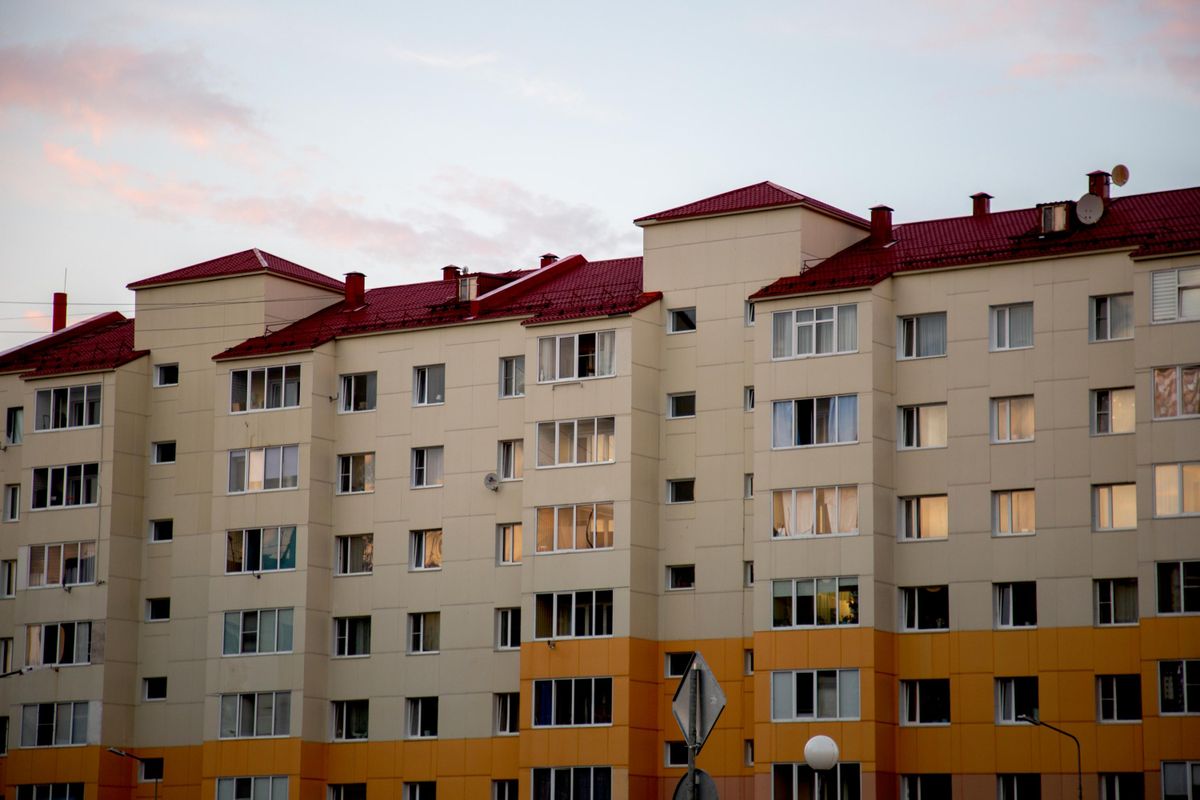
Since its establishment, Naryan-Mar has gone through four look changes, from the wooden buildings moved here from nearby villages, to the pit-houses of the early 1930s, to two-floor buildings with stove heating.
“We had a song about that city in the middle of the 20th century: Wooden houses, wooden sidewalks, this is our low but beloved city of Naryan-Mar,” Marina Kolovangina said brimming with enthusiasm.
It remained like that until the late 1970s, when the construction of new brick two-floor districts began in the city. The first concrete high-rise houses were built here in the 21st century.
“It looks like we are losing our wooden city, which old-timers remember with nostalgia. We don’t want this page in the history of Naryan-Mar to fade from people’s memory,” the local historian said with concern.
Northern cuisine: Nenets ya’evey soup served with nyan bread and cloudberry cake
Gastronomy is another essential part of discovering the region. At the Timan restaurant and museum, chef Pyotr Khmelenko transforms reindeer meat, fish and the bounty of the tundra into culinary works of art. Born in Orenburg, he moved to the North from the Moscow Region and, in just two years, has become an ambassador for Arctic cuisine.
“It used to be a calling, and now it’s a way of life,” Pyotr says.
The limited range of ingredients available locally means that products familiar in central Russia, such as stracciatella, burrata and avocado, are nowhere to be found, while working with the local selection of ingredients is more challenging.
“We are still exploring ways to adapt this rugged cuisine to a more European palate,” the chef says.
He notes that interest in Northern cuisine is currently growing. “A year ago, we were only beginning to see a rise in culinary tourism. People have had their fill of focaccia and sushi – now they want something local and truly authentic to the region.”
The menu includes venison marrow bones, shulyum(a meat stew with vegetables), venison tartare, venison liver pâté, wild mushroom soup, sugudai (quick-marinated whitefish) and stroganina(thin shavings of frozen whitefish). According to the chef, the venison can even be eaten raw. The reindeer feeds exclusively on yagel (or reindeer moss), a northern lichen rich in vitamins A and C, iron, copper and iodine. The meat is tender, with no gamey aftertaste.
“We collect the reindeer moss ourselves out in the tundra, choosing the best specimens before sorting and preparing them. We then dehydrate and dry the moss before soaking it in sugar syrup,” he explains.
We also had an opportunity to try ya’evey, a traditional Nenets soup served with nyan bread. The broth is made with just three ingredients: venison, flour and reindeer blood. Locals traditionally drink reindeer blood as a way of boosting their immune system, and the chef says he does so himself. “I had high blood pressure, so I drank about 100 grams of reindeer blood. My pulse went back to normal, and even my gums stopped bleeding,” he recalls.
Every part of the reindeer is put to use in the kitchen. The chef attributes this to a special, respectful attitude towards the animal.
“For people here, reindeers are far more than livestock – they are at the heart of their culture and a vital part of life in the North. I’ve talked to reindeer herders in the tundra, and they have enormous respect for everything nature gives them. Nothing from the reindeer should go to waste – the hides are made into clothing, the antlers are used to make household items, and the blood and meat provide food. Every part of the animal is used,” the chef explains.
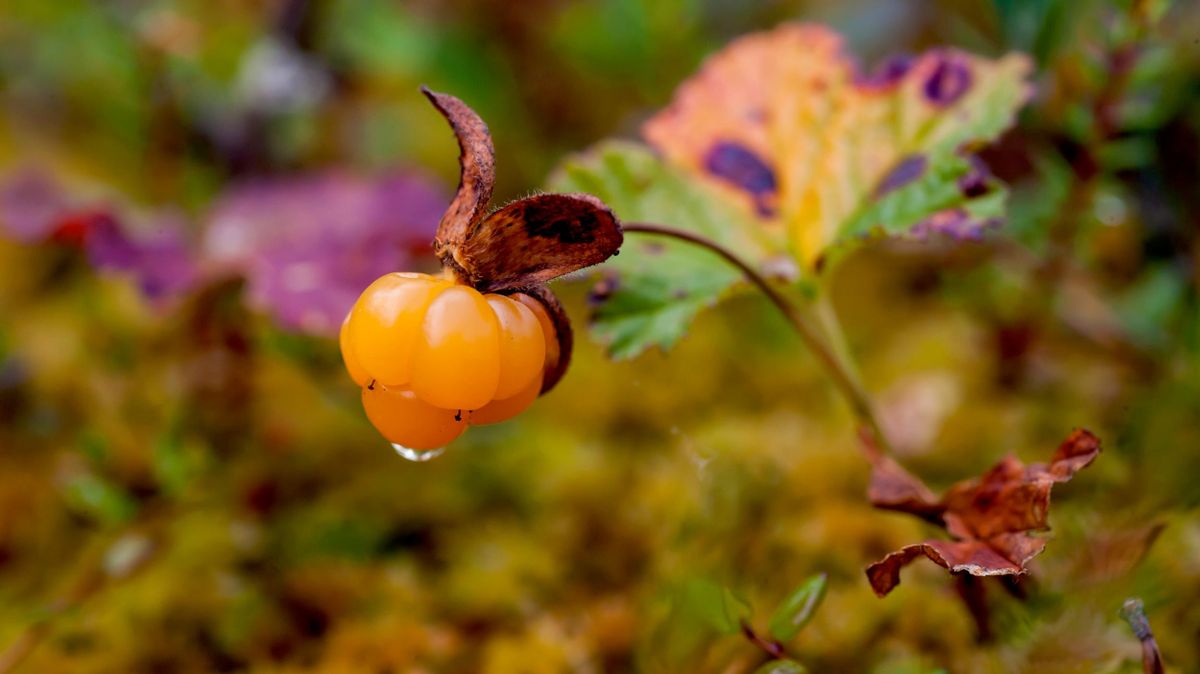
For dessert, there is cloudberry cake. Known locally as the “royal berry” or “Arctic raspberry”, cloudberries grow in the harsh conditions of the region’s bogs. The restaurant has its own way of showcasing the berry: cloudberries are baked into the sponge cake, used to flavor the cream, and then brought together in a cloudberry cake.
“In the tundra, I let my mind unwind”
Pyotr Khmelenko recommends a trip to the tundra. “Everything there – mushrooms, berries – is right under your feet, and the place is teeming with life. Hares dart about, and partridges take flight. You experience a genuine sense of oneness with nature, and that’s why I can let my mind unwind in the tundra.”
We take his advice and head to the Arctic Tourism Center, just 7 km from the city. Here, visitors can step inside a traditional chum(nomadic tent), see Nenets idols and a Wish Tree, try their hand at archery and tackle an obstacle course. We drink fragrant herbal tea brewed over a campfire and gather handfuls of local blueberries, known here as golubel.
The only thing that puts a damper on our time in the tundra is the swarms of tiny biting flies. They get into your nose and eyes and their bites are painful. Locals tell us that the other summer months are no easier: gadflies are a nuisance in June, while July is mosquito season.
Valery Gudyrev’s shamanic drums
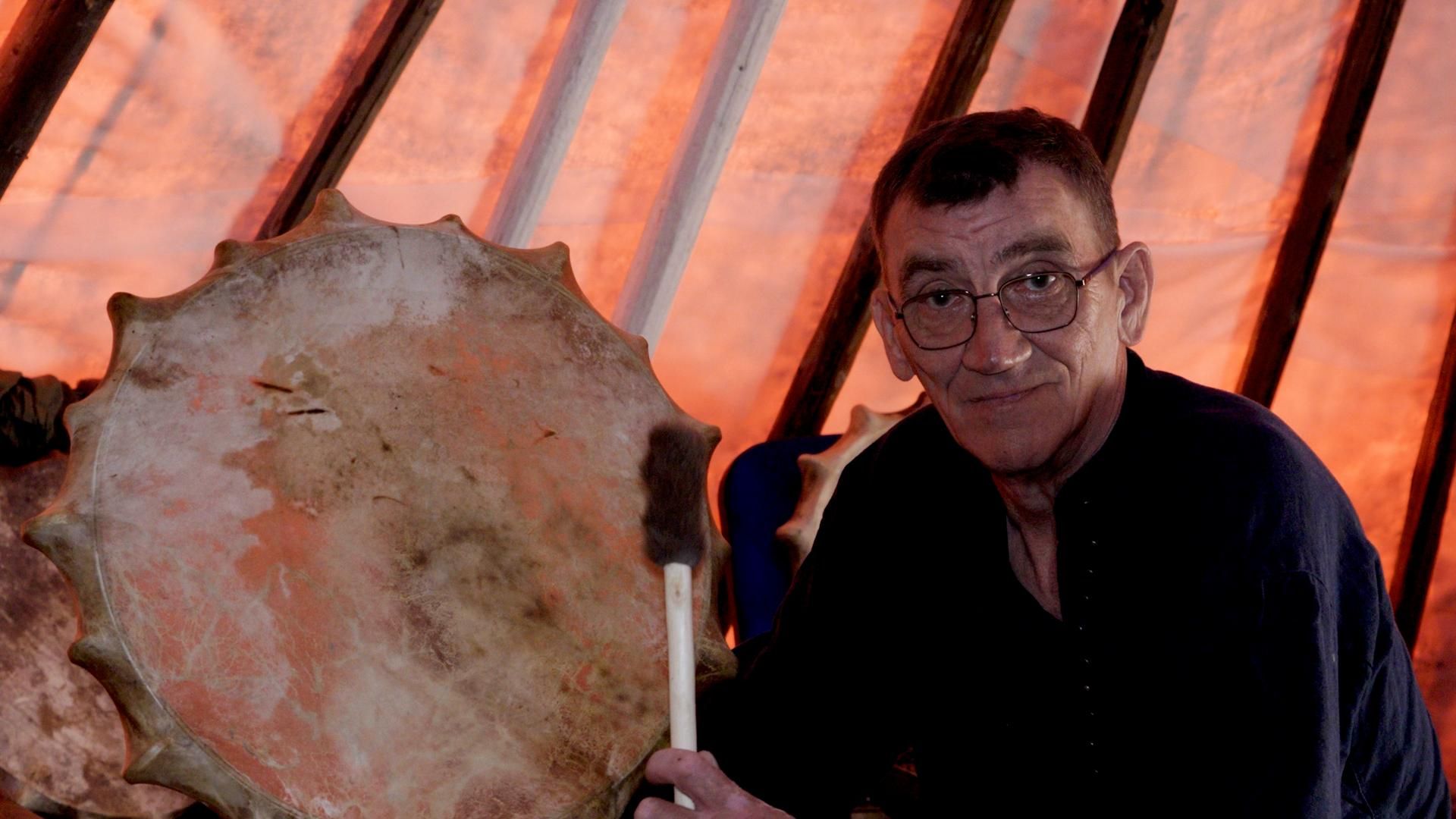
One of the most memorable discoveries on our trip into the tundra is Valery Gudyrev’s drum workshop. It all began when Gudyrev, then a KamAZ truck driver, started repairing worn-out drums for local shamans. Eventually, he decided to make one of his own from scratch. What began by chance turned into a labour of love that he has pursued for the past 15 years.
“They are like children to me. They leave my hands and go out into the world,” the craftsman admits.
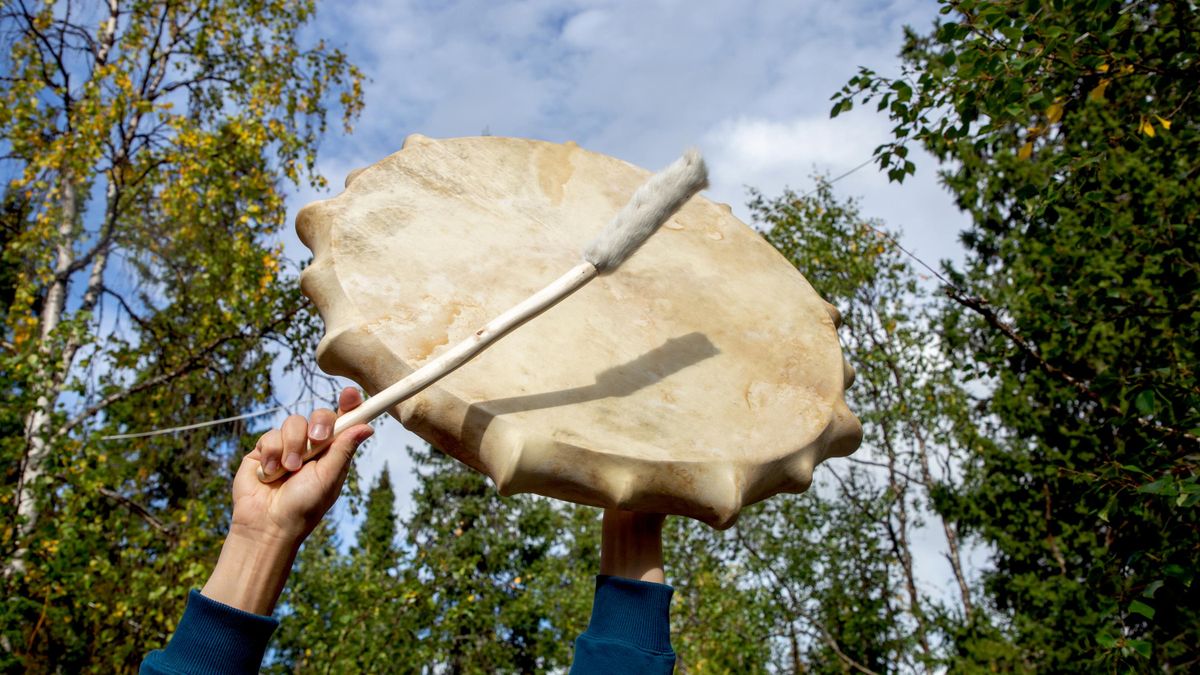
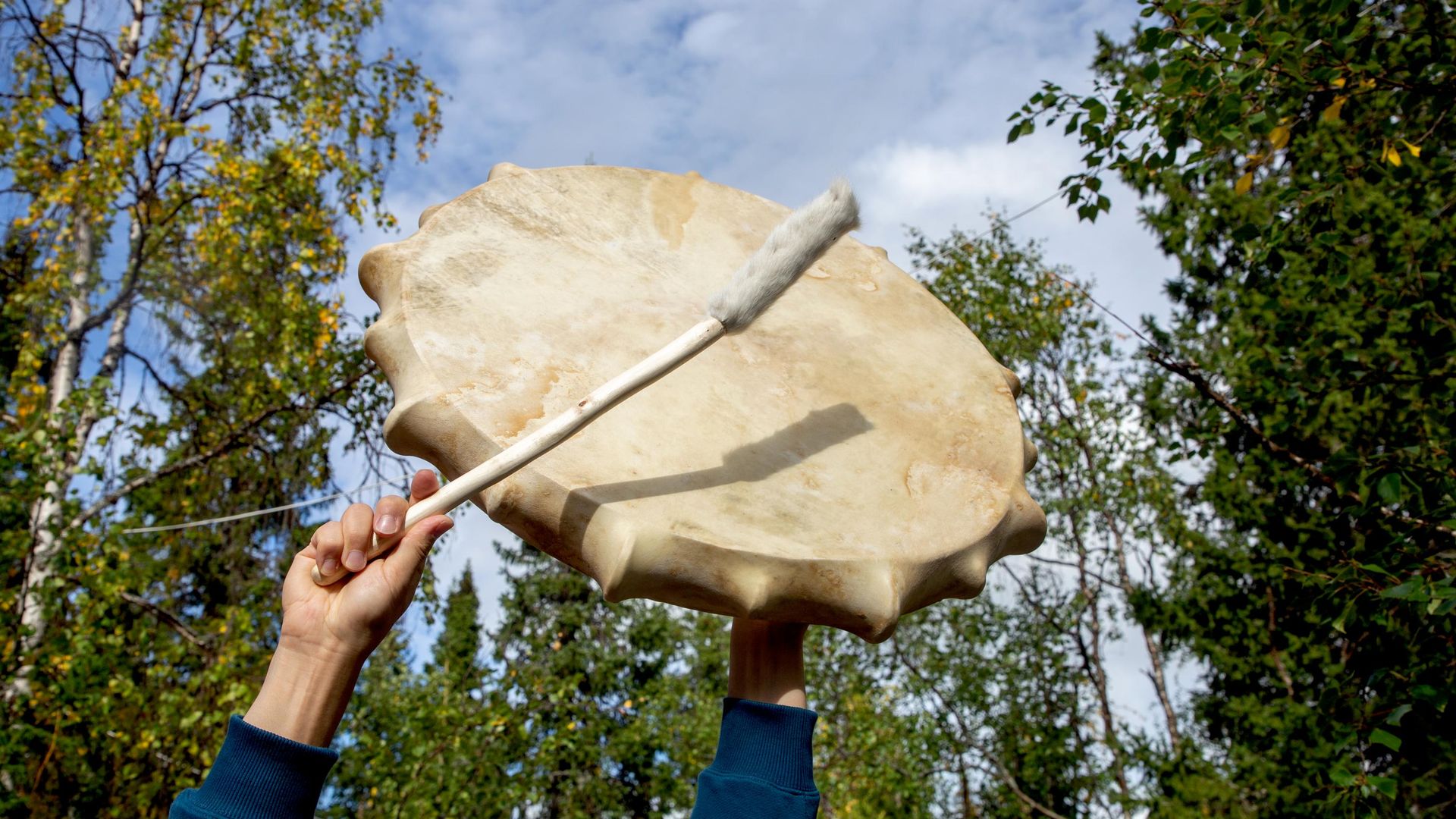
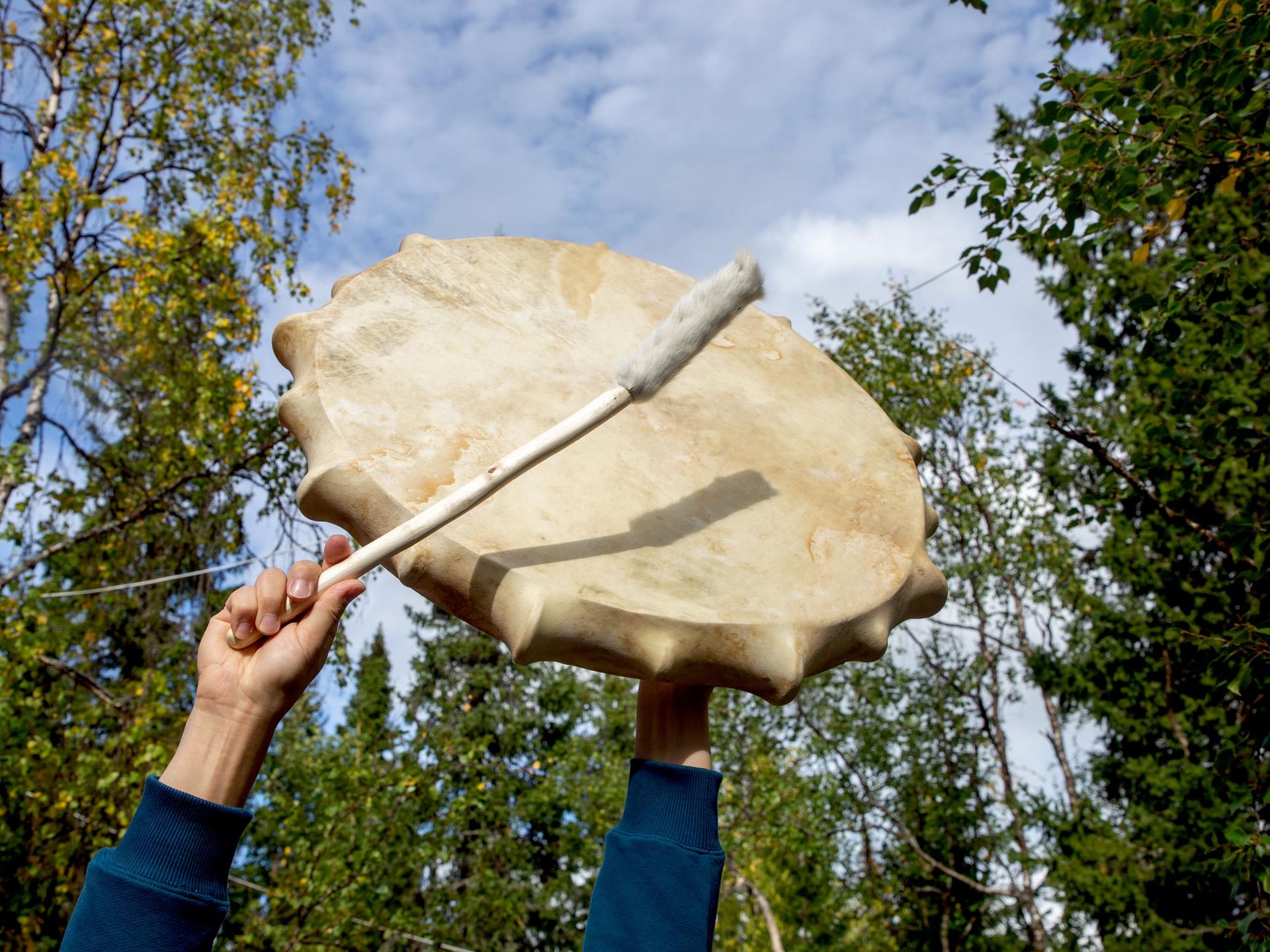
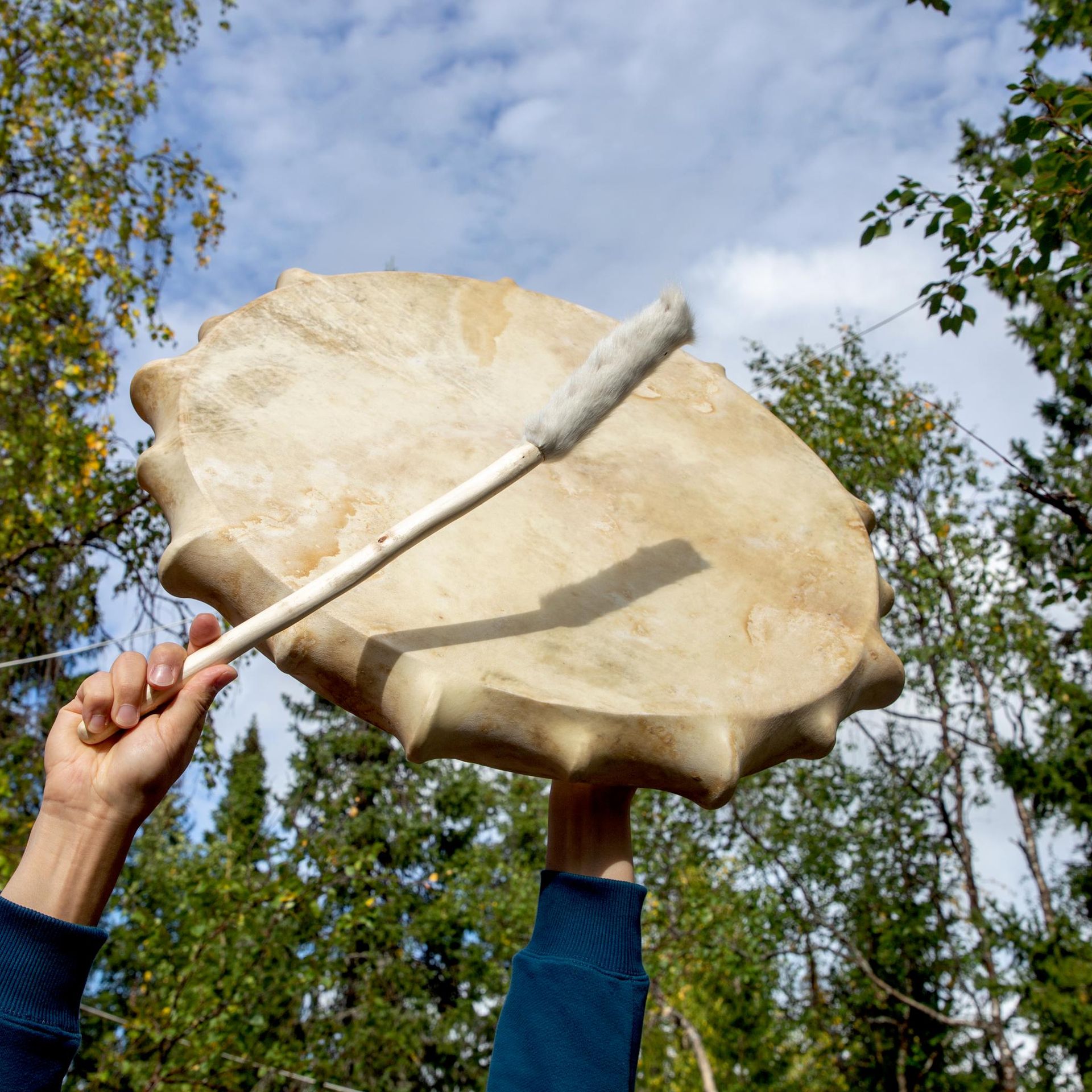
He can currently make around 200 drums a month. A single large drum requires an entire reindeer hide, and each design is unique – sometimes depicting a map of the local area, sometimes a complete scene. In other regions, drums are made from goatskin or even stingray skin, but the Nenets craftsman is convinced that reindeer hide is the best material.
“It’s like natural parchment – incredibly thin, but strong. And the reindeer itself is a symbol of strength,” he explains.
The instrument has a comfortable handle shaped like Leonardo da Vinci’s Vitruvian Man, while the pointed elements around the frame symbolize the sun.
“You see, we either go without the sun for almost two months, or in summer it simply circles the sky. People who come here for the first time, especially in summer, can’t tell where day ends and night begins,” the craftsman laughs.
1/6
Valery Gudyrev prepares materials for making shamanic drum
Valery strikes the drum, filling the air with a deep, resonant sound. He says every drum absorbs the atmosphere of its surroundings, its voice subtly shifting with the weather. There is something magical about its sound, he believes – something that can awaken both the body and also the mind, unlocking a hidden door to something deep within.
“As you listen to the drum, you begin to understand the essence of things, their primordial nature,” the drum maker says enigmatically.
Love at first sight
As our journey through the Nenets Autonomous Area draws to an end, we cannot help but realize that there is no need to look for attractions in the conventional sense here. They are everywhere – in the buildings, the beat of shamanic drums, the flavors of Northern cuisine and, above all, in the people who call this land home.
Speaking at the 2026 Youth Environmental Forum and Festival, The Arctic: The Ice Has Broken, Head of the Presidential Directorate for Social Projects Sergei Novikov said: “The most important thing for those of you visiting the Arctic for the first time is to fall in love with it and keep coming back.” For us, at least the first part has already come true.