https://en.arctic.ru
Irina Gekht: New oil fields mean hundreds of jobs and infrastructure development
Irina Gekht: New oil fields mean hundreds of jobs and infrastructure development
Arctic.ru: Discover how Russia implements its development goals in the Arctic and the Far East
2026-09-07T09:51
2026-09-07T09:51
2026-09-08T18:40
expert opinion
nenets autonomous area
/img/07ea/09/08/1729195_0:0:3640:2048_1920x0_80_0_0_8d5d7473bb980f277407116a816901bd.png
The Nenets Autonomous Okrug is preparing for the launch of two major oil fields — Layavozhskoye and Komandirshorskoye. They will provide the region with hundreds of new jobs and contribute to the development of social infrastructure. Furthermore, to develop the port of Indiga, there are plans to build an oil transshipment terminal and a railway to Sosnogorsk.In an interview with the Arctic.ru portal, the Governor of the Nenets Autonomous Okrug, Irina Gekht, spoke about personnel training for the region, plans to reduce dependence on Northern deliveries, and the future of the port of Indiga.Arctic.ru: Irina Alfredovna, what are the main tasks currently being addressed in the Nenets AO?Irina Gekht: First and foremost, economic ones. As I’ve recently discussed with Vladimir Vladimirovich Putin, the natural path of development for our region lies in expanding oil and gas production. Two major fields — Layavozhskoye and Komandirshorskoye — will begin production in the very near future. Naturally, this means hundreds of new jobs, infrastructure, and projects related to education and healthcare, because oil workers need medical care and education, and such a large number of new jobs requires supporting services. Therefore, without a doubt, economic development invariably drives infrastructure development, including transportation.The second task is improving regional connectivity. In terms of air travel, we have already expanded our flight network and added several new routes. We now have flights to Yaroslavl and Khanty-Mansiysk—the latter being important because its economic structure is very similar to ours. We hope our youth will also go on to study at universities in Khanty-Mansiysk, which offer the exact specialized training that our economy requires. We have also added Perm and launched a direct flight to Sochi, which we didn't have before. People are thrilled that they can now fly straight south for their vacations without any layovers.Arctic.ru: What are the current priorities in the social sector?Gekht: Healthcare is one of the most important issues residents raised when I first arrived here. Over the past year, we have recruited 24 doctors and 5 paramedics — which I consider a very significant number — and they are primarily highly specialized doctors. We have started performing complex surgeries that were never done here before, including urological and arthroscopic procedures.Starting next year, we will also have cardiology services, as we have purchased an angiograph. Consequently, all care concerning cardiovascular emergencies and their prevention will be handled within the okrug, without the need to transport patients to neighboring regions. The 'golden hour' principle—which was previously sometimes compromised by having to wait for long medical evacuation flights—will now be strictly observed, which will positively impact both the life expectancy and the quality of life of our residents.In terms of education, it is important for us to restructure the range of specialties currently offered in secondary vocational education so that they align with labor market forecasts. Primarily, this includes everything related to oil and gas extraction, as well as the housing and utilities sector. Another major employer driving demand for personnel is our airport and the okrug aviation detachment.We are planning to open specialized classes in this field as well, allowing children to focus on choosing a profession that is in high demand within the okrug while they are still in school.Arctic.ru: Will the region be able to achieve full self-sufficiency and become independent of Northern deliveries?Gekht: At this stage, we cannot survive without Northern deliveries—this is simply a reality for all northern territories. However, we are trying to reduce this dependence, in part by utilizing technologies currently used at oil fields. For example, alternative energy sources—such as heat pumps, wind power, and solar generation—which are currently being installed in the settlement of Khorey-Ver.If this pilot project is successful, we will try to implement it in other settlements as well. This will reduce our dependence and yield resource savings, which will have a fairly positive impact on the overall structure of Northern deliveries. Additionally, we are planning to transition our transportation to natural gas, which is extracted locally but is not currently being used as fuel.We partially ensure our food security using our own resources. Primarily, this involves venison, the vast majority of which is directed toward internal consumption. As for dairy, we have a regional plant that produces a full line of these goods. Furthermore, many products are brought in from the Komi Republic and other regions, and these are also in high demand here.Any production here—given the small population, vast distances, and the complexity and high cost of logistics—will require additional budget subsidies. The important thing here is to find a balance that allows us to meet all the needs of local residents while at the same time managing the region's resources wisely.Arctic.ru: What projects are currently in place to attract personnel to the Nenets AO?Gekht: There aren't that many romantics who are willing to come to the North simply out of a desire to make a contribution, although they do exist. Ultimately, just as in Soviet times, people are drawn by higher salaries, which make trading a favorable climate for a harsher one worthwhile. Therefore, we are certainly pinning our hopes on the development of oil and gas extraction, which guarantees a sufficiently high level of wages.Today, this is an industry that is implementing the latest technologies. It is highly knowledge-intensive, packed with modern technology, and highly digitized—which makes it very appealing to young people. This synergy of high technology and high salaries—coupled with our efforts to create high-quality living conditions here—will allow us to attract personnel. The main thing is that our young people don't leave to work as waiters in St. Petersburg cafes, but instead acquire a profession that will enable them to find a job and earn a decent living right here in the okrug.Our objectives in personnel policy include introducing new specialties within the vocational education system, joining the 'Professionalitet' program in partnership with oil companies, and establishing training laboratories here so that students can start working right from their first years of study. Naturally, this also applies to 'person-to-person' professions: we train paramedics and teachers here, who are also in high demand in the okrug.Arctic.ru: How are agriculture and the agro-industrial complex supported in the region?Gekht: We spend around 500 million rubles just on subsidizing reindeer herding: this covers production and preservation, pedigree animal husbandry, and subsidies per kilogram of meat. We also have the highest milk subsidy in the country at 75 rubles per liter. Therefore, essentially, everything related to agriculture here is heavily subsidized by the budget.At the same time, however, we consider this our advantage, because we have preserved all the Soviet-era technologies and GOSTs (state standards) used in food production. For example, our dairy products are made using natural milk fungi (kefir grains) rather than standard commercial starter cultures. In other words, these are natural technologies that ensure a high-quality product. Therefore, in addition to oil and gas, we count our clean air, water, and the extremely high-quality food products we produce here among our region's greatest treasures.Arctic.ru: What are your plans for the development of the port of Indiga?Gekht: I believe there is a good reason why this project was always included in the development strategies for the Arctic zone during Soviet times: it boasts great depths of nearly 25 meters and ice-free waters, thanks to warm incoming currents, or at most, sparse ice of only 15 to 30 centimeters. This minimizes the need for an icebreaker fleet to operate the port, which is a significant expense in and of itself.We have calculated a model that envisions a phased approach. The first phase is an oil transshipment terminal, which requires an investment of around 10 billion rubles. Today, our task is to find investors willing to take on this mission. We already have interested parties.The next phase is the railway to Sosnogorsk, which will enable us to handle container shipments here, as the port's depths easily allow for it. In turn, resources such as ore could be transported to the Komi Republic for further processing.It is a huge victory for us that we have been included in the Trans-Arctic transport corridor, alongside the ports of Murmansk and Arkhangelsk. Therefore, our task right now is to find an anchor investor, secure a resource base to ensure the port operates at capacity, and drive its further development. This undoubtedly opens up prospects for the development of the okrug as well, because the thousands of people who will arrive to build and operate the port will create additional opportunities for regional development.
https://en.arctic.ru/20260817/1685652.html
https://en.arctic.ru/20260821/1694736.html
https://en.arctic.ru/20260515/1480543.html
2026
Новости
ru-RU
https://en.arctic.ru/docs/about/copyright.html
https://xn--c1acbl2abdlkab1og.xn--p1ai/
/img/07ea/09/08/1729195_0:0:2732:2048_1920x0_80_0_0_9fb04b231a5f98358ff5ca29ea7b193b.pngexpert opinion, nenets autonomous area
The Nenets Autonomous Okrug is preparing for the launch of two major oil fields — Layavozhskoye and Komandirshorskoye. They will provide the region with hundreds of new jobs and contribute to the development of social infrastructure. Furthermore, to develop the port of Indiga, there are plans to build an oil transshipment terminal and a railway to Sosnogorsk.
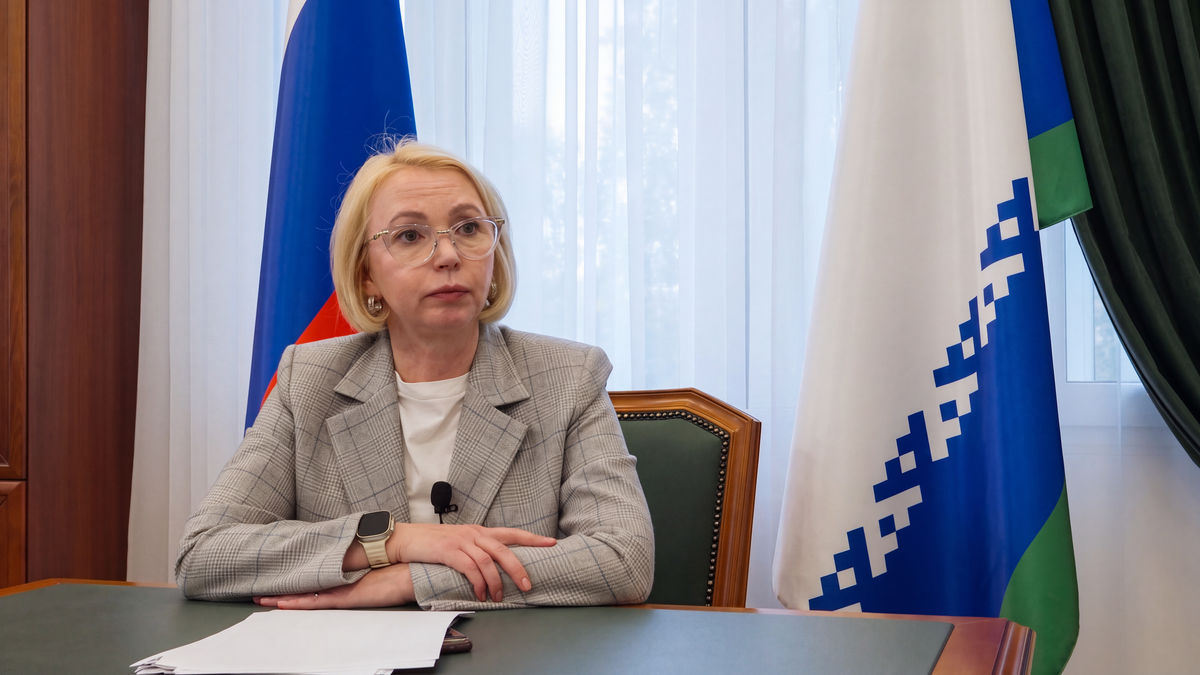
In an interview with the Arctic.ru portal, the Governor of the Nenets Autonomous Okrug, Irina Gekht, spoke about personnel training for the region, plans to reduce dependence on Northern deliveries, and the future of the port of Indiga.
Arctic.ru: Irina Alfredovna, what are the main tasks currently being addressed in the Nenets AO?
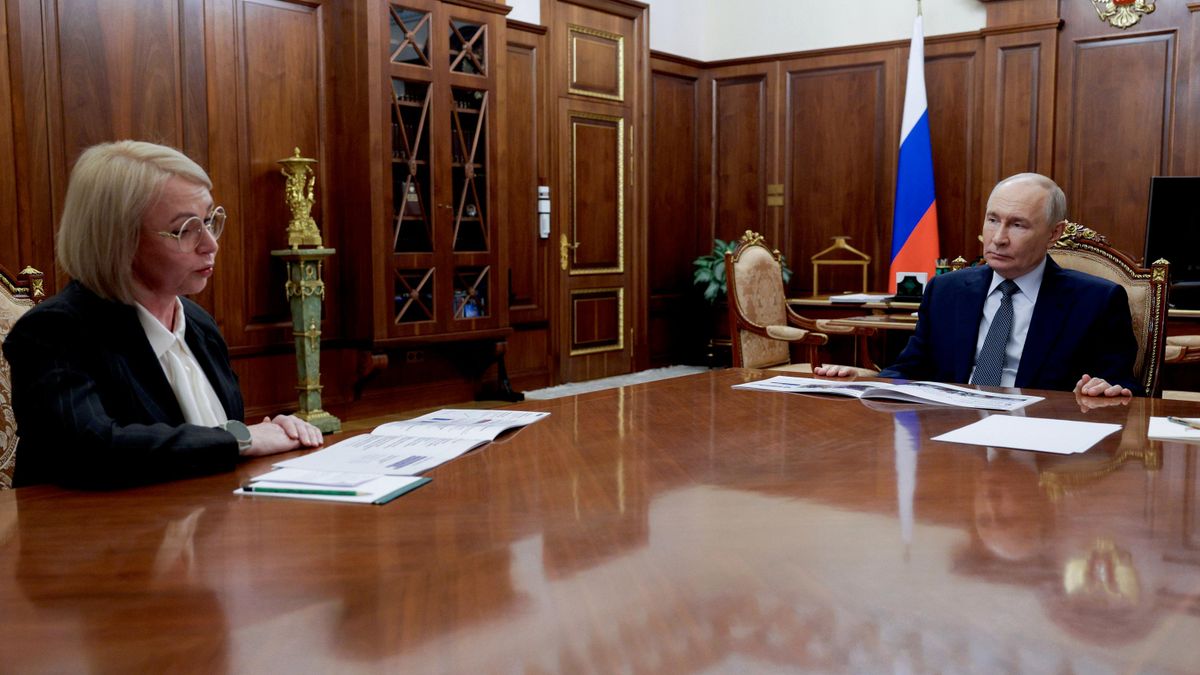
Irina Gekht: First and foremost, economic ones. As I’ve recently discussed with Vladimir Vladimirovich Putin, the natural path of development for our region lies in expanding oil and gas production. Two major fields — Layavozhskoye and Komandirshorskoye — will begin production in the very near future. Naturally, this means hundreds of new jobs, infrastructure, and projects related to education and healthcare, because oil workers need medical care and education, and such a large number of new jobs requires supporting services. Therefore, without a doubt, economic development invariably drives infrastructure development, including transportation.
The second task is improving regional connectivity. In terms of air travel, we have already expanded our flight network and added several new routes. We now have flights to Yaroslavl and Khanty-Mansiysk—the latter being important because its economic structure is very similar to ours. We hope our youth will also go on to study at universities in Khanty-Mansiysk, which offer the exact specialized training that our economy requires. We have also added Perm and launched a direct flight to Sochi, which we didn't have before. People are thrilled that they can now fly straight south for their vacations without any layovers.
Arctic.ru: What are the current priorities in the social sector?
Gekht: Healthcare is one of the most important issues residents raised when I first arrived here. Over the past year, we have recruited 24 doctors and 5 paramedics — which I consider a very significant number — and they are primarily highly specialized doctors. We have started performing complex surgeries that were never done here before, including urological and arthroscopic procedures.
Starting next year, we will also have cardiology services, as we have purchased an angiograph. Consequently, all care concerning cardiovascular emergencies and their prevention will be handled within the okrug, without the need to transport patients to neighboring regions. The 'golden hour' principle—which was previously sometimes compromised by having to wait for long medical evacuation flights—will now be strictly observed, which will positively impact both the life expectancy and the quality of life of our residents.
In terms of education, it is important for us to restructure the range of specialties currently offered in secondary vocational education so that they align with labor market forecasts. Primarily, this includes everything related to oil and gas extraction, as well as the housing and utilities sector. Another major employer driving demand for personnel is our airport and the okrug aviation detachment.
We are planning to open specialized classes in this field as well, allowing children to focus on choosing a profession that is in high demand within the okrug while they are still in school.
Arctic.ru: Will the region be able to achieve full self-sufficiency and become independent of Northern deliveries?
Gekht: At this stage, we cannot survive without Northern deliveries—this is simply a reality for all northern territories. However, we are trying to reduce this dependence, in part by utilizing technologies currently used at oil fields. For example, alternative energy sources—such as heat pumps, wind power, and solar generation—which are currently being installed in the settlement of Khorey-Ver.
If this pilot project is successful, we will try to implement it in other settlements as well. This will reduce our dependence and yield resource savings, which will have a fairly positive impact on the overall structure of Northern deliveries. Additionally, we are planning to transition our transportation to natural gas, which is extracted locally but is not currently being used as fuel.
We partially ensure our food security using our own resources. Primarily, this involves venison, the vast majority of which is directed toward internal consumption. As for dairy, we have a regional plant that produces a full line of these goods. Furthermore, many products are brought in from the Komi Republic and other regions, and these are also in high demand here.
Any production here—given the small population, vast distances, and the complexity and high cost of logistics—will require additional budget subsidies. The important thing here is to find a balance that allows us to meet all the needs of local residents while at the same time managing the region's resources wisely.
Arctic.ru: What projects are currently in place to attract personnel to the Nenets AO?
Gekht: There aren't that many romantics who are willing to come to the North simply out of a desire to make a contribution, although they do exist. Ultimately, just as in Soviet times, people are drawn by higher salaries, which make trading a favorable climate for a harsher one worthwhile. Therefore, we are certainly pinning our hopes on the development of oil and gas extraction, which guarantees a sufficiently high level of wages.
Today, this is an industry that is implementing the latest technologies. It is highly knowledge-intensive, packed with modern technology, and highly digitized—which makes it very appealing to young people. This synergy of high technology and high salaries—coupled with our efforts to create high-quality living conditions here—will allow us to attract personnel. The main thing is that our young people don't leave to work as waiters in St. Petersburg cafes, but instead acquire a profession that will enable them to find a job and earn a decent living right here in the okrug.
Our objectives in personnel policy include introducing new specialties within the vocational education system, joining the 'Professionalitet' program in partnership with oil companies, and establishing training laboratories here so that students can start working right from their first years of study. Naturally, this also applies to 'person-to-person' professions: we train paramedics and teachers here, who are also in high demand in the okrug.
Arctic.ru: How are agriculture and the agro-industrial complex supported in the region?
Gekht: We spend around 500 million rubles just on subsidizing reindeer herding: this covers production and preservation, pedigree animal husbandry, and subsidies per kilogram of meat. We also have the highest milk subsidy in the country at 75 rubles per liter. Therefore, essentially, everything related to agriculture here is heavily subsidized by the budget.
At the same time, however, we consider this our advantage, because we have preserved all the Soviet-era technologies and GOSTs (state standards) used in food production. For example, our dairy products are made using natural milk fungi (kefir grains) rather than standard commercial starter cultures. In other words, these are natural technologies that ensure a high-quality product. Therefore, in addition to oil and gas, we count our clean air, water, and the extremely high-quality food products we produce here among our region's greatest treasures.
Arctic.ru: What are your plans for the development of the port of Indiga?
Gekht: I believe there is a good reason why this project was always included in the development strategies for the Arctic zone during Soviet times: it boasts great depths of nearly 25 meters and ice-free waters, thanks to warm incoming currents, or at most, sparse ice of only 15 to 30 centimeters. This minimizes the need for an icebreaker fleet to operate the port, which is a significant expense in and of itself.
We have calculated a model that envisions a phased approach. The first phase is an oil transshipment terminal, which requires an investment of around 10 billion rubles. Today, our task is to find investors willing to take on this mission. We already have interested parties.
The next phase is the railway to Sosnogorsk, which will enable us to handle container shipments here, as the port's depths easily allow for it. In turn, resources such as ore could be transported to the Komi Republic for further processing.
It is a huge victory for us that we have been included in the Trans-Arctic transport corridor, alongside the ports of Murmansk and Arkhangelsk. Therefore, our task right now is to find an anchor investor, secure a resource base to ensure the port operates at capacity, and drive its further development. This undoubtedly opens up prospects for the development of the okrug as well, because the thousands of people who will arrive to build and operate the port will create additional opportunities for regional development.