https://en.arctic.ru
Year-round fresh produce: How Arctic logistics are evolving
Year-round fresh produce: How Arctic logistics are evolving
Arctic.ru: Discover how Russia implements its development goals in the Arctic and the Far East
2026-07-29T10:00
2026-07-29T10:00
2026-07-30T20:13
expert opinion
republic of sakha (yakutia)
infrastructure
strategy implementation
/img/07ea/07/17/1632568_0:83:3380:1984_1920x0_80_0_0_67be560d946994d5bb06993b11f97d80.jpg
In Yakutia, a project to create a network of logistics and supply hubs across the republic’s Arctic regions has been completed. The initiative was included as a separate item in the regional section of the Arctic Development Strategy Through 2035. Saidam Stepanov, CEO of the Arctic Trade and Logistics Company (ATLC), which manages the hubs, spoke to Arctic.ru about the network’s purpose and how it is organized.Since the project’s launch, 13 logistics and supply hubs have been built in Yakutia – one for each of the republic’s Arctic districts. Their primary mission is to ensure uninterrupted year-round deliveries of essential products to remote communities and to maintain sufficient stocks of socially important food items for hard-to-reach municipalities throughout the year.The need for change, he said, had been building for some time. The first step came in 2019 with the merger of two regional enterprises – one formally responsible for transport, the other for trade – which had partially overlapping functions. The result was ATLC, which consolidated the transportation, storage, and distribution of food products across the republic’s Arctic districts, while also handling the outbound shipment of local products to markets beyond the Arctic.The merger yielded tangible results: thanks to a shift to multimodal transportation and overall logistics optimization, delivery volumes to Arctic municipalities increased significantly. However, a new challenge emerged – the supplied food required better storage conditions, while depreciation of existing warehouse facilities, according to experts, exceeded 55 percent.According to him, the new Arctic logistics and supply hubs are sophisticated, state-of-the-art facilities with automated equipment, providing the necessary conditions for long-term storage of food and other essential goods. The vegetable storage units are equipped with microclimate control systems, humidification, and temperature regulation. The cold storage rooms, featuring automatic air exhaust, are fitted with sensors to monitor ethylene and carbon dioxide levels.The expanded storage capacity, in turn, has allowed for a significant increase in the range of delivered products – from 70 to 400 items. Product selection is based on analysis of local needs and requests, so as not to occupy space with unpopular goods.Stepanov noted that local residents’ taste preferences, demographic composition, and the economic specifics of each district are also taken into account when planning procurement.“For example, communities specializing in livestock farming don't require large quantities of canned meat,” he explained. “Jams and preserves aren’t popular in areas rich in wild plants – they have their own reserves.”The creation of the hub network has also made logistics more efficient. During the summer and fall, small aircraft, boats, and all-terrain vehicles are used to supply food to residents of hard-to-reach Arctic communities. Small vessels capable of operating during shallow water periods were also built specifically for work on the Kolyma River. As a result, service coverage expanded from 19 to 45 communities during off-road periods.Another function of the hubs is to support local traditional crafts. Workshops for processing raw materials have been established at the facilities, along with a distribution system for products made by indigenous peoples of the North.He also noted that the project’s success has been recognized at the federal level: the system operating in Yakutia, even while still in its infancy, served as the prototype for the recently adopted federal law on northern supply haul.
2026
Новости
ru-RU
https://en.arctic.ru/docs/about/copyright.html
https://xn--c1acbl2abdlkab1og.xn--p1ai/
/img/07ea/07/17/1632568_431:0:3162:2048_1920x0_80_0_0_0ca94eb281b0a5763cfb0c35b972d482.jpgexpert opinion, republic of sakha (yakutia), infrastructure, strategy implementation
In Yakutia, a project to create a network of logistics and supply hubs across the republic’s Arctic regions has been completed. The initiative was included as a separate item in the regional section of the Arctic Development Strategy Through 2035. Saidam Stepanov, CEO of the Arctic Trade and Logistics Company (ATLC), which manages the hubs, spoke to Arctic.ru about the network’s purpose and how it is organized.
Since the project’s launch, 13 logistics and supply hubs have been built in Yakutia – one for each of the republic’s Arctic districts. Their primary mission is to ensure uninterrupted year-round deliveries of essential products to remote communities and to maintain sufficient stocks of socially important food items for hard-to-reach municipalities throughout the year.
“The population of the Arctic zone is highly dependent on the state northern supply system for food, fuel, equipment, and materials,” Stepanov explained. “This dependence is due to challenging natural and climatic conditions, the lack of local production capacity for many industrial and most agricultural goods, and the remoteness and underdeveloped transport infrastructure.”
The need for change, he said, had been building for some time. The first step came in 2019 with the merger of two regional enterprises – one formally responsible for transport, the other for trade – which had partially overlapping functions. The result was ATLC, which consolidated the transportation, storage, and distribution of food products across the republic’s Arctic districts, while also handling the outbound shipment of local products to markets beyond the Arctic.
The merger yielded tangible results: thanks to a shift to multimodal transportation and overall logistics optimization, delivery volumes to Arctic municipalities increased significantly. However, a new challenge emerged – the supplied food required better storage conditions, while depreciation of existing warehouse facilities, according to experts, exceeded 55 percent.
“To ensure proper storage conditions for the supplied goods, a decision was made to build modern facilities equipped with vegetable storage, cold storage rooms, warehouses, and large sales areas,” said Stepanov.
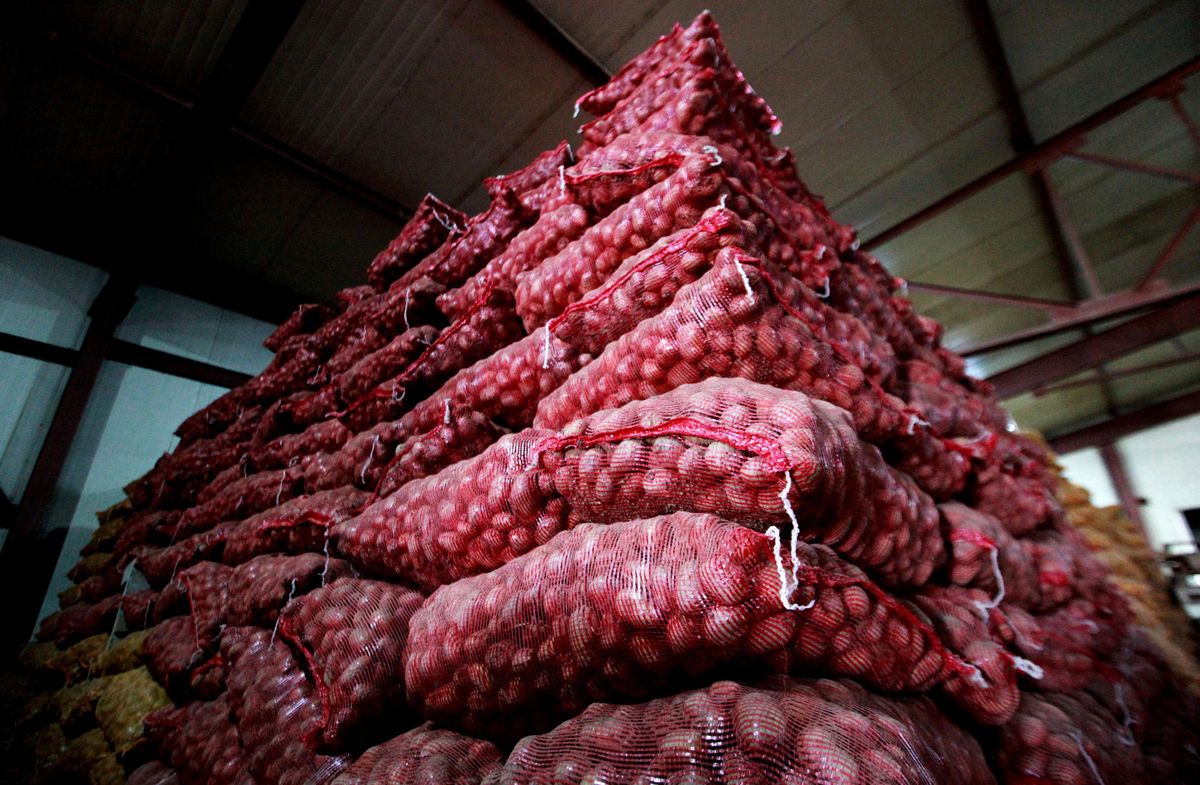
According to him, the new Arctic logistics and supply hubs are sophisticated, state-of-the-art facilities with automated equipment, providing the necessary conditions for long-term storage of food and other essential goods. The vegetable storage units are equipped with microclimate control systems, humidification, and temperature regulation. The cold storage rooms, featuring automatic air exhaust, are fitted with sensors to monitor ethylene and carbon dioxide levels.
The expanded storage capacity, in turn, has allowed for a significant increase in the range of delivered products – from 70 to 400 items. Product selection is based on analysis of local needs and requests, so as not to occupy space with unpopular goods.
Stepanov noted that local residents’ taste preferences, demographic composition, and the economic specifics of each district are also taken into account when planning procurement.
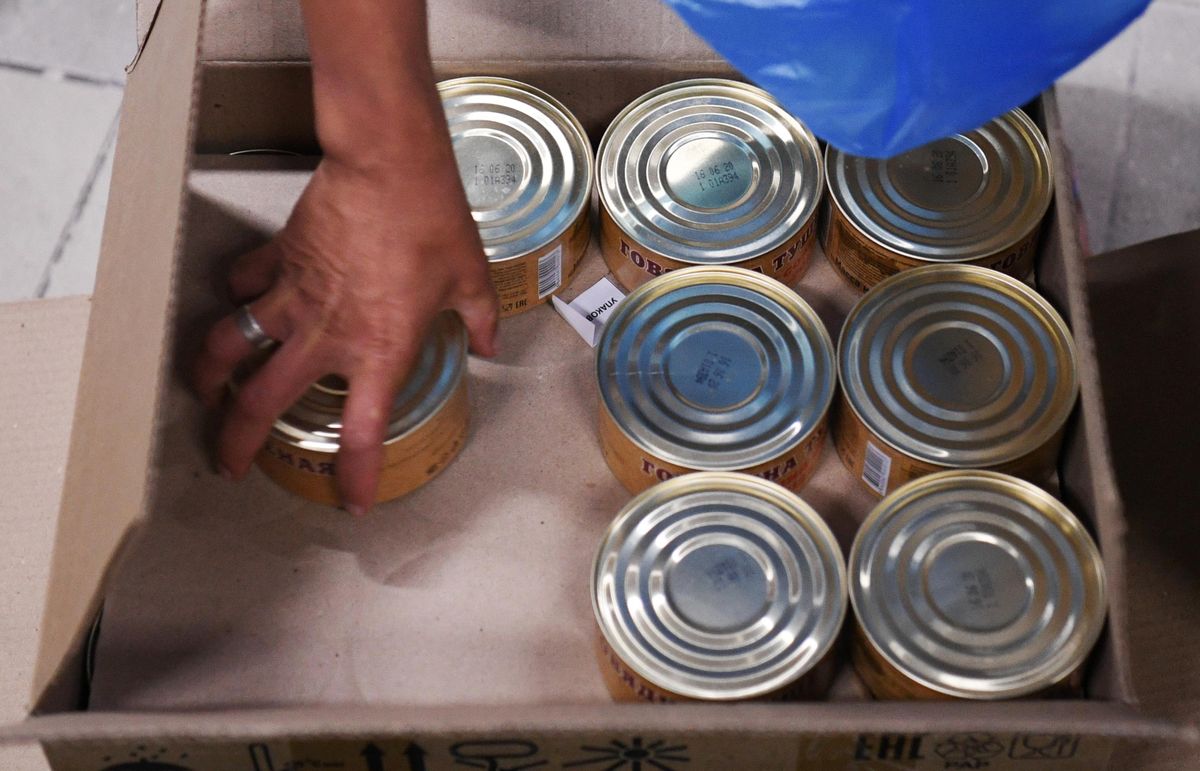
“For example, communities specializing in livestock farming don't require large quantities of canned meat,” he explained. “Jams and preserves aren’t popular in areas rich in wild plants – they have their own reserves.”
The creation of the hub network has also made logistics more efficient. During the summer and fall, small aircraft, boats, and all-terrain vehicles are used to supply food to residents of hard-to-reach Arctic communities. Small vessels capable of operating during shallow water periods were also built specifically for work on the Kolyma River. As a result, service coverage expanded from 19 to 45 communities during off-road periods.
“Previously, these communities were supplied with food products only once a year – during the winter road season,” Stepanov noted. “The role of the logistics and supply hubs in this chain is to preserve perishable goods during the navigation period, followed by their shipment and delivery by alternative modes of transport – both within the Arctic districts where the hubs are based and to neighboring regions where navigation is impossible due to low water levels.”
Another function of the hubs is to support local traditional crafts. Workshops for processing raw materials have been established at the facilities, along with a distribution system for products made by indigenous peoples of the North.
“Our main goal is to ensure equal conditions and quality of life for all residents of the Sakha Republic (Yakutia),” Stepanov emphasized. “We strive to ensure that products delivered to the Arctic are affordable to everyone and are of the same quality as those in Russia’s central regions.”
He also noted that the project’s success has been recognized at the federal level: the system operating in Yakutia, even while still in its infancy, served as the prototype for the recently adopted federal law on northern supply haul.