On Arctic Day, experts, artists, travelers, actors, adults and children gathered on Chistoprudny Boulevard to celebrate the day in three different venues, each appealing to a different audience.Our correspondent went to the boulevard, spending several hours at the edge of the earth without leaving Moscow to see firsthand what makes the Arctic such a powerful source of inspiration.The Krug (Circle) Stage served as the festival’s main discussion venue. Experts gathered there to discuss the interconnection of dry scientific data with artistic interpretation of the North. They also discussed how culture helps us understand the mysterious nature of the High Latitudes, and why Russia needs the Arctic.The roundtable discussion began with a video address by traveler and film director Leonid Kruglov from Wrangel Island. He began work on his debut film about the Arctic seven years ago, and has been exploring the Polar region ever since. Engrossed in the topic, he started working on his second film.Pavel Sukhov, deputy director general of the Project Office for Arctic Development (PORA), pointed out during the debates that it is extremely important to attract public attention and explore the Arctic.The Arctic has been the subject of films, books and paintings, yet it remains shrouded in mystery.The roundtable venue was surrounded by the photo exhibition titled The Northern Sea Route: 500 Years of Conquering the Arctic, which displayed vast frozen expanses, animals, and the fragile beauty of one of the world’s most remote regions.An exhibition of paintings titled The Arctic. Plein air. 500, which opened at Dostoyevsky Library No. 19, comprises 60 works made during expeditions to Murmansk, Arkhangelsk, Salekhard, Yakutsk, Anadyr, and Naryan-Mar, cities whose history is closely tied to the Northern Sea Route.Linda Kritskaya, the founder of the Plein Air Artists Association, said that despite rigorous weather, Nature itself became the artists’ ally: frozen watercolors left unusual crystallized patterns on canvas.All works at the exhibition were painted in the open air, helping the artists depict the true atmosphere of the Russian North. They painted northern ports, landmarks, and natural monuments.While adults debated Arctic development strategies, the children were in their element, painting polar bears, having a snowball fight in summer, and taking part in the science show The Snow Queen in the Arctic.Family entertainment included a comedy performance Clowns at the North Pole about humorous adventures in the severe polar climate.A lady in red juggled four balls at once, clowns and mime artists entertained the audience, and children laughed so loudly that it seemed their voices could be heard all the way on Wrangel Island. The festival ended with the screening of Leonid Kruglov’s film Into the Arctic, released in 2023.
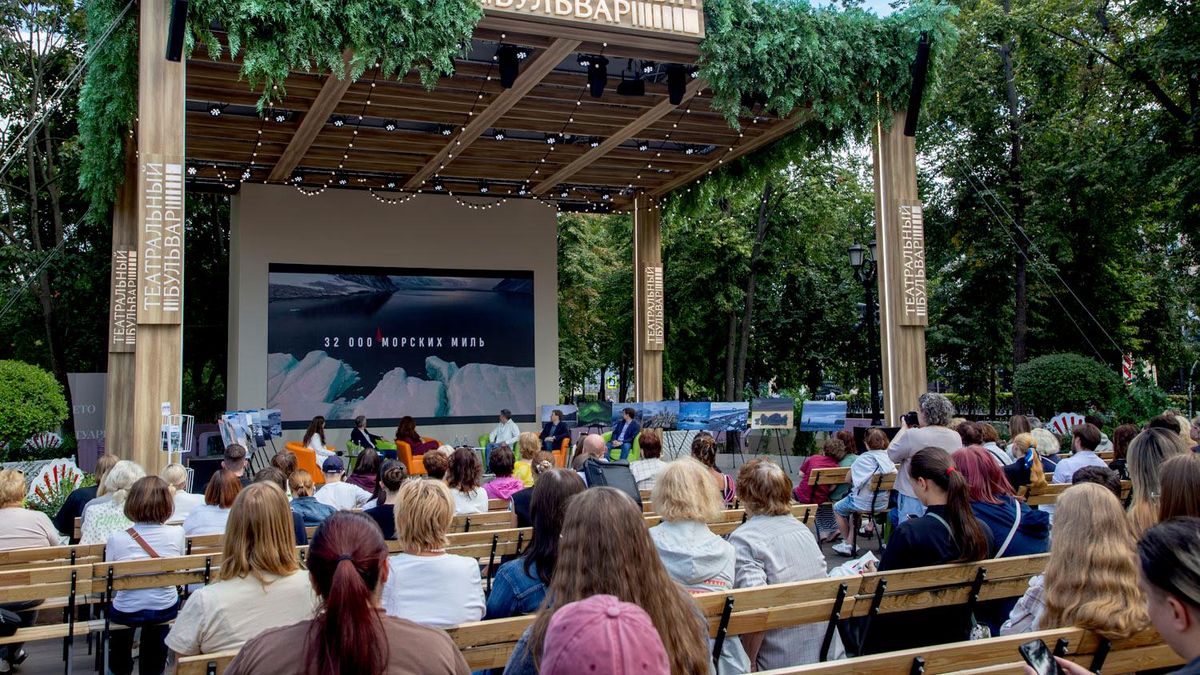
On Arctic Day, experts, artists, travelers, actors, adults and children gathered on Chistoprudny Boulevard to celebrate the day in three different venues, each appealing to a different audience.
Our correspondent went to the boulevard, spending several hours at the edge of the earth without leaving Moscow to see firsthand what makes the Arctic such a powerful source of inspiration.
The Krug (Circle) Stage served as the festival’s main discussion venue. Experts gathered there to discuss the interconnection of dry scientific data with artistic interpretation of the North. They also discussed how culture helps us understand the mysterious nature of the High Latitudes, and why Russia needs the Arctic.
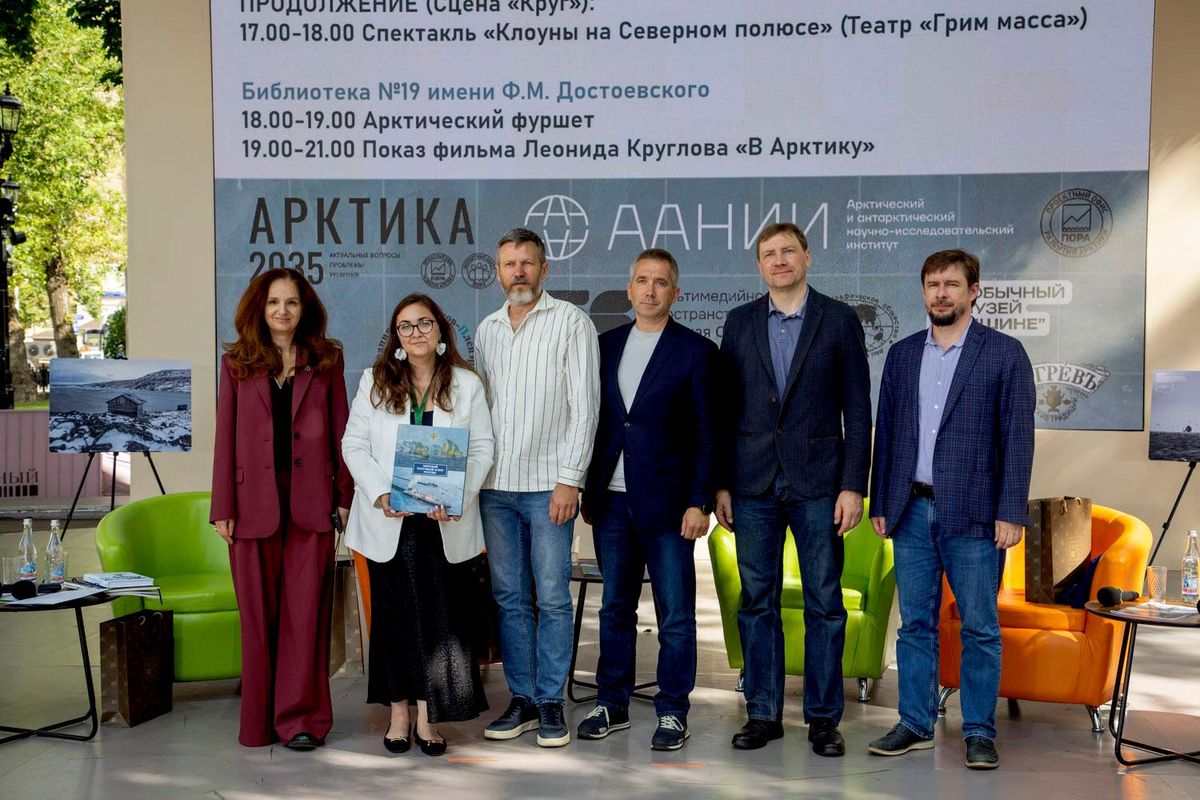
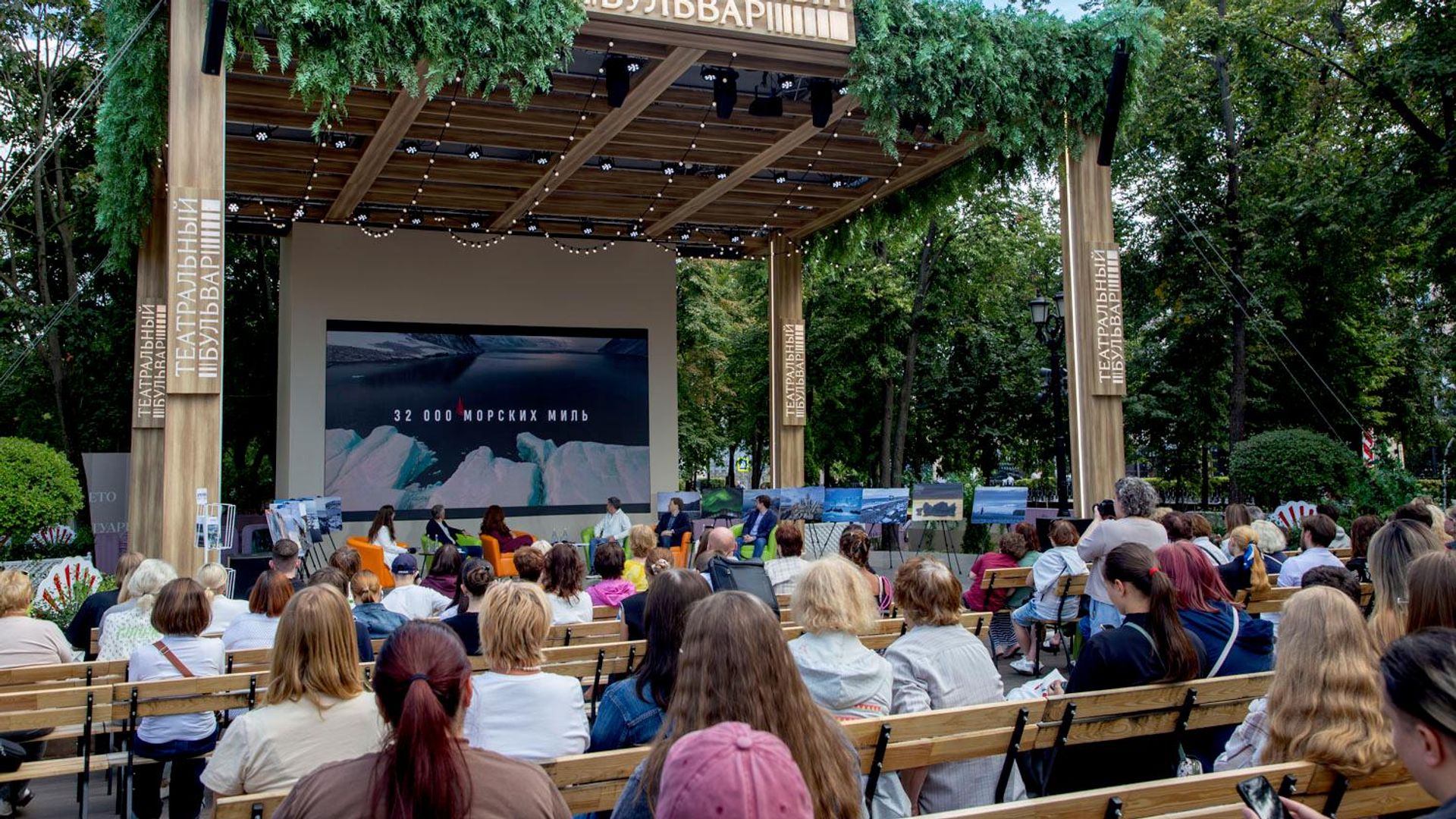
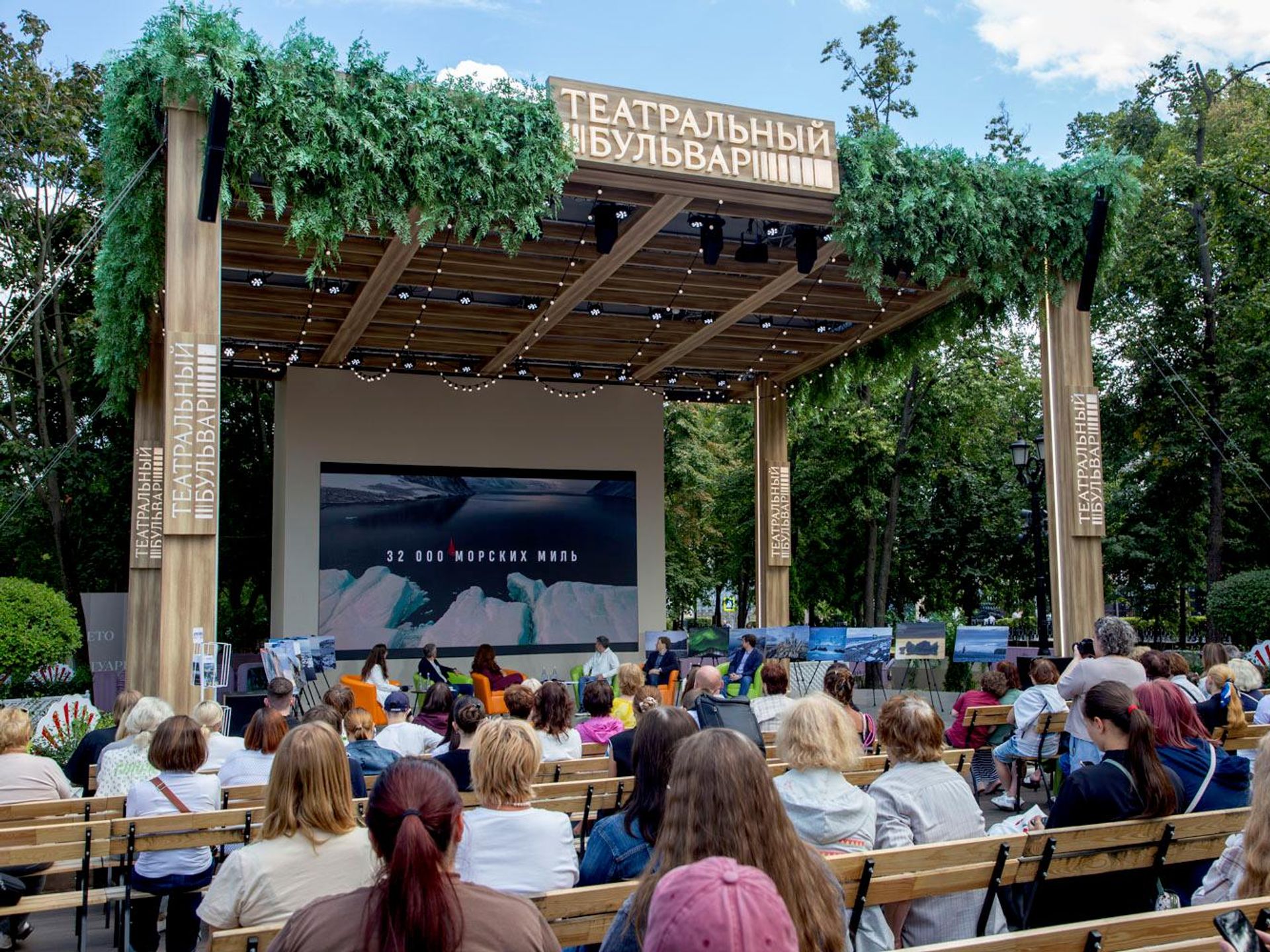
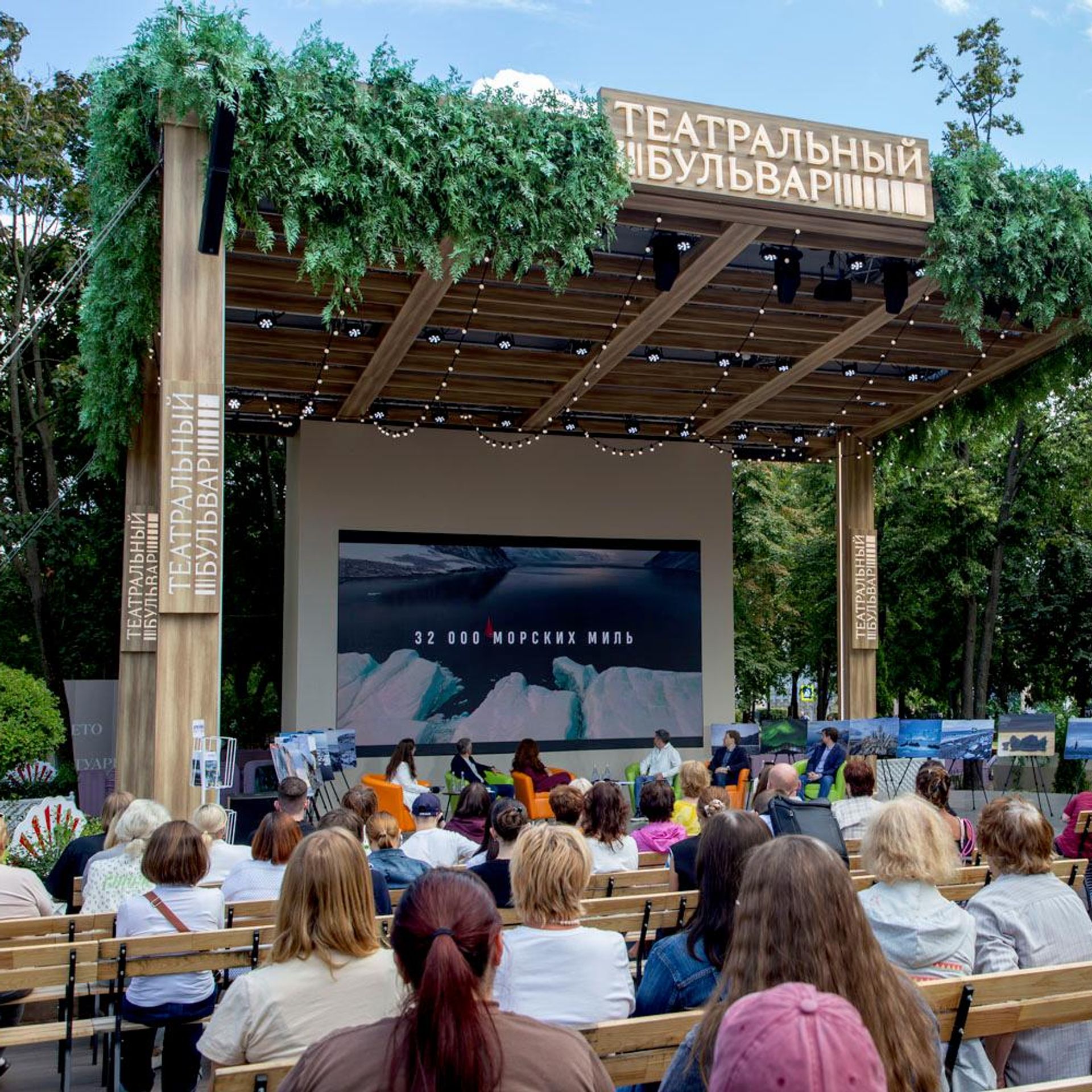
Participants in the roundtable discussion titled The Northern Vector: A Dialogue between Science and Creativity
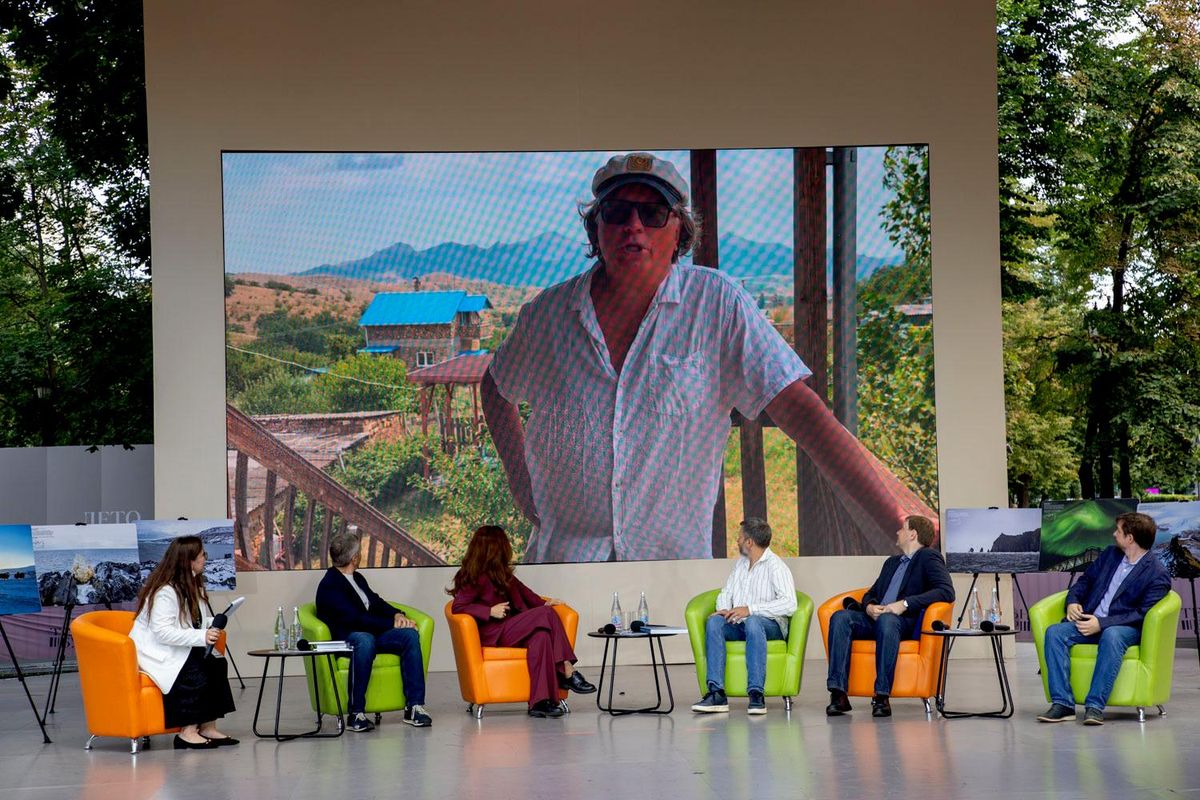
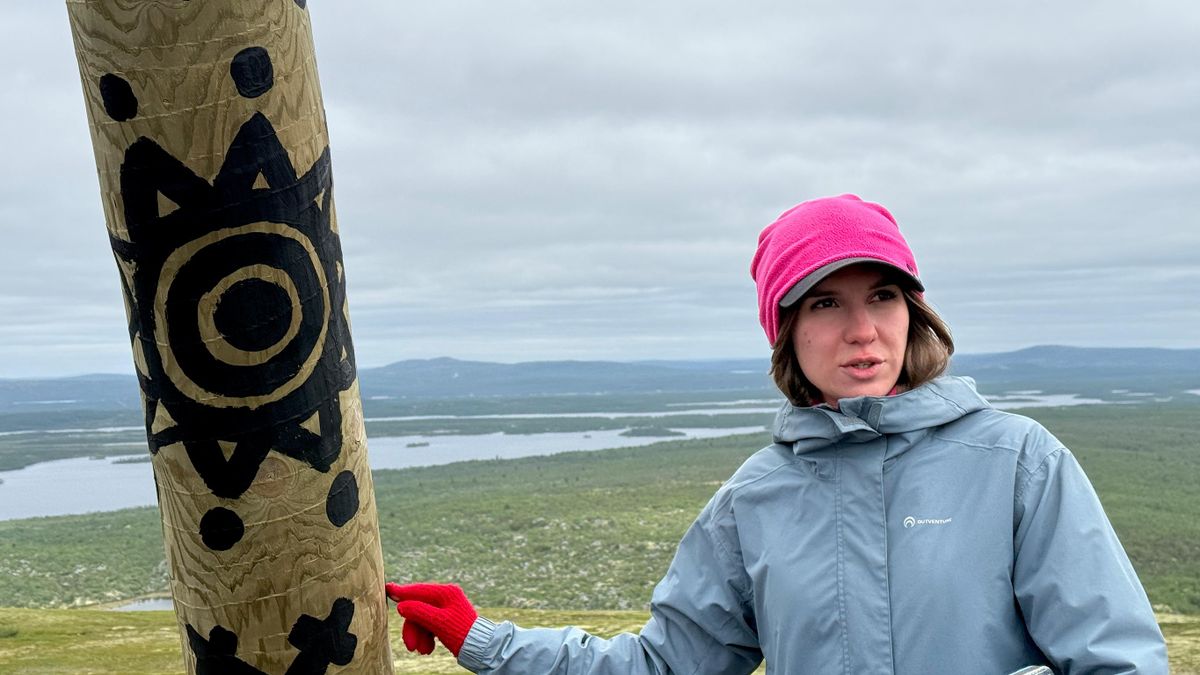
The roundtable discussion began with a video address by traveler and film director Leonid Kruglov from Wrangel Island. He began work on his debut film about the Arctic seven years ago, and has been exploring the Polar region ever since. Engrossed in the topic, he started working on his second film.
Video address by traveler and film director Leonid Kruglov from Wrangel Island
Pavel Sukhov, deputy director general of the Project Office for Arctic Development (PORA), pointed out during the debates that it is extremely important to attract public attention and explore the Arctic.
“This macroregion is home not only to walruses and polar bears, but also to millions of people who live and work there, and quite happily. Life continues from generation to generation. The Russian Arctic has been Russian for centuries and will remain so for centuries to come,” he said.
The Arctic has been the subject of films, books and paintings, yet it remains shrouded in mystery.
“The Arctic has drawn seafarers and explorers for centuries, yet we know very little about it. To understand the present and forecast the future, we must know the past,” said Artyom Savinov, head of the Exhibition Department of the Maritime and River Fleet Museum.
The roundtable venue was surrounded by the photo exhibition titled The Northern Sea Route: 500 Years of Conquering the Arctic, which displayed vast frozen expanses, animals, and the fragile beauty of one of the world’s most remote regions.
1/5
Photo exhibition The Northern Sea Route: 500 Years of Conquering the Arctic
An exhibition of paintings titled The Arctic. Plein air. 500, which opened at Dostoyevsky Library No. 19, comprises 60 works made during expeditions to Murmansk, Arkhangelsk, Salekhard, Yakutsk, Anadyr, and Naryan-Mar, cities whose history is closely tied to the Northern Sea Route.
Linda Kritskaya, the founder of the Plein Air Artists Association, said that despite rigorous weather, Nature itself became the artists’ ally: frozen watercolors left unusual crystallized patterns on canvas.
“We began working in March, which is the spring season in the majority of Russian regions, but there were blizzards and snowfalls in Murmansk. Working in such conditions is very difficult, which is why you will see several unfinished works. I asked our artists to leave them unfinished to demonstrate the traces of Nature on canvas. On the other hand, we encountered 40-degree heat and biting gnats in Yakutia, and the artists had to work in mosquito nets,” she said.
All works at the exhibition were painted in the open air, helping the artists depict the true atmosphere of the Russian North. They painted northern ports, landmarks, and natural monuments.
“My goal as curator of the exhibition is to let for people to see these paintings first, then visit these places and experience a sense of recognition – to recognize the landscapes from the paintings. The Arctic is a promising region from the standpoint of popularization, because it is underexplored and yet attractive to many people,” Linda Kritskaya said.
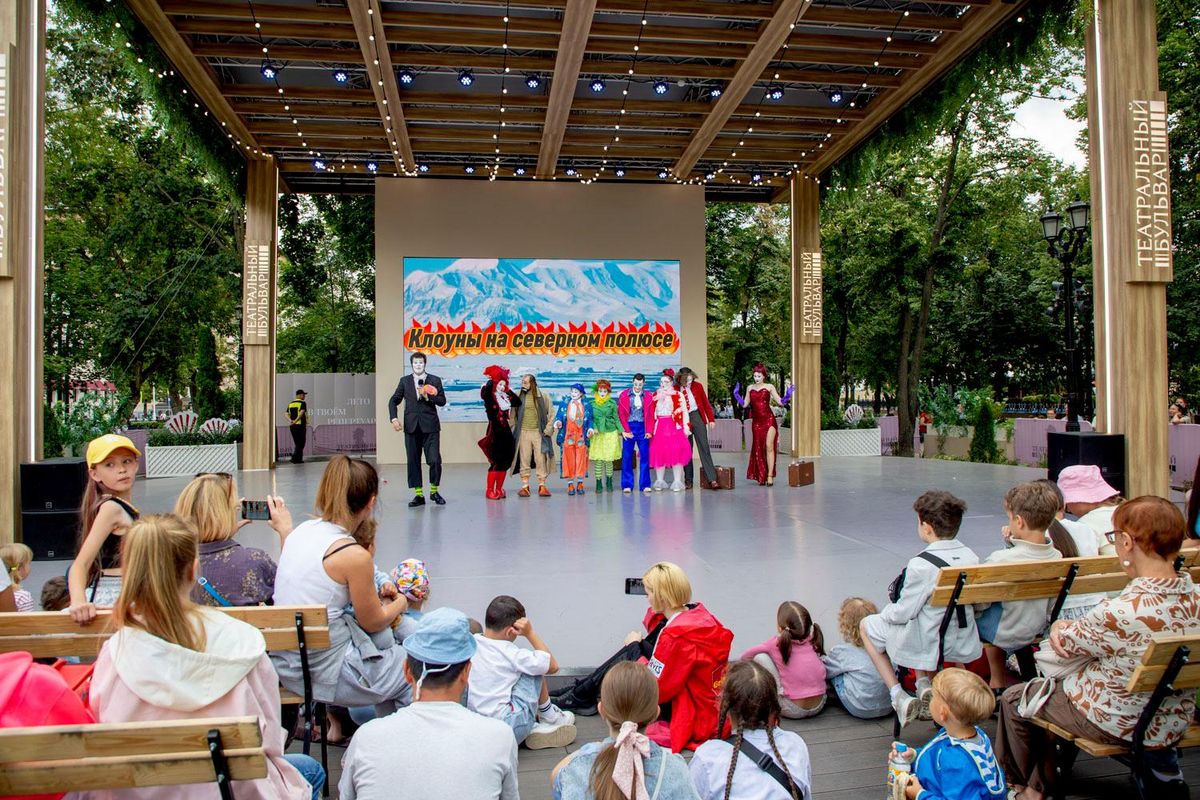
While adults debated Arctic development strategies, the children were in their element, painting polar bears, having a snowball fight in summer, and taking part in the science show The Snow Queen in the Arctic.
A lady in red juggled four balls at once, clowns and mime artists entertained the audience, and children laughed so loudly that it seemed their voices could be heard all the way on Wrangel Island. The festival ended with the screening of Leonid Kruglov’s film Into the Arctic, released in 2023.