10:00 20.07.2026
Far East Development Strategy: Raising the Bar
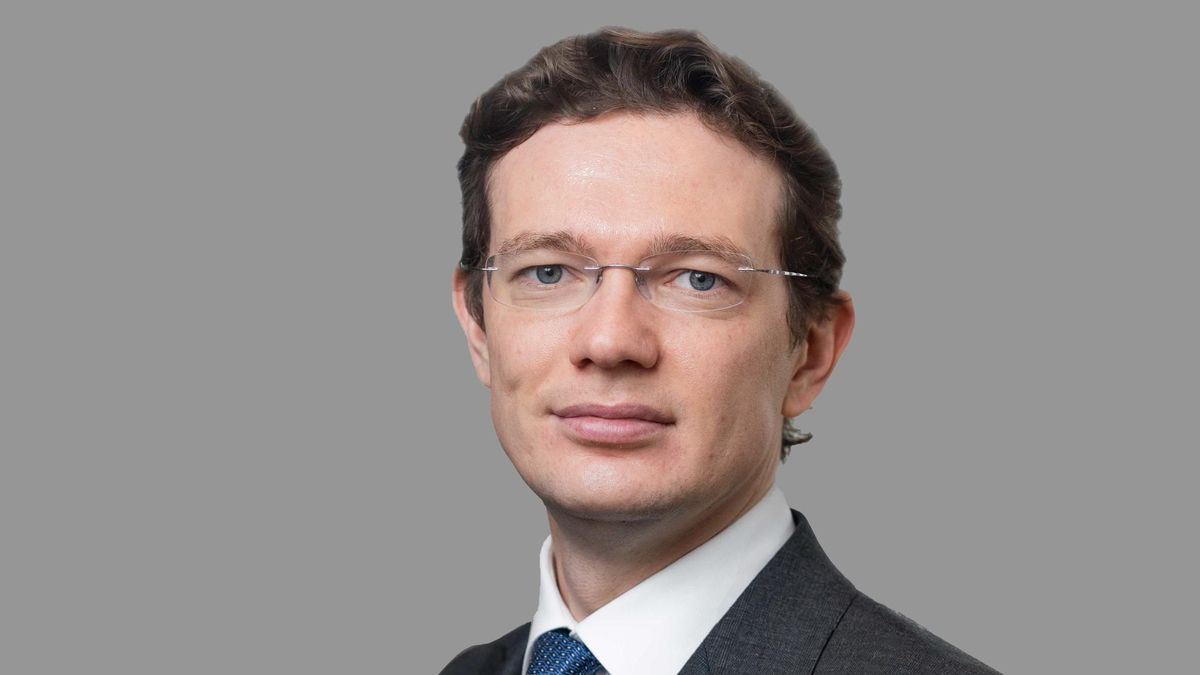
© Courtesy of Mikhail Bazhenov
A new Socioeconomic Development Strategy for the Far Eastern Federal District with a planning horizon to 2036 is being drafted. The draft has been submitted for public discussion and will be submitted to the Government for approval soon. Arctic.ru asked infrastructure and investment development expert Mikhail Bazhenov to analyze the document and provide his assessment of the proposed development scenarios for the Russian Far East.
The draft Far East Development Strategy to 2036 is a mature and structurally balanced document that is being prepared in an open manner. The Eastern Center for State Planning and the Ministry for the Development of the Far East and the Arctic are conducting public discussions in all regions of the district; regional sections are being drafted and coordinated by the regions themselves; and any local resident can submit a proposal through a dedicated website. This transparent approach improves the quality of the final document and deserves recognition.
The draft incorporates institutional innovations whose absence has repeatedly hindered development efforts in the Far East: the integration of priority development areas, the Free Port of Vladivostok, and the Arctic Zone and the Kuril Islands into a single preferential zone; a network of 214 core communities and 25 master plans; and a digital strategy management platform incorporating AI elements. These solutions reflect the current understanding of the region’s development needs and establish a practical framework for the macro-region’s development to 2036.
What follows below is an expert perspective on the publicly available portion of the draft. It is not a list of shortcomings, but rather a set of additional focal points. Each of them is already included in the strategy in one form or another. The text draws a line between three types of indicators: the draft strategy’s target indicators, external statistical comparisons, and the author’s scenario-based assessments intended to discuss the possibility of raising ambitions even higher. The author’s assessments cannot be viewed as approved state policy parameters and require additional financial, economic, and demographic validation.
The strategy’s target scenario is structured around stabilization, which is a justified choice. By 2026, the population is projected to remain at 7.866 million which is the same as in early 2024. Net migration by 2036 is projected at +181,000 people (Section 10). Over 12 years, the share of high-tech industries in GRP is planned to grow by 4.5 percentage points, reaching 17.1 percent, while research and development spending is expected to rise to the national average of 1.0 percent of GRP. To put that in perspective, in the countries with which the Far East competes for capital and workforce, this indicator is higher: 3.4 percent in Japan, 4.9 percent in the Republic of Korea, and 2.6 percent in China. This is a natural area where future ambitions could be set at a higher level.
Below are several areas where the strategy’s existing priorities could be strengthened without going beyond what is achievable within the 2030-2036 timeframe.
Strategic Reserve: The Sustainability Vector
The strategy relies on what makes the Far East, including its Arctic territories, a bulwark of national resilience prioritizing the Northern Sea Route and the Eastern Operating Domain, focusing on the development of resource potential and building connectivity with friendly countries. The geopolitical shift of recent years gives this logic additional significance, namely, the region’s role as a country’s strategic reserve. The proposed emphasis is to make this reserve function as an explicit and separate vector, as it changes the very system used to evaluate projects: some of them are justified not by their current returns, but by the contribution to the predictability and resilience of the national economy over a decades-long horizon.
The reserve function manifests itself in two dimensions.
Resource dimension: the macro-region contains some of the world’s largest untapped reserves of hydrocarbons, copper, rare earth metals, gold, biological resources, and fresh water. As traditional markets and suppliers become less accessible, these resources get transformed into an economic security network losing their status of deferred assets.
Transport dimension: the Eastern Operating Domain, Pacific ports, and the Trans-Arctic Transport Corridor provide safer and more legally predictable connectivity with friendly countries, bypassing chokepoints that are vulnerable to external pressure, including the Suez Canal, the Strait of Malacca, and the Baltic Sea and the Black Sea routes.
The practical implication of this emphasis is to supplement the existing priorities with measurable reserve indicators: the share of critical exports and imports transported along controlled routes, and the volume of confirmed but mothballed capacities and reserves that are ready for deployment. This would make it possible to make a case for unhurried capital and federal prioritization in areas where conventional commercial logic produces a negative outcome, but national resilience produces a positive one.
Population: The Strategy Priorities Have Been Set
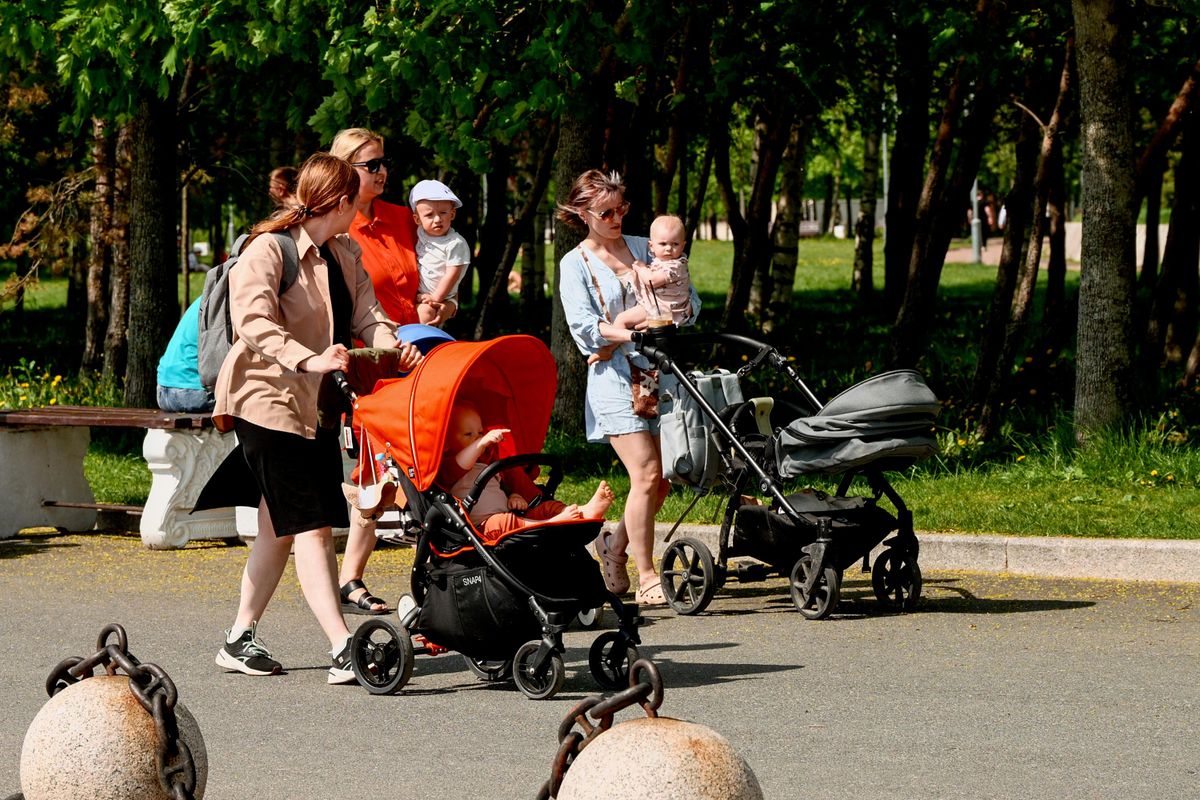
Women with children take a walk in the park
© RIA Novosti /Alexei Danichev
What Do We Need Growth For?
The strategy justifiably sets the goal of stabilizing the population size. At the same time, for certain sectors of deep processing and service supply chains, the scale of the domestic market itself becomes a constraint, and a benchmark of 10 million residents can be viewed as a practical lower threshold for creating a sustainable local demand ecosystem.
The current population density in the Far East is just 1.13 people per square kilometer, which is significantly lower than that of neighboring Chinese provinces located at comparable latitudes: Heilongjiang (≈31 million people - here and below, examples for China refer to total population figures), Jilin (≈24 million), and Liaoning (≈42 million). The idea of increasing the region’s population to 50-100 million people by mid-century, which occasionally appears in strategic discussions, is practically unattainable if the current trends remain unchanged. A more ambitious but still debatable maximum objective would be an increase of 1.5-2 million permanent residents by 2035 which is 7 to 10 times higher than the target scenario. Such a goal would require a separate demographic balance calculation covering birth rates, mortality, and domestic and external migration. The experience of the Yamalo-Nenets Autonomous Area is quite illustrative: it is not part of the Far Eastern Federal District and is not directly comparable, but based on several variables, such as high incomes, infrastructure programs, and targeted support measures it demonstrates that positive demographic dynamics are quite achievable.
Sources of Demographic and Workforce Growth
Executive Order No. 738 establishes the framework for a more manageable migration policy, and the strategy fits within this logic. The sources and ranges outlined below represent the author’s scenario framework and are not set out in the executive order or the draft strategy. Under this scenario, five sources of population and workforce replenishment could be considered for the Far East; to illustrate the potential scale, a scenario is proposed in which the combined contribution of these sources to permanent population growth reaches approximately 1.5-2 million people.
- —Compatriots. Priority is given to residents of Donbass and Novorossiya, as well as communities such as Old Believers, Sakhalin Koreans, Russian Germans, and Pomors. Under an upper-range scenario, the voluntary resettlement program could be expanded to meet the needs of the Far East; the scale would need to be determined through a separate assessment of the countries of origin, family motivations, and regional absorption capacity.
- —Highly skilled specialists with families. Targeted recruitment for implementing major projects, including the Udokan Mining and Metallurgical Plant, the Eastern Petrochemical Company, and the Pacific Railway. In total, the expected inflow of workers together with their families could amount to 80,000-120,000 people; target countries could include China (engineers), India (IT specialists), Iran, and Türkiye.
- —Educational migration. Universities in the Far East, Northeastern Russia, and Sakhalin are viewed as centers for attracting students from ASEAN countries and South Asia. The plan is to enroll 100,000-150,000 students, of whom 30 to 40 percent could stay in Russia after completing their education and obtain citizenship through naturalization.
- —Targeted organized recruitment of foreign labor. This mechanism involves bringing in temporary workers, without the right to bring families along and with a commitment to go back after their contracts expire. Such rotation will cover temporary labor shortages, particularly during construction cycles, and is designed for 150,000-250,000 worker placements. It is not a source of population growth.
- —Internal migration of Russian citizens is a source of permanent population growth that is not restricted by migration policy. Free Port benefits and the Far Eastern mortgage program with a 2% APR will be used to support it. The mortgage program is already a workable tool for retaining families: in 2024, 232.6 billion roubles in loans were issued, and more than 189,000 families have used the program since 2019. At the same time, its contribution to net migration growth should be assessed separately, since some recipients might have lived in the region even without the program.

Birth Rates Among Permanent Population
If migration is viewed as a managed rather than a replacement mechanism, the focus of demographic policy shifts towards supporting birth rates among the permanent population and helping families already living in the region stay there. The strategy reflects this approach: the target scenario sets a total birth rate of 1.8 by 2036 and treats birth rates as a tool for preserving population levels and slowing decline. Here, both Russia as a whole and the Far East face the same challenge.
Sociological studies identify a persistent gap where Russian women report a desired number of children in the range of 2.3-2.5, while the actual birth rate stands at 1.4-1.5 children per woman. The gap of almost one child cannot be explained solely by financial circumstances. South Korea, with a total birth rate of 0.7, and Singapore, with 1.0, demonstrate that even the most generous financial incentives only remove the initial barrier of “being able to afford children.” Without childcare infrastructure, flexible employment, a high-quality living environment, and adequate housing, financial measures produce limited and unstable results.
Three measures tailored to the Far East and its cultural code appear to be the most effective.
- —Far Eastern Family Homestead. A family support program is underway in the region: the Far Eastern Hectare program (nearly 120,000 plots have already been allocated), a standard subsidized house of 120-150 square meters, and - as a newly proposed measure - reducing the interest rate on the Far Eastern mortgage program to as low as zero percent upon the birth of a third child, or alternatively providing additional repayment of the principal debt for each subsequent child. This would remove the main barrier identified in surveys - housing costs - while also resonating with the Far East’s historical identity: the aspiration for one’s own house on one’s own land and the idea of putting down family roots.
- —Grandma’s Route. Many Far Eastern families lack support from older generations: grandparents remained in European Russia, a consequence of population losses from migration during the 1990s and 2010s. Strengthening intergenerational ties could be encouraged through a 30-50 percent pension supplement for elderly citizens who move to live near their children and two or three grandchildren, a tax credit of up to 200,000 roubles per year for families accommodating parents, and a “Far Eastern family home” - housing of at least 150 square meters designed for three- generation occupancy. France can serve as an example of support for extended families, which for many years remained a Western European country with relatively high birth rates, although even there the indicator is now declining.
- —Parental Capital as a Monthly Income Stream. A support system focused on the long-term wellbeing of families. Monthly payments would be differentiated according to the number of children: 15,000-20,000 roubles for the first child, 25,000-30,000 for the second, and 40,000-50,000 for the third and each subsequent child until the age of 18. For a family with three children, this would amount to 80,000-100,000 roubles per month. In the Far East, this amount is comparable to an average salary and would make having several children an economically viable choice as opposed to sacrificing career prospects. Unlike the one-off maternity capital payment intended for “large purchases,” such a format would change the very logic behind the decision to have children: a third child would become not only an expense but also a source of stable income for 18 years. A similar principle of long-term incentives through tax benefits operates in Hungary, where since 2020 mothers of four children have been permanently exempt from income tax.
A preliminary financial assessment of these measures amounts to hundreds of billions of roubles per year. To claim that they would raise the total birth rate to 1.7-1.8, a separate model would be required, taking into account family coverage, actual use of support measures, the distribution of births by birth order, inflation, and delayed behavioral responses. The target itself, however, remains within the strategy’s framework: the strategy’s target scenario sets a birth rate of 1.8 by 2036.

It is likewise important to identify the nature of the underlying constraint. The limiting factor is the number of potential mothers: the cohort of women of childbearing age contracted by approximately 5 percent between 2018 and 2024, which the strategy explicitly identifies as one of the reasons for declining birth rates. Arithmetically, even a very high birth rate would produce population growth. With an assumed total birth rate of around 4 children per woman, natural increase would amount to approximately +90,000 people per year. But this level is unattainable, and this is the key point: at realistically achievable fertility levels (the target of 1.8, with the upper end of the discussed range being around 2.1), the smaller female population base combined with high mortality will keep natural population dynamics in negative or, at best, zero territory. The calculated “break-even point” corresponds to a total birth rate of approximately 2.1. Thus, as also noted in the strategy, net population growth in the Far East is primarily a migration issue, while fertility policy serves to preserve the population and slow its decline. Therefore, measures to support birth rates should be assessed not by their contribution to population growth, but by their ability to slow population decline. Sustainable growth on this scale has not been reliably achieved anywhere through support policies alone. In Hungary, fertility growth was followed by a partial reversal.
Energy: Price as a Benchmark
The strategy’s target scenario envisages an increase in installed generating capacity from 18.6 GW to 34.8 GW, an increase of 16.2 GW over 12 years. The document addresses tariff issues by focusing on the optimization of tariff regulation in isolated power systems and the “take-or-pay” mechanism (measure 191). The proposed emphasis is to take the next step and make industrial electricity prices one of the measurable benchmarks, since at present the issue is largely addressed in qualitative terms.
Predictably affordable electricity is one of the decisive factors when choosing locations for energy-intensive deep-processing industries, such as copper smelting, aluminum production, hydrogen complexes, and data centers. In addition to improving profit margins, predictably low generation costs also support the macro-region’s reserve function by reducing the dependence of industrial projects on external supplies and price fluctuations.
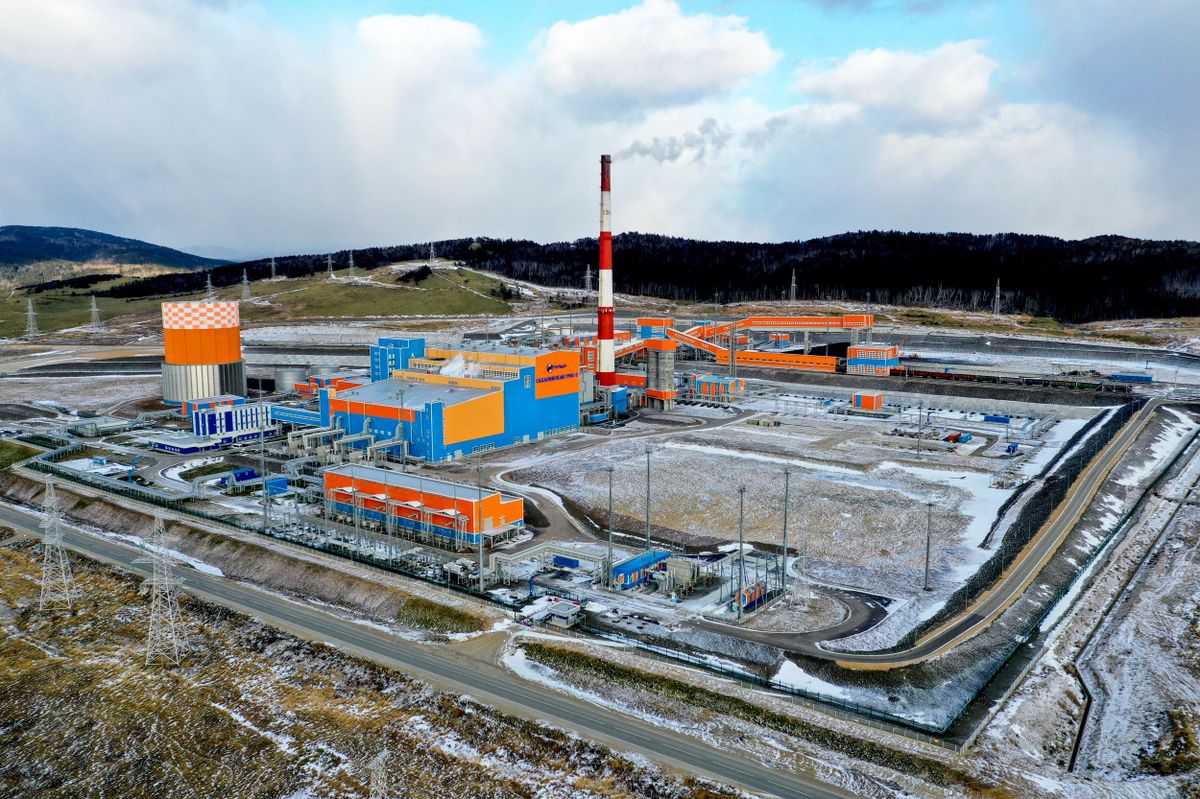
The Sakhalin State Regional Power Plant No. 2 in the village of Ilyinskoye
© RIA Novosti / Vladimir Mikhaylov
The strategy’s benchmarks should be supplemented with a price benchmark. By 2030, the weighted average tariff for industrial consumers in the first and second price zones of the Far East could exceed the Russian average by no more than 5 percent, and by 2035 it could reach parity. A special approach is needed for isolated power systems: by 2035, tariffs in these areas should ideally be cut in half. Target tariff parameters require calculations based on the generation mix, grid costs, interregional subsidies, and budgetary sources of compensation. A fundamental step could include the elimination of cross-subsidization through the Far Eastern surcharge and a transition towards a technological foundation with low unit generation costs.
Various combinations are possible to increase generating capacity by 16.2 GW. One option could include gas-fired thermal power plants (TPPs) of 4-6 GW (based on the Power of Siberia and Power of Siberia-2 pipelines); hydropower generation of 2-3 GW (the Kankunskaya Hydroelectric Power Plant with 1.2 GW capacity, as well as the Gilyuiskaya, Selemdzhinskaya, and Lower Zeya HPP projects); modernization and replacement of coal-fired capacity of 2-3 GW; Rosatom floating nuclear power plants of 1-1.5 GW (the Baimsky project and replicating its approaches for the Udokan and Yakutia gold mining clusters); stationary small modular nuclear units; renewable energy sources and storage systems (Kamchatka geothermal energy, wind installations on Sakhalin and the Kuril Islands) with a combined 2-3 GW. Some of these capacities are already included in the project portfolio, while others remain at the conceptual development stage, primarily in connection with gas infrastructure development projects.
From Tonnes to Competencies
The strategy has already taken a significant step towards increasing added value. The document explicitly shifts the priority away from unprocessed raw material exports towards participation in high-value-added supply chains (Section 6.1.2 about deep processing and regional chains), redirects state support towards projects with high added value and longer processing chains (Measure 81), and sets a target of increasing the share of high-tech industries to 17.1 percent by 2036, with an export focus on the Asia-Pacific region (Section 6.1.3). The proposed emphasis sharpens one particular aspect: alongside deep-processing products - increasing the output of polymers, fertilizers, and rolled metal products, where margins are constrained by logistics - the strategy should place greater focus on export monetization of intellectual property and services, in other words, expanding Section 6.1.3 towards exporting competencies, such as intellectual property, engineering services, and software solutions. These segments can generate higher margins and are less dependent on physical logistics, while still carrying sanctions, settlement, and compliance risks. In this context, five development areas could be considered.
- —Marine Biotechnology. Intellectual property accumulated over half a century by the Pacific Institute of Bioorganic Chemistry of the Far Eastern Branch of the Russian Academy of Sciences on bioactive compounds derived from marine organisms (sea urchins, sea cucumbers, and algae) could serve as the foundation for commercial projects within the sphere of Chinese traditional medicine, the beauty industry in Gulf countries, and ASEAN markets. The financial potential should be assessed separately based on the patent portfolio, licensable products, and target markets.
- —Diamond Cutting. In Russia, less than 5 percent of raw diamonds are processed domestically despite significant reserves (ALROSA produced 33 million carats in 2024). The Surat cluster in India, which accounts for 90 percent of global diamond cutting, saw exports of polished diamonds decline from $25.5 billion to $13.3 billion after sanctions had been imposed. Conditions are emerging for establishing a joint venture in Yakutia and Mirny involving Indian master cutters potentially generating hundreds of millions of dollars in export revenue through the establishment of an industrial cluster and access to international markets.
- —Rare Earth Metal Separation. The Tomtor deposit in Yakutia, which was transferred to Rosneft in May 2025, is one of Russia’s largest deposits of rare and rare-earth metals, including niobium. The bulk of added value comes not from exporting concentrate but from separation. Joint ventures involving an Indian state-owned rare-earth metals company and the Solikamsk Magnesium Plant are a distinct possibility; however, the financial impact requires a separate model based on the development schedule, separation technology, and sales markets.
- —Cold-Climate Engineering. Russia can leverage 80 years of experience operating in permafrost conditions, operating high ice-class vessels, and designing Arctic infrastructure. This expertise is in demand for domestic Arctic projects, as well as in China, Central Asian countries, and other friendly jurisdictions with cold climates. Export revenue potential needs to be assessed separately.
- —Information Technology and Services for Asia. Thanks to their time zone advantage (a seven-hour difference with Moscow), Vladivostok and Khabarovsk could benefit from servicing clients in China, India, and ASEAN countries. The example of Yerevan as a center attracting relocated specialists in 2022-2025 shows that, with targeted policy support, a significant IT ecosystem involving tens of thousands of specialists could be developed by the 2030s. Export revenue could amount to hundreds of millions of dollars annually.

Sorting diamonds
© RIA Novosti / Aleksandr Utkin
Taken together, these five areas should be viewed not as a source of quick revenue, but as a portfolio of niche opportunities with high margins and limited dependence on logistics and sanctions. Their returns will materialize over time and will partly rely on assets that have yet to be fully developed. For example, the Tomtor rare-earth project is only expected to reach full production capacity beyond 2035. With consistent development, by the mid-2030s these areas could generate high-tech exports worth hundreds of millions of dollars annually, with the potential to reach billions of dollars through the implementation of major rare-earth, IT, and engineering projects. They could also raise the share of knowledge-intensive industries in GRP significantly above the target of 17.1 percent, transforming accumulated competencies into export products in areas where raw material exports are reaching their logistical limits.
Finance: Time to Scale Up Infrastructure
The strategy focuses on attracting long-term capital into infrastructure, and current market conditions are favorable for doing so. Lower Bank of Russia’s key interest rate (14.25 percent as of June 2026 v. 21 percent in late 2024) positively impacts the capital market. Under the baseline forecast of rates at 14.0-14.5 percent in 2026 and 8.0-10.0 percent in 2027, the capital market is gradually recovering, creating a window for rational long-term financing of infrastructure projects. Later, once lower rates change the economic cycle, such financing will be more expensive. Against this backdrop, two independent but parallel development tracks appear promising.
Digital Financial Assets for Attracting Foreign Capital. Law 259-FZ, which has been in force since 2021, created conditions for innovative financial instruments; digital financial asset platforms already operating on the market include Sber’s DFA platform, Atomyze, Alfa-Bank, and Lighthouse. Investment tranches for the Eastern Operating Domain, tariff flows from the Northern Sea Route, and electricity purchase contracts for floating nuclear power plants could be packaged into digital financial assets with settlements in friendly currencies such as yuan, dirhams, and rupees. This could reduce dependence on parts of the traditional international financial infrastructure while remaining compliant with currency, sanctions, and tax regulations, as well as customer identification and anti-money laundering requirements. The potential investor base could include major sovereign and infrastructure funds from friendly jurisdictions, including the Abu Dhabi Investment Authority ($1.11 trillion), the Saudi Public Investment Fund ($925 billion), Mubadala ($330 billion), the China Investment Corporation, India’s National Investment and Infrastructure Fund, and Indonesia’s sovereign wealth fund.
Global experience confirms the promise of this approach: in 2023-2024, the Hong Kong Monetary Authority issued tokenized green bonds. For Far Eastern infrastructure, a more realistic discussion concerns pilot issuances worth tens to hundreds of billions of roubles; a cross-border market worth tens of billions of dollars (estimates for the BRICS framework by 2030) could emerge only as a long-term multi-country market, rather than as a source of financing for a single macro-region. To put that in perspective in order to assess the scale, the entire Russian digital financial asset (DFA) market in late 2025 amounted to less than 0.7 trillion roubles in circulation (with cumulative issuance since 2022 of around 1.46 trillion roubles). Russia could take advantage of the position of a trailblazer while regulatory frameworks are still being developed in Asia. The key factors will be to secure these assets and to ensure their liquidity.
Securities and Derivatives on the Domestic Market. The total pool of funds available for investment in Russia is substantial. Non-state pension funds hold around 5.5 trillion roubles, insurance companies around 3 trillion roubles, and the banking system around 150 trillion roubles (although the amount realistically available for long-term infrastructure investment is determined by regulatory requirements, asset-liability management, capital constraints, and banks’ willingness to assume risk). Brokerage accounts held by 30 million retail investors contain around 5 trillion roubles. This pool is currently focused primarily on short-term federal loan bonds, while long-term products based on infrastructure assets remain poorly developed.
For infrastructure investment, a three-tier system of instruments would be appropriate. The first tier would involve issuing securities backed by concession payments through specialized financial entities (an example is DOM.RF’s mortgage-backed securities, with volumes exceeding 1 trillion roubles). The second tier would include liquidity and credit-risk management instruments, including repo transactions and guarantee or insurance mechanisms (derivatives would become possible only after a liquid underlying market has been established). The third tier would consist of index products and secured debt obligations. By 2030, these instruments could potentially help attract 1.5-3 trillion roubles for infrastructure development.
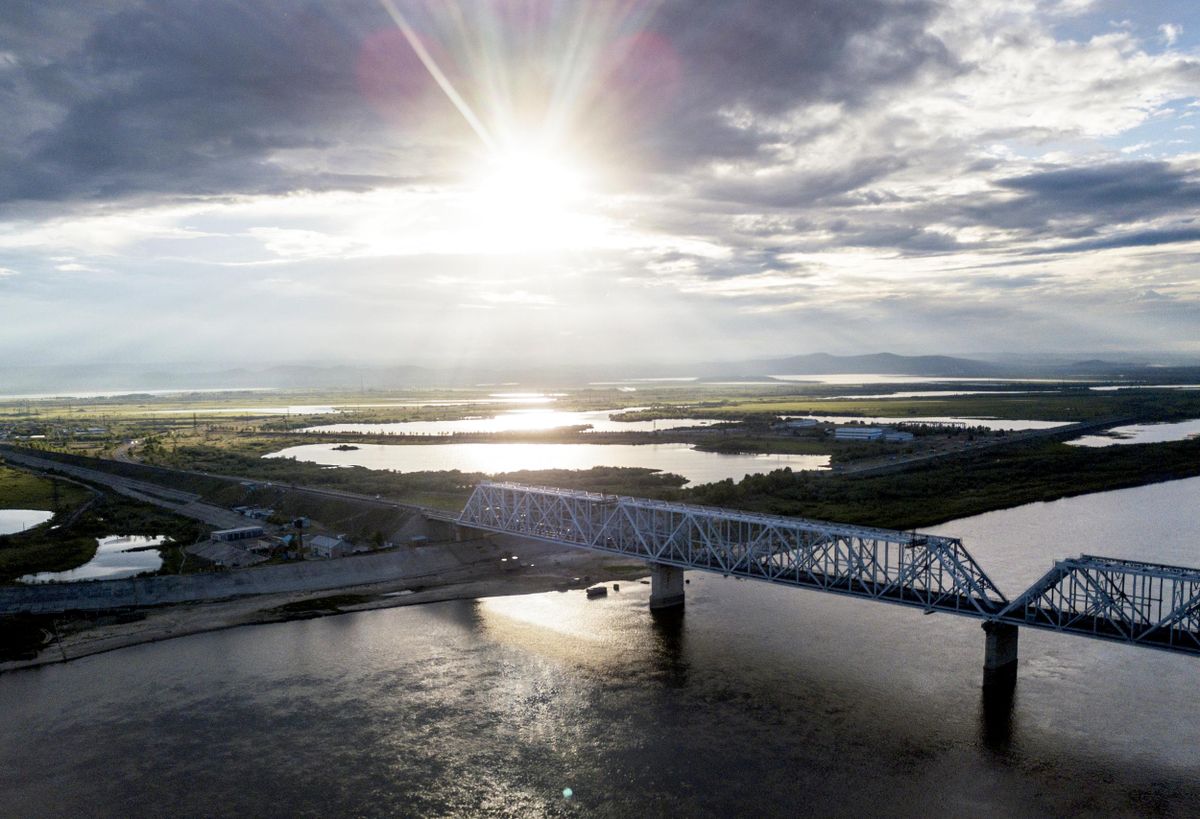
A railway bridge across the Amur River in the Khabarovsk Territory
© RIA Novosti / Valery Melnikov
Shared Responsibility of Regional Leaders
The strategy notes that five regions account for 80 percent of the Far East’s GRP (Section 3), meaning that concentration and coordination are already within the document’s scope. The proposed emphasis concerns not the methodology but the structure of the incentives.
The existing model, under which each head of the region is responsible for an individual set of performance indicators, is clear and overall justified: it creates competition for investment and establishes clear personal accountability. At the same time, a significant portion of the economic returns in the Far East emerges at the intersection of regions - through production and service chains that the strategy itself identifies as a priority. Examples include the processing of copper concentrate from Chukotka at smelting facilities in the Primorye Territory, shared rare-earth raw material separation centers, and interregional medical clusters serving patients from several territories. Such ties strengthen the overall performance of the macro-region and should naturally be supported by supplementing individual indicators with an interregional incentive framework.
Why the Performance Indicator Structure Should Be Expanded
In order to more fully unlock the Far East’s potential, the individual responsibility of regional leaders should be complemented by shared responsibility. This would ensure that neighboring regions involved in interconnected projects have a common interest in coordinated action, that investment in interregional centers - including medical facilities - takes the needs of surrounding territories into account from the beginning, and that the broader Far Eastern agenda has people responsible for the overall outcome rather than only for individual regional plans.
An effective indicator structure could follow a 30-50-20 modelwhere 30 percent is individual regional indicators (as it is now); 50 percent interregional initiatives and value chains; and 20 percent is contribution to the overall results of the Far East.

A worker in a shop of a locomotive maintenance facility in Tynda
© RIA Novosti / Stanislav Krasilnikov
Potential Models
Several established international approaches deserve attention. We suggest considering four models.
- —Australia. Since 2008, that country has operated the Closing the Gap program which is an agreement between the federal government and individual states that currently includes 19 indicators. Each indicator is overseen by point persons at the federal and state levels, while annual reports submitted by the Prime Minister to the Parliament provide detailed results by the region. Shared responsibility is legally established and does not overlap with individual agendas of states.
- —European Union. In interregional and cross-border cooperation programs, funding logic is often built around partnerships between several territories. This principle could be used as a starting point without extending it to all structural funds.
- —Germany. The financial equalization system (Länderfinanzausgleich) demonstrates the institutionalization of interregional solidarity, although it is not a direct equivalent of governors’ key performance indicators.
- —China. The paired-province model implemented since the 1990s involves developed provinces (Guangdong, Shanghai, Jiangsu) supporting less developed regions (Tibet, Xinjiang, or Yunnan) through measurable commitments related to investment, personnel, and infrastructure. Cities such as Moscow and St Petersburg, as well as regions with comparable administrative capacity, such as the Republic of Tatarstan, could potentially play a similar role in cooperation with cities and regions of the Far East.
Corporate experience also offers proven models. Robert Kaplan and David Norton’s Balanced Scorecard framework covers finance, consumers, processes, and learning. Toyota’s shared workspace model is based on the principle of a single workplace and a unified performance dashboard, encouraging cross-functional cooperation. Management by objectives and key results allows a combination of individual and team goals; for regional leaders, the specific ratio should be determined through pilot projects. Procter & Gamble’s matrix structure, with dual accountability by region and product line, strengthens integrated management. Large manufacturing programs often use a unified project management center responsible for deadlines, budgets, and cross-functional coordination; this principle can be applied to interregional projects.

What Should Be Introduced in Practice
A public performance dashboard could be posted on the website of the Ministry for the Development of the Far East and the Arctic featuring 12-15 key indicators for each region as well as aggregated results for the macro-region as a whole. It would be useful to launch a pilot unified joint report on interregional projects, showing the contribution of each region to the overall outcome.
To boost motivation, a significant share of the evaluation and motivation system for regional teams could be linked to interregional results. In addition, the practice of joint sign-off on key investment decisions for interregional projects would be beneficial. Under this arrangement, one project is approved by several regional leaders ensuring shared responsibility and risk distribution.
A potential challenge is the free rider problem, where one region benefits from the efforts of neighboring regions. To minimize this, a system of paired accountability could be introduced, under which the performance indicators of both regions involved in a value chain are reduced if one fails to meet its commitments. A cap could also be placed on individual bonuses if joint targets are not achieved.
Things To Do in the Next 12 Months
The proposed priorities do not require a revision of the strategy. Most are already reflected in one form or another and the issue is one of further detailing and strengthening them in subsequent documents, such as the implementation plan.
Over the next six to 18 months, the first framework could be established: KPI, methodologies, pilot projects, and adjustments to the implementation plan. Capital-intensive measures require a longer timeframe. At the strategy level, it would be useful to convert elements that are currently defined qualitatively into measurable targets - including an energy price indicator, an indicator for exports of competencies, and target parameters for migration and birth rate.
At the implementation plan level, specific mechanisms and timelines should be detailed. At the level of the Far East and Arctic Development Corporation’s instruments, preferential regimes should be expanded for projects based on intellectual property, new housing programs should be launched, and coordination mechanisms between regions should be introduced.
The strategic horizon of 2030/36 appears sufficient to achieve the stated objectives. The draft strategy represents a strong and balanced platform. The proposed priorities are aimed at unlocking more fully the potential of the strategy.
The material was prepared by Mikhail Bazhenov, an expert in infrastructure and investment development.