June 1937saw a historic event in the history of aviation: the world witnessed the first nonstop flight along the Moscow-North Pole-Vancouver, Washington, USA route by the Valery Chkalov-led crew.The flight symbolized the Soviet Union’s level of technological advancement and manifestly demonstrated not only the superior quality of a new aircraft, but also the skill and heroism of the crew.What stood behind this feat? In this article, we provide an in-depth overview of preparations for the flight, the aircraft’s technical specifications, and the geopolitical context of that period in history.The Moscow-North Pole-United States flight started from the Shchyolkovo Airfield outside Moscow on June 18, 1937. Soviet pilots Valery Chkalov, Georgy Baidukov, and Alexander Belyakov took off in the latest ANT-25 aircraft, heading for the North Pole.“I taxied the aircraft along the concrete runway. That’s how the most difficult and the most complex flight began. The engine, roaring at full throttle, propelled the aircraft forward. Staying on course was all I was thinking about. With each passing second, the aircraft gained speed. With a final handwave to those seeing us off, the aircraft lifted off the ground. Bouncing once or twice, the machine remained in the air. Baidukov retracted the landing gear. Hangars and factory chimneys flashed by. We were airborne flying above forests, fields, and rivers. It was morning. The country was waking up to a new day,” Valery Chkalov wrote about the fist minutes of the legendary flight.The Fourth Crew Member: ANT-25This unrivalled machine largely owes its existence to Joseph Stalin’s interest in aviation records. It is believed that he personally approached aircraft designer Andrey Tupolev with a request to create an aircraft capable of breaking the world flight distance record.The design of an aircraft capable of covering 13,000 km was completed in July 1932. It was developed by a team led by Pavel Sukhoi.This type of aircraft was built for the first time ever and was designed as a monoplane with a duralumin corrugated wing of unusually high for its time aspect ratio. The size of the wing made it possible to store extra fuel inside it.The ANT-25 was a simple and stable aircraft that performed well at high altitudes. However, due to its large wingspan, it had handling specifics: takeoff posed the main challenge, and a specially prepared sloped runway was built to overcome it.The first nonstop test flight under Valery Chkalov’s command took place along the Moscow-Victoria Island-Franz Josef Land -Severnaya Zemlya-Tiksi Bay-Petropavlovsk-Kamchatsky route in the summer of 1936. The crew covered 9,374 km in 56 hours and 20 minutes in severe Arctic weather.After that, it was decided to set a new world record for nonstop flight, which was considered the most prestigious achievement in the aviation community.Flights to South America and Australia were considered first, but- for political reasons - the route via the North Pole to the United States was chosen, even though it was the most technically challenging route.From the Soviet Union to the United States and BackDuring the flight, the experienced crew encountered four cyclones. To bypass them, they had to climb to an altitude of 6,000 meters, and the temperature in the cockpit dropped to 9°C below zero. Fur clothing provided little protection.During the flight, the ANT-25 crew counted on weather forecasts from other Arctic explorers, such as the North Pole-1 drifting polar station led by Ivan Papanin. However, when the aircraft was flying over that area, the antenna broke, and Alexander Belyakov had to do some urgent repairs. He eventually made it work, but the weather report was never received.Over the American continent, Chkalov felt unwell. He had a nosebleed and handed over the controls to Baidukov. His comrades gave him the remaining oxygen supplies while they themselves lay exhausted. The aircraft iced up several times, and the crew had to fly at lower altitudes.The engine cooling system’s failure posed the greatest danger. The crew needed warm water to restart it, but none was available. They ended up by pouring tea, coffee, and other liquids into the cooling system and made the final kilometers on this mixture.At 4:20 p.m. GMT on June 20, the ANT-25 crew successfully completed the flight along the Moscow-Kola Peninsula-Barents Sea-Franz Josef Land-North Pole-Melville Island-Banks Island-Pierce Point-Queen Charlotte Islands-Vancouver-Portland route.There were merely 50 liters of fuel out of initial 6 tonnes left in the tank when the aircraft landed.In total, the aircraft covered over 9,130 km (8,582 km in a straight line) in 63 hours and 16 minutes. This result was recognized as a Soviet national record, but the world distance record was not broken that time. The new record was set by another ANT-25 crew led by Mikhail Gromov in July 1937.The United States of the 1930s gave the aviators a lavish reception. President Franklin D. Roosevelt spoke with the Soviet crew for almost two hours instead of a 15-minute protocol meeting as planned. The aviators were warmly welcomed by the crowds in the streets of New York.The ANT-25 Chkalov crew aircraft was disassembled and brought back to the Soviet Union in 1937. Parts of the aircraft presumably were taken to the northern French port of Le Havre aboard the liner Normandie. From there, the aircraft was transported aboard the ship Kooperatsiya to Leningrad.Modern Polar AviationRussia is carrying on the traditions of polar aviation, but using far more advanced aircraft of course.In the spring of 2026, successful tests of the MS-21, SJ-100, and Il-114 aircraft were conducted at Talagi Airport in Arkhangelsk to verify compliance with Russian and international aviation standards under natural icing conditions.Later, the Il-114-300 aircraft carried out additional certification tests at airfields on the Arctic archipelagos of Novaya Zemlya and Franz Josef Land.According to Ilyushin Aviation Complex, the Il-114-300 was designed to operate across all geographical latitudes and all weather and climate conditions.Aircraft designers believe the Il-114 can also be used in the Arctic zone and replace all existing aircraft from the old fleet and foreign-made aircraft of this class.
June 1937saw a historic event in the history of aviation: the world witnessed the first nonstop flight along the Moscow-North Pole-Vancouver, Washington, USA route by the Valery Chkalov-led crew.
The flight symbolized the Soviet Union’s level of technological advancement and manifestly demonstrated not only the superior quality of a new aircraft, but also the skill and heroism of the crew.
What stood behind this feat? In this article, we provide an in-depth overview of preparations for the flight, the aircraft’s technical specifications, and the geopolitical context of that period in history.
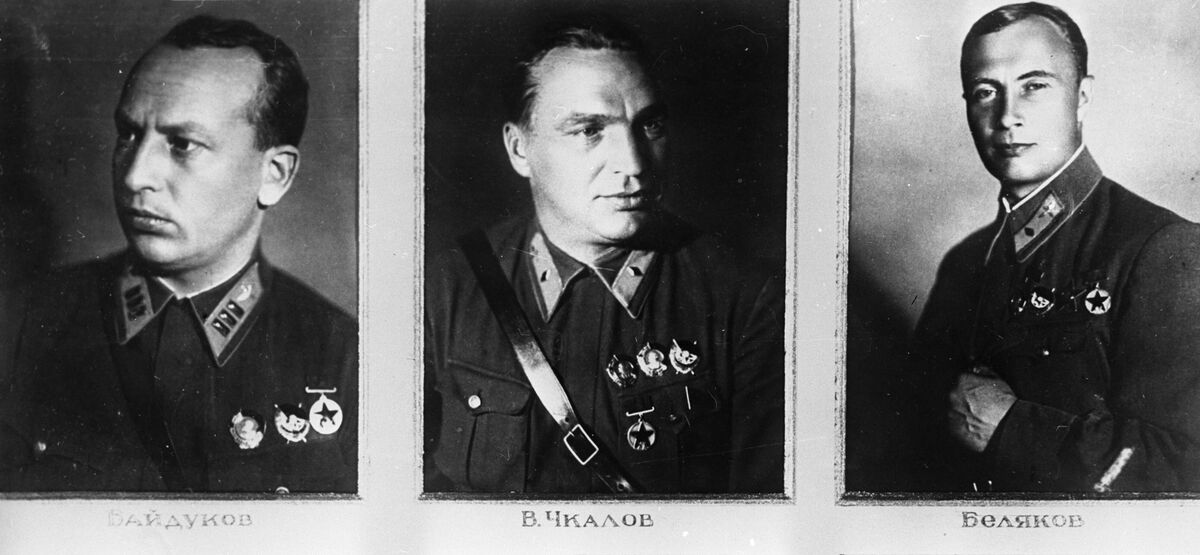
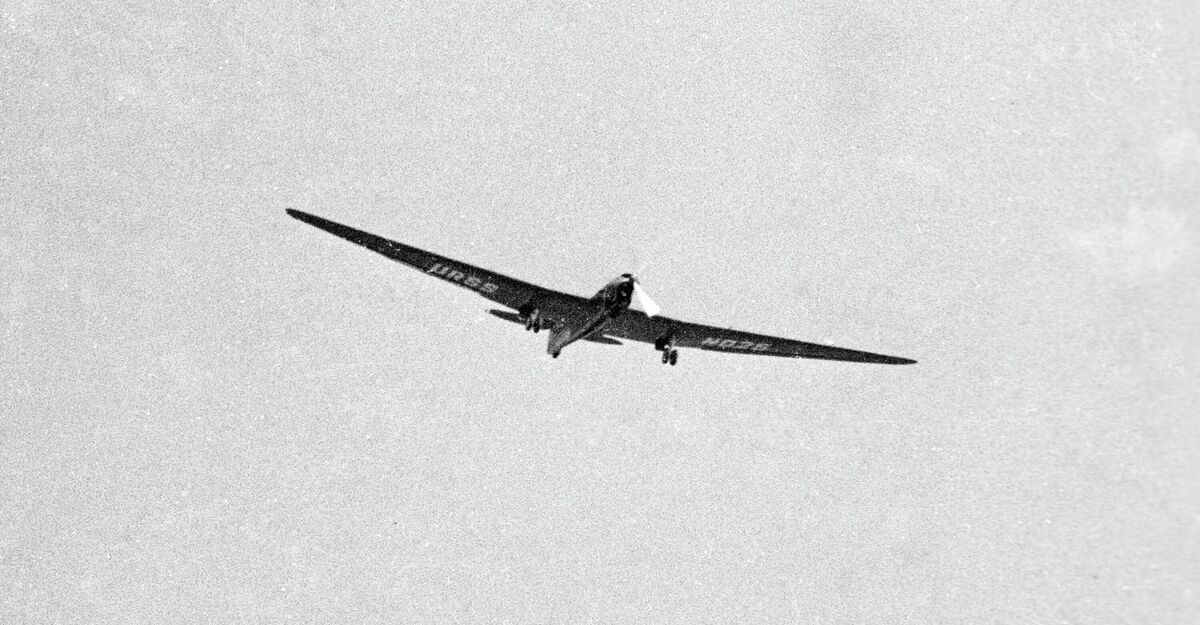
The Moscow-North Pole-United States flight started from the Shchyolkovo Airfield outside Moscow on June 18, 1937. Soviet pilots Valery Chkalov, Georgy Baidukov, and Alexander Belyakov took off in the latest ANT-25 aircraft, heading for the North Pole.
Soviet aviation heroes: Georgy Baidukov, Valery Chkalov, Alexander Belyakov
“I taxied the aircraft along the concrete runway. That’s how the most difficult and the most complex flight began. The engine, roaring at full throttle, propelled the aircraft forward. Staying on course was all I was thinking about. With each passing second, the aircraft gained speed. With a final handwave to those seeing us off, the aircraft lifted off the ground. Bouncing once or twice, the machine remained in the air. Baidukov retracted the landing gear. Hangars and factory chimneys flashed by. We were airborne flying above forests, fields, and rivers. It was morning. The country was waking up to a new day,” Valery Chkalov wrote about the fist minutes of the legendary flight.
The Fourth Crew Member: ANT-25
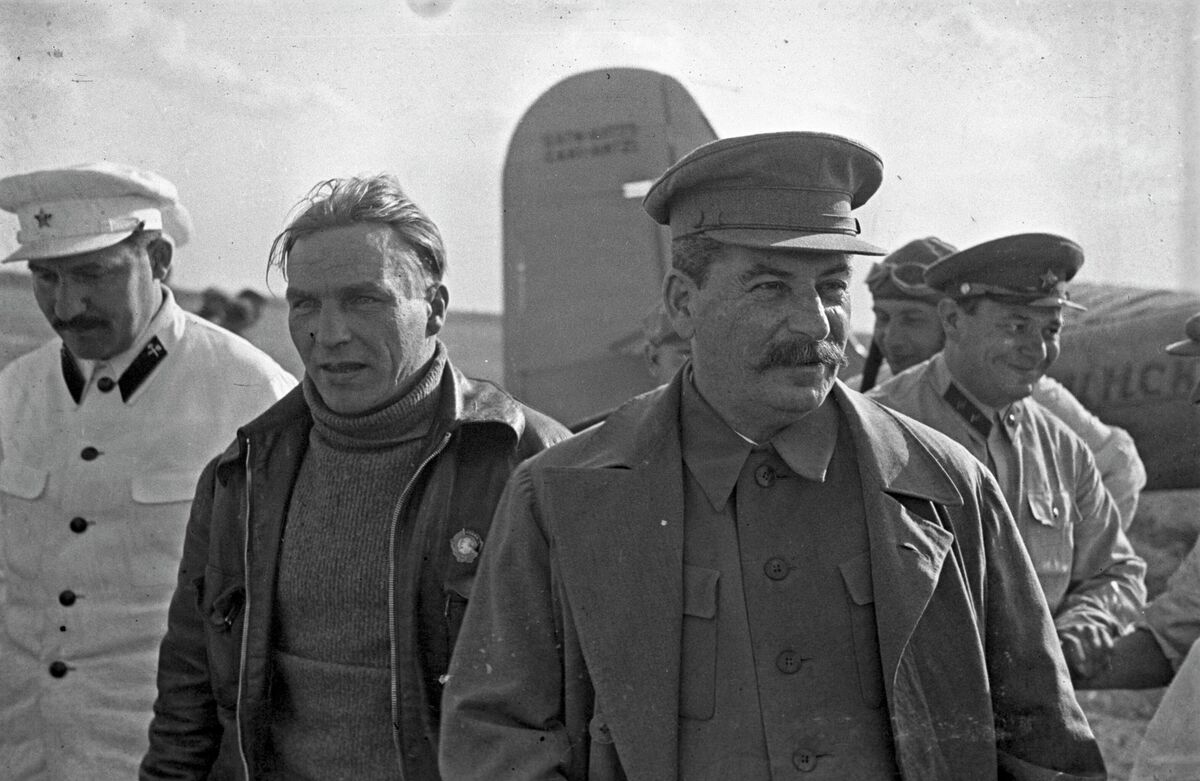
This unrivalled machine largely owes its existence to Joseph Stalin’s interest in aviation records. It is believed that he personally approached aircraft designer Andrey Tupolev with a request to create an aircraft capable of breaking the world flight distance record.
Valery Chkalov and Joseph Stalin at Shchyolkovo Airfield
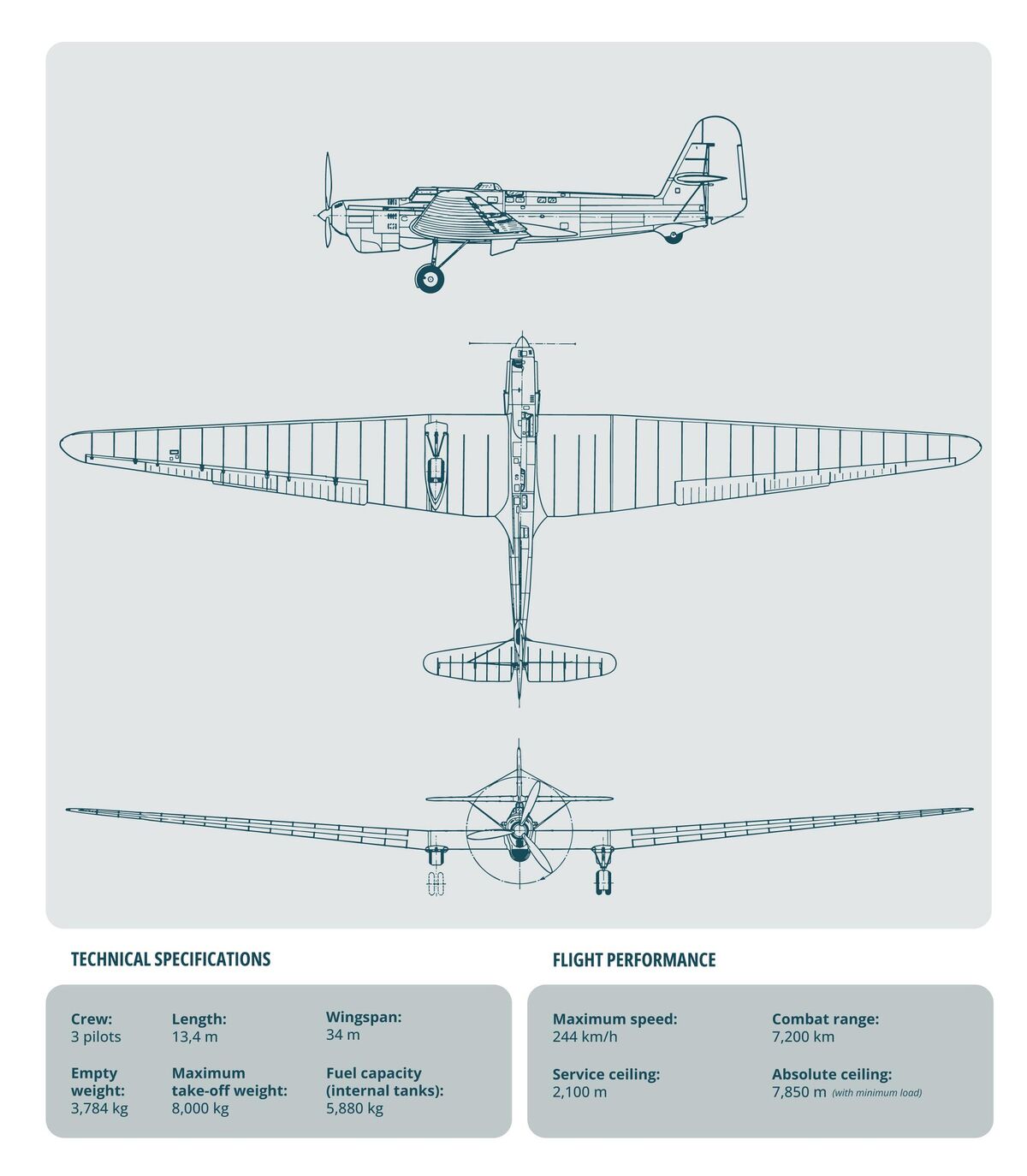
The design of an aircraft capable of covering 13,000 km was completed in July 1932. It was developed by a team led by Pavel Sukhoi.
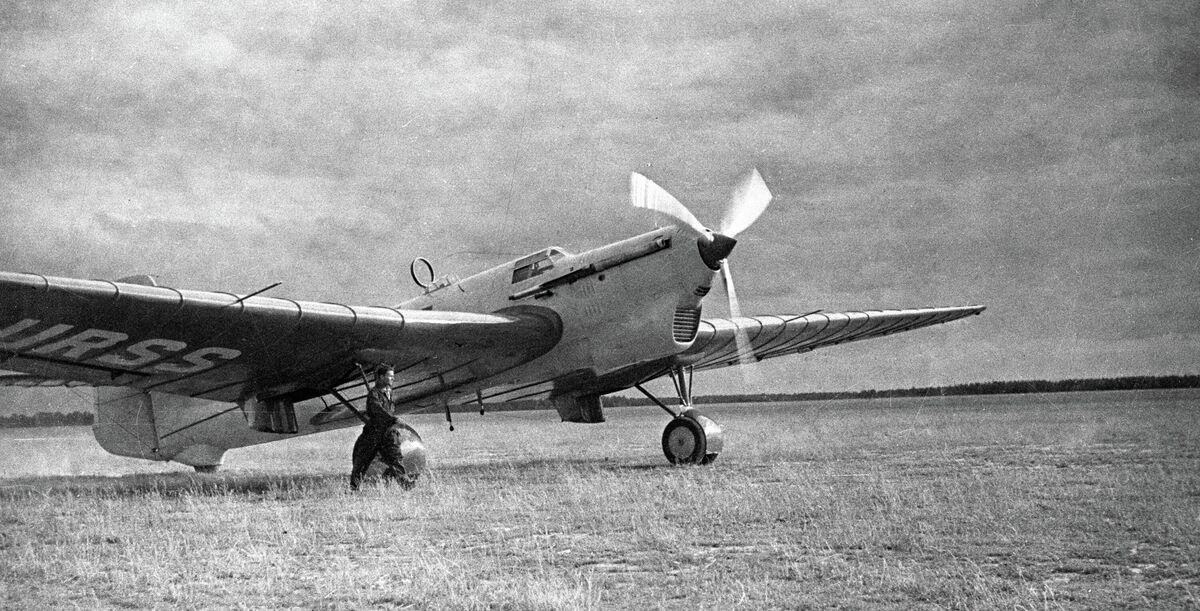
This type of aircraft was built for the first time ever and was designed as a monoplane with a duralumin corrugated wing of unusually high for its time aspect ratio. The size of the wing made it possible to store extra fuel inside it.
The ANT-25 was a simple and stable aircraft that performed well at high altitudes. However, due to its large wingspan, it had handling specifics: takeoff posed the main challenge, and a specially prepared sloped runway was built to overcome it.
The first nonstop test flight under Valery Chkalov’s command took place along the Moscow-Victoria Island-Franz Josef Land -Severnaya Zemlya-Tiksi Bay-Petropavlovsk-Kamchatsky route in the summer of 1936. The crew covered 9,374 km in 56 hours and 20 minutes in severe Arctic weather.
After that, it was decided to set a new world record for nonstop flight, which was considered the most prestigious achievement in the aviation community.
Flights to South America and Australia were considered first, but- for political reasons - the route via the North Pole to the United States was chosen, even though it was the most technically challenging route.
From the Soviet Union to the United States and Back
During the flight, the experienced crew encountered four cyclones. To bypass them, they had to climb to an altitude of 6,000 meters, and the temperature in the cockpit dropped to 9°C below zero. Fur clothing provided little protection.
During the flight, the ANT-25 crew counted on weather forecasts from other Arctic explorers, such as the North Pole-1 drifting polar station led by Ivan Papanin. However, when the aircraft was flying over that area, the antenna broke, and Alexander Belyakov had to do some urgent repairs. He eventually made it work, but the weather report was never received.
Ivan Papanin, from the diary of the drifting polar station
June 19. It’s an unusually busy day. All night Ernst was on radio watch tracking Chkalov’s flight... We got up. In a while, I heard the sound of an aircraft engine and shouted, “The plane, the plane!” Zhenya ran outside but was unable to see a thing. He came back shouting through the door: “That’s Chkalov, but I can’t see the plane, the sky is overcast. I can clearly hear the engine, though.” Everyone rushed out. We cursed the clouds a thousand times.
Over the American continent, Chkalov felt unwell. He had a nosebleed and handed over the controls to Baidukov. His comrades gave him the remaining oxygen supplies while they themselves lay exhausted. The aircraft iced up several times, and the crew had to fly at lower altitudes.
The engine cooling system’s failure posed the greatest danger. The crew needed warm water to restart it, but none was available. They ended up by pouring tea, coffee, and other liquids into the cooling system and made the final kilometers on this mixture.
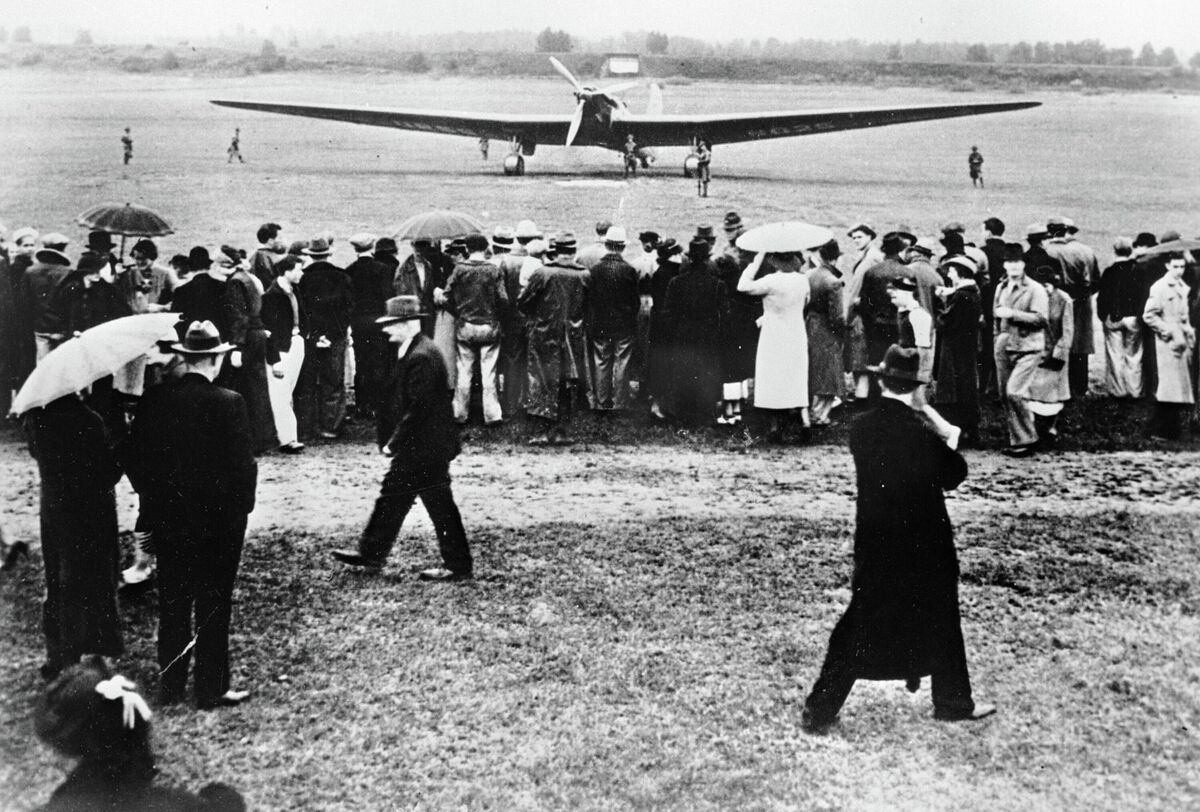
Greeting Soviet aviators at the Barracks military base airfield in Vancouver, Washington
At 4:20 p.m. GMT on June 20, the ANT-25 crew successfully completed the flight along the Moscow-Kola Peninsula-Barents Sea-Franz Josef Land-North Pole-Melville Island-Banks Island-Pierce Point-Queen Charlotte Islands-Vancouver-Portland route. There were merely 50 liters of fuel out of initial 6 tonnes left in the tank when the aircraft landed.
In total, the aircraft covered over 9,130 km (8,582 km in a straight line) in 63 hours and 16 minutes. This result was recognized as a Soviet national record, but the world distance record was not broken that time. The new record was set by another ANT-25 crew led by Mikhail Gromov in July 1937.
Excerpt from the June 1937 issue of Flight International:
“The fact that they failed to break the existing nonstop flight record is not as important as the fact that three Russians - Chkalov, Baidukov, and Belyakov- were the first in history to connect Soviet Russia with the United States via the North Pole. In some circles it has now become fashionable to downplay Russia’s achievements in aircraft construction and design. The flight from Moscow to Oregon showed that this country has pilots and navigators capable of flying under challenging conditions, and is able to manufacture engines capable of operating for long periods of time.”
Greeting in Vancouver of the ANT-25 flight crew: crew commander Valery Chkalov, co-pilot Georgy Baidukov, and navigator Alexander Belyakov
The United States of the 1930s gave the aviators a lavish reception. President Franklin D. Roosevelt spoke with the Soviet crew for almost two hours instead of a 15-minute protocol meeting as planned. The aviators were warmly welcomed by the crowds in the streets of New York.
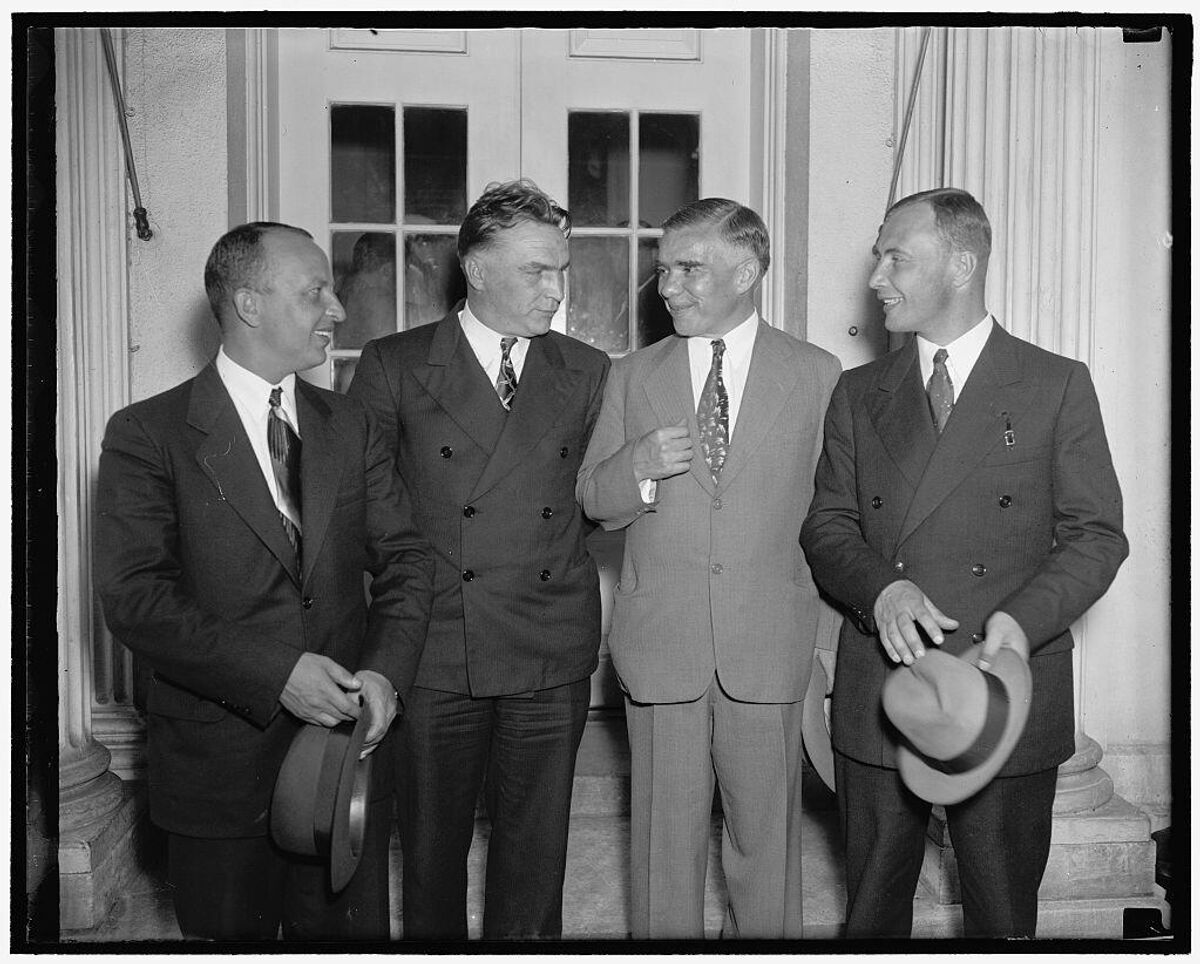
Valery Chkalov, Georgy Baidukov, and Alexander Belyakov leaving the White House after reception by President Franklin D. Roosevelt
The ANT-25 Chkalov crew aircraft was disassembled and brought back to the Soviet Union in 1937. Parts of the aircraft presumably were taken to the northern French port of Le Havre aboard the liner Normandie. From there, the aircraft was transported aboard the ship Kooperatsiya to Leningrad.
Modern Polar Aviation
Russia is carrying on the traditions of polar aviation, but using far more advanced aircraft of course.
1/3
Passenger aircraft MS-21, SJ-100, and Il-114 undergoing natural icing tests at Talagi Airport, Arkhangelsk, Russia
In the spring of 2026, successful tests of the MS-21, SJ-100, and Il-114 aircraft were conducted at Talagi Airport in Arkhangelsk to verify compliance with Russian and international aviation standards under natural icing conditions.
Later, the Il-114-300 aircraft carried out additional certification tests at airfields on the Arctic archipelagos of Novaya Zemlya and Franz Josef Land.
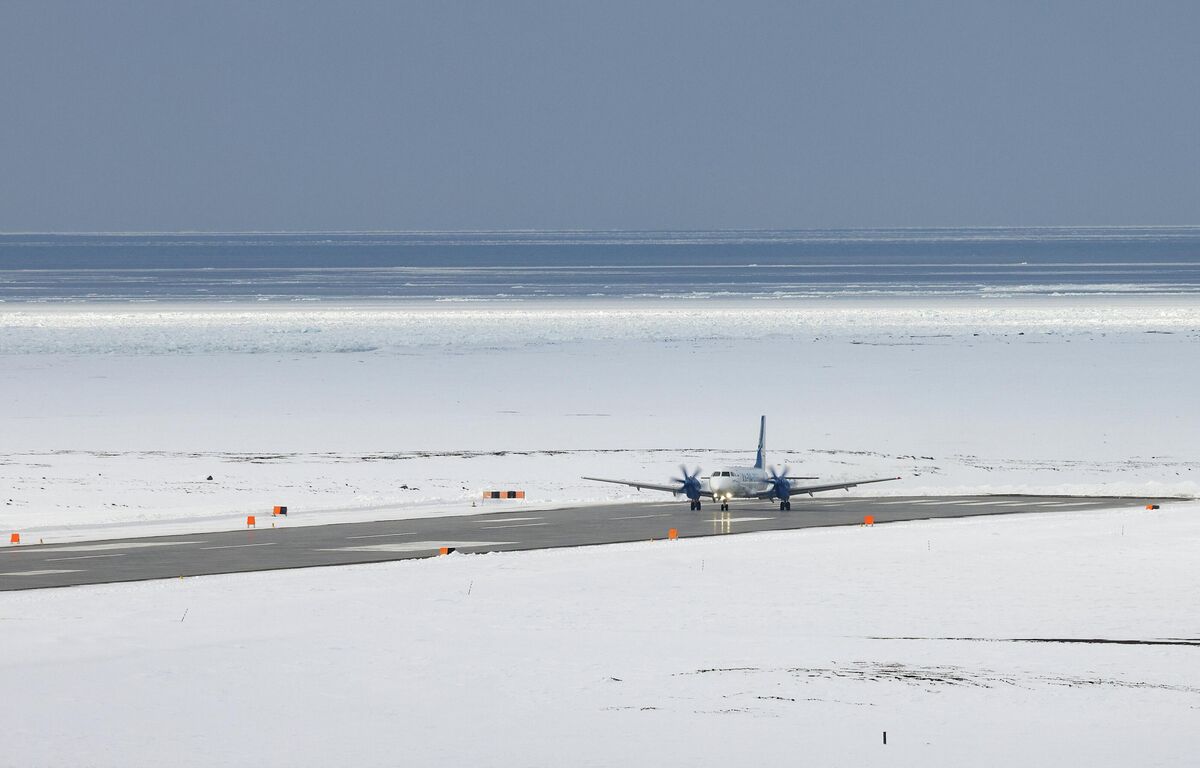
Il-114-300 turboprop aircraft during testing on the Franz Josef Land Archipelago
According to Ilyushin Aviation Complex, the Il-114-300 was designed to operate across all geographical latitudes and all weather and climate conditions.
“The aircraft made it almost to the North Pole with less than 100 km remaining to the zero point. To determine the maximum operating latitude, the Franz Josef Land archipelago was chosen which is home to Russia’s northernmost airfield on the 80th parallel,” the company’s media release said.
Aircraft designers believe the Il-114 can also be used in the Arctic zone and replace all existing aircraft from the old fleet and foreign-made aircraft of this class.