18:51 29.05.2026
Federation Council Committee on Defense and Security holds meeting in Karelia
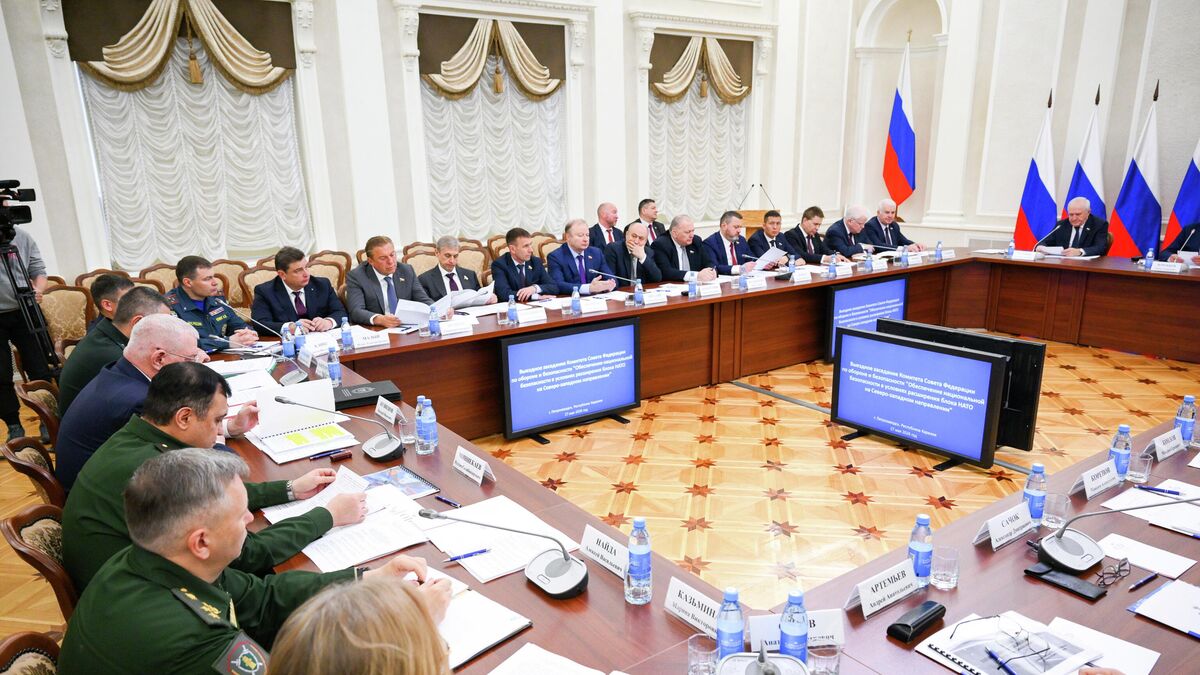
© Karelia Republic News Agency / Sergei Yudin
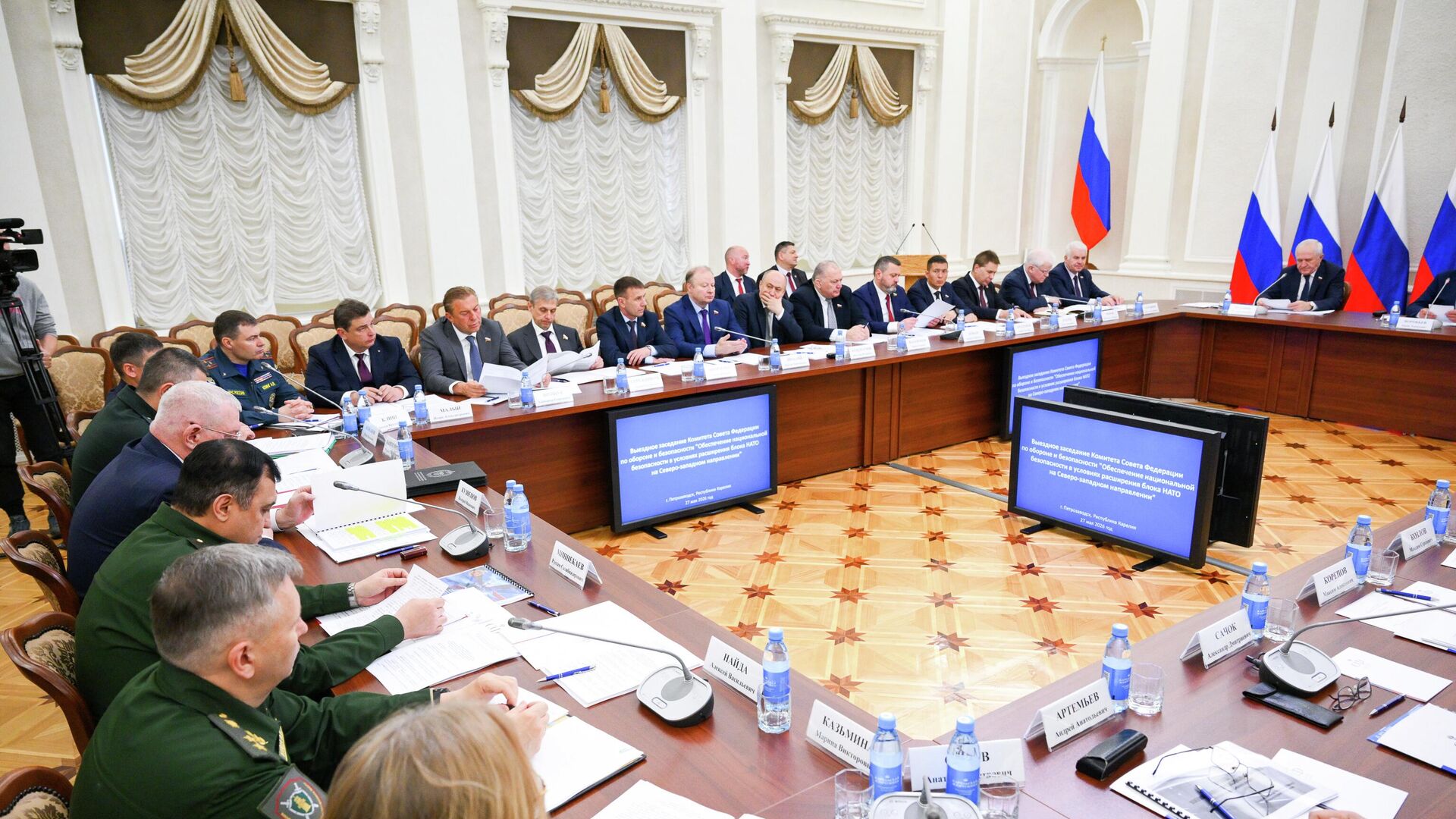
Participants discussed the strategic military situation in the Arctic, as well as the readiness of territorial defense systems. The agenda also included discussions on securing the national border and the role of border agencies in bolstering Russia’s western frontiers.
According to the Federation Council’s press service, the current condition, existing challenges, and development prospects of the White Sea–Baltic Canal were subjected to rigorous analysis.
“We reviewed all issues amenable to resolution through legislative regulation. For all matters requiring adjustment, we stand ready to act swiftly to effect necessary changes,” affirmed Deputy Speaker of the Federation Council Yury Vorobyov.
Chair of the Federation Council Committee on Defense and Security Vladimir Bulavin noted that the meeting examined three critical pillars of national security: military, border, and transportation.
“During a closed session, the committee received briefings from the leadership of the relevant ministries and agencies,” he added.
The deliberations yielded concrete decisions aimed at implementing necessary and appropriate measures to ensure the region’s national security.
Yury Vorobyov further noted that the meeting was deliberately convened in the Republic of Karelia, a strategic outpost in Russia’s northwest – and home to Petrozavodsk, a City of Military Glory.
“NATO is actively augmenting its military capabilities along Russia’s borders. Moreover, the North Atlantic Alliance designates Russia as its primary adversary, labeling it as threat number one. These developments coincide with accelerated militarization across European nations and a surge in Russophobic sentiment,” he stated.
According to the Deputy Speaker of the Federation Council, in the wake of Sweden’s and Finland’s accession to NATO, the alliance has significantly expanded the scope of its exercises, including those in close proximity to Russia’s borders. NATO is simulating provocative armed-conflict scenarios involving Russia, with exercises featuring offensive weaponry. Yury Vorobyov further underscored the necessity of improving current legislation for more effective counteraction to emerging new threats.