10:00 25.05.2026
“We defended the Northern Sea Route.” How the Solovetsky School of Naval Cadets forged young warriors
© Courtesy of Anatoly Shchelkunov’s personal archive
The Solovetsky School of Naval Cadets was a unique educational institution established in 1942. Teenagers who studied naval warfare there were assigned to the fleet and enlisted in the crews of combat ships to defend the Motherland during the Great Patriotic War.
Anatoly Shchelkunov enrolled in the School for Naval Cadets in 1944. From Moscow, he traveled to Arkhangelsk, and then – to the Solovetsky Islands, where he trained as a radioman. Within a year, he commenced combat duty as part of the Amur Flotilla.
Read about how the cadets trained in the North and what helped them persevere during difficult times in this article from the portal “Development of the Arctic and the Far East.”
The Solovetsky School for Naval Cadets was founded on May 25, 1942. The institution’s primary mission was to train qualified specialists for the Navy.
Adolescents who had completed sixth or seventh grade were selected for admission. They were sent to the Solovetsky Islands, where in the harsh conditions of the North they trained in military specialties and maritime operations. Upon completing their studies, cadets were assigned to the active fleet, and upon reaching the age of majority, they were enlisted in the crews of combat vessels.
Over three years, the Solovetsky School of Naval Cadets trained more than 4,111 radiomen, helmsmen, boatswains, engine mechanics, and electricians.
Anatoly Shchelkunov ranks among the graduates of the Solovetsky School for Naval Cadets. He was born in Moscow, where he lived with his mother and sister. In 1941, following the outbreak of war, schools closed, and Anatoly, having completed fifth grade, began working at an aircraft factory, where he helped solder radiators for airplanes and other equipment in support of the war effort.
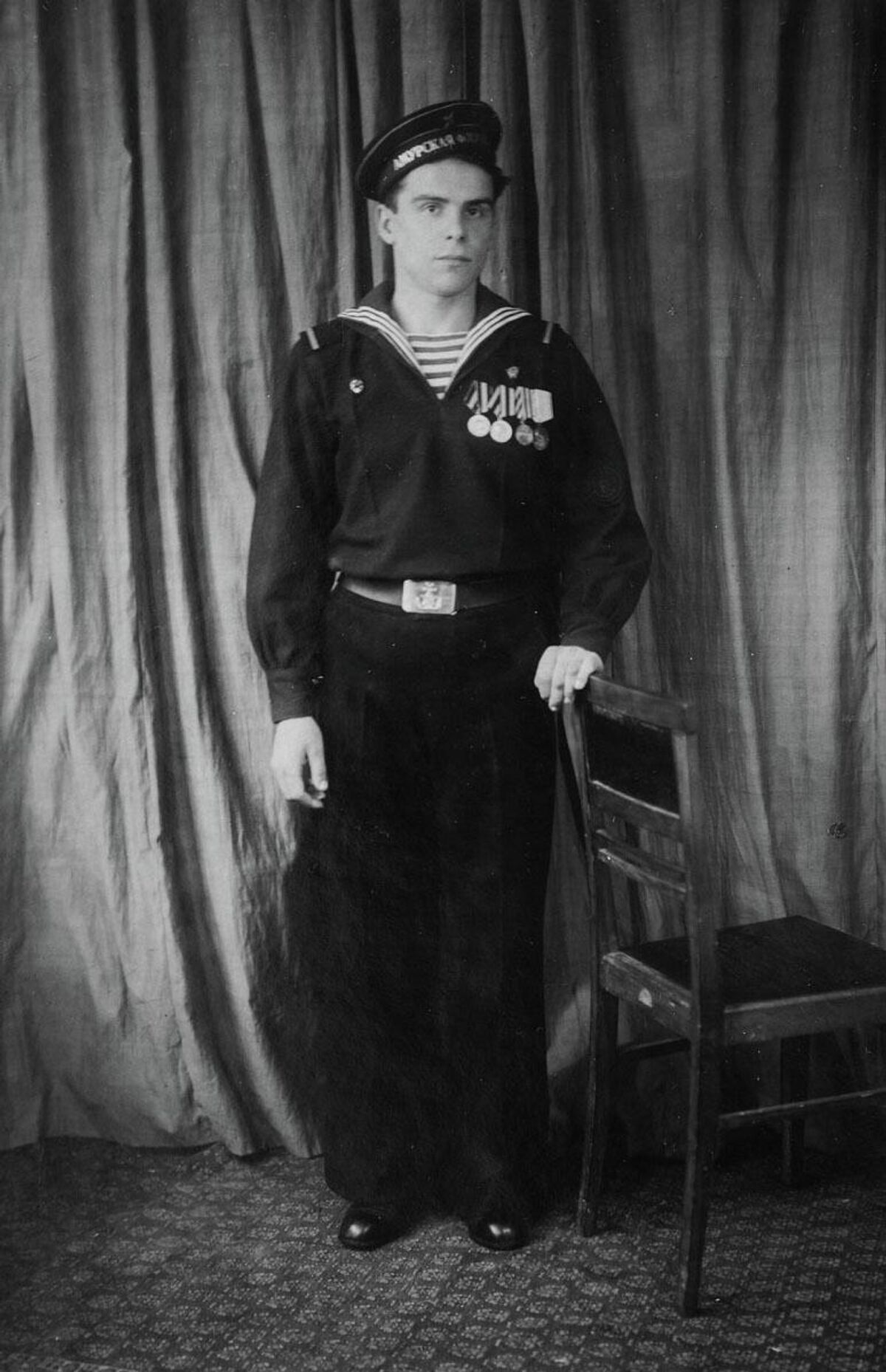
17 Years old. Amur Flotilla. June 1945
© Courtesy of Anatoly Shchelkunov’s personal archive
Anatoly enrolled in the Solovetsky School for Naval Cadets in 1944, when schools reopened, having just completed sixth grade. In August, alongside fellow recruits, he departed Moscow for Arkhangelsk aboard a freight train. After passing the medical examination, he was selected for training as a radioman.
“We changed into naval uniforms and embarked aboard a transport vessel bound for the Solovetsky Islands. A naval escort accompanied us to the islands. We approached the Solovki under cover of darkness and were ferried ashore by longboats,” he recalls.
Training on the Solovetsky Islands lasted six months under extremely harsh conditions. The School of Naval Cadets was of critical strategic importance to country, as it provided professional personnel for the Northern Fleet. According to Shchelkunov, this strategic significance – coupled with the garrison’s proximity to White Sea shipping lanes – made the facility a repeated target for German air raids.
As training drew to a close, the cadets applied their newly acquired skills at sea. It was no easy task, Anatoly noted:
“When we went on combat missions in the Barents Sea, the pitching was severe. There we grew accustomed to the cold: storms raged, but the sea tempered us. There were also threats of attack, as German aircraft were flying overhead, and we could return fire.”
The naval cadets were also engaged in protecting the country’s transportation system. “We defended the Northern Sea Route, and had it not been for the efforts and heroism of the lads, the ships from England that carried military cargo, equipment, provisions, and humanitarian aid would not have been able to deliver to the Motherland such vital, essential supplies for the front lines,” Shchelkunov added.
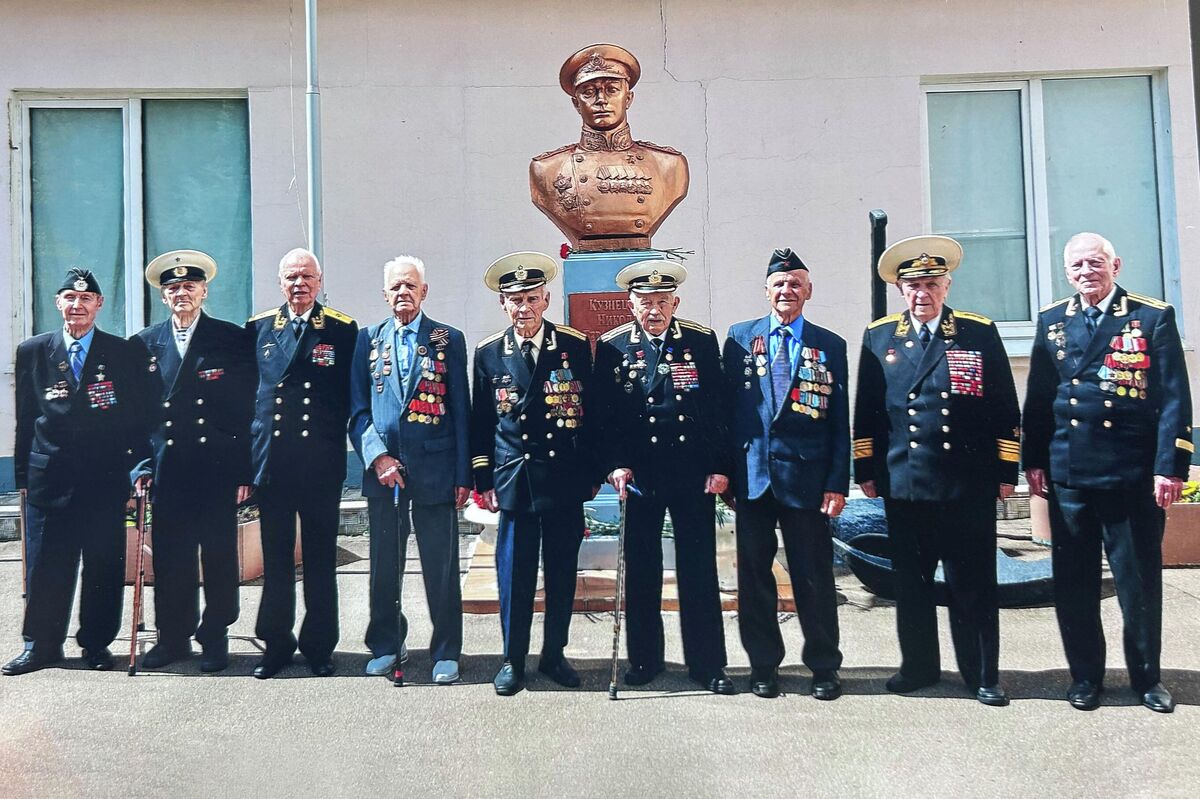
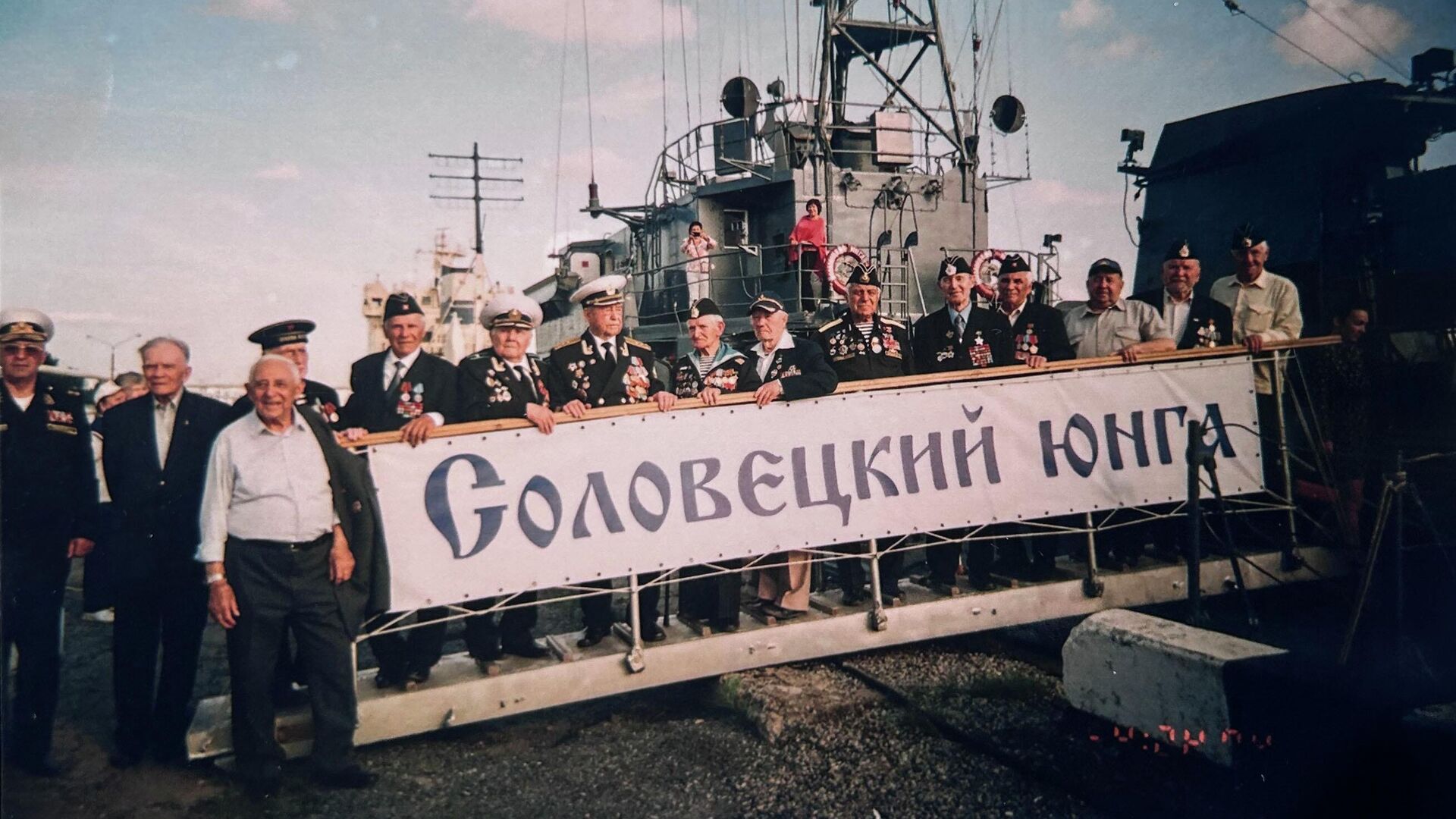
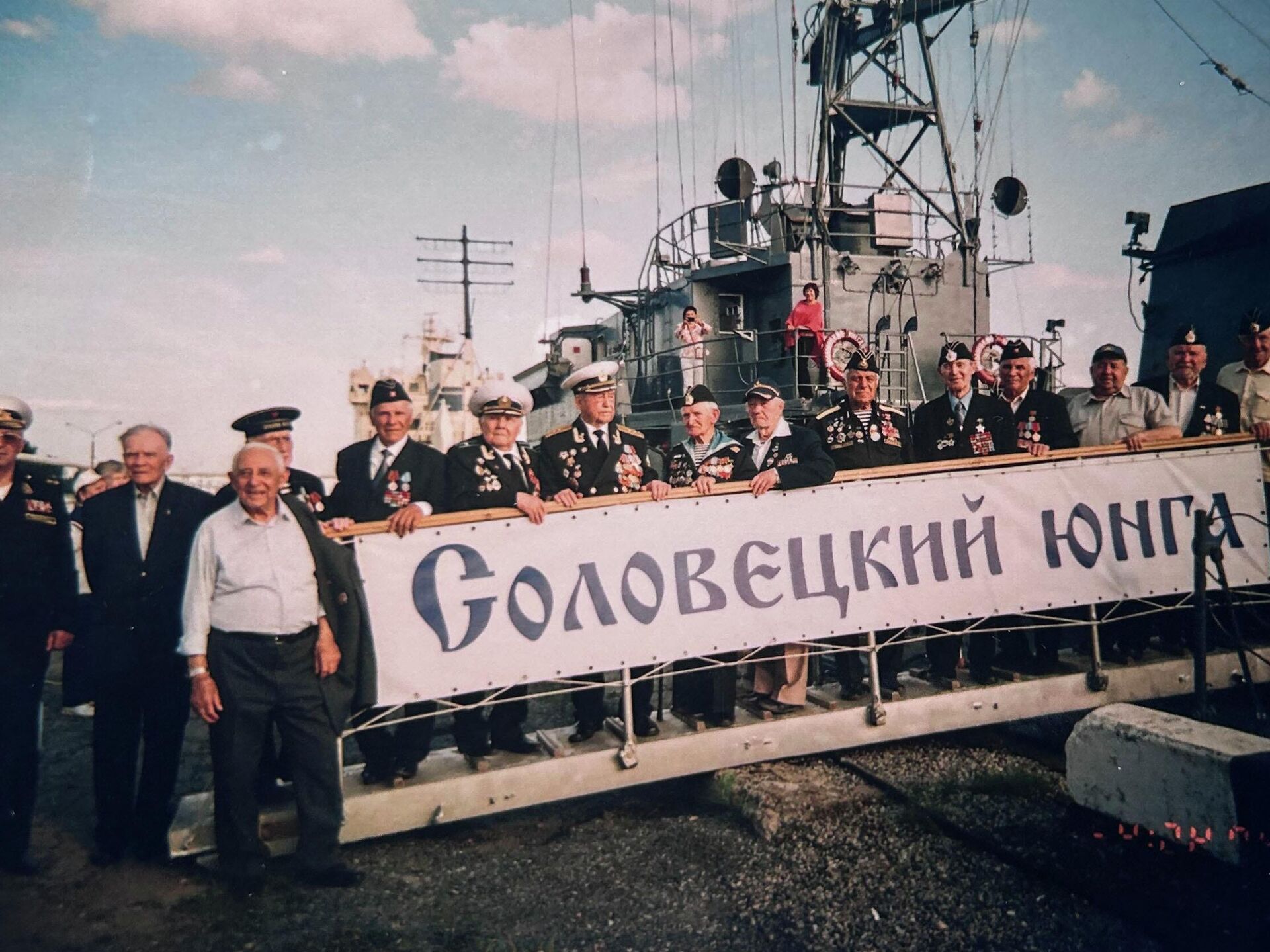
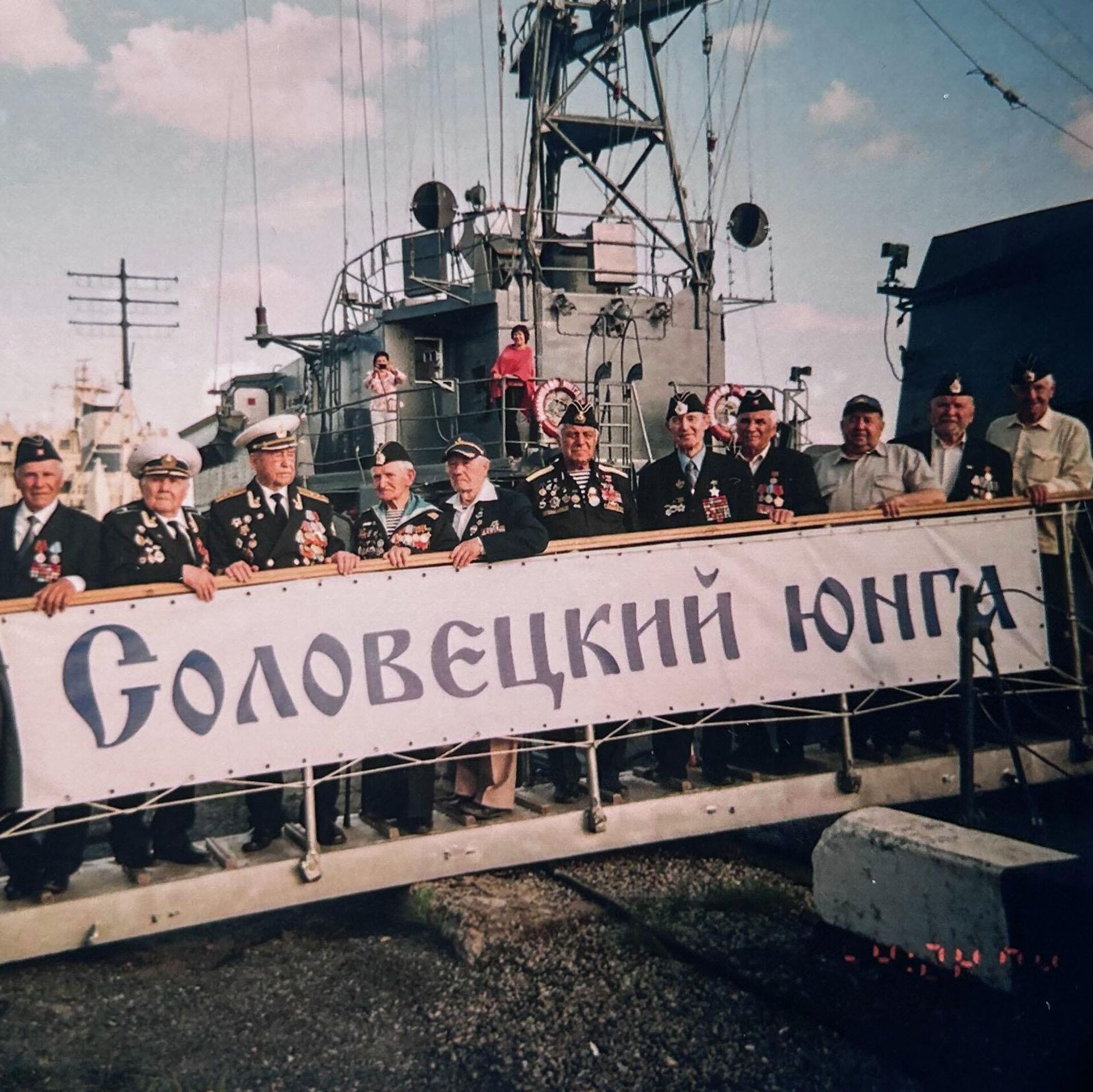
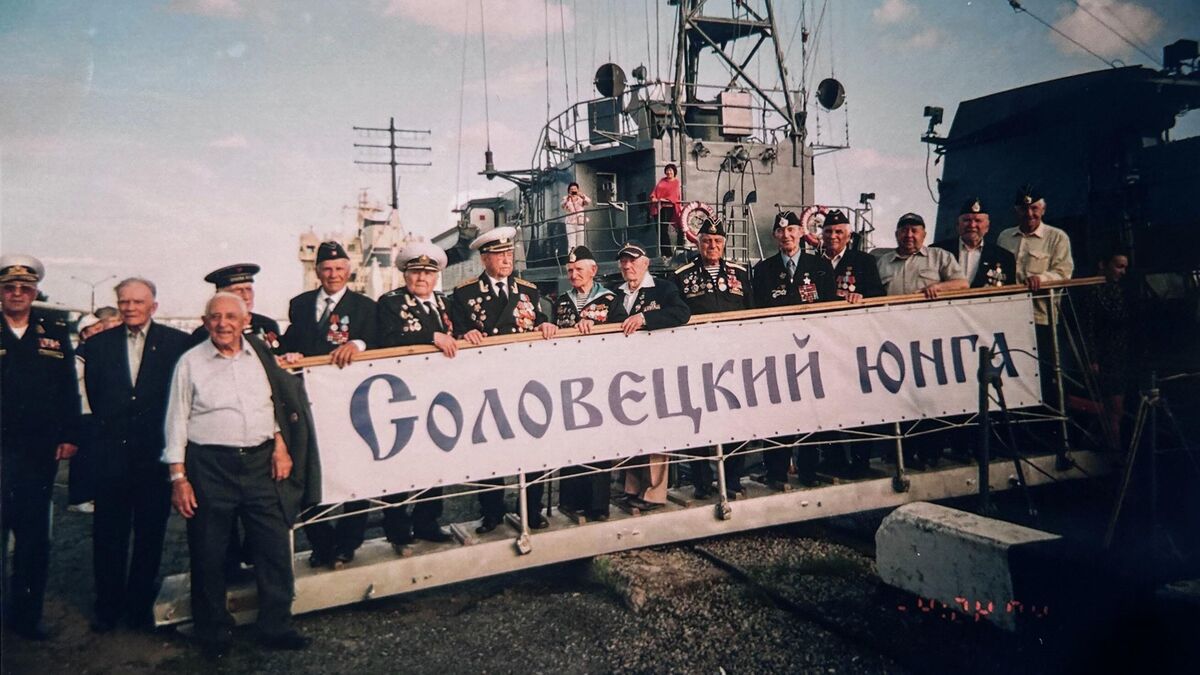
Solovetsky naval cadets, Admiral Nikolai Kuznetsov School. July 24, 2023
© Courtesy of Anatoly Shchelkunov’s personal archive
Anatoly graduated from the School of Naval Cadets as a first-class radioman. In 1945, he was assigned to full combat duty as part of the Amur Flotilla.
“Our task was to detect submarines and drop depth charges on them,” Anatoly recounted. His duties involved decoding and transmitting information, which the captain used to make decisions in engaging the enemy.
Anatoly and his comrades shared a single goal: to defend the Motherland. According to Shchelkunov, it was precisely this, as well as a close-knit unit and faith in a bright future, that helped them overcome fear in difficult times and fulfill their military duty.
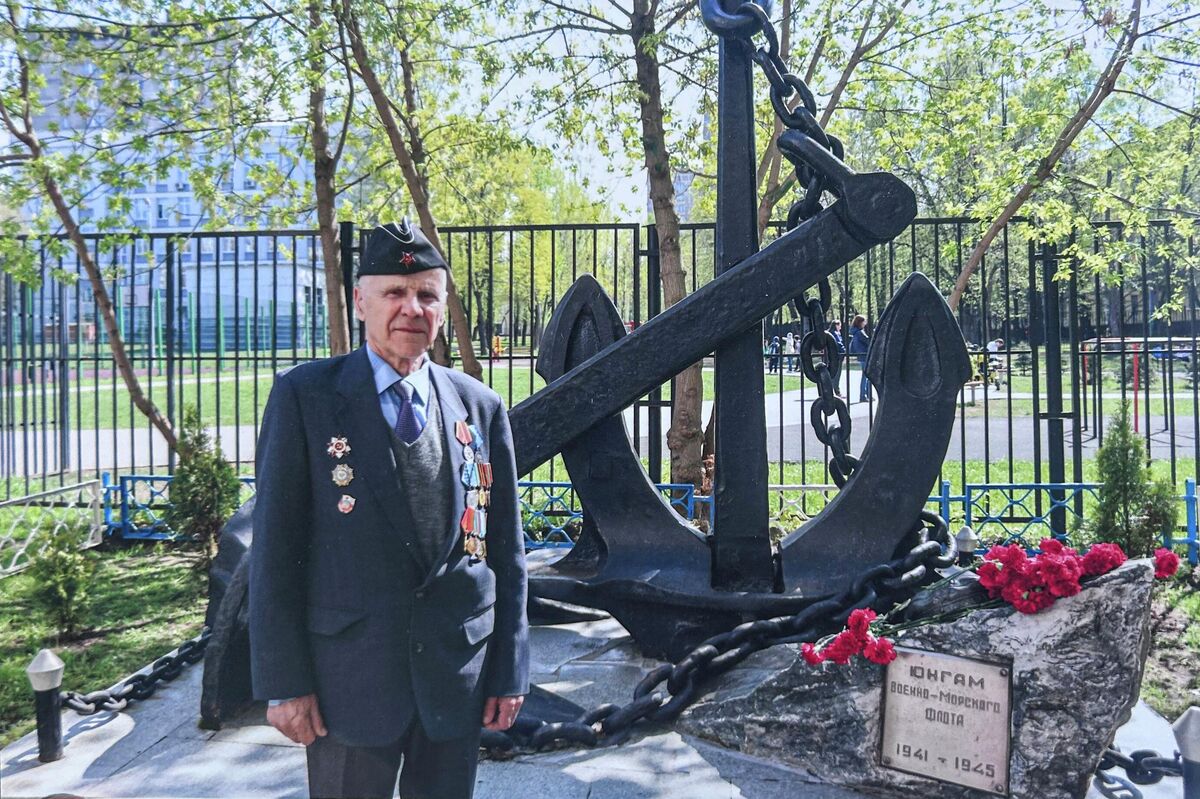
School No. 349 named after Solovetsky naval cadets. Izmailovo, 2020
© Courtesy of Anatoly Shchelkunov’s personal archive
Anatoly was demobilized in 1951. He returned to Moscow, where he was involved in the construction of high-rise buildings: Moscow State University, the Ministry of Foreign Affairs, Hotel Ukraina. Six years later, he completed specialized retraining with the Baltic Fleet, and then returned to the capital again.