10:00 29.04.2026
Zero accidents, growing cargo traffic, and unique vessel escort operations: how navigation along the Northern Sea Route works
© Atomflot
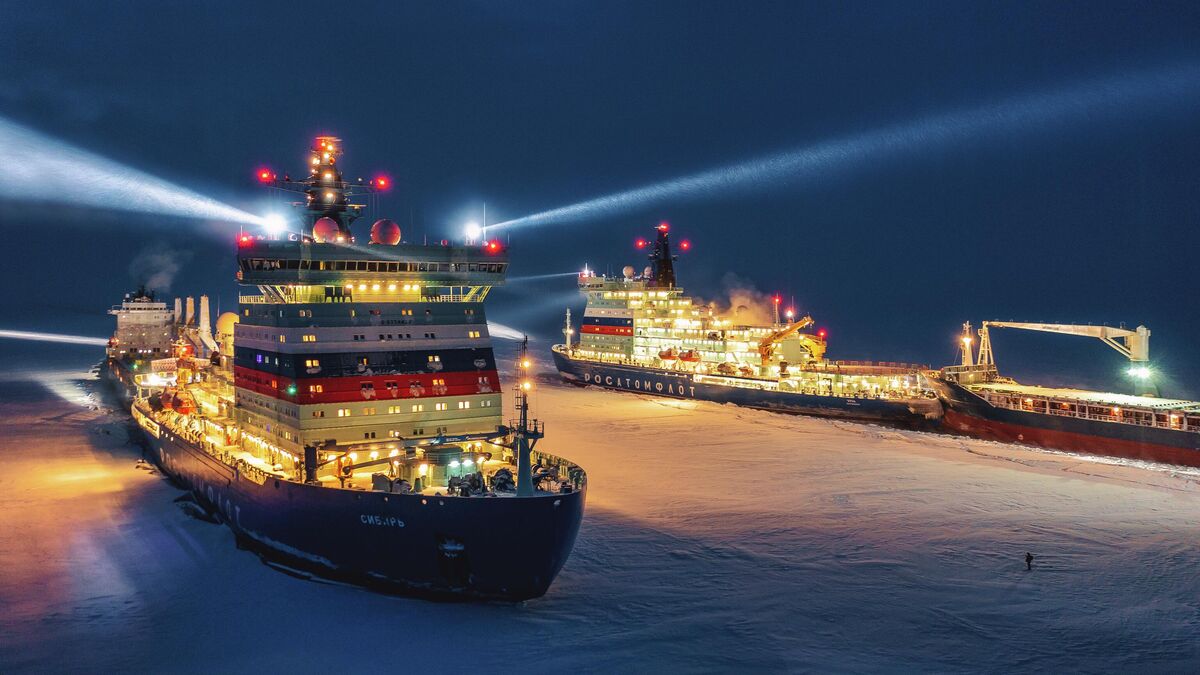
The Northern Sea Route is the shortest shipping route between European Russia and the Far East. In recent years, much has been done to expand its operations. Cargo volumes have increased accordingly. By 2030, more than 100 million tonnes of cargo are expected to have been transported along the NSR.
GlavSevmorput and the Marine Operations Headquarters play a major role in the functioning and development of this key maritime transport artery. They are responsible for safety, issuing transit permits, interacting with icebreakers, and much more.
Correspondents from the Development of the Arctic and the Far East portal went to St Petersburg to talk with those who help vessels stay on course along the Northern Sea Route. They found out why there has been not a single denial of a request to pass along the NSR over the past two years, how the most recently built icebreakers will influence cargo transport in the Arctic ice, and why sailors are fascinated with walruses diving into the ocean depths.
- GlavSevmorput was established in 2022 and is responsible for the overall organization of vessel navigation in the waters of the Northern Sea Route. What are the main accomplishments so far?
Sergei Zybko (CEO of GlavSevmorput): The most important accomplishment is that since August 1, 2022 to this day the Northern Sea Route has remained accident-free. We can state this safely. We do not take into consideration minor incidents in ports. In terms of navigation, though, there have been no accidents related to sailing in ice conditions.
Svyatoslav Stepchenkov (Deputy CEO for Navigation Support at GlavSevmorput): I would like to highlight another key point in our work: cargo traffic along the Northern Sea Route is increasing with each passing year. We undoubtedly have an influence on this indicator which shows in our ability to organize efficient cargo operations, engagement with shipowners, navigation planning, and granting vessels access to the NSR waters.
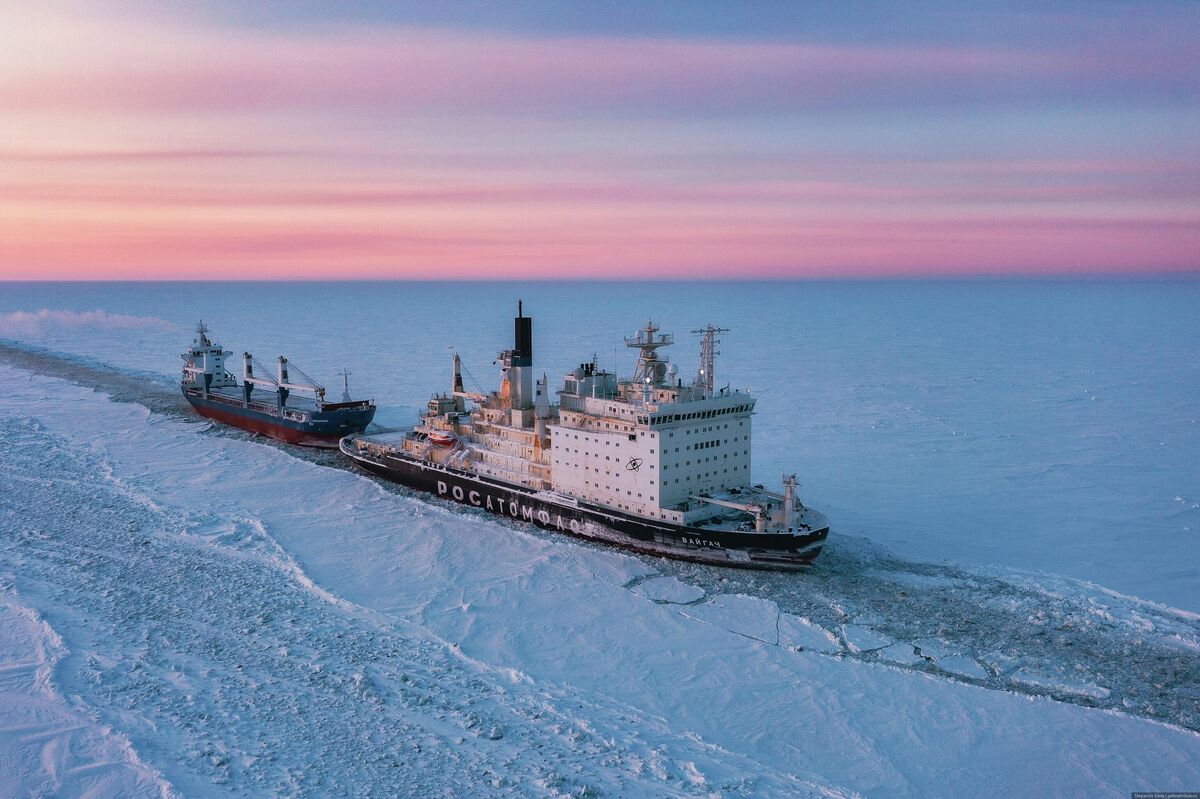
Nuclear-powered icebreaker Vaygach guiding a vessel through the ice
© Rosatom State Corporation
In addition, the number of permits is growing. The number of denied requests for passage along the Northern Sea Route is decreasing year by year. Over the past two years, we have not rejected a single request. We also see an increase in the number of voyages within the NSR waters. I would say these are the main results. This is the result of significant efforts by Rosatom as a whole and GlavSevmorput in particular.
Sergei Zybko: There is also something that cannot be quantified, but still is an important achievement: all shipowners and commercial operators now have faith in GlavSevmorput.
An increasing number of vessel operators are turning to us for information and navigation support which works as follows: we sign a contract, the vessel is given an entry point into the NSR waters in advance, and a specially designed route is delivered electronically to the captain. All that remains is to upload the route and follow it. The vessel proceeds depending on ice conditions, while we monitor its whereabouts from the Marine Operations Headquarters. When the time is right, we tell them to stop and wait for an icebreaker to arrive at a specified time and escort them to the destination, or to let them know that the icebreaker escort is complete and they can keep sailing all by themselves.
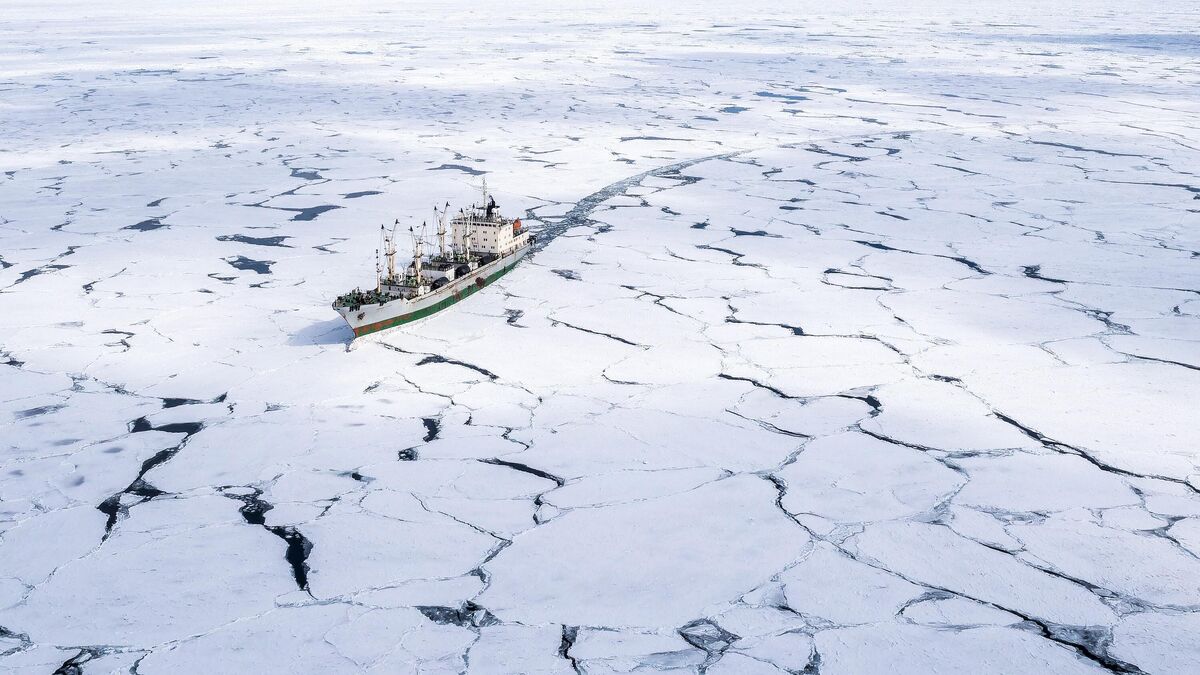
I can safely say that the demand for this service is surging. We are already signing contracts for the summer period meaning that people know about us and trust us, and that GlavSevmorput stands high in the eyes of shipowners and commercial operators.
- You mentioned that you monitor vessel whereabouts from the Marine Operations Headquarters. It sounds much like a flight control centre. How accurate is it to make that comparison?
Vladimir Arutyunyan (Head of the Marine Operations Headquarters at GlavSevmorput): I am not fully familiar with what happens inside the flight control centre. I have only briefly been in a dispatch room once. But overall, I would say yes, we do something very similar.
- Then let’s let those who have never been to either a flight control centre or the Marine Operations Headquarters know what you do.
Vladimir Arutyunyan: We have contracts signed with specific organizations and specific icebreakers. There are nuclear icebreakers provided by Atomflot and diesel icebreakers provided by Rosmorport. They supply us with a schedule of required vessel escorts for specific times and information about the vessels. We make an assessment to see whether those vessels qualify for passing the route during that particular period. This is done in advance, before the navigation season begins. We decide on the vessels that can make it and the escort periods.
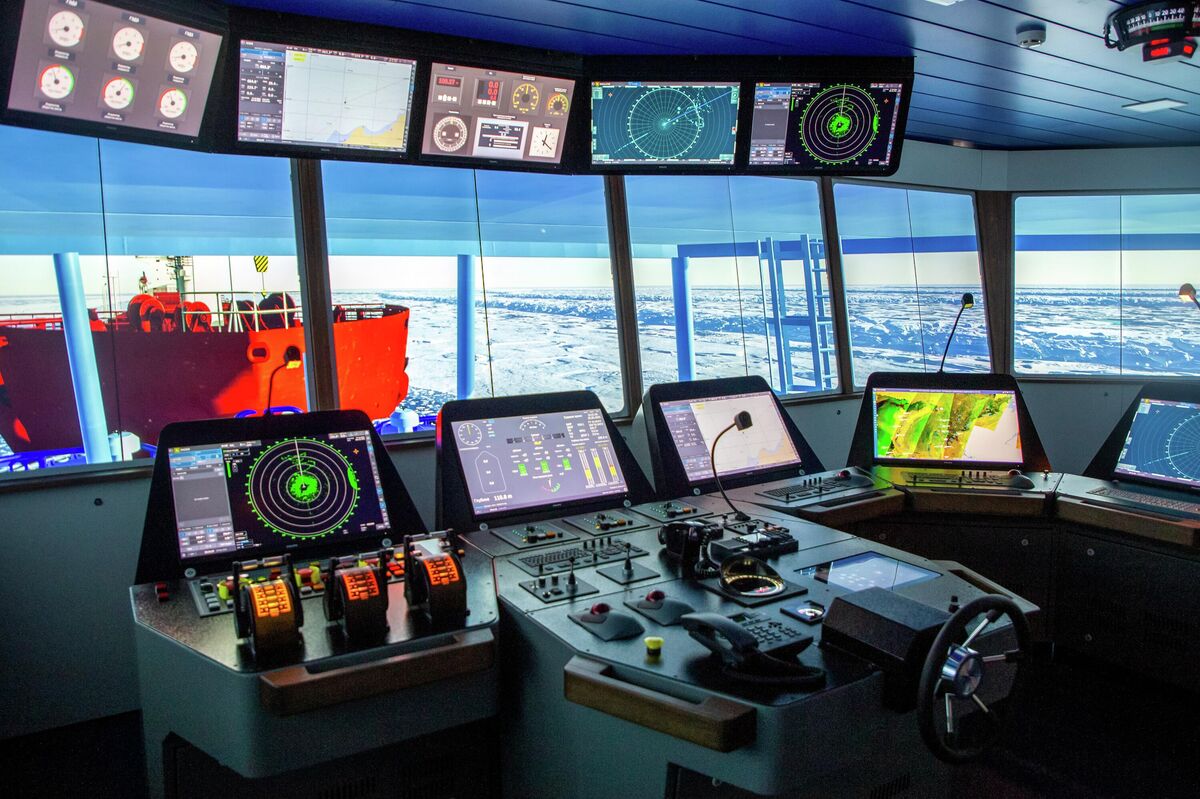
Navigation simulator for the Project 22220 multipurpose nuclear-powered icebreaker
© Russian Arctic and Far East Development
March, April, and May are the most challenging periods, because ice is at its thickest. Here’s how our work is organized: we receive an application and begin matching icebreakers and vessels to make sure the escort is done in the most efficient and the fastest way.
- Recently, the Marine Operations Headquarters introduced a digital services platform for the Northern Sea Route. What practical benefits does this innovation provide?
Nikita Boyev (Leading Specialist of the Fleet Operations Department at the GlavSevmorput Marine Operations Headquarters): Indeed, this is our new system, the Unified Digital Services Platform of the Northern Sea Route. It encompasses the full scope of work done by the headquarters, icebreakers, vessels, shipowners, charterers, and clients. The system allows users to submit applications and to obtain permits to navigate the NSR waters. The system can also be used to file a request for an icebreaker escort or for information support.
Svyatoslav Stepchenkov: In the future, this platform will include everything that may be needed to navigate the Northern Sea Route. All services will be available in one place. One could describe it as a one-stop-shop for the NSR similar to the integrated government services app. Here, users will be able to obtain navigation permits, request and use icebreaker escort services, or, if no escort is required, apply for information and navigation support. This service allows vessels of a specific ice class to travel along a pre-planned route in specific ice conditions without icebreaker assistance, which helps reduce escort costs. The headquarters assesses whether such a passage is possible. If it is, we process the application and provide the service. If not, an icebreaker is assigned to the operation. In every case, we choose the best solution, as safety is our top priority.
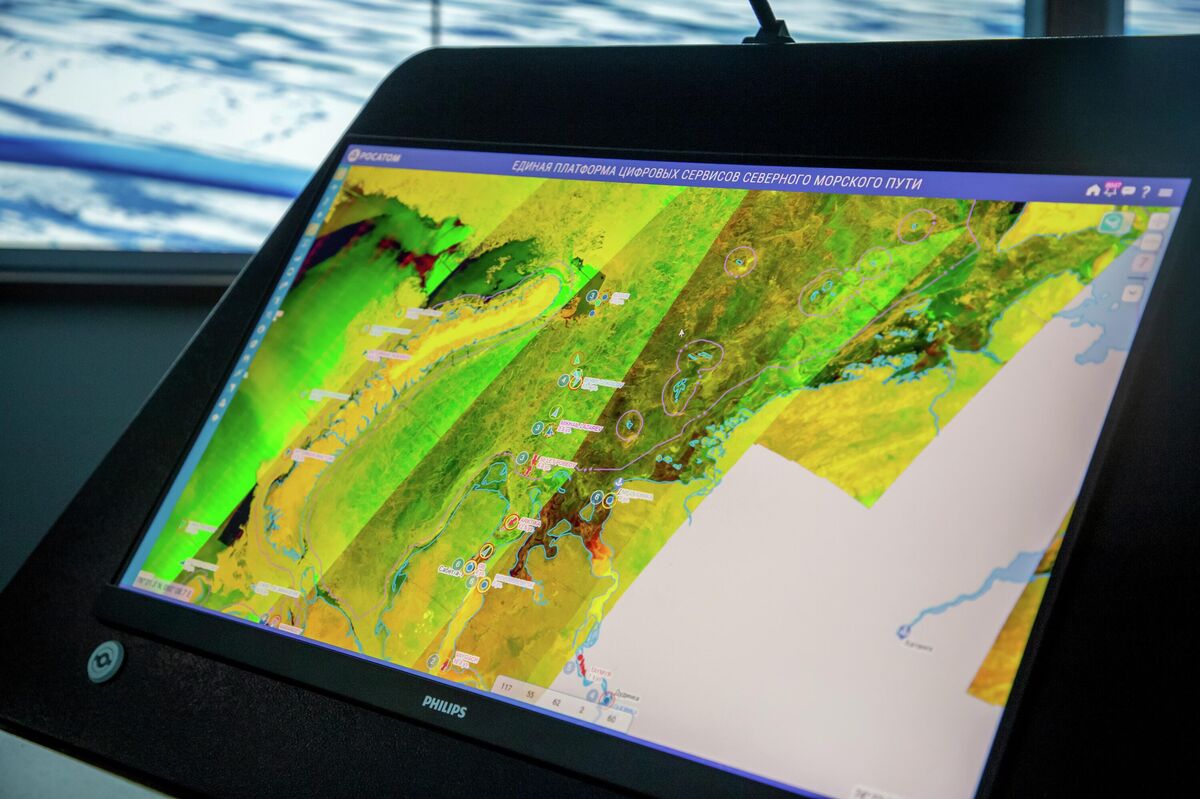
The Unified Digital Services Platform (UDSP) for the Northern Sea Route
© Russian Arctic and Far East Development
In the future, the Unified Digital Services Platform will also let users obtain services in ports, such as ordering water and food and refueling.
- How can one obtain a permit to navigate the Northern Sea Route?
Svyatoslav Stepchenkov: There are several ways to obtain a permit. The first one is to use the government services portal. The second option is to submit documents using a form on our official website. The third one is to email a request.
- Are any services available for foreign vessels?
Svyatoslav Stepchenkov: Processing applications from abroad has become somewhat of a challenge lately. However, email is working reliably, so our foreign colleagues have no problem submitting requests whatsoever. We are in touch with them on an almost daily basis. Submitting required documents or obtaining permits is not a problem.
- You mentioned earlier that over the past two years there has not been a single denial of a request for passage along the Northern Sea Route. If a denial does occur, what are the reasons?
Svyatoslav Stepchenkov: We consistently issue over 1,200 permits per year. Indeed, over the past two years we have not refused anyone. Everyone who obtained a permit fully qualified to operate on the Northern Sea Route.
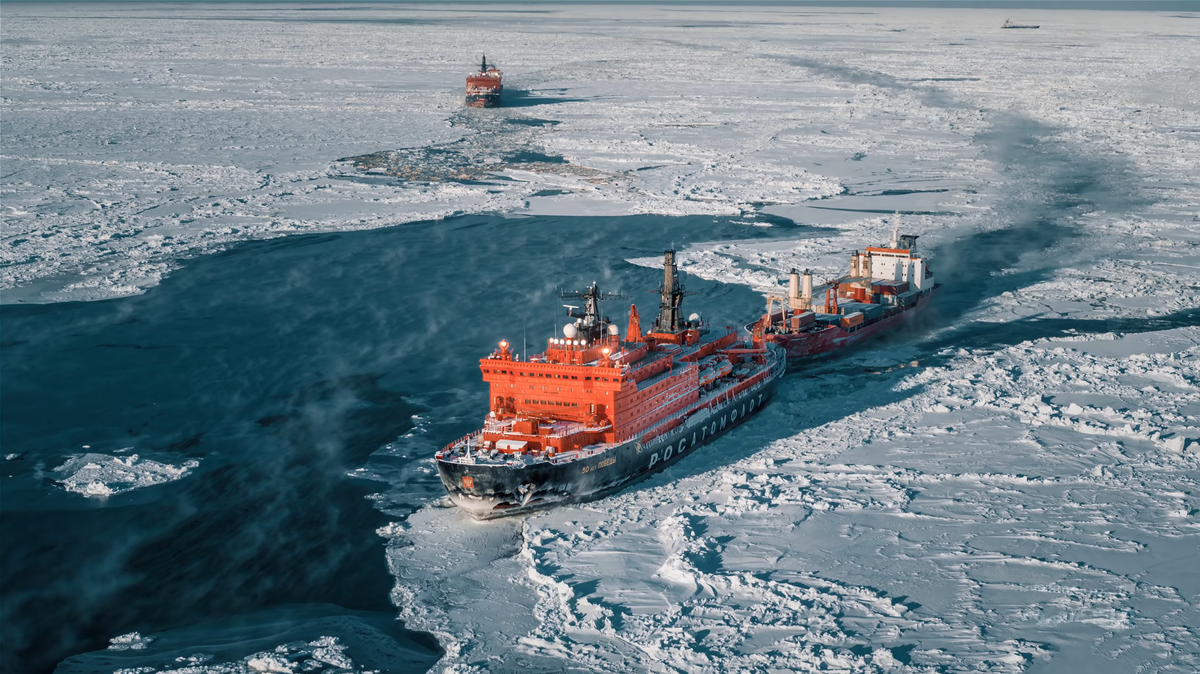
Project 10521 nuclear-powered icebreaker 50 Let Pobedy towing a vessel
© Atomflot
Speaking about the main reasons for refusals, they are usually connected with applicants submitting documents for a navigation period that their vessels do not qualify for. In such cases, we deny the request and explain that the vessel should be used in a more accommodating season. For example, if a vessel has no ice class or just a low ice class, it is better suited to the summer/fall period, when there is less ice and passage is easier.
- Is there a particular reason why there have been no denials in the past two years?
Svyatoslav Stepchenkov: Yes, this is because we have significantly improved our preliminary work. Before an application is submitted, we try to review all documents with applicants and provide consultations.
How do we organize this? People come to us and say they want to transit the Northern Sea Route. We tell them to first send us what they have, and we will see what we can do. Then, we will recommend the best timing and the most suitable vessel. In other words, we walk them through all the nuances in advance. We provide consultations to both Russian and foreign applicants, it makes no difference to us. We also provide consultations in English, no problem with that.
We aim to resolve all issues before the documents are formally submitted, so that by the time we receive them, we know that the application set is complete and properly prepared. As a result, the process runs smoothly and the permit is granted.
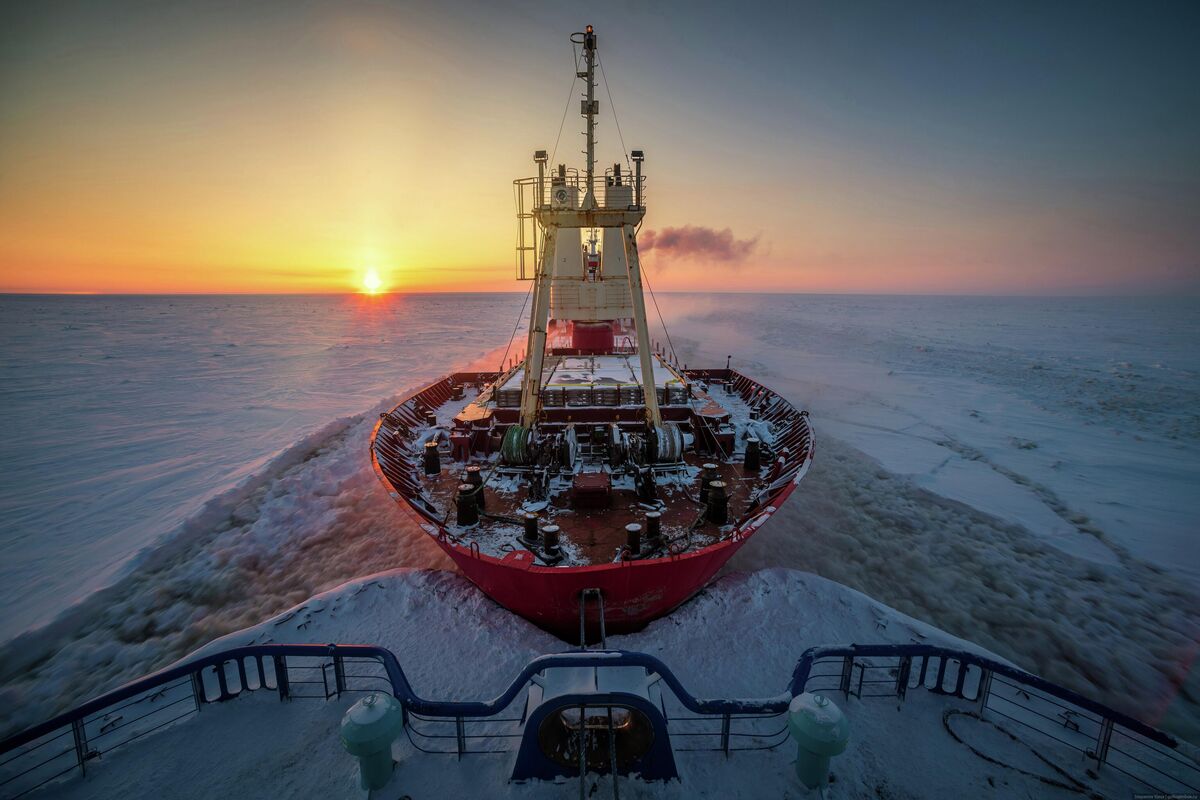
Icebreaker escorting a vessel
© Rosatom State Corporation
We are making an extra effort, but we know why we are making it. The objective is to make things more convenient for our partners. We receive a great deal of positive feedback from shipowners and cargo owners, who appreciate that this approach reduces the risks of service denials and negative consequences.
There have been instances where companies that had been refused a permit were later told by insurers that they would not sign an insurance contract with them, because they’ve been denied a permit. So, we walk an extra mile for them even despite our relatively small staff and help them mitigate reputational risks. Ultimately, we aim to issue permits to as many vessels as possible so that our economy can grow and move forward.
- The Northern Sea Route is an unusual passage even for seasoned captains and sailors, especially foreign vessels. Do you provide any assistance to those confronted with Arctic conditions for the first time?
Sergei Zybko: Let me tell you a story. At some point I worked on an LNG carrier for a Japanese company. When I took over and was reviewing the documents, I found a folder labeled “Ice Navigation” in English. It was compiled by a Japanese captain. I opened it and found just one A4 sheet with just one sentence: “If you see ice, go around it.”
When I saw that, I realized how stressful ice navigation can be for sailors without such experience, and 99 percent of sailors simply do not have that experience. They are genuinely terrified of navigating in ice.

So, to help them feel more comfortable, we recommend ice advisers or ice pilots to Chinese vessels among others. These advisers are our seafarers, mainly from Arkhangelsk and St Petersburg. They are experienced ice navigators and can also act as interpreters if needed to describe the unfolding developments, if needed. It is critical to have someone on board who has already sailed in ice. They can reassure the crew and tell them not to worry and that everything is fine. This helps us a lot in our work.
- Given the specifics of operating in ice conditions, you must have had some one-of-a-kind escort operations along the route?
Svyatoslav Stepchenkov: There is a project in the Arctic that was under construction at the time. We were tasked with delivering two parts of a plant on two vessels simultaneously. Both parts needed to be there at the same time, otherwise the project would have been delayed by a year.
GlavSevmorput ensured the escort of these vessels during a period of active ice formation. It was incredibly challenging, but we completed the task and successfully delivered the modules to the port, thus ensuring that the plant was built on schedule.
- What made this operation unique? Why could these vessels not have passed without your involvement?
Sergei Zybko: There are two sides to it. First, we accurately assessed the hydrological, meteorological, and ice conditions in the Gulf of Ob and determined that the passage was possible. In addition to our calculations, ice reconnaissance was carried out. We call it “hull-based ice reconnaissance.” The icebreaker captain conducted a dry run, assessed the situation, and said he was able to escort a vessel of that size provided there was a forecast. The forecast was calculated.
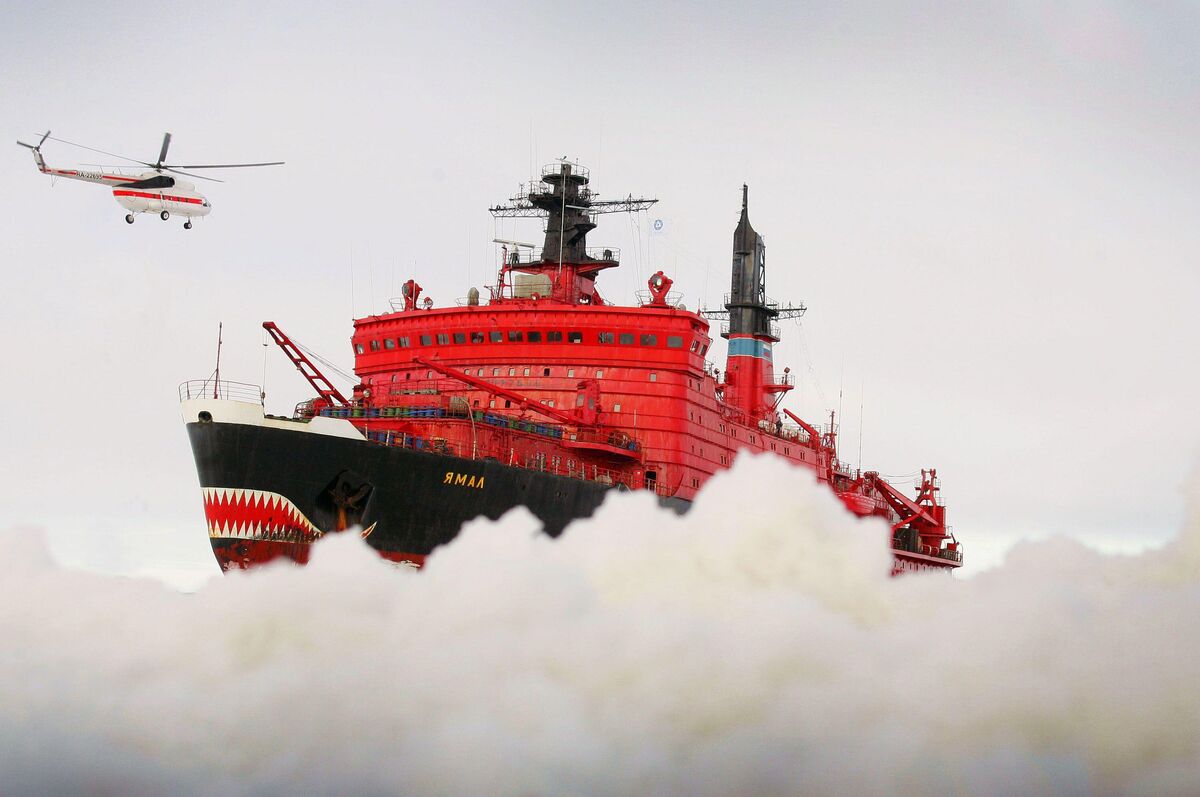
Project 10521 nuclear-powered icebreaker Yamal
© Atomflot
To conduct this complex operation, we formed a joint research and operational group, including representatives of GlavSevmorput, the icebreaker captain under our oversight, and specialists from the Arctic and Antarctic Research Institute. We formed a team to carry out this operation.
Vladimir Arutyunyan: We brought the Arctic and Antarctic Research Institute, Atomflot, and the shipowner together, coordinated the effort, and conducted a one-of-a-kind operation. The escort operation was extremely difficult. In theory, that section of the route could have been passed in 10 to 12 days; it took us an entire month. But we succeeded. We demonstrated strong teamwork and accomplished the task.
- Let’s take a sneak peek into the future. Where do you see the Northern Sea Route in 10-25 years?
Sergei Zybko: There are many plans. In the future, we expect year- round navigation in the eastern part of the Northern Sea Route, and we anticipate this to happen in the coming years.
Icebreaker construction is ongoing. Four more icebreakers will be built. We have particularly high expectations for the commissioning of the nuclear icebreaker “Rossiya” of the Leader project. Modern icebreakers of Project 22220 have propulsion power of 60 MW. The Leader-class icebreaker will have 120 MW, something that defies imagination. It will be capable of breaking ice of any thickness with ease.
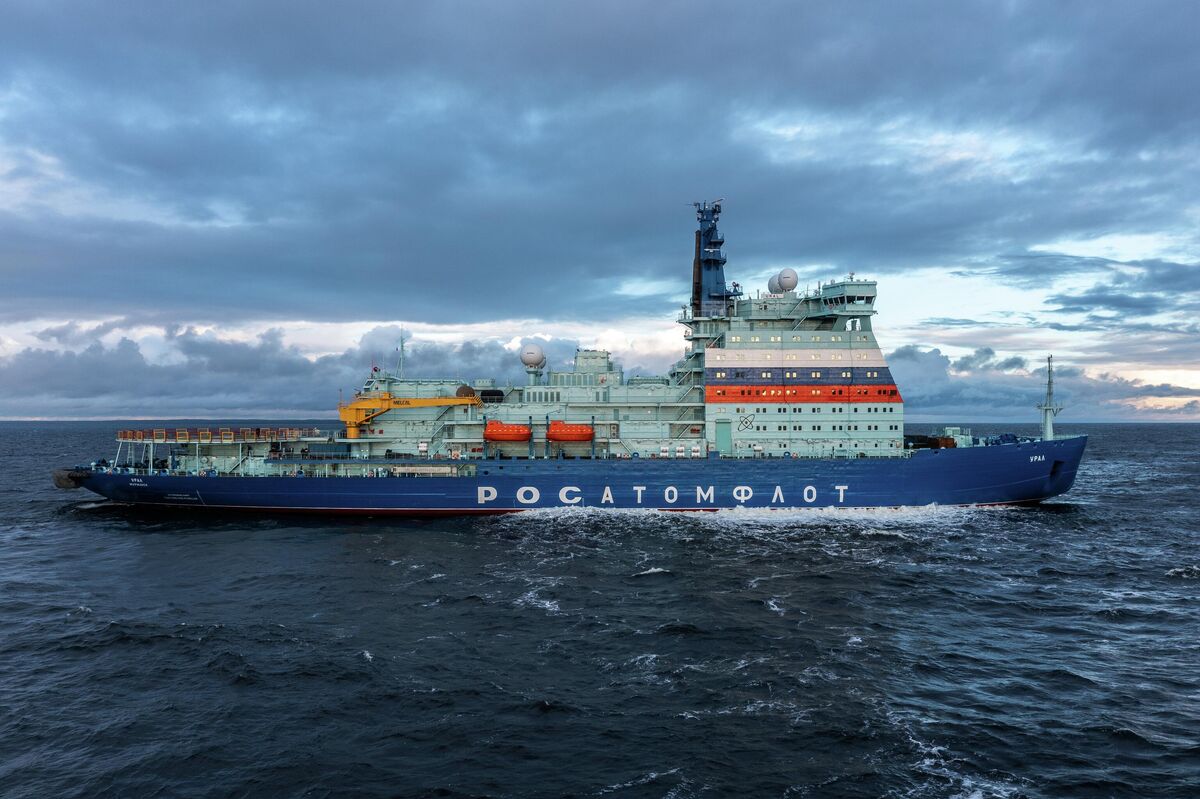
Project 22220 nuclear-powered icebreaker Ural in the open sea
© Atomflot
Just one such icebreaker will solve navigation issues in the East Siberian Sea, because it will be 50 meters wide, compared to 34 meters for the latest Project 22220 icebreaker. A 50-meter-wide channel would accommodate comfortably cargo vessels of the same width. All LNG carriers servicing Sabetta have precisely this width.
This means a wider channel, less ice pressure on vessels, and increased speeds. While the exact effect is difficult to calculate, it will certainly be significant. Even one such icebreaker would allow us to run shuttle operations in both directions. And once shipowners see reliable icebreaker support, they will begin building more ice-class vessels, knowing the route will always be open to them.
- We have been talking for nearly two hours now, and could easily keep going. Clearly, you are deeply passionate about your work and have a strong connection to the Arctic. In closing, what motivates people to work here since it’s about hard work and harsh climate, and involves terrifying experiences and immense responsibility.
Sergei Zybko: First and foremost, the Arctic is incredibly fascinating. The challenges here are extremely complex, and solving them is always engaging. Moreover, many of these tasks are so unique that few other people could address them.
Young people are drawn by romance and the uniform. Of course, there is also the fact that this is a lifelong career, and the financial aspect matters too. One can earn good money in the Arctic.
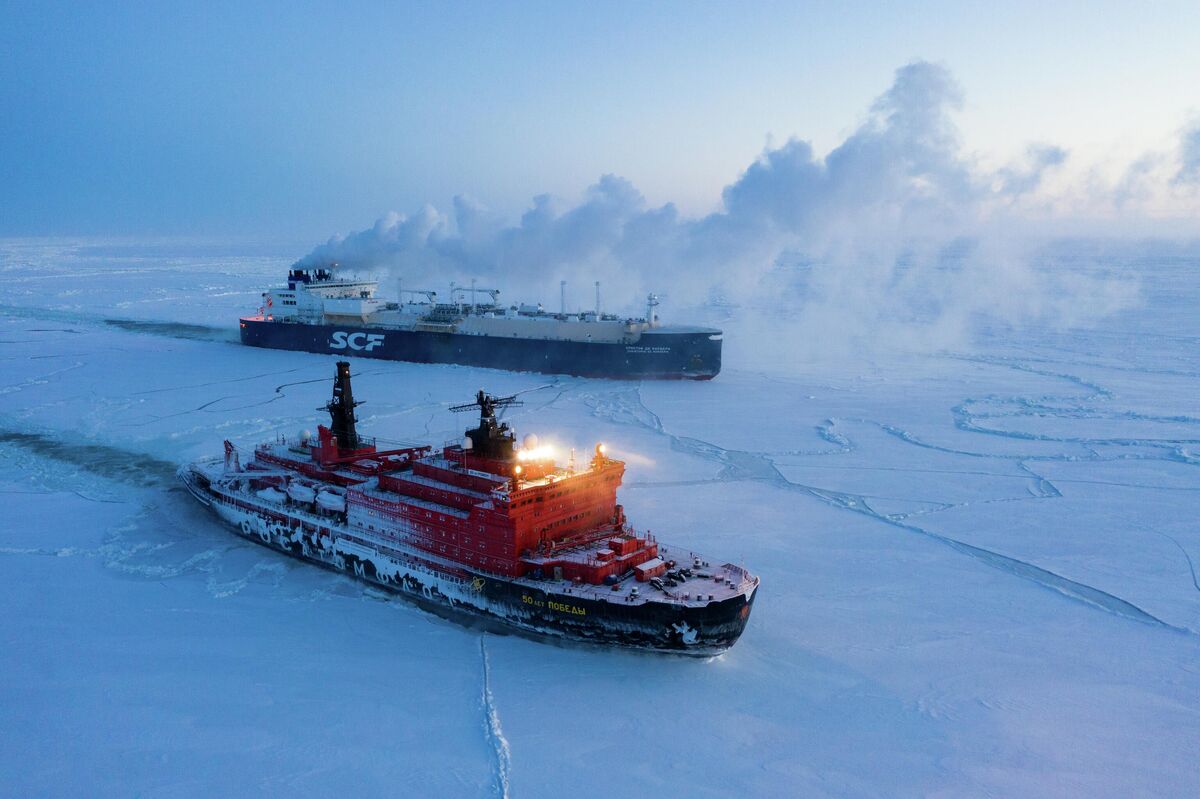
Project 10521 nuclear-powered icebreaker 50 Let Pobedy and the LNG tanker Christophe de Margerie on the Northern Sea Route
© Rosatom State Corporation
There’s one more element to it. When you first arrive in the Arctic, ice gives you scare. But then you begin to realize how beautiful it truly is. The beauty of the Arctic is spectacular and when you are on an icebreaker breaking through ice, you can marvel at it endlessly. Let me share one of my most unforgettable impressions. You are walking on deck, and suddenly, just 100 meters away, a whale breaches. It’s an awe-inspiring experience. And then there are walruses diving off ice floes and gliding gracefully underwater. That is real romance.