12:04 22.04.2026
“I’m loving life in Yamal!” A Don Cossack woman trades Rostov for the village of Tazovsky and finds a new path
© Marina Astashova
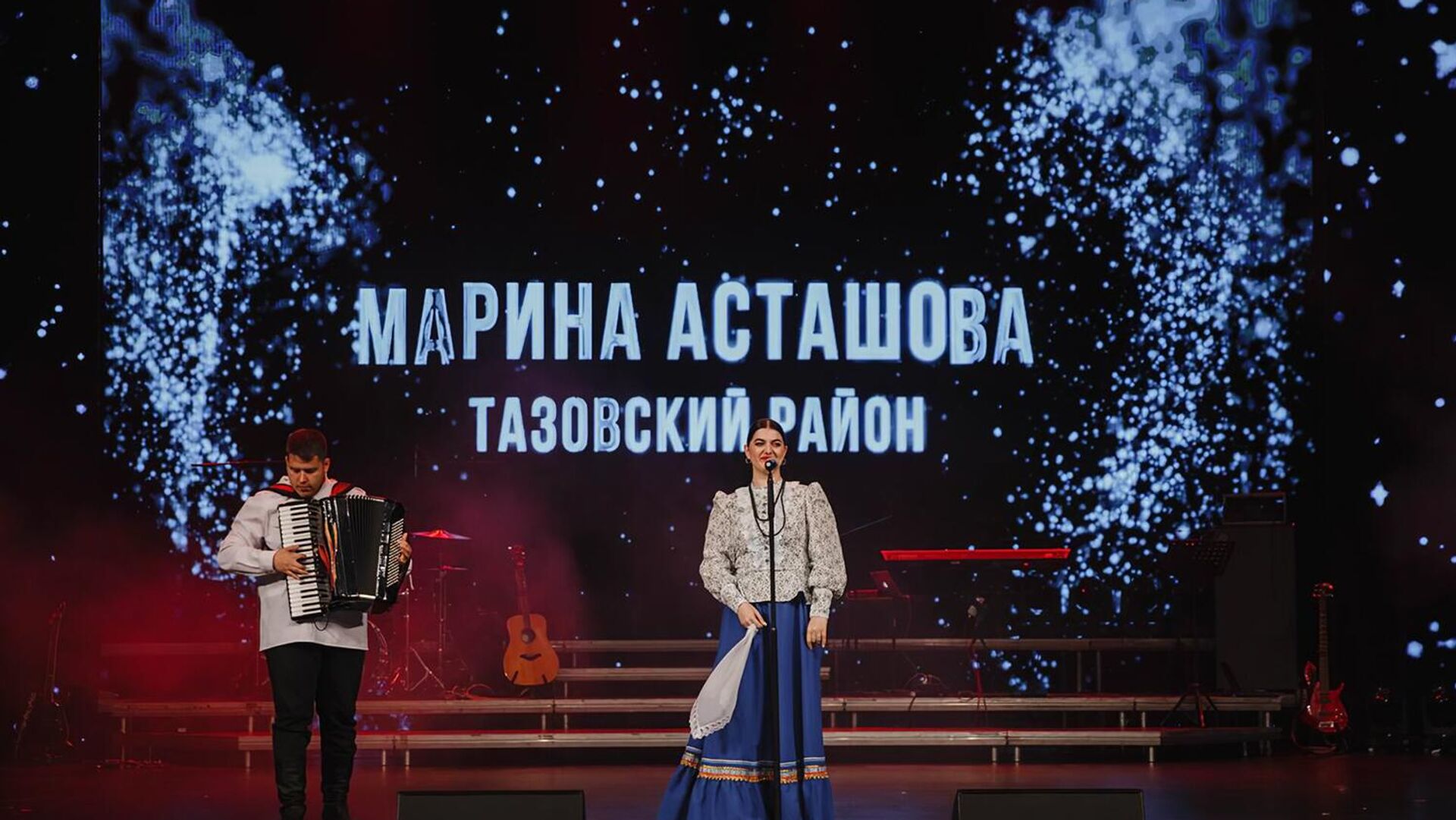
Marina Astashova, a native of the village of Kazanskaya in the Rostov Region, grew up steeped in Cossack culture. Her family are Don Cossacks; from the age of 13, she sang in a folk choir, later enrolling at the Rostov College of Arts. Her future seemed mapped out – performing on stage and introducing audiences to Cossack culture.
But in her fourth year, everything changed. An unexpected offer to move to Yamal set her on a completely different course. This feature explores why this region is seen as an ideal place for self-development and how she ultimately chose a new career path.
Sometimes even a small event can dramatically change a person’s life – and that is exactly what happened to Marina Astashova. At the time, she was studying solo and choral folk singing at an art college and thinking about her future career.
While walking through her hometown of Rostov-on-Don, she ran into a former classmate who had already moved north. Her school friend suggested that she try working in the Arctic as a singing club leader and showed a video of Marina’s performance to representatives of the Tazovsky District administration. The response was immediate and clear: “We’ll take her!”
Marina admits she had little idea at the time where she was heading – she didn’t know how far Tazovsky was from her native Rostov or what the living conditions would be like. Nevertheless, in October 2017, she took a leap of faith and bought a plane ticket to Novy Urengoi.


1/3
Entrance to the village of Tazovsky
© Russian Arctic and Far East Development
2/3
Traditional chum dwelling
© Russian Arctic and Far East Development
3/3
Northern Lights above the village of Tazovsky
© Marina Astashova
She recalls that upon arrival, she called her friend and, out of habit, said,
“I’ll grab a taxi and head to the dorm.” Her friend laughed in response: “Marina, what taxi? It’s a five-hour drive.”
What makes city girls cry?
Much about life in Yamal was new to Marina. The village of Tazovsky was nothing like the Rostov she knew: there were more wooden houses, only a handful of shops, and a pontoon bridge.
“I’m a city girl from Rostov-on-Don, used to the hustle and fast pace of urban life. I burst into tears and thought I wouldn’t be able to live here,” Marina recalls.
She called her future employer and said she was going home, but received a calm reply: “Just try working for a month – then you can decide.”
Marina thought it over and agreed. Over the next 30 days, she immersed herself in working with children. Soon came her first concerts, her first success, and her first business trip, which included a helicopter flight.
“I experienced completely new and unusual things. I was really impressed – it made me curious,” Marina says with a smile.
She decided to stay and signed a three-year contract as a young specialist. In total, Marina spent four years working in the cultural industry, but after experiencing burnout, she decided to pursue a new career path.
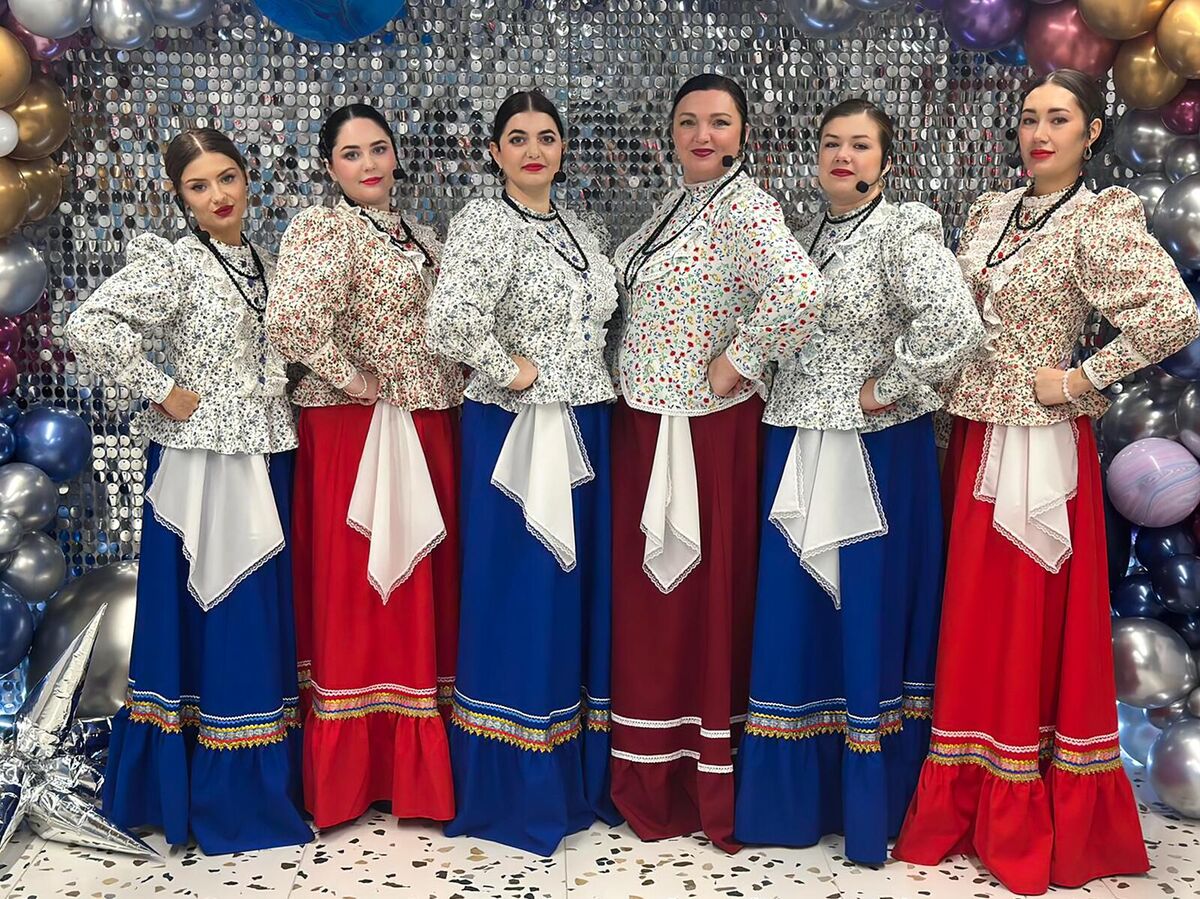
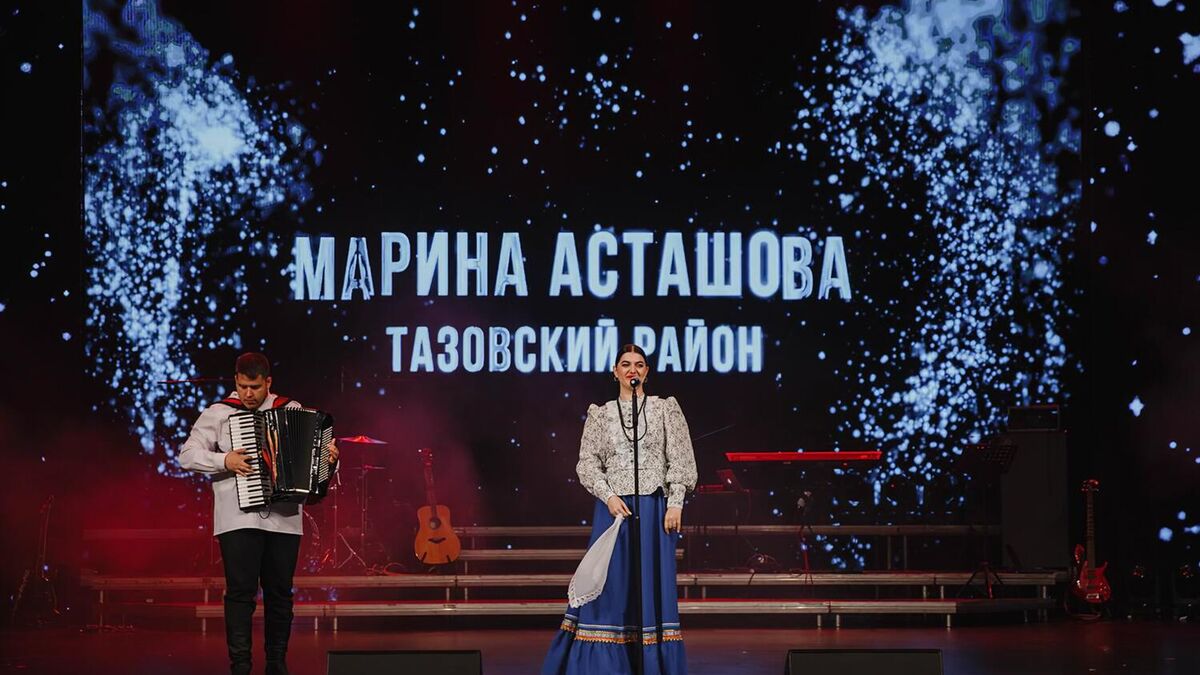
Marina Astashova and her colleagues perform at an event marking the 94th anniversary of the Yamal-Nenets Autonomous Area and the village of Tazovsky
© Marina Astashova
“The daily routine was starting to weigh on me: there was no development, no career growth, no sense of moving forward,” she explains.
However, returning to Rostov was not something she considered. By then, she had already come to appreciate the charm of the North, and she had made many friends in Tazovsky.
Without much hesitation, she decided to change careers and took a job as a kindergarten teacher, drawing on her years of experience working with children in the singing club.
Marina admits that the first six months were challenging. Her previous classes had lasted just an hour, but now she had to adapt to a completely different pace, working two shifts with the children: from 7:30 a.m. to 2:30 p.m., and from 12:30 p.m. to 7:30 p.m.
“I learned quickly and took in a lot of new knowledge. It gave me a real boost and helped develop my thinking, skills, and abilities,” Marina says confidently.
Later, she discovered the program called I Am a Yamal Educator and decided to take part. Marina developed her own project, submitted an application, and received a grant to bring her idea to life.
“This is something you’ll only find in Yamal”
Marina is convinced that Yamal offers powerful opportunities for personal and professional growth. Here, people can access free training programs and take part in state-sponsored competitions, with travel and accommodation expenses fully covered.
“You won’t find this on the mainland – only Yamal offers such conditions,” she says.
According to Marina, the Yamalo-Nenets Autonomous Area does a great deal to support its residents. “They truly strive to make life comfortable here. Special attention is given to children’s education. All clubs and extracurricular activities are free,” she explains.
Marina believes the most important aspect of her work is the people and the warm, friendly atmosphere. The kindergarten where she works now brings together children from diverse backgrounds – Russians, Nenets, Kyrgyz, Tatars, and Azerbaijanis – and the teachers make a point of cultivating respect for each culture and tradition.


1/3
Nomadic kindergarten
© Russian Arctic and Far East Development
2/3
Population of the Yamal-Nenets Autonomous Area
© Russian Arctic and Far East Development
3/3
Residents of the village of Tazovsky
© Russian Arctic and Far East Development
For example, during Maslenitsa celebrations, the staff wore traditional attire representing different cultures: Marina dressed in a Cossack outfit, one of her colleagues chose a Tatar dress, and another wore an Azerbaijani costume.
“We teach our children to understand that we may be different, but we are united,” she says with a smile.
Marina admits that she has long since completed the required term under the program, but she has no plans to return south.
For those thinking about moving north, she advises visiting first to get a feel for the place. If it feels right, they can then look for housing and stable employment. During her time in Tazovsky, she noticed an interesting pattern: many of her acquaintances who relocated to Yamal ended up starting families there.
“I’m loving life in Yamal. It’s a great starting point – for gaining experience, for personal growth, and for building a future,” she says.