12:01 22.04.2026
Expert: Middle East conflict could catalyze the Northern Sea Route development
© RIA Novosti / Svetlana Shevchenko
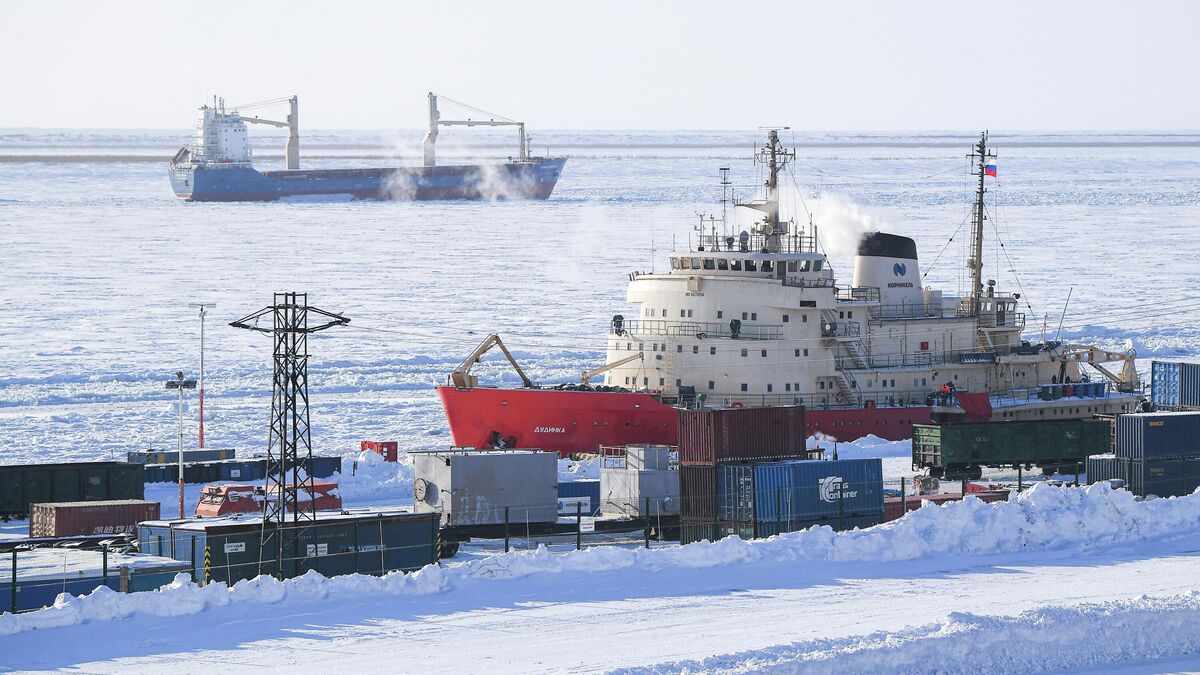
The Middle East conflict, particularly the situation around the Strait of Hormuz, could act as a catalyst for the development of the Northern Sea Route(NSR), which offers a safer option for exporting and delivering raw materials, including hydrocarbons, to global markets, Alexei Fadeyev, Doctor of Economics and professor at the Graduate School of Industrial Management at Peter the Great St. Petersburg Polytechnic University, told RIA Novosti.
“Because of the situation in the Middle East, demand for hydrocarbons has risen significantly. Russian hydrocarbons – around 90 percent of the country’s gas, for example – are largely produced in the Arctic. Today, the Northern Sea Route is becoming not only a corridor for exporting Russian hydrocarbons, but also a major artery for delivering raw materials to markets, primarily in the Asia-Pacific region, which had already been growing rapidly even before the Middle East conflict,” Fadeyev said.
In his view, the strategic value of the Northern Sea Route is increasingagainst the backdrop of the Middle East conflict, which could catalyze the development of northern shipping lanes. At the same time, the situation in the Strait of Hormuz does not in itself pose a direct threat to Russia. However, if Iran was to target the Bab el-Mandeb Strait, which, together with the Suez Canal, forms part of a single strategic maritime corridor linking the Mediterranean Sea with the Indian Ocean, it could lead to a collapse in global trade, Fadeyev warned.
“Today, 25 to 30 percent of global trade passes throughthe Suez Canal. Against that backdrop, the Northern Sea Route would take on a completely different significance,” he explained.
He added that, under current conditions, the NSR’s key advantage lies in the fact that, unlike the routearound Africa, it is largely free from many of the associated risks. It is shorter, carries no significant risk of piracy, involves lower insurance costs, and Russia is in a position to ensure safe navigation along the entire route, Fadeyev added.