15:32 15.04.2026
The principle of the rule of international law: Why NATO countries’ attempts to internationalize the Northern Sea Route are untenable
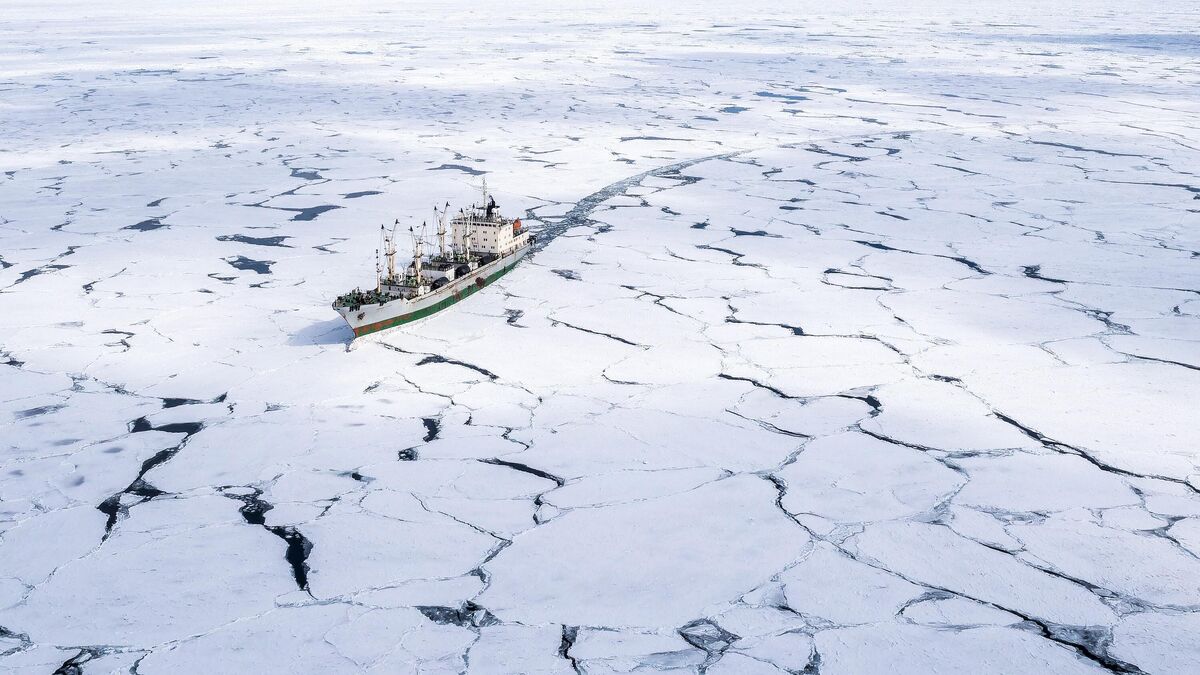
© RIA Novosti / Sergei Krasnouhov
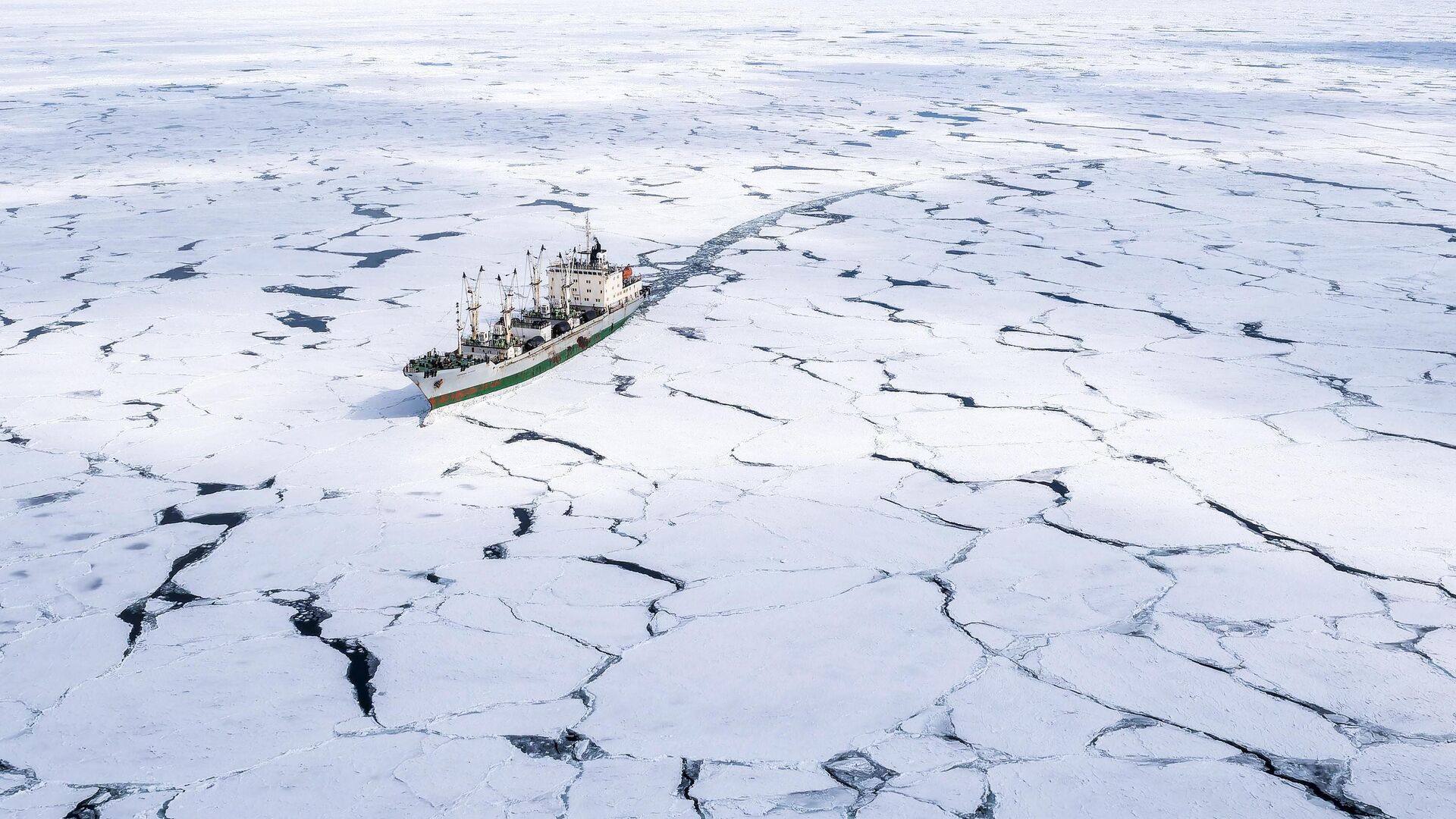
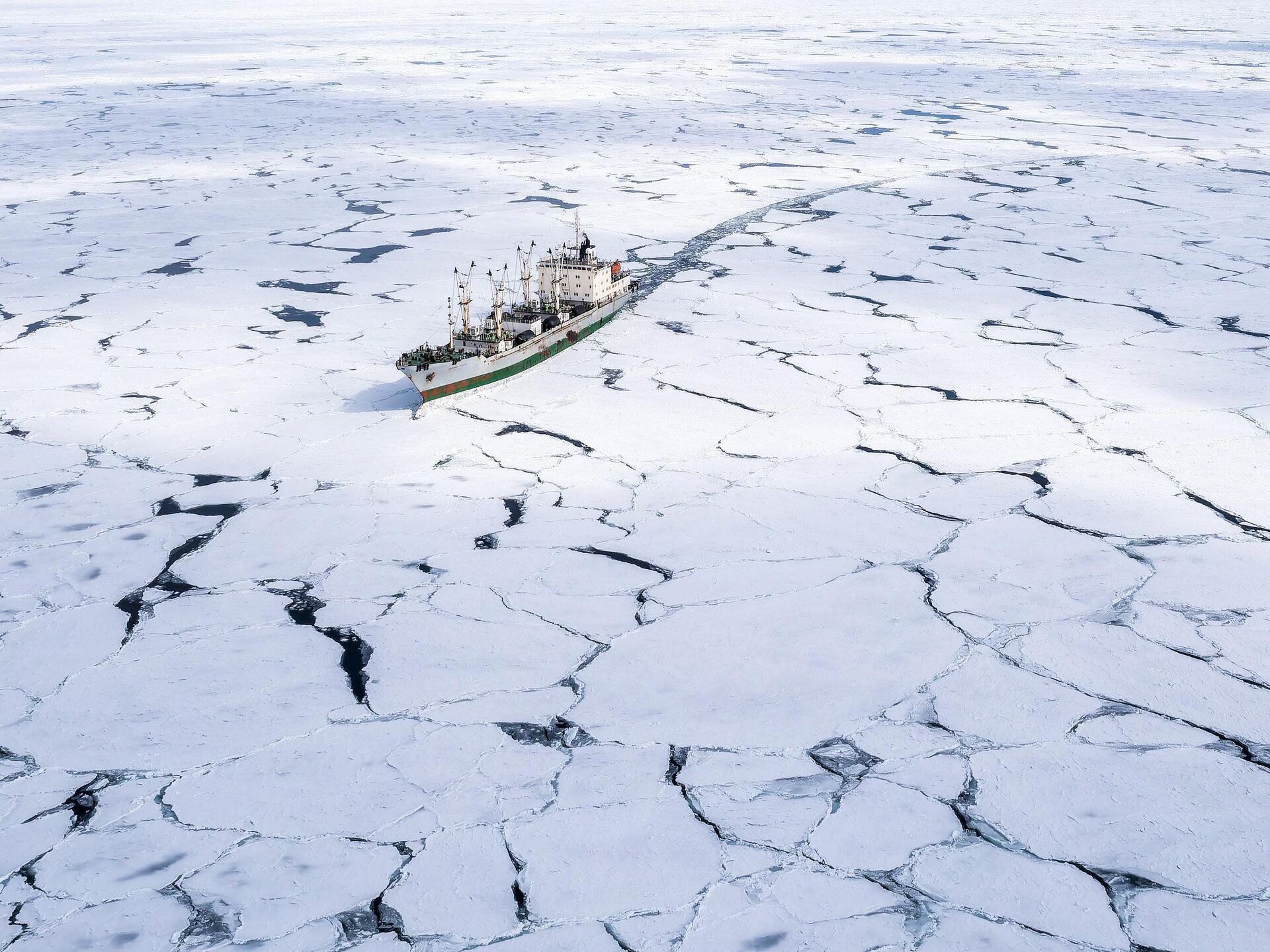
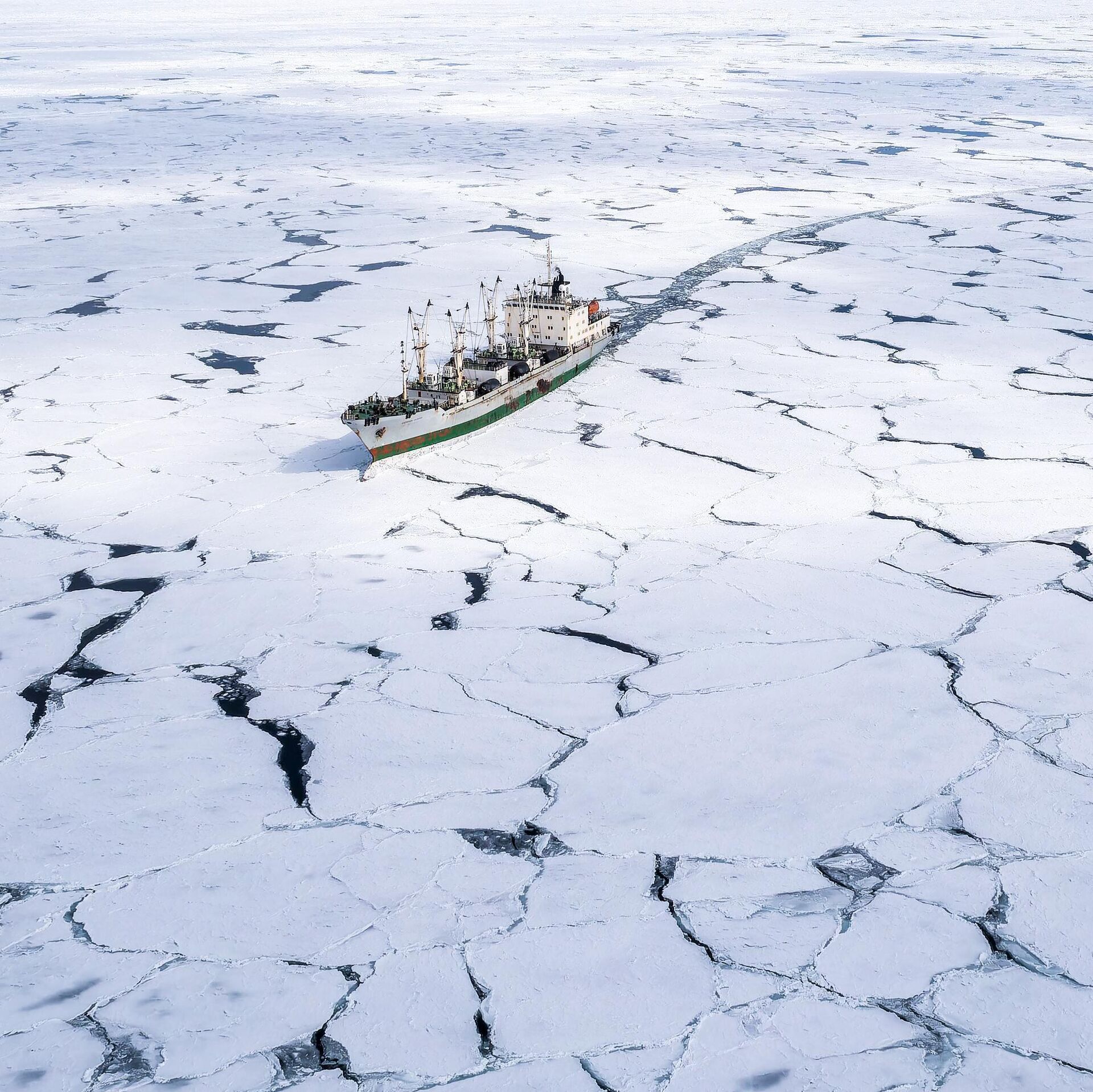
The melting of Arctic ice is opening up new economic opportunities, but at the same time exposing long-standing political differences. As ice coverage shrinks and the Arctic Ocean seas become more accessible for cargo transport, NATO countries are increasingly raising the issue of the international legal legitimacy of Russia traditionally regulating navigation along the Northern Sea Route.
Read more about the differences in legal positions held by the countries and why Western arguments are unfounded in a paper drafted by Doctor of Law, Professor, and Head of the Laboratory of International Legal Studies at Foreign Ministry’s MGIMO University Alexander Vylegzhanin.
“Against all odds, Russian Columbuses will break through the ice and open up a new route to the East…”
At the Russian State Museum of the Arctic and Antarctic, a curious visitor will discover that the largest section is devoted to exploring and developing the Northern Sea Route.
In addition to polar artifacts and documents, works of art, one of which depicts Semyon Dezhnev’s sea voyage, are on display as well. The “Illustrated History of the Russian Arctic” shows that Russian trailblazers had engaged in polar navigation since the 11th century.
These include the Russian Pomors’ expeditions to Grumant (Spitsbergen) and Novaya Zemlya, the Mangazeya Sea Route, and the 17th-century polar expeditions, including the Dezhnev-led koch vessel voyages around the Chukchi Peninsula. For the first time ever, a state service vessel made it through the strait between Chukotka and Alaska. Even more Russian Arctic expeditions were held in the 18th century.
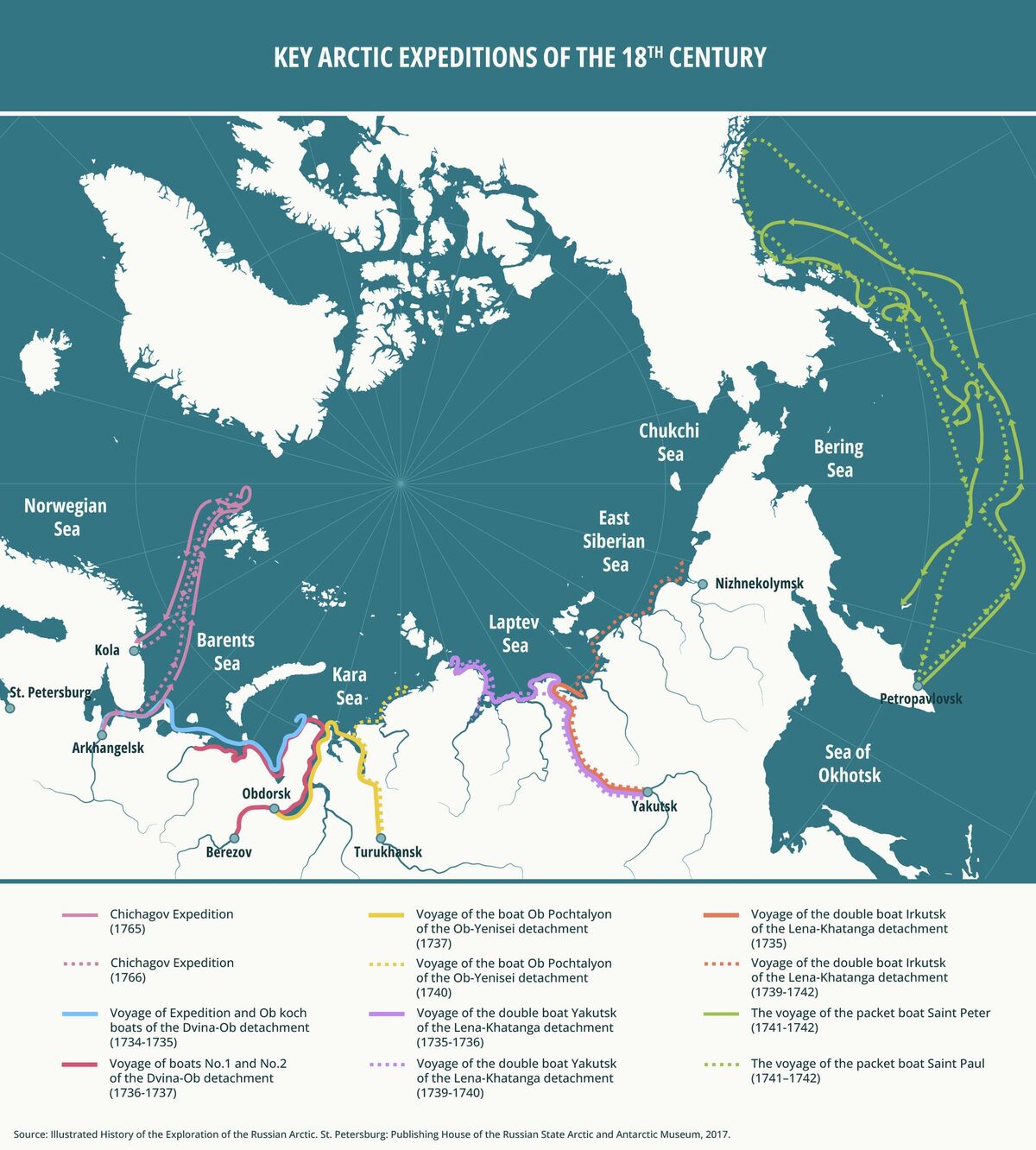
Key Arctic expeditions of the 18th century
© Russian Arctic and Far East Development
In his ode to Peter the Great, Mikhail Lomonosov famously underscored the significance of the Russian monarch’s efforts to protect Russia’s northern borders. Academician Lomonosov wrote that Peter I had foreseen the discovery of the Northeast Sea Passage: “Against all odds, Russian Columbuses will break through the ice and open up a new route to the East…” Lomonosov set out substantive arguments in favor of developing the “passage through the Siberian Ocean” in his research papers, such as “Supplement on Northern Navigation to the East via the Siberian Ocean.”
It is important to bear this in mind today given a wholly different portrayal of the history of Arctic navigation in foreign-based sources. For example, in the British Encyclopedia of World History, the listing of explorers of the Arctic seas begins with the British geographer Sir John Barrow, who, in the early 19thcentury, went on North Pole research expeditions. In another foreign academic publication - Arctic Review on Law and Politics - a Norwegian legal scholar claimed that the first attempt to traverse the Northeast Passage was made in 1878–1879 by the Swedish explorer Adolf Erik Nordenskjöld. Yet, neither the British encyclopedia nor the Norwegian international lawyer’s article mentions the earlier Arctic expeditions, namely, the voyages of Russian pioneers in the North Pole waters from the 11th to the 18th centuries.
References to historical events are meaningful also because the very facts of discovery, first passage, and the raising of a state flag on a newly discovered island could have, in and of themselves, constituted a basis for title. Moreover, contemporary international law retains the concept of “historic title,” which must be considered when assessing the current status of the Northern Sea Route and Russia’s right to use national legislation to regulate navigation in this polar body of water.
Russian historical literature describes the Arctic feats accomplished by expeditions led by Russian subjects from the 16th century to the early 20thcentury, including Semyon Dezhnev, Vitus Bering, Ivan Kruzenshtern, the Laptev brothers, Georgy Sedov, and other renowned seafarers.
The Soviet period of the Northern Sea Route exploration is well documented, too, and includes expeditions led by Otto Schmidt and Georgy Ushakov, the voyages of the steamships Alexander Sibiryakov and Chelyuskin, aerial operations to rescue the Chelyuskin crew, and the exploits of the group led by Ivan Papanin, which conducted Arctic research on a drifting ice floe. Literature convincingly describes our country’s major contribution to the economic development of the Arctic, especially since the nuclear-powered icebreaker fleet had been created.
Nevertheless, as year-round Arctic ice coverage shrinks and the Arctic Ocean becomes increasingly accessible for the transport of cargo and passengers, as well as for oil and gas, fishing, recreational, and other economic activities in the North Pole region, NATO countries are more insistently questioning the international legal legitimacy of Russia’s traditional regulation of navigation along the Northern Sea Route.
From a legal perspective, two questions are central to NATO’s assertive position. First: which specific Arctic areas constitute the Northern Sea Route? Does this term correspond to the concept of the “Northeast Passage,” or are these legally distinct notions? Second: in denying Russia’s right to regulate navigation along the Northern Sea Route under its national law, what international legal arguments do representatives of NATO member states invoke? How well-founded are those arguments?
What is the Northern Sea Route?
In Russian legislation, the term “Northern Sea Route” (NSR) was first formally introduced by a decree of the USSR Council of People’s Commissars on December 17, 1932. By this decree, the Soviet government established the Main Directorate of the Northern Sea Route (Glavsevmorput). The Directorate was tasked with “finally establishing the Northern Sea Route from the White Sea to the Bering Strait, equipping this route, maintaining it in proper condition, and ensuring safe navigation.” The same decree placed under its authority “all existing meteorological and radio stations located on the shores and islands of the Arctic Ocean.”
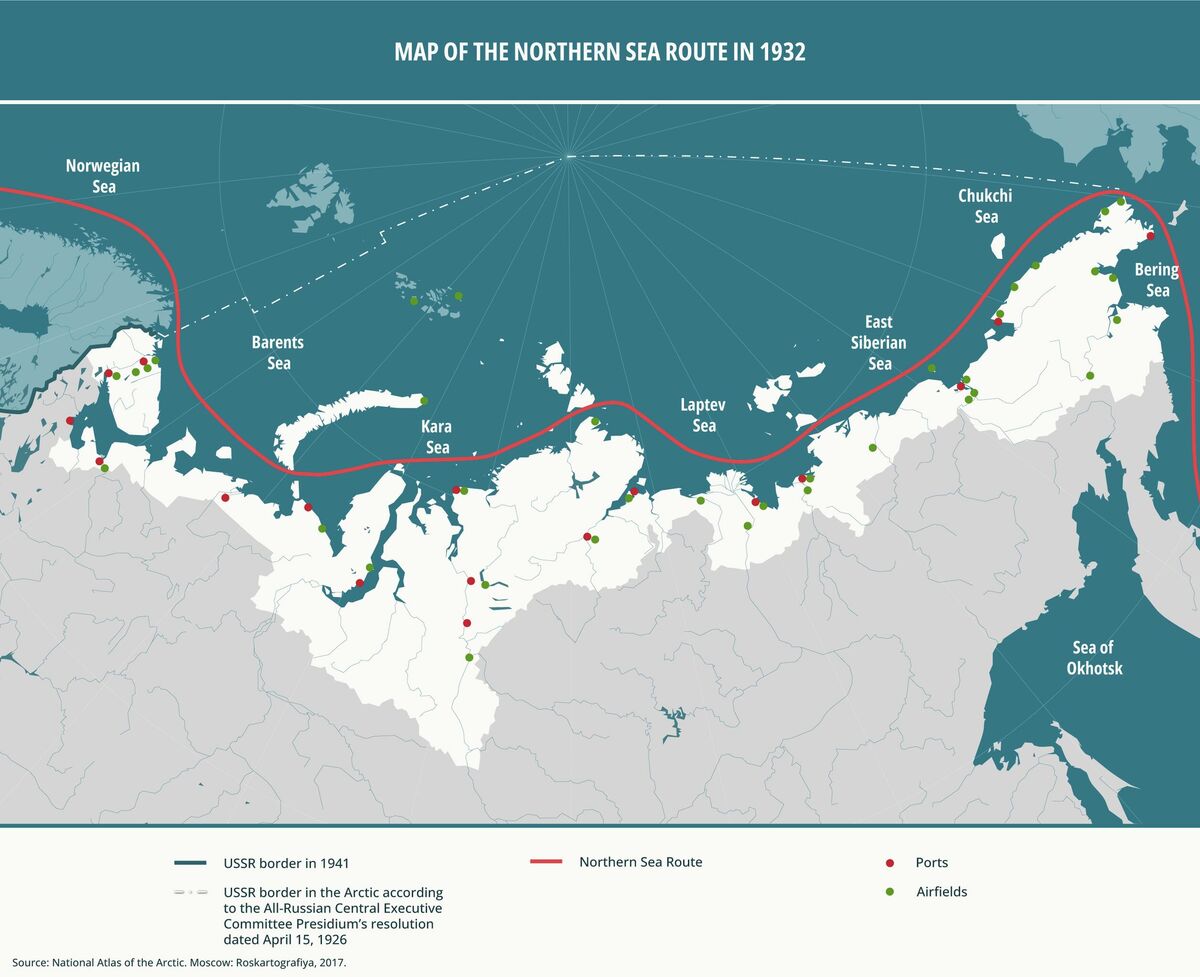
Map of the Northern Sea Route in 1932
© Russian Arctic and Far East Development
At the time of its formal legal establishment, the Northern Sea Route extended along the entire Soviet Arctic coastline, including the Soviet coast of the Barents Sea (unlike the Kara, Laptev, East Siberian, and Chukchi seas, its southern part is ice-free for most of the year).
A further decree by USSR Council of People’s Commissars of June 22, 1936 approved the Regulations on the Main Directorate of the Northern Sea Route. In the European part of the USSR, its area of responsibility included contiguous islands and seas of the Arctic Ocean; in the Asian part of the country, it encompassed all territory under Soviet sovereignty and jurisdiction north of latitude 62° North. The head of Glavsevmorput was appointed by the Council of People’s Commissars. The Directorate’s central office included 14 divisions, among them departments for maritime and river transport, polar aviation, hydrography, and mobilization. Its field offices were located in Arkhangelsk, Murmansk, Tobolsk, Igarka, Yakutsk, and Vladivostok.
The Northern Sea Route during World War II
During the Great Patriotic War, the infrastructure of Glavsevmorput then headed by the renowned statesman and polar explorer Ivan Papanin was significantly expanded. New piers were built in the port of Arkhangelsk, additional polar stations were created, artillery installations were placed on the islands of Novaya Zemlya and Dikson, and the deep-water port of Severodvinsk was built in Dvina Bay.
The expanded infrastructure made it possible to receive Allied convoys from the United Kingdom and the United States in the ports of Arkhangelsk, Murmansk, and Severodvinsk.
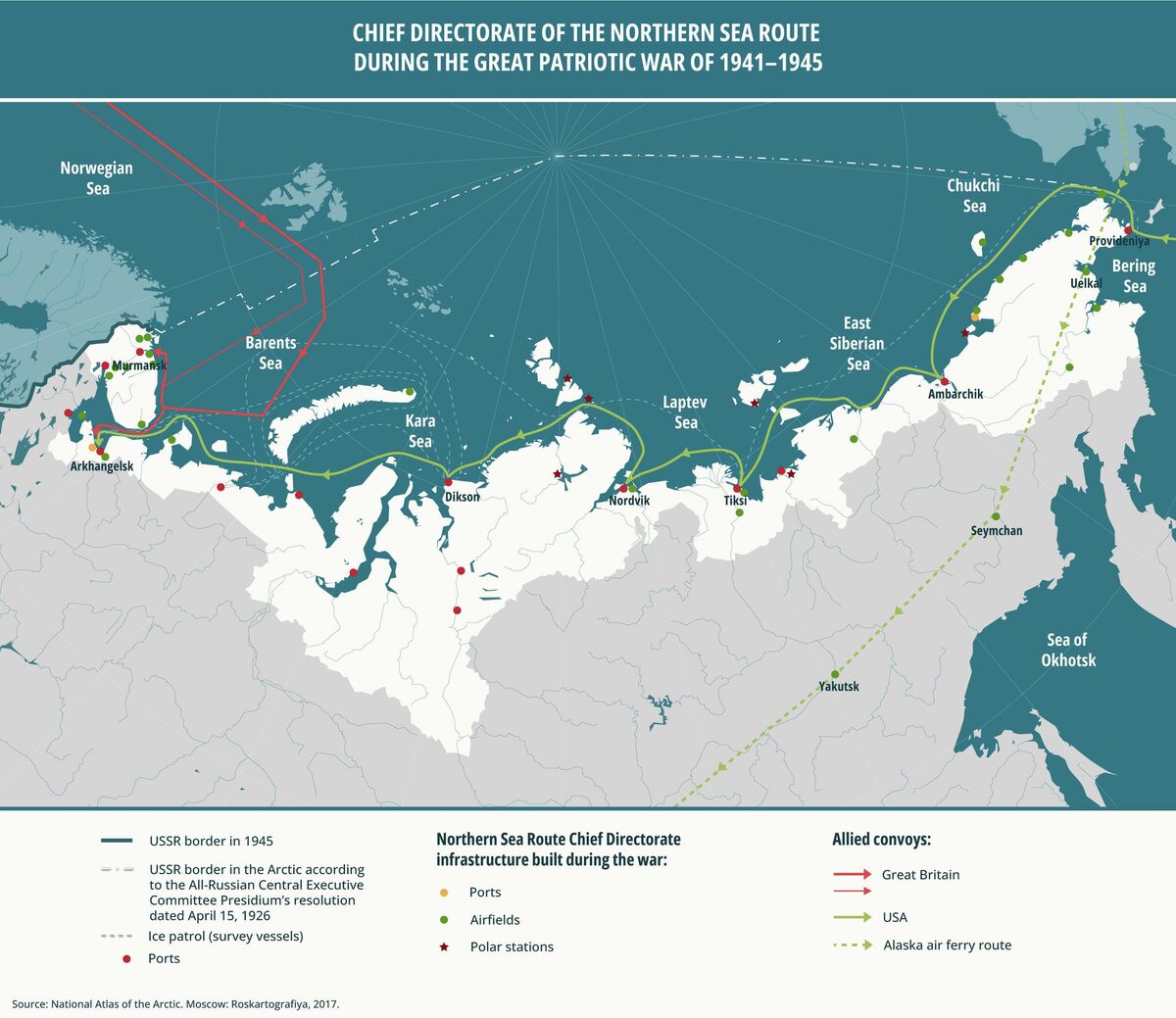
Chief Directorate of the Northern Sea Route during the Great Patriotic War of 1941–1945
© Russian Arctic and Far East Development
In October 1941, Papanin was also appointed an authorized representative of the State Defense Committee. In July 1943, he was sent to oversee navigation along the Northern Sea Route from the ports of Vladivostok, Petropavlovsk-Kamchatsky, and Provideniya. At that time, delivering cargo-both Soviet and Allied (primarily American and British)-from these eastern ports to the western part of the USSR was critically important for the Soviet rear areas and the front.
In light of these historical facts, it might seem there would be no grounds to question that today’s Northern Sea Route is a Russian body of water. However, Western states-including former WWII allies such as the United States and the United Kingdom-now challenge Russia’s right to regulate navigation along the NSR by national legislation.
Current NSR status: Russia’s and NATO countries’ diverging legal positions
Western NATO member states fail to consider Russia’s historical rights to regulate navigation along the NSR under its national law and the applicable treaty-based foundations of such regulation, including norms concerning coastal state sovereignty over internal waters. Under this Western interpretation, NATO warships (including those carrying weapons of mass destruction) could freely transit-without Russia’s authorization-through strategic sections of the NSR that are Russia’s internal waters, such as the Kara Gates Strait or the Vilkitsky Strait. This would mean the legal possibility of approaching Russia’s northern coastline, including central regions of the country, via maritime routes with vessels potentially armed with nuclear weapons.
Invariably committed to the rule of international law in relations between countries, Russia opposes such a narrowed ad hollowed out interpretation. Russia believes prior authorization is required before a foreign warship can enter its internal waters.
More specifically, under international law, beyond Russia’s internal waters and 12-nautical-mile territorial sea along its Arctic coast lies its exclusive economic zone (EEZ), extending up to 200 nautical miles from the baselines. Entry of a foreign vessel into a coastal state’s internal waters is permitted only with that state’s consent. In the EEZ, absent special rules, the general norms of international maritime law (lex generalis) provide for freedom of navigation.
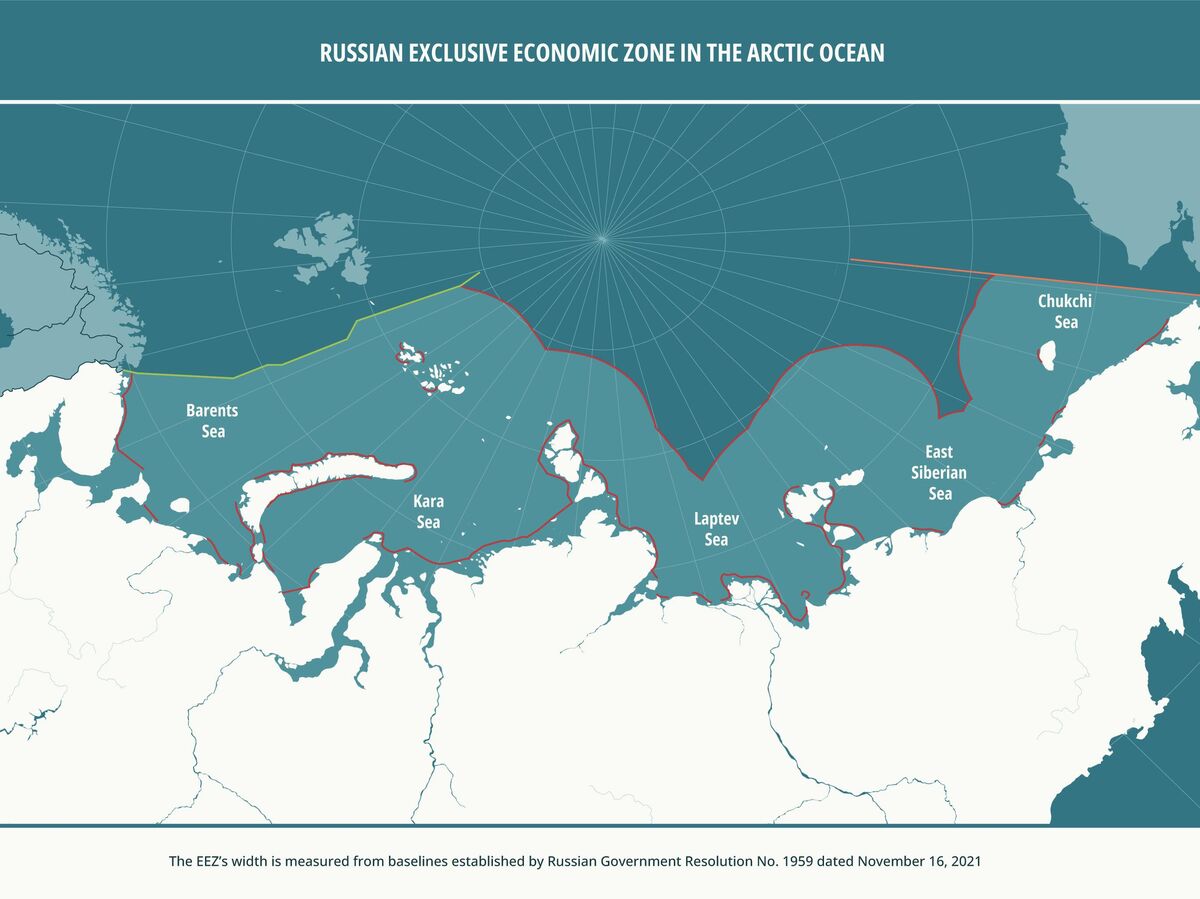
Russian exclusive economic zone in the Arctic Ocean
© Russian Arctic and Far East Development
Compared to the EEZs established off the Arctic coasts of neighboring states-Canada, the United States (off Alaska), Norway, and Denmark (off Greenland)-Russia’s Arctic EEZ is the largest in area, reflecting the fact that Russia has the longest Arctic coastline.
The water area of the Northern Sea Route is smaller: it does not include Russia’s EEZ in the Barents Sea. Under current Russian legislation, the NSR begins at the Kara Gates Strait (leading from the Barents Sea into the Kara Sea) and encompasses areas of the EEZ in the Laptev, East Siberian, and Chukchi seas.
The Northern Sea Route is part of the broader North East Passage, which connects Europe and Asia via Arctic waters-first along the coast of Norway and then along Russia’s Arctic coast. The legal status and boundaries of the NSR are defined by Russian legislation, primarily the Federal Law “On Internal Sea Waters, the Territorial Sea and the Contiguous Zone of the Russian Federation” and the Merchant Shipping Code of the Russian Federation. The frequent conflation in Western discourse of the terms “NorthEast Passage” and “Northern Sea Route” introduces a degree of ambiguity into the legal assessment of the NSR’s status.
Article 5.1. Navigation in the waters of the Northern Sea Route
The waters of the Northern Sea Route means the waters adjacent to the northern coast of the Russian Federation, encompassing the internal sea waters, the territorial sea, the contiguous zone, and the exclusive economic zone of the Russian Federation, and bounded on the east by the line demarcating maritime areas with the United States of America and by the parallel of Cape Dezhnev in the Bering Strait, on the west by the meridian of Cape Zhelaniya to the Novaya Zemlya Archipelago, the eastern coastline of the Novaya Zemlya Archipelago, and the western boundaries of the Matochkin Strait, the Kara Strait and the Yugorsky strait.
Russia, for its part, is interested in clearly defining both the boundaries of the Northern Sea Route and its status as a “national transport communication of the Russian Federation,” as stipulated in Article 14 of the 1998 Federal Law “On Internal Sea Waters, the Territorial Sea and the Contiguous Zone of the Russian Federation.”
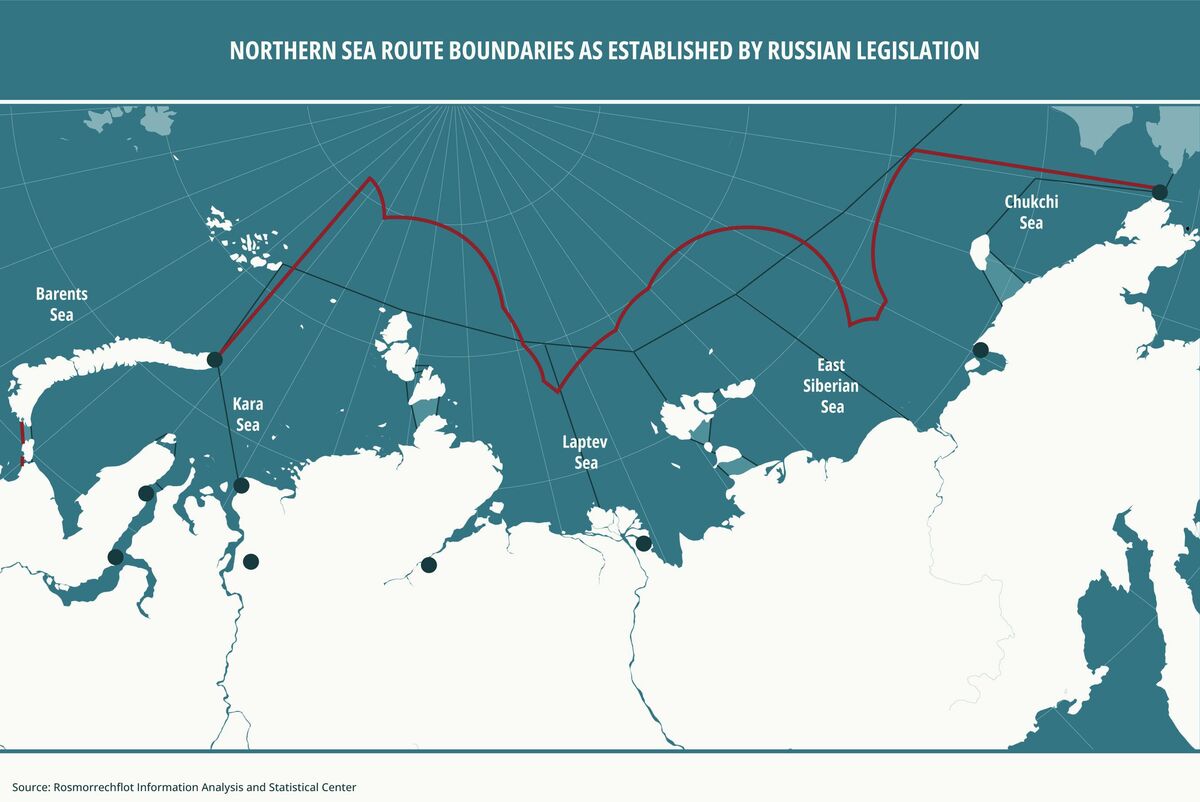
Northern Sea Route boundaries as established by Russian legislation
© Russian Arctic and Far East Development
Under Article 14.3 of the same law, foreign warships “may enter the internal sea waters within the water area of the Northern Sea Route… by permission requested through diplomatic channels no later than 90 days prior to the intended entry.” Such entry must be carried out “in accordance with the established route and other parameters and conditions for vessel passage (including compulsory pilotage), as specified in the permit.”
Foreign warships, upon such entry into the internal waters of the NSR, “must comply with the legislation of the Russian Federation,” including rules on navigation safety, environmental protection, and the prevention of violations of federal laws and other regulatory legal acts of Russia.
It should be emphasized that these requirements of Russian law fully correspond to the scope of rights granted to a coastal state in its internal waters under international law, including the frequently cited by NATO UN Convention on the Law of the Sea.
An important clarification is in order. The concept of the Northern Sea Route does not include the seabed of internal waters, the territorial sea, or the exclusive economic zone (EEZ). The NSR refers specifically to maritime areas-shipping lanes located at varying distances from Russia’s Arctic coast (of course, not a single route).
Russian legislation provides for a developed infrastructure for managing this national maritime communication route, as can be seen from the works of Academician of the Russian Academy of Sciences Alexander Granberg.
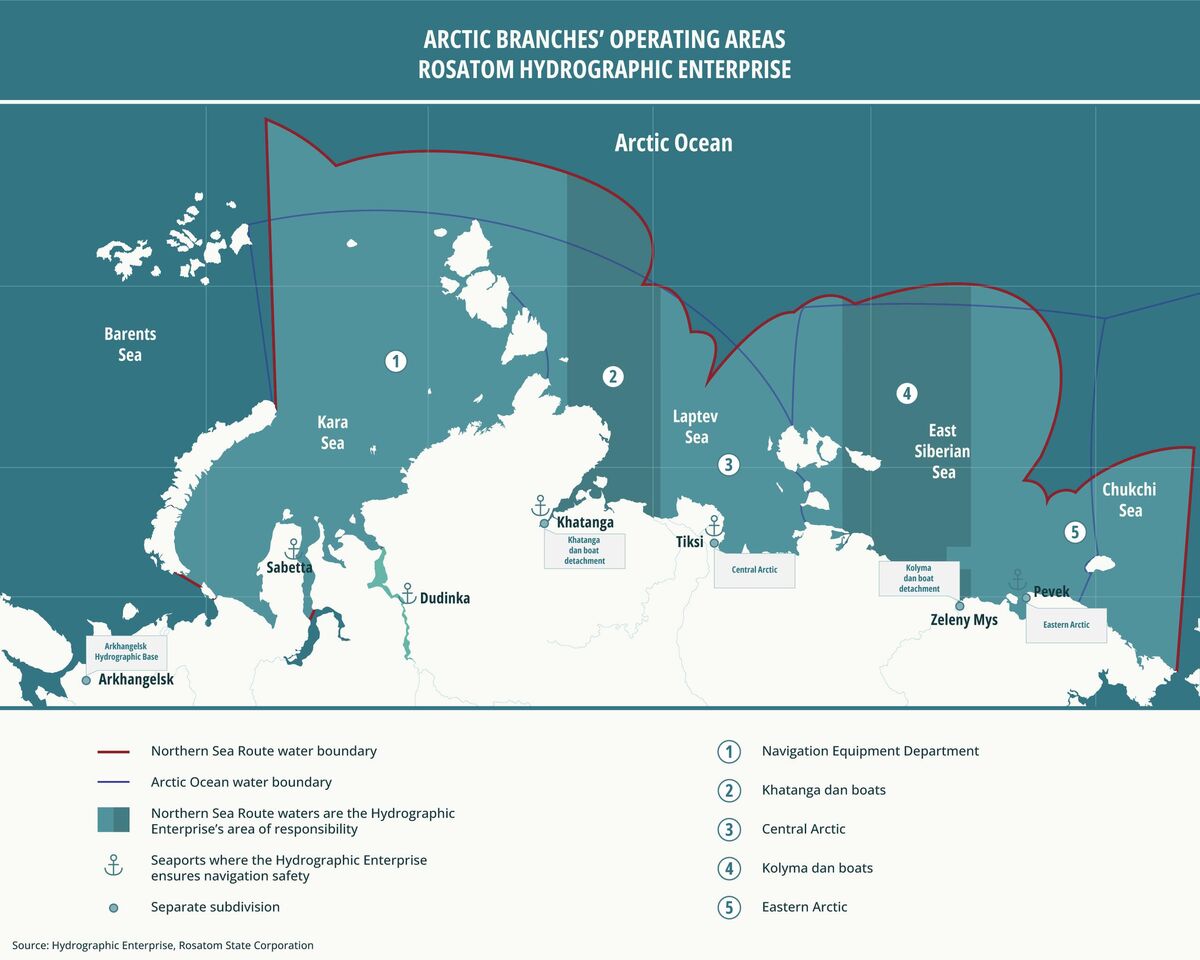
Arctic branches’ operating areas Rosatom Hydrographic Enterprise
© Russian Arctic and Far East Development
In terms of Russian legislation on the Northern Sea Route (NSR) and applicable international law, the NSR waters consist of areas with different legal statuses:
a) areas of internal waters; b) areas of Russia’s territorial sea; c) areas of Russia’s exclusive economic zone (EEZ), including its contiguous zone. The stumbling block in the competing international legal positions of NATO and Russia regarding the legal status of the NSR is the characterization of those parts of the route that constitute Russia’s internal waters, primarily the straits of Kara Gates, Vilkitsky Strait, Shokalsky Strait, and Sannikov Strait. As previously noted, under Russian law, entry of foreign warships into these internal waters of the Russian Federation requires the consent of the territorial sovereign which is Russia (Article 14.3 of the 1998 Federal Law). This is also consistent with the provisions of international law governing internal waters.
In the 20th century, NATO constructed a different legal position, disregarding the long-established status of the above straits, which had taken shape well before NATO’s creation. According to NATO’s current position, these Arctic straits, located between Russia’s mainland and island territories, do not have the status of Russia’s internal waters. Western states, which tacitly accepted Russia’s legislative regulation of navigation through these straits in the 17th to 19th centuries and in the first half of the 20thcentury, decided in the second half of the 20th century that the Kara Gates, Vilkitsky, Shokalsky, and Sannikov straits are international straits, allegedly because they fall under the definition agreed upon in the 1982 text of the UN Convention on the Law of the Sea. An official NATO document craftily states that this Convention “constitutes the legal basis” for activities in the Arctic Ocean.
In this interpretation of international law, NATO artfully combines references to actual articles of the 1982 Convention with a distortion of their meaning, while ignoring other sources of international law, above all, international custom as a primary source of international law under Article 38 of the Statute of the International Court of Justice (an integral part of the UN Charter).
The assertion of sovereign powers by the Russian Empire in its polar possessions from the 17th century onward was not disputed by any state which is an indication of the existence of the relevant international custom. Great Britain recognized the legitimacy of Russia’s authority in its polar possessions at the treaty level as well, under the 1825 Anglo-Russian Convention on boundaries.
Is it logical to recognize such Russian powers in the 17th to 19thcenturies, only to challenge them in the 20th? By proclaiming the 1982 Convention as the basis for the status of the Arctic Ocean, NATO member states ignore applicable international custom, whose significance is enshrined in the UN Charter. In doing so, NATO also disregards a fundamental reality of the modern international legal order: obligations under the UN Charter prevail over obligations under any other international treaty, including the 1982 Convention.
To reiterate, the status of the Kara Gates, Vilkitsky, Shokalsky, and Sannikov straits as Russia’s internal waters was formed in customary international law long before the adoption of the 1982 Convention. The 1982 Convention applies to them, but as additional confirmation of Russia’s right to exercise sovereignty over its internal waters.
As for Russia’s legislative regulation of navigation in those parts of the NSR that lie within its EEZ, the international legal basis for such regulatory authority of the territorial sovereign is also found in Article 234 of the UN Convention on the Law of the Sea. Under this article, Russia, as a coastal state, has the right to adopt and enforce national environmental protection regulations in areas of its EEZ that are covered by ice “for most of the year.” This provides the conventional legal basis for Russia’s environmental measures in its EEZ areas of the Kara, Laptev, East Siberian, and Chukchi Seas, which form part of the NSR.
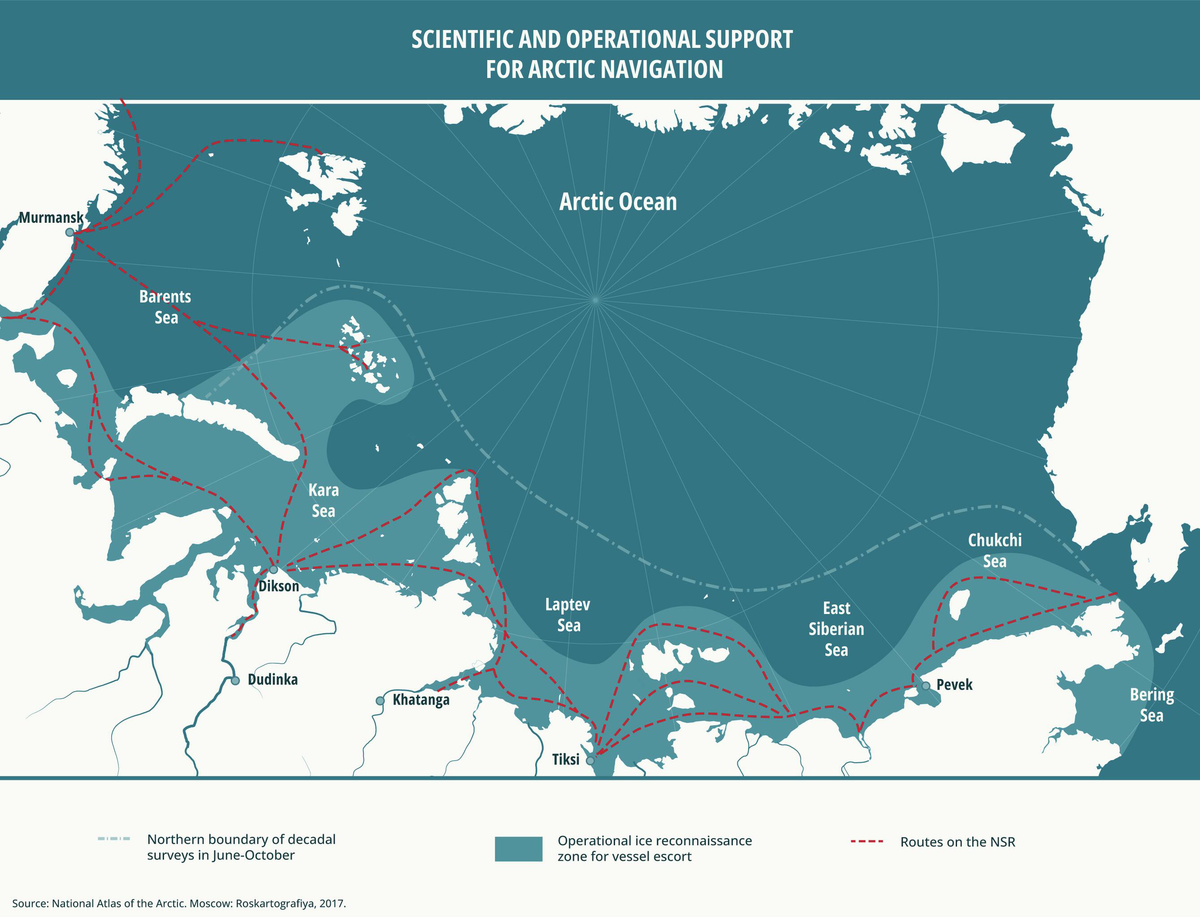
Scientific and operational support for Arctic navigation
© Russian Arctic and Far East Development
What is to be done?
How should Russia respond to NATO’s position regarding the status of the NSR? To begin with the obvious, it is pointless to try to silence critics; there will always be opponents within NATO to Russia’s regulation of navigation along the NSR. Russia cannot and should not change its position regarding sovereignty over its internal waters, including those that form part of the NSR. This is a genuinely existing Russian national transport route, whose status was shaped by the centuries-long efforts of many generations. Russia’s current legislative regulation of navigation along the NSR is both necessary and legitimate from the standpoint of international law.
Russia’s environmental regulation of shipping in those NSR areas that fall within its EEZ does not currently provoke major objections from NATO states. Nevertheless, the Russian Federal Assembly still has international legal reserves to further improve such regulation at the legislative level.
As for those NSR areas that belong to the territorial sea of the Russian Federation, it would be important to rely more inventively on the authoritative 1989 document agreed between the USSR and the United States, the Uniform Interpretation of the Rules of International Law Governing Innocent Passage.
The most legally complex (and politically delicate) issue concerns the international legitimation of the Russian Federation’s rights over those NSR areas that are classified under Russian law as internal waters but designated in the documents of most NATO states as international straits. Here it would be highly useful to take into account Canada’s relevant treaty experience. Despite holding positions entirely different from those of the United States regarding the status of the Northwest Passage, Canada has not repealed its legislation classifying it as internal waters. As a compromise, however, Canada concluded with the United States in 1988 the well-known Agreement between the Government of Canada and the Government of the United States of America on Arctic Cooperation, often referred to as an agreement to disagree. Under that agreement, the United States “pledges that all navigation by US icebreakers within waters claimed by Canada to be internal will be undertaken with the consent of the Government of Canada.” At the same time, the agreement states that “nothing in this agreement … affects the respective positions of the Governments of the United States and of Canada on the Law of the Sea in this or other maritime areas.” In practice, when US vessels transit Arctic waters between the shores of the Canadian Arctic Archipelago, Canada’s consent is presumed under the bilateral agreement; other states, however, must obtain Canada’s consent as the territorial sovereign when navigating the waters of the Northwest Passage. What is permitted to Jupiter is not permitted to the bull.
There is no reason why Russia should not follow a similar legal model: not negotiating with all NATO states, but specifically with its Arctic neighbor, the United States. And precisely with the current US administration, which demonstrates a focus on defending national interests rather than adhering to NATO’s traditional collective Russophobia toward Russia.