18:30 14.04.2026
The woman who sings to bears: A fearless solo traveler explores the Arctic
© Marina Galkina
Some people look at a map and see borders. Others see rivers, mountain ranges, and vast, untamedexpanses among meridians, latitudes and parallels – and feel an irresistible urge to explore them.
Traveler Marina Galkina belongs firmly to the latter group. For years, she has been venturingalone into the Far North, constantly pushing beyond the horizon. Her expeditions have taken her to Kamchatka, Chukotka, Taymyr, Pomorye and Yakutia – to name just a few of the remarkable places she has explored.
In March 2026, Marina won the Far East – Land of Adventure competition with her documentary Alone in the Tundra: A 700 kilometer Journey, chronicling a two-month solo expedition across Chukotka. In this feature, she shares how she prepares for her journeys and the principles that help her survive in some of the harshest environments on Earth.
It all began with a love of books. As a child, Marina was captivated by the writings of Vladimir Arsenyev and his expeditions with the guide Dersu Uzala. She dreamed that one day she, too, would explore the boundless North.
As an adult, she enrolled in the Department of Biology at Moscow State University, where her studies opened the door to her first expeditions. Fieldwork in the Ussuri taiga and assignments in the Khabarovsk Territory and on the Yamal Peninsula – this was her student life.
Then came the turbulent 1990s, along with her first brief job in her field atthe Institute of Medicinal Plants.
“After that, I got a job at a travel agency, assembling sleeping bags and repairing inflatable tubes for kayaks and catamarans. Even then, I couldn’t stay away from travel,” she recalls.
During her university years, Marina joined expeditions with friends and became part of a water tourism club. She found a circle of like-minded adventurers, with whom she set out on her first major journey to the Putorana Plateau. It was unforgettable: six people, an improvised catamaran, and a route they charted themselves.
Marina’s first expedition as a student took her to the Khabarovsk Territory. Even then, the expedition leader occasionallyleft her on her own.
“I spent nights alone in the taiga. I kept imagining bears everywhere,” she says with a laugh.
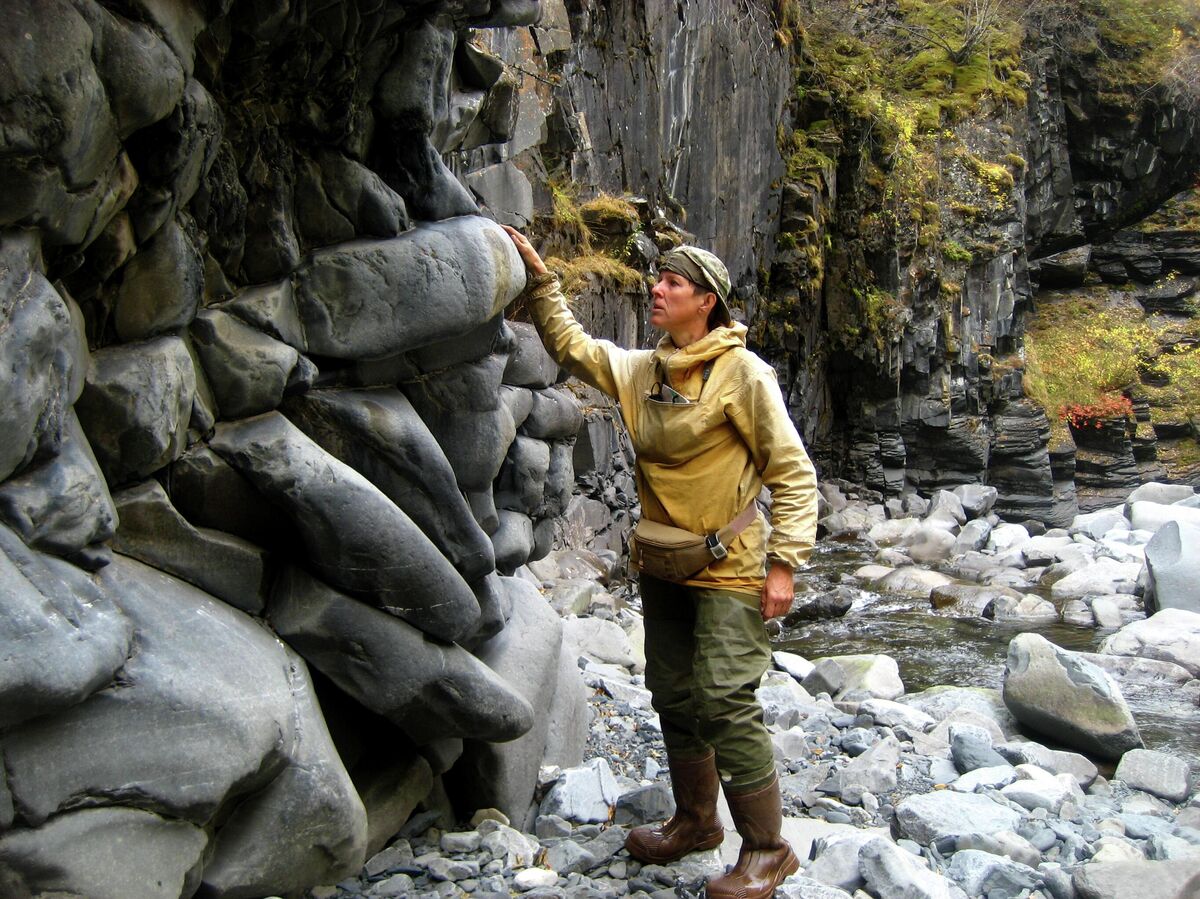
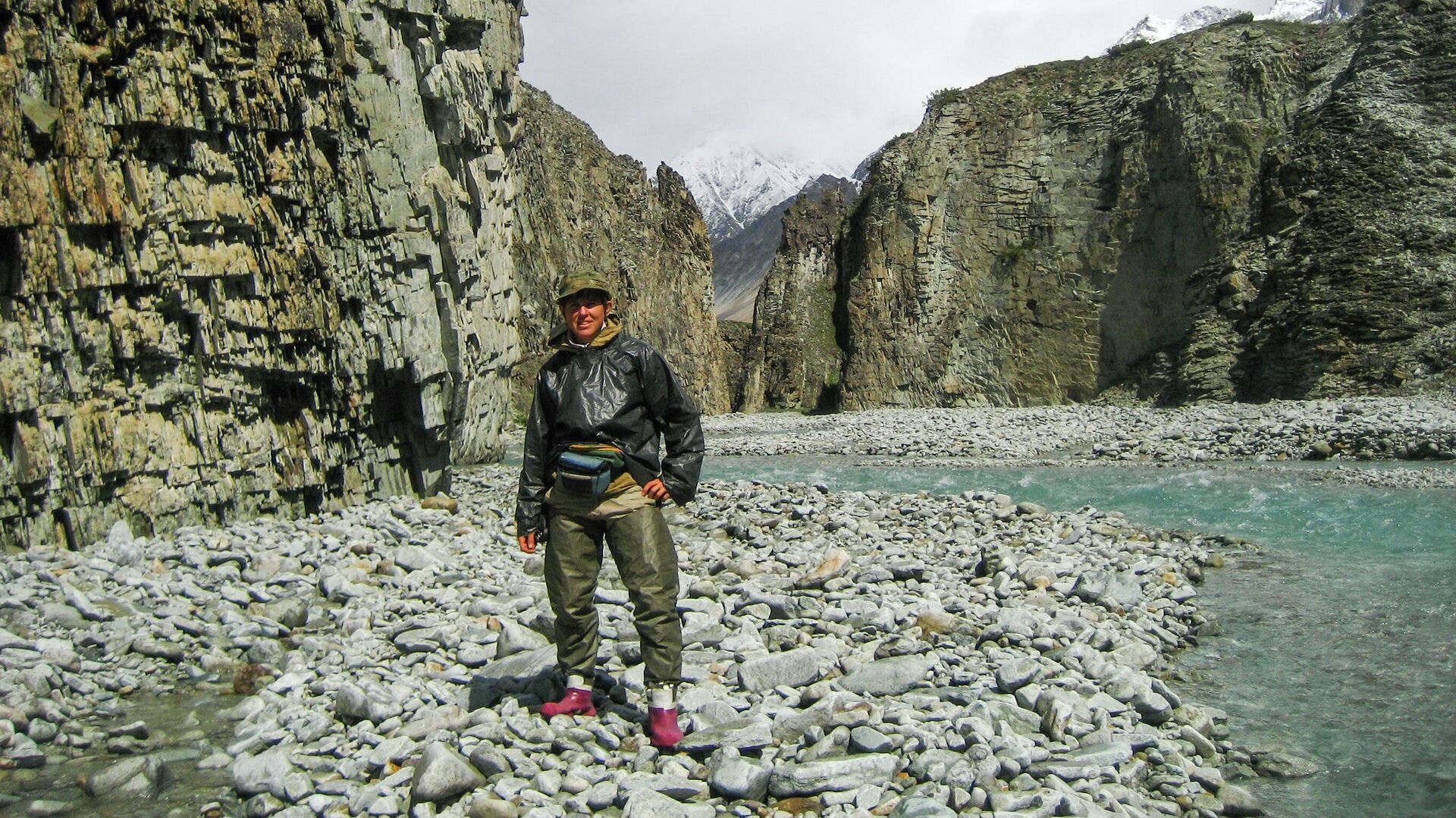
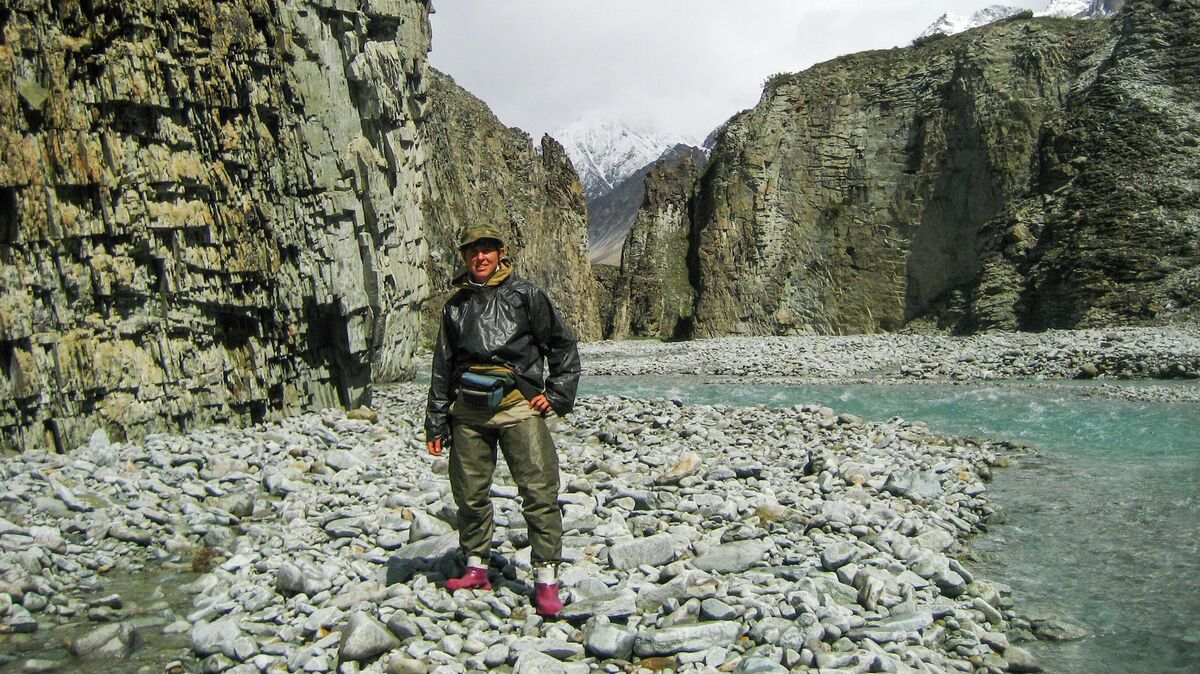
Canyons of the Verkhoyansk Range
© Marina Galkina
Her first solo journey came in the mid-1990s, when she traveled to Kamchatka. No group came together, flights from Moscow were prohibitively expensive, but her determination outweighed the obstacles. She bought a single ticket and set off on foottoward the Valley of Geysers, returning the same way. In total, she covered an impressive 500 kilometers.
Soon after, she undertook her first large-scale expedition: flying to Chukotka and crossing it from south to north by rafting down the wild Pegtymel River. She spent a month and a half trekking alone across mountain passes and traveling by water, crisscrossing the entire region.
The bears are well-fed and the tourists are safe
Planning an expedition is serious work, Marina emphasizes. You have to prepare for any eventuality, and the process can take years.
“When I have a dream, I start building an entirefolder around it. I put everything in there: maps, notes, reports, and books I need to read about the place I’m going,” she explains.
Routes gradually take shape through reading, map study, and careful consideration ofterrain and season. In northeastern Russia, the most favorable months for expeditions are July, August, and September. In Primorye, for example, September is ideal.
“And in June, bears are more dangerous. By August, they’reusually well-fed and mating season is over. So August is really the best time,” she adds.


1/5
Chukotka tundra in August
© Marina Galkina
2/5
Delkyu-Okhotskaya River, Suntar-Khayat Range
© Marina Galkina
3/5
A Central Chukotka landscape
© Marina Galkina
4/5
Mount Suntar-Khayata near a tributary of the Suntar River
© Marina Galkina
5/5
Panorama of the Mechigmenskaya tundra in Chukotka
© Marina Galkina
Marina’s backpack weighs around 30 kilograms. About 18–20 kilograms is gear – her boat, paddles, tent, and a gas stove – while the rest is food. Her provisions include grains, powdered milk, clarified butter, bagels, crackers, chocolate, and pemmican (dried meat with fat), chosen because regular sausage has a strong smell that attracts rodents.
At the same time, she takes advantage of opportunities along the way: fishing, or accepting meat or rice from reindeer herders she encounters. Mushrooms, however, she avoids – they simply don’t provide enough calories.
As for communication, Marina carries a satellite phone – a relatively recent addition – and a tracker for sending text messages.
“I used to travel without any communication at all. Now I bring a phone, but I’ve never had to use it in an emergency. I navigate perfectly wellwith a map and compass,” she says.
Her participation and victory in the Far East – Land of Adventure competition was partly made possible by these tools.Travelers venturing into remote, high-risk areas are required to carry satellite communication devices in order to register their routes with emergency services.
Face to Face withthe Arctic’s Master
Marina has had plenty of encounters with bears. For safety, she always carries a Signal Okhotnika (Hunter’s Signal) flare gun, though the cartridges are often confiscated at airports.
“I arrive in some small settlement, and there’s nowhere to buy them, no one to ask. Once I ended up completely unarmed, without cartridges, and a bear tried to attack me,” she recalls.
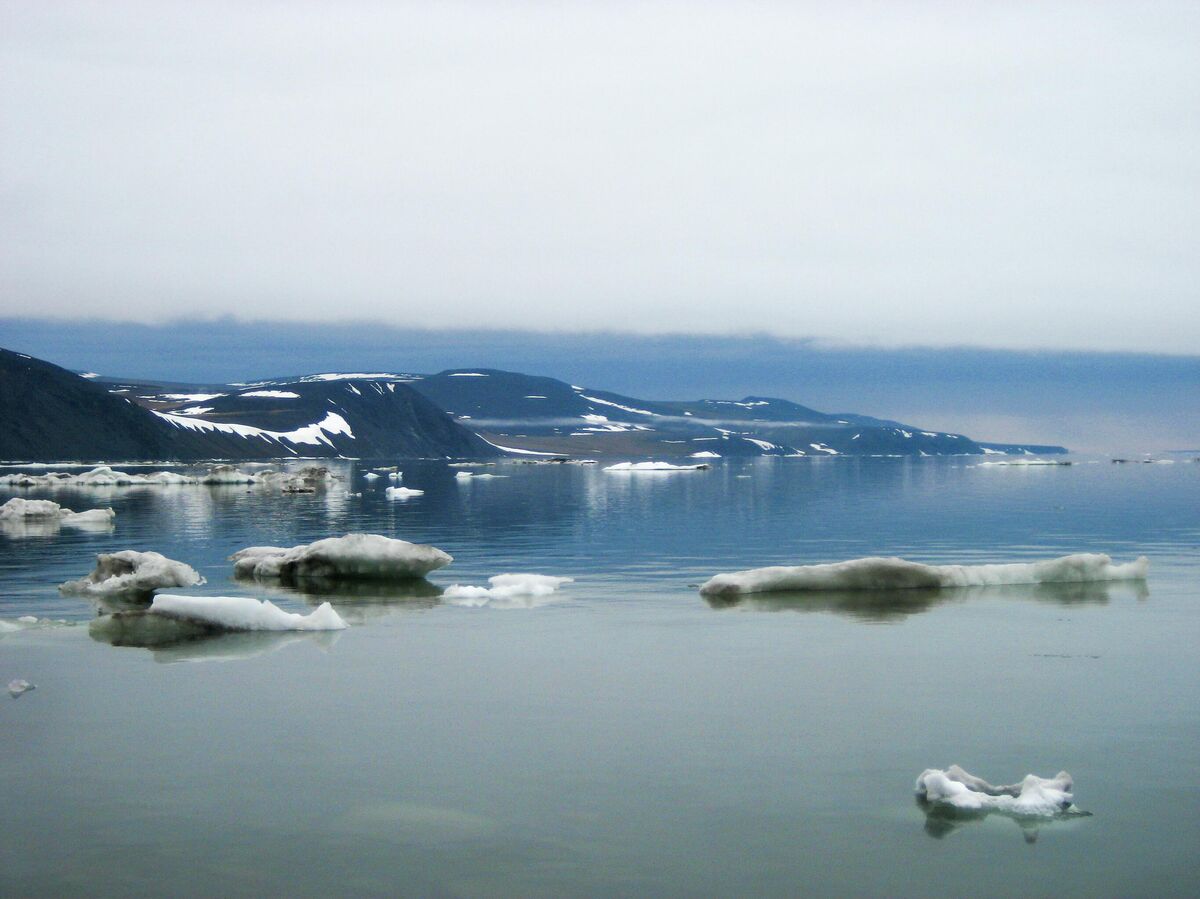
Ice-floes in Chaunskaya Bay, Chukotka
© Marina Galkina
It happened during a river journey, when a bear began swimming after her boat. It was likely a young animal that hadn’t yet picked up her scent. As an experienced traveler, Marina knew she couldn’t run. Instead, sheturned around and paddled straight toward it.
The maneuver worked.
“He caught my scent and backed off,” she says.
Marina is meticulous about choosing where to camp, always trying to avoid bear trails. But unexpected encounters still happen. One night, a bear came right up to her tent and refused to go around it.
“Usually they smell a person and leave. But this one didn’t. It kept circling the tent and grumbling. I had to sing it a lullaby to calm it down. Eventually it cooled off and left. But I was terrified,” she says.
Surprisingly, the most dangerous element isn’t wildlife – it’s the weather. In the regions Marina explores, conditions can change in an instant.
“There’s nothing you can do about bad weather. I just wait it out in the tent. The tent has to be reliable, and you have to pitch it carefully so it won’t be blown away, buried in rocks, or flooded if the water rises,” she explains.
To handle fierce winds, heavy precipitation, and everything else the Arctic throws at her, gear selection is critical. Although Marina is an ambassador for an outdoor equipment brand, almost all of her gear is handmade: her tent, backpack, waterproof trousers and jacket.
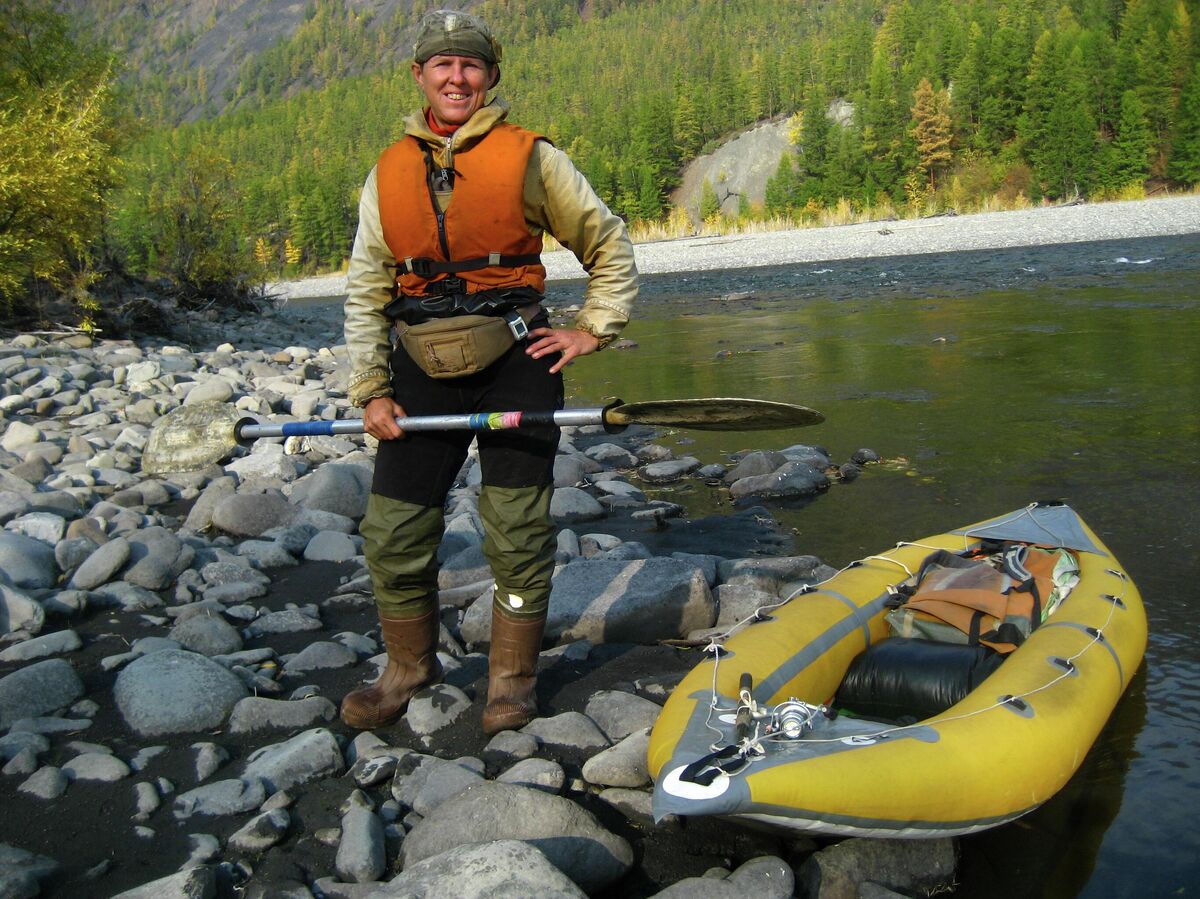
Verkhoyansk Range. Sobolokh-Mayan River
© Marina Galkina
“Mass-produced gear is designed for the average tourist – it’s heavy and not always practical. Mine is based on patterns I’ve refined over the years, using ultralight materials. My kayak weighs just 9 kilograms,” she says with pride.
Forty-four days of silence
Her longest and most demanding expedition took place on the Taymyr Peninsula, beginning in mid-July and ending only in late September.
“I crossed the Taymyr Peninsula and made my way to Cape Chelyuskin. For 44 days, I didn’t see a single person, even though I was moving the entire time. Altogether, I had 53 days on the trail,” she recalls.
This is far from a tourist route: there is a high risk of encounters with polar bears, snow can fall even in August, and an icebreaker arrives just once a year. It was on this expedition that she was attacked by a rabid Arctic fox, which she managed to fight off. When she eventually reached Cape Chelyuskin and told the station chief what had happened, he replied: “If it had bitten you, there’s no telling when a helicopter could have come or whether a vaccine would even be available.”
Even so, Marina carries only a minimal medical kit: bandages, plasters, fever-reducing medications, painkillers, andantibiotics – items she didn’t even take on earlier expeditions.
Despite spending weeks or even months alone, Marina says solitude simply suits her:
“Not everyone can keep going for months, but I’m always glad to meet people along the way – reindeer herders in the tundra and geologists.”
Every journey leaves her with unforgettable moments – especially the earliest ones, when everything was new.
And although she has already traveled extensively, she still has dreams ahead: completing the Beringia race route in Kamchatka, kayaking along the Sea of Japan in Primorye, and exploring new routes in Chukotka.
Marina documents all of her expeditions, turning them into films. Through her work, she aims to capture the stark beauty of the North, and perhaps inspire others to set out and discover the remote, mesmerizing landscapes of the Arctic for themselves.