https://en.arctic.ru
Roundtable “India-Russia: Strategic Arctic Dialogue” held in St. Petersburg
Roundtable “India-Russia: Strategic Arctic Dialogue” held in St. Petersburg
Arctic.ru: Discover how Russia implements its development goals in the Arctic and the Far East
2026-03-27T11:42
2026-03-27T11:42
2026-03-27T14:59
news
international cooperation
/img/07ea/03/1b/1348302_0:323:3066:2048_1920x0_80_0_0_e86a0c5acf748e8f9c3f942e73a4418a.jpg
The Consulate General of India in St. Petersburg and the Arctic and Antarctic Research Institute (AARI) convened a roundtable to discuss prospects for cooperation in the Arctic. The event brought together leading experts in high-latitude research, government officials, and representatives of the scientific and business communities from Russia and India, according to the institute’s press service.According to Ms. Rani, strategically important areas such as communications, energy, and the Northern Sea Route play a vital role in the development of bilateral relations, as the processes unfolding in the Arctic are of global significance. Their consequences will be felt not only by India but around the world. India’s growing energy needs and its global responsibilities make cooperation in the Arctic essential, both for securing sustainable energy sources and for ensuring the balanced and inclusive development of the region.Particular attention during the discussion was given to the opportunities for joint scientific projects that would strengthen the two countries’ mutually beneficial partnership in the Arctic.The roundtable included thematic sessions addressing the joint development of the Northern Sea Route to ensure uninterrupted energy supplies to India. Participants emphasized the strategic importance of the NSR as a key element of Russian-Indian economic cooperation and discussed mechanisms for integrating it into global supply chains. In the area of international law and Arctic governance, experts discussed the use of multilateral platforms to advance shared interests and identified key international organizations, including the Arctic Council and the International Arctic Science Committee, through which Russia and India can coordinate their Arctic policies. They also explored strategies for joint initiatives and the promotion of shared approaches to sustainable development, scientific research, and security in the Arctic.Technological innovations – particularly drones, remote sensing, and surveillance – were also a focus of discussion. Russian and Indian technology developers presented an analysis of the prospects for using unmanned aerial systems and artificial intelligence technologies. Another topic of discussion was the potential use of UAVs for navigation, mapping, and environmental monitoring in the Far North.Experts noted that integrating unmanned platforms and AI could significantly improve the efficiency of data collection, enable real-time environmental monitoring, and enhance the safety of shipping and logistics operations in the Arctic.
https://en.arctic.ru/20260311/1301606.html
2026
Новости
ru-RU
https://en.arctic.ru/docs/about/copyright.html
https://xn--c1acbl2abdlkab1og.xn--p1ai/
/img/07ea/03/1b/1348302_236:0:2967:2048_1920x0_80_0_0_f82a9f0cc32c44317feb6604cb3ffed9.jpgnews, international cooperation
Roundtable “India-Russia: Strategic Arctic Dialogue” held in St. Petersburg
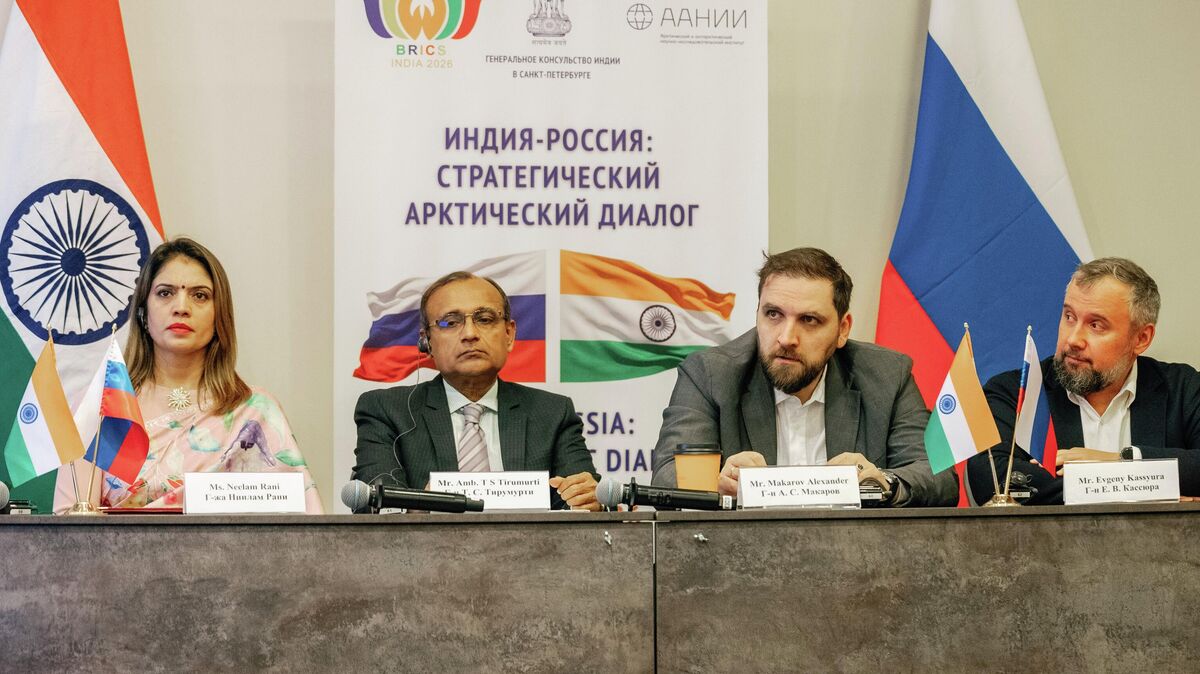
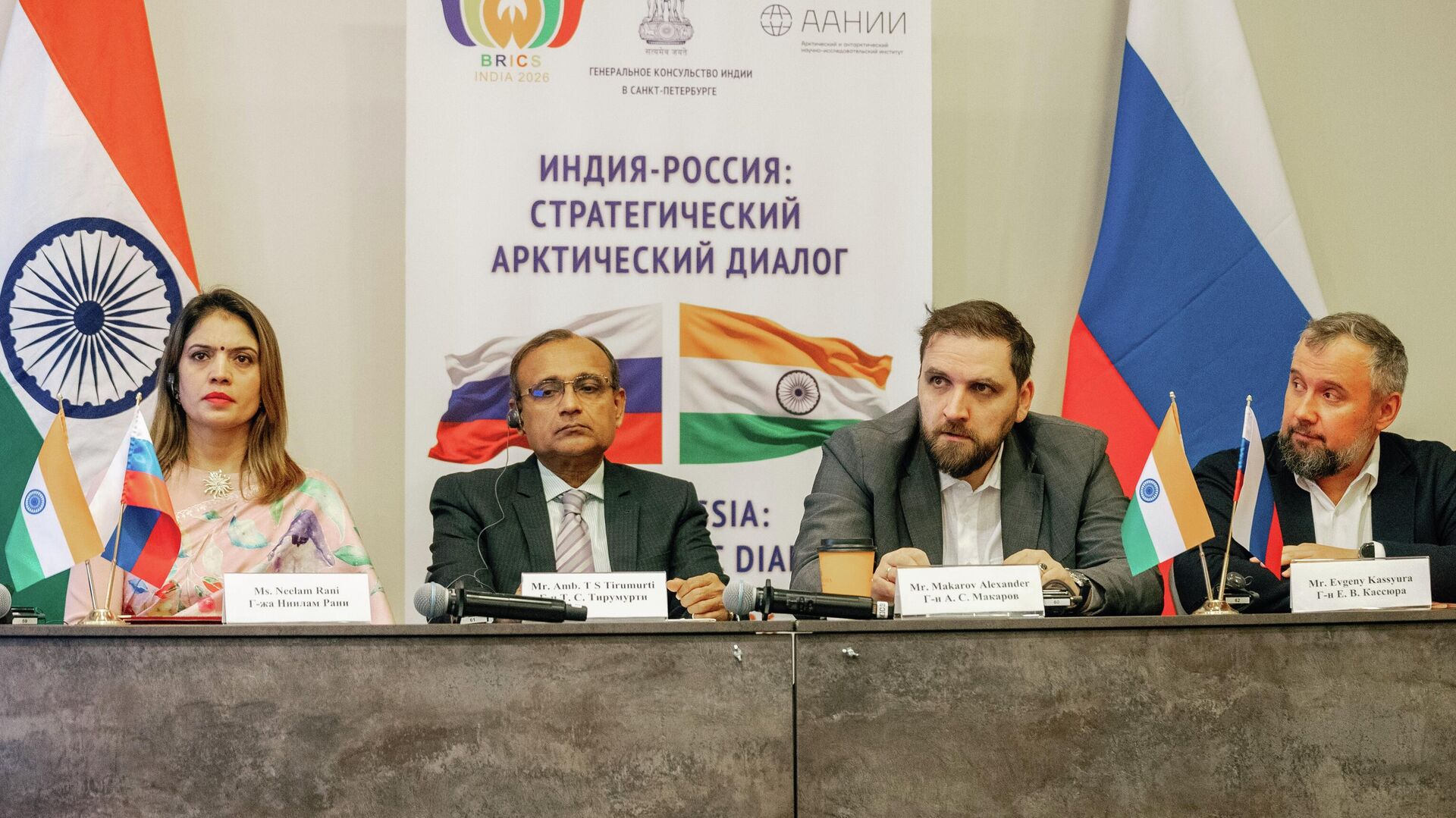
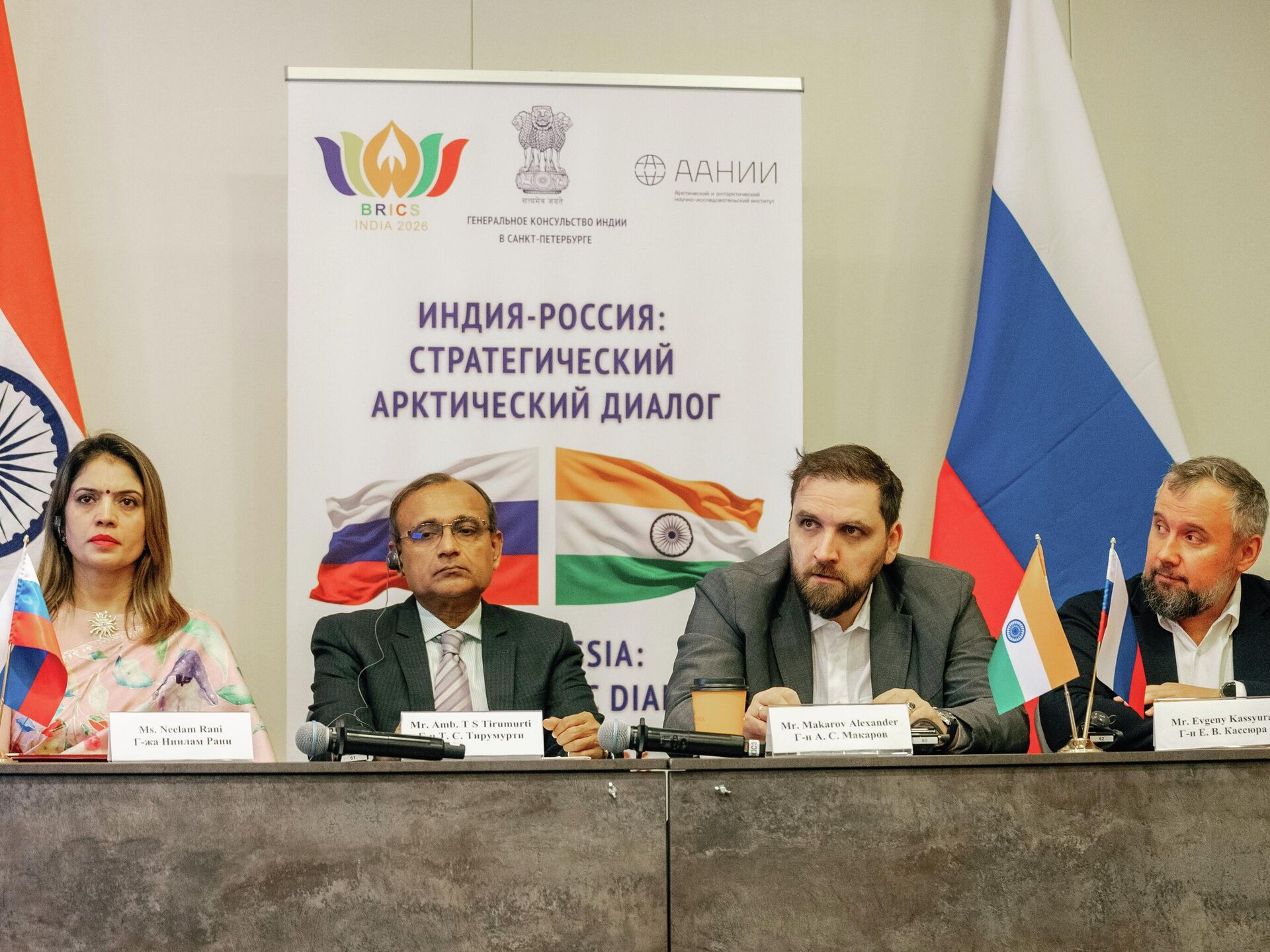
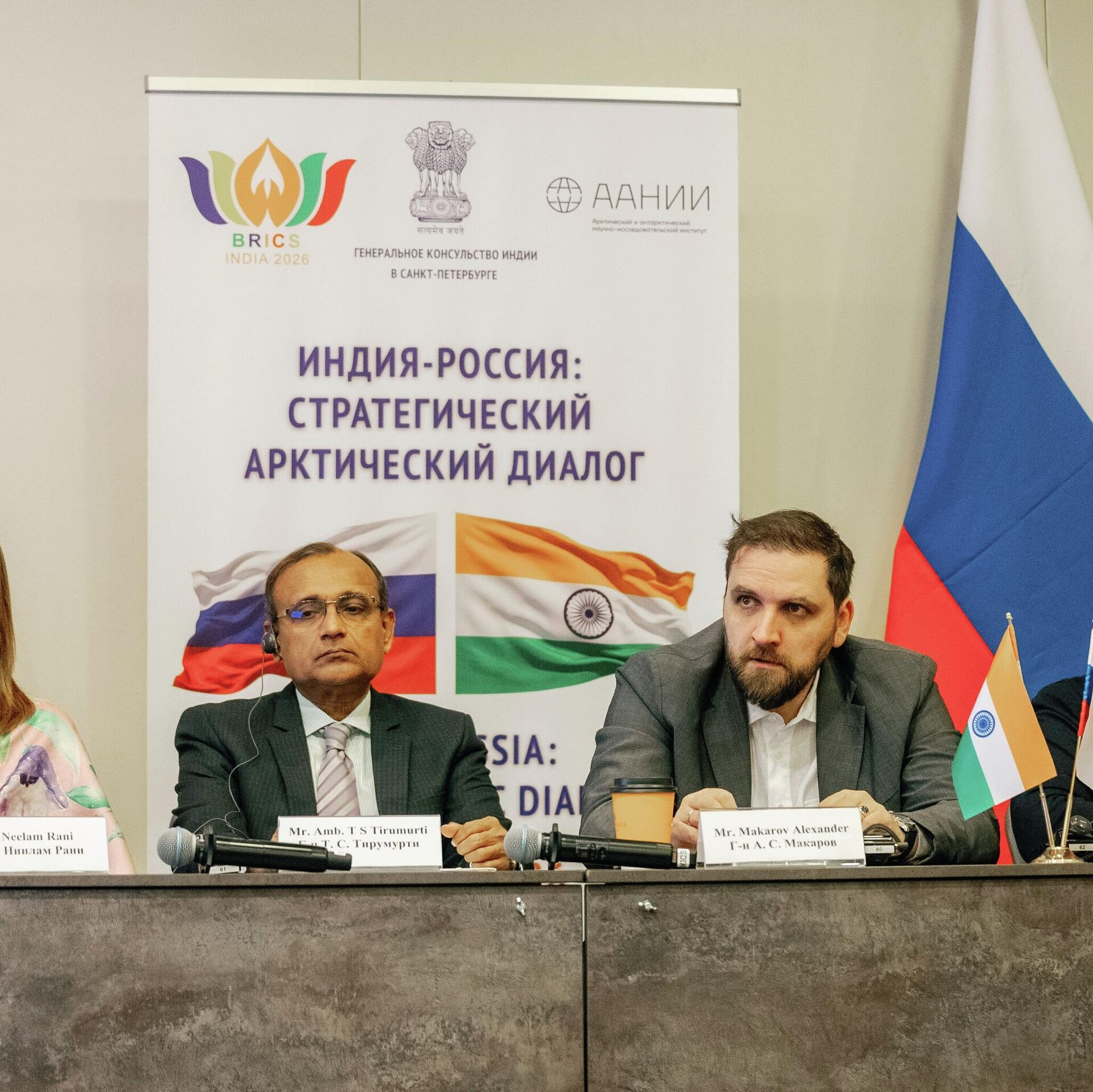
The Consulate General of India in St. Petersburg and the Arctic and Antarctic Research Institute (AARI) convened a roundtable to discuss prospects for cooperation in the Arctic. The event brought together leading experts in high-latitude research, government officials, and representatives of the scientific and business communities from Russia and India, according to the institute’s press service.
“India and Russia are interested in expanding cooperation in the Arctic, particularly in scientific research, sustainable development, and the Northern Sea Route,” said Neelam Rani, Consul General of India in St. Petersburg. “The signing of a memorandum of understanding on cooperation in training personnel for vessels operating in polar waters during President Vladimir Putin’s visit to India was a significant step toward constructive engagement in the Arctic region.”
According to Ms. Rani, strategically important areas such as communications, energy, and the Northern Sea Route play a vital role in the development of bilateral relations, as the processes unfolding in the Arctic are of global significance. Their consequences will be felt not only by India but around the world. India’s growing energy needs and its global responsibilities make cooperation in the Arctic essential, both for securing sustainable energy sources and for ensuring the balanced and inclusive development of the region.
Particular attention during the discussion was given to the opportunities for joint scientific projects that would strengthen the two countries’ mutually beneficial partnership in the Arctic.
“The most significant scientific results can and should be achieved only through international cooperation,” said Alexander Makarov, AARI Director. “We see our Indian colleagues as reliable partners with whom we can work side by side in the Arctic. In Antarctica, we already have experience collaborating with India’s National Centre for Polar and Ocean Research, and we have clearly defined areas for future cooperation at the South Pole. Today, the task is to explore possible joint scientific projects in the Arctic.”
The roundtable included thematic sessions addressing the joint development of the Northern Sea Route to ensure uninterrupted energy supplies to India. Participants emphasized the strategic importance of the NSR as a key element of Russian-Indian economic cooperation and discussed mechanisms for integrating it into global supply chains. In the area of international law and Arctic governance, experts discussed the use of multilateral platforms to advance shared interests and identified key international organizations, including the Arctic Council and the International Arctic Science Committee, through which Russia and India can coordinate their Arctic policies. They also explored strategies for joint initiatives and the promotion of shared approaches to sustainable development, scientific research, and security in the Arctic.
Technological innovations – particularly drones, remote sensing, and surveillance – were also a focus of discussion. Russian and Indian technology developers presented an analysis of the prospects for using unmanned aerial systems and artificial intelligence technologies. Another topic of discussion was the potential use of UAVs for navigation, mapping, and environmental monitoring in the Far North.
Experts noted that integrating unmanned platforms and AI could significantly improve the efficiency of data collection, enable real-time environmental monitoring, and enhance the safety of shipping and logistics operations in the Arctic.