13:44 23.03.2026
Romance of the Arctic: How pediatrician traded the South for the Far North with no regrets
© Yumabike Mankayeva
The Zemsky Doctor (Rural Doctor) program, designed to attract healthcare professionals to rural areas, will mark its 15thanniversary next year. Since its launch in 2012, more than 72,000 medical workers have been deployed to remote villages and small towns with populations of up to 50,000.
Ten years ago, pediatrician Yumabike Mankayeva decided to take part in the program and move from the Krasnodar Territory to the Arctic Circle. Her story is about what drew her to the North, why the first years were the most challenging, and how healthcare is organized in a remote settlement.
Yumabike’s story shows her life and career path, which span a remarkable geography. The doctor-to-be was born in the Chechen Republic, spent her childhood in Kalmykia, finished school in Dagestan, and earned her medical degree at Kuban State Medical University in Krasnodar.
After graduating, she got married and moved to Tula, where she began her medical career in a local hospital. Soon after, she received an unexpected offer: to move to the Yamal Peninsula under the Zemsky Doctor program.
Yumabike admits that she was won over by the fact that the invitation came from a colleague of hers – the then head of the Novy Port district hospital with whom they shared alma mater. Without hesitation, Yumabike and her husband decided to take a chance and move to the remote Yamal village called Novy Port.
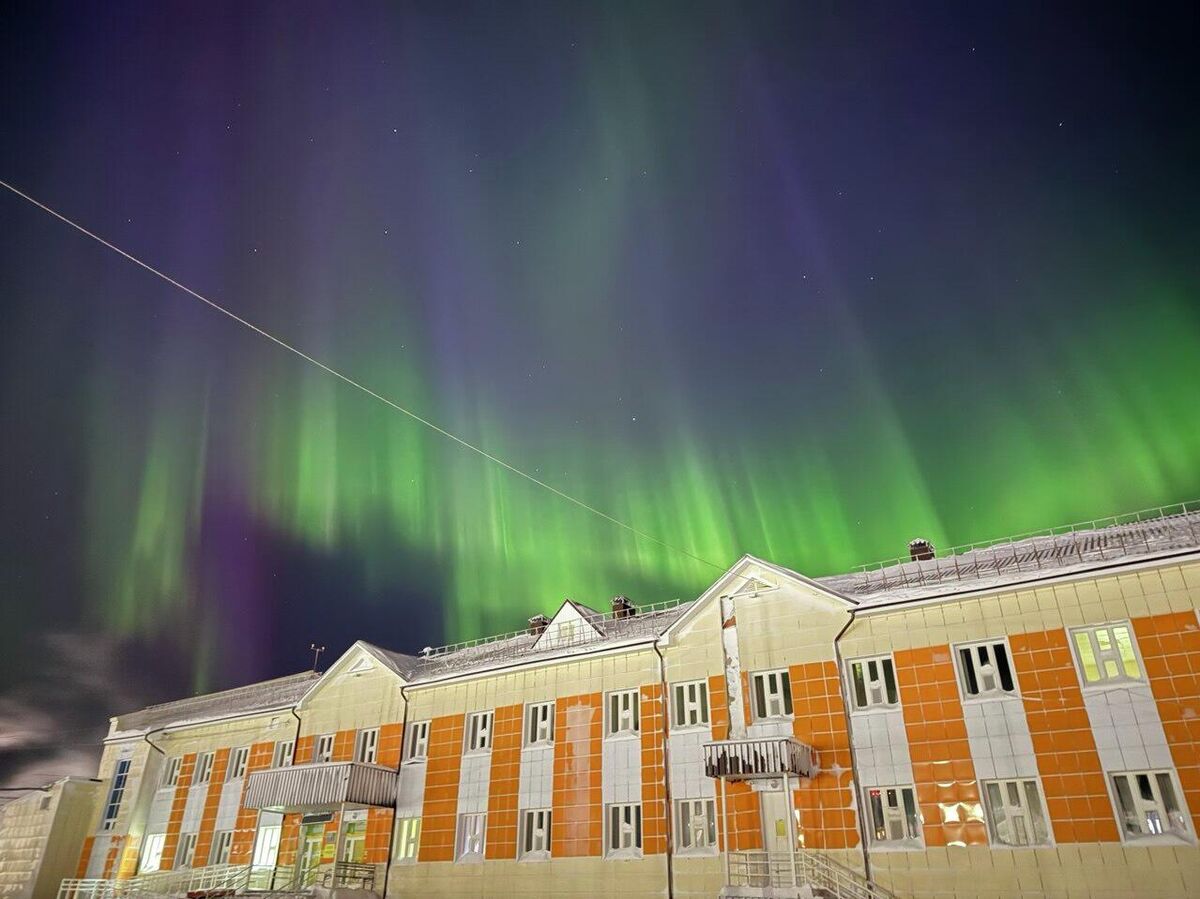
Novy Port Medical Outpatient Clinic
© Yumabike Mankayeva
“We felt a sense of adventure,” she recalls. “We had just gotten married, had no children yet, and were always ready to just get up and go.”
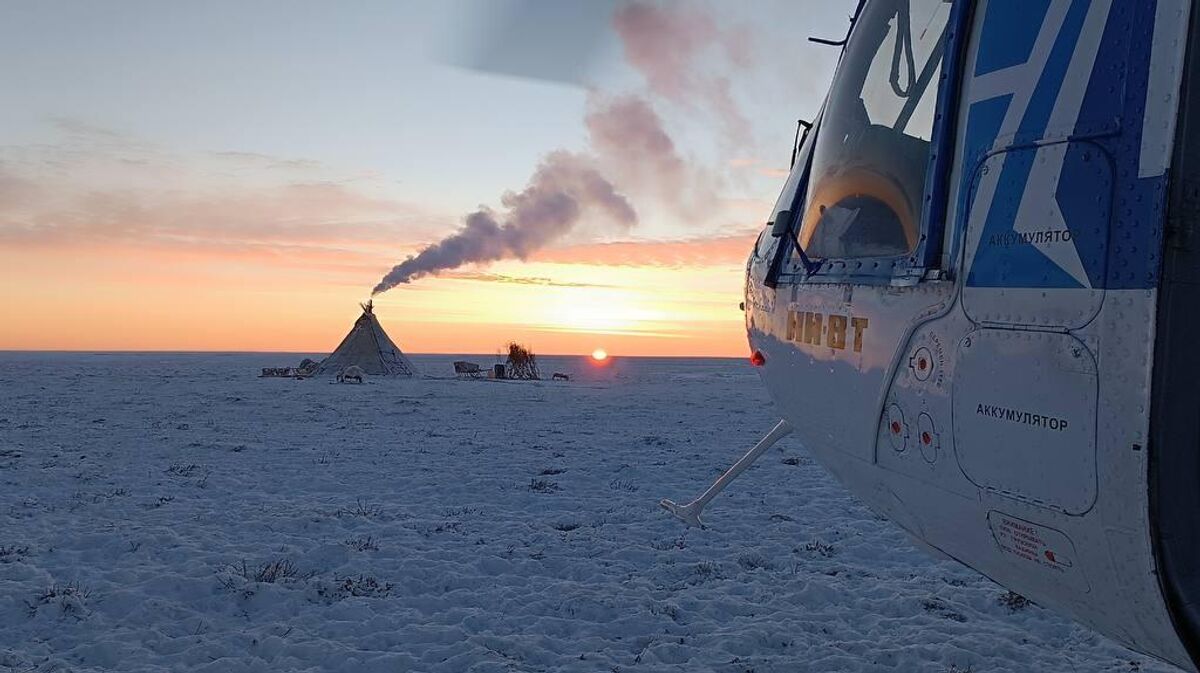
Just three weeks later, the couple boarded a helicopter, ready to start a new life in the Far North.
Million at the start and northern incentives
In 2016, the program offered a one-time payment of one million rubles, which served as an important financial cushion for Yumabike and her husband.
“Housing was no problem. They met us at the helicopter, showed us the apartment, and handed over the keys – we could move in right away,” Yumabike says.
In addition to the initial payment, participants received monthly support and northern incentives, which increased every six months.
Today, the program has expanded its benefits: payments have risen to two million rubles, and young doctors now receive the maximum northern incentive from their first day on the job.
Harsh weather dictates its rules
Yumabike admits that the early years were difficult. She often thought of giving up and leaving, above all because of the cold climate she wasn’t used to. Isolation from family also tested her resilience. Travel in and out of Novy Port is only possible by helicopter, with tickets often needing to be booked three months in advance. Internet access was also unreliable at first, but later the problem was resolved.
Medical emergencies posed the greatest challenge. Unlike in cities, where ambulances arrive quickly, evacuation here depends entirely on weather conditions. You have to call for an air ambulance and wait. It may take a day, two, or even three for a helicopter to arrive, depending on the flight conditions.
“There were times when heavy snow prevented the air ambulance from reaching us for days. We had to treat patients ourselves. Thankfully, sometimes further hospitalization wasn’t necessary,” she recalls.
According to the doctor, another challenge she had to face early on was diagnostics and prescribing treatment based solely on her expertise, with limited laboratory equipment. After all, specialists who can provide a wide range of ultrasound diagnostic services come to the village only twice a year for a week.
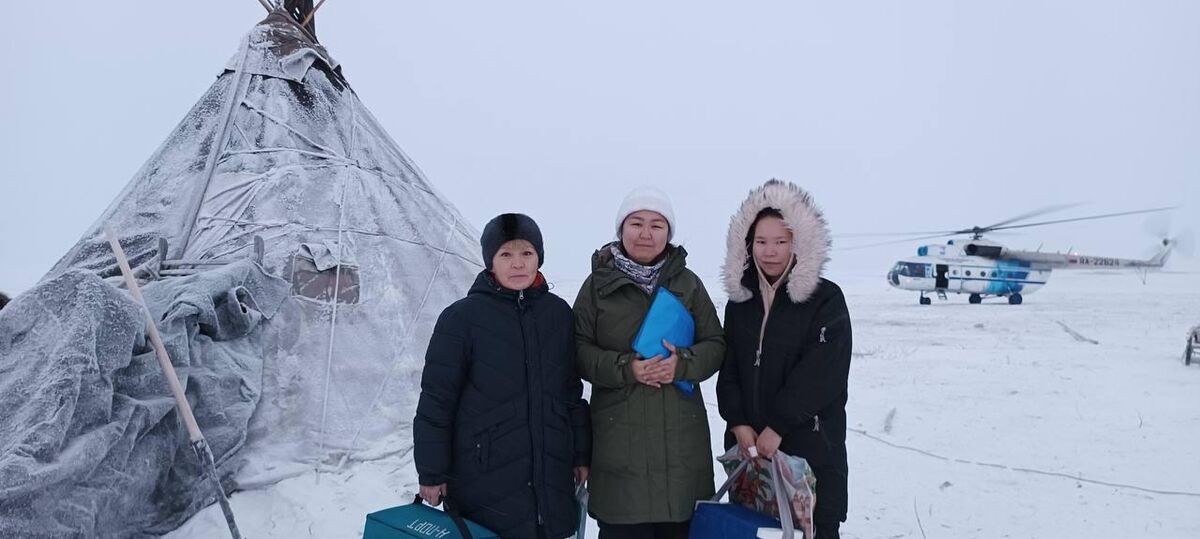
Flying to the tundra for vaccinations and medical examinations
© Yumabike Mankayeva
Young and close-knit team
However, over time Yumabike realized that the advantages began to outweigh the hardships. She highlights the clinic’s young and close-knit team – a pediatrician, general practitioner, dentist, as well as experienced and kind nurses and paramedics, many of whom also arrived through the Zemsky Doctor program.
She also praises the local community and the unique beauty of the northern nature.
“The North is rightly known for its people: they are incredibly welcoming and supportive here. Unlike in cities, patients trust doctors and follow recommendations carefully,” she says. “After ten years, I know every child in the area: I’ve watched them grow up.”
Equally important is the supportive management. Yumabike said that when she once considered leaving, the chief doctor did not pressure her but instead had an open and understanding conversation, which ultimately influenced her decision to stay.
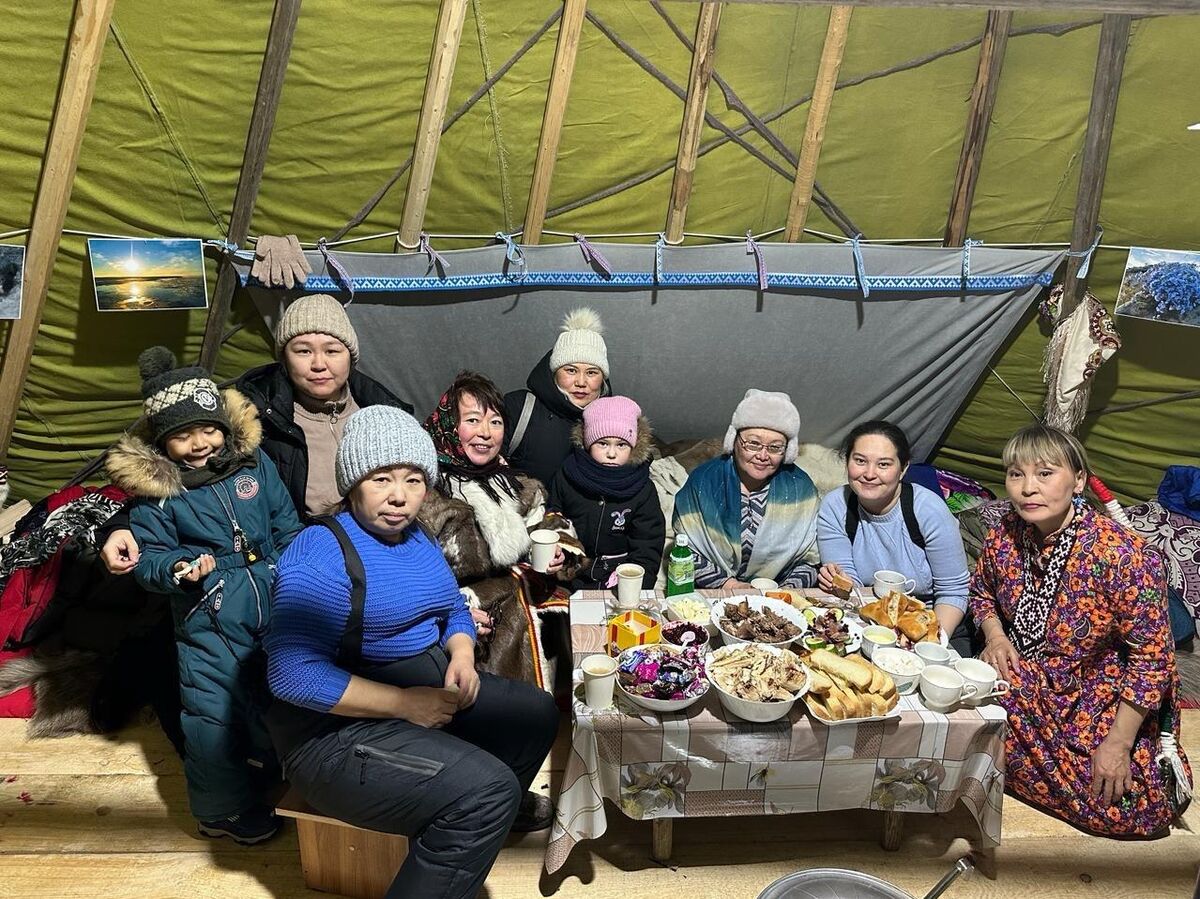
Yumabike Mankayeva with her team celebrating Reindeer Herders’ Day in a chum
© Yumabike Mankayeva
“We have a very responsive management. The entire team is friendly and supportive. I have no intention of losing this and moving into the unknown,” the doctor said.
Today, Yumabike is a mother of two and the head of the outpatient clinic. She believes that major life changes require two key elements: strong family support and a trusting, positive team environment.