15:21 10.03.2026
The Tunnel beneath the Bering Strait: A Fantastical Project Could Become Reality
© Public domain
By Ruslan Marmazov
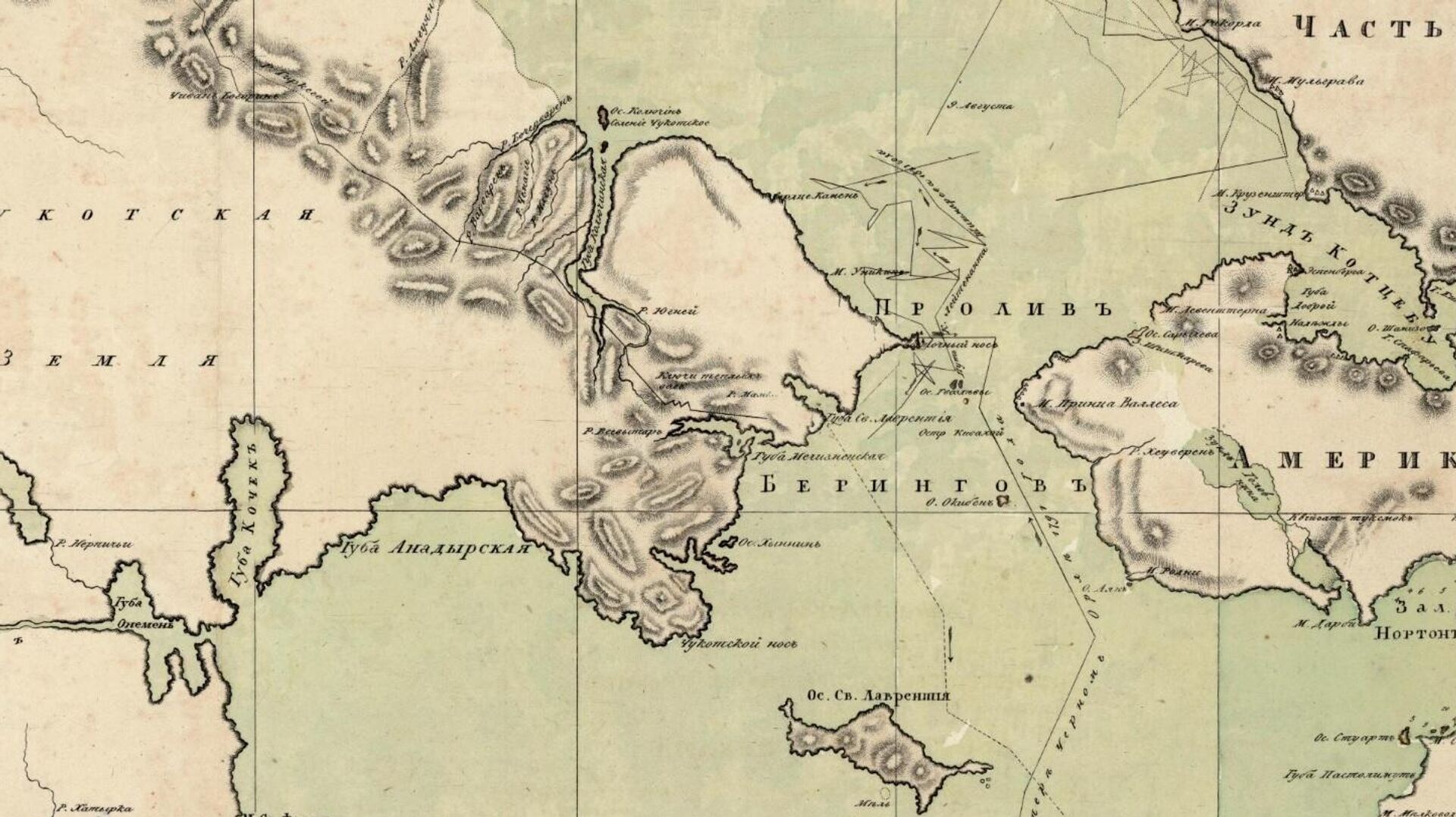
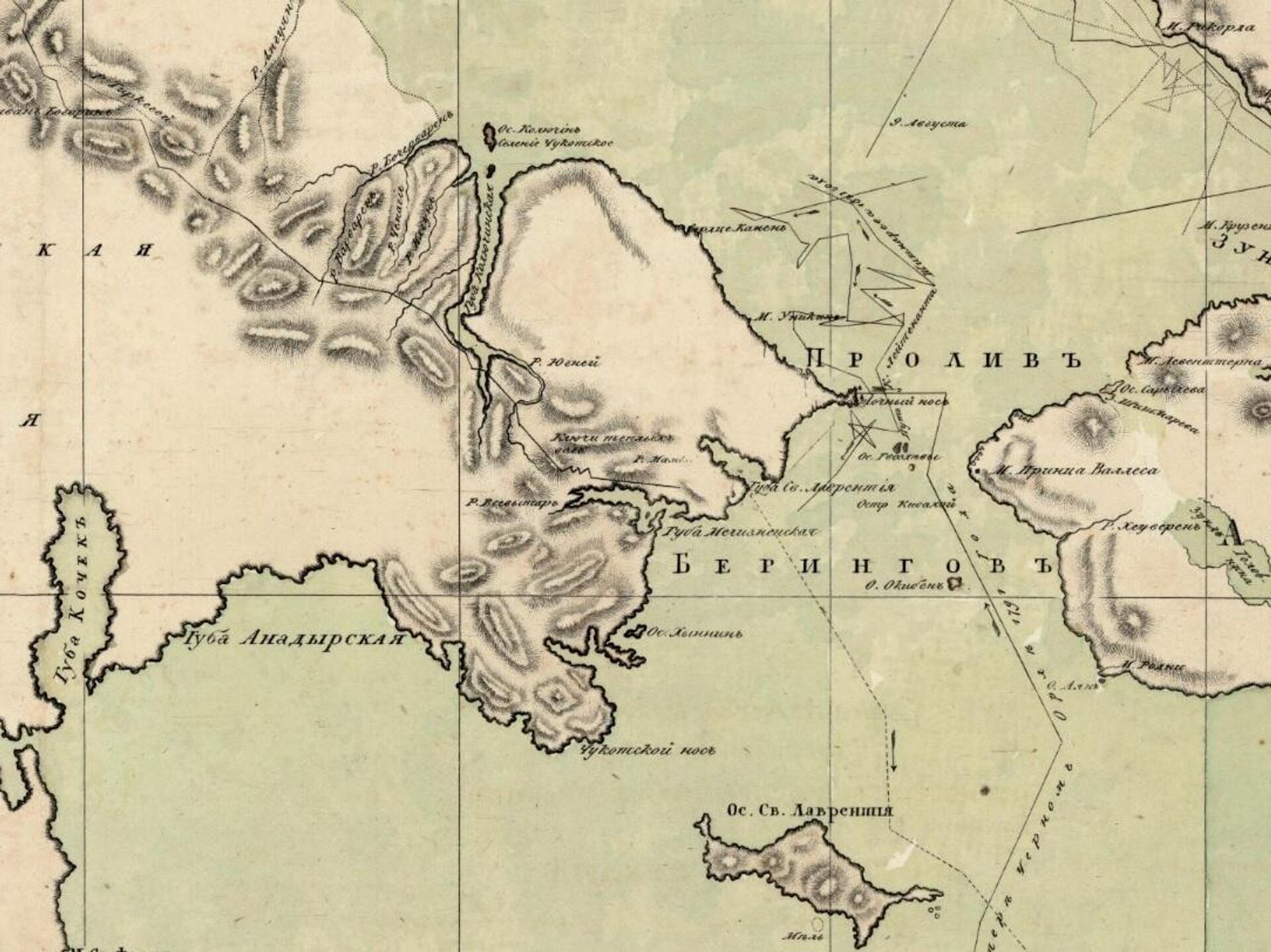
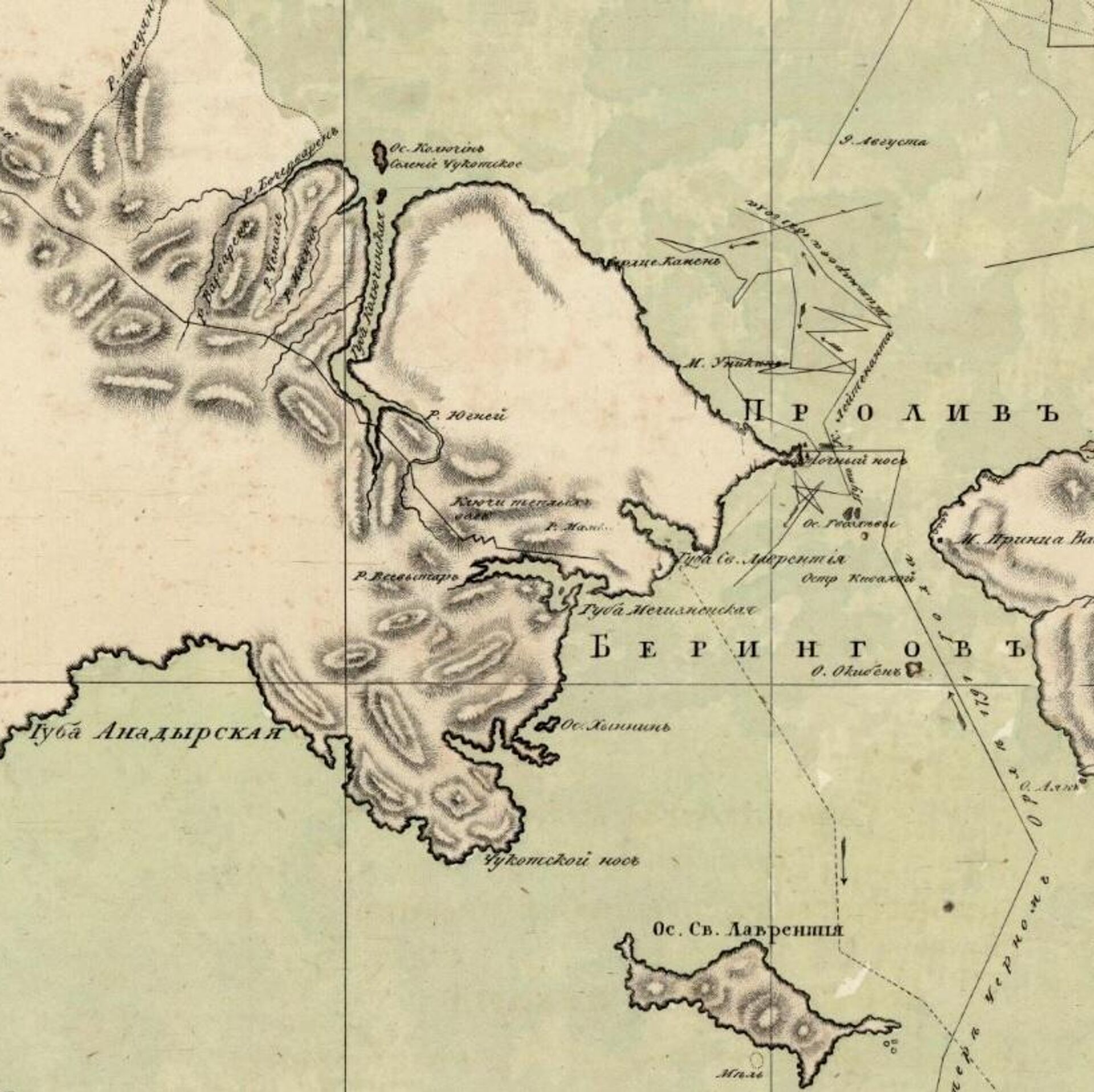
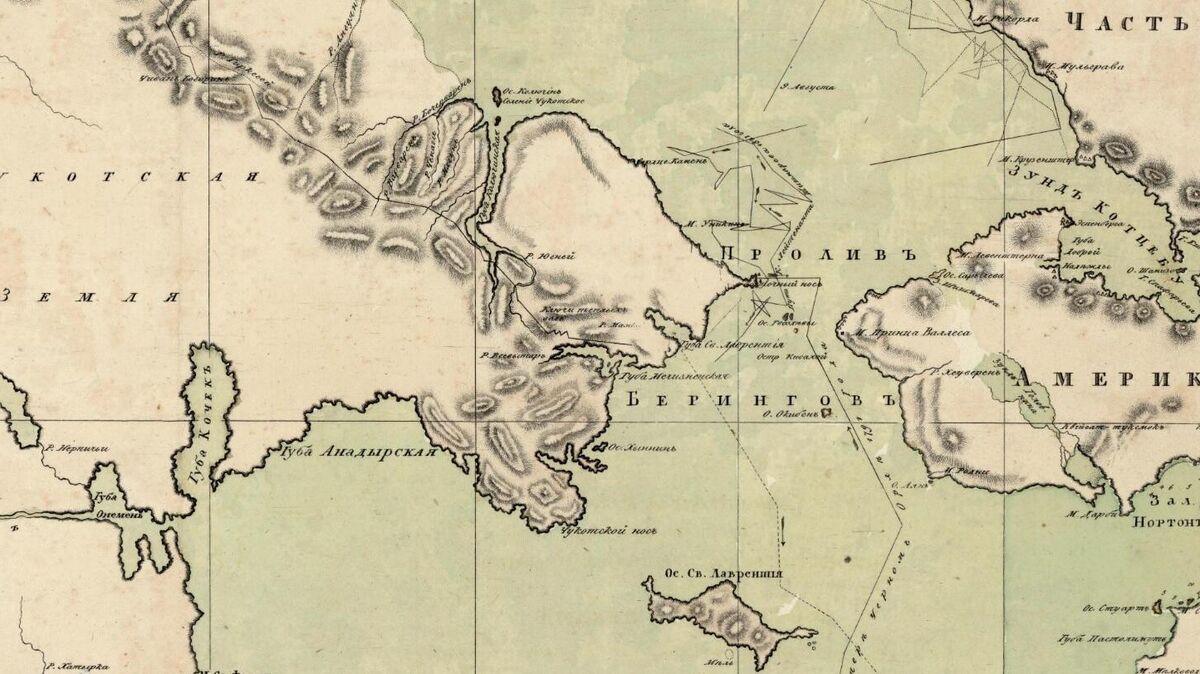
Eighty-six kilometers of open water separate Eurasia and North America at the narrowest point of the Bering Strait. Here, between Cape Dezhnev and Cape Prince of Wales, a monumental structure - a tunnel beneath the Bering Strait - could one day become a reality. Over the past 150 years, proposals to create an infrastructure link between Russia and Alaska have been made repeatedly. However, none has ever reached the implementation stage.
Following the meeting between President Vladimir Putin and US President Donald Trump on August 15, 2025, the idea once again entered public discussion. Head of the Russian Direct Investment Fund Kirill Dmitriev, a participant in the talks, noted that, using the most advanced technologies, the tunnel could be built in less than eight years.
Learn more about the reasons such a tunnel is necessary, how it has already secured a place in world literature, and how much this structure might cost in an article by Rossiya Segodnya columnist Ruslan Marmazov.
Outline Maps Get Intriguingly Reshuffled
Vice Admiral and holder of the Saint George Order Makar Ratmanov would surely have been astonished if some holy fool on a church porch had told him that his name - the name of a modest Russian seafarer and public servant - would, in the 21st century, become a key point along the route of an unprecedented transport artery between Eurasia and America.
Cossack ataman Semyon Dezhnev would have probably been struck speechless if someone were to tell him his name would show on globes and world maps. He might as well have roughed the offender up for such impertinence.
The ataman was an exceptionally tough man, and quick in his decisions, too. What he did not know was that he was not merely racing across the ocean in a near-suicidal Pomor koch in search of walrus and seal rookeries, but was confidently entering history and geography too, for that matter. And that it was he, Semyon Dezhnev, who, in fact, discovered the Bering Strait long before Vitus Bering was born in his native Denmark.
Indeed, history maps are shuffled in weird ways. The outline maps of geography are colored in even more intricate patterns.
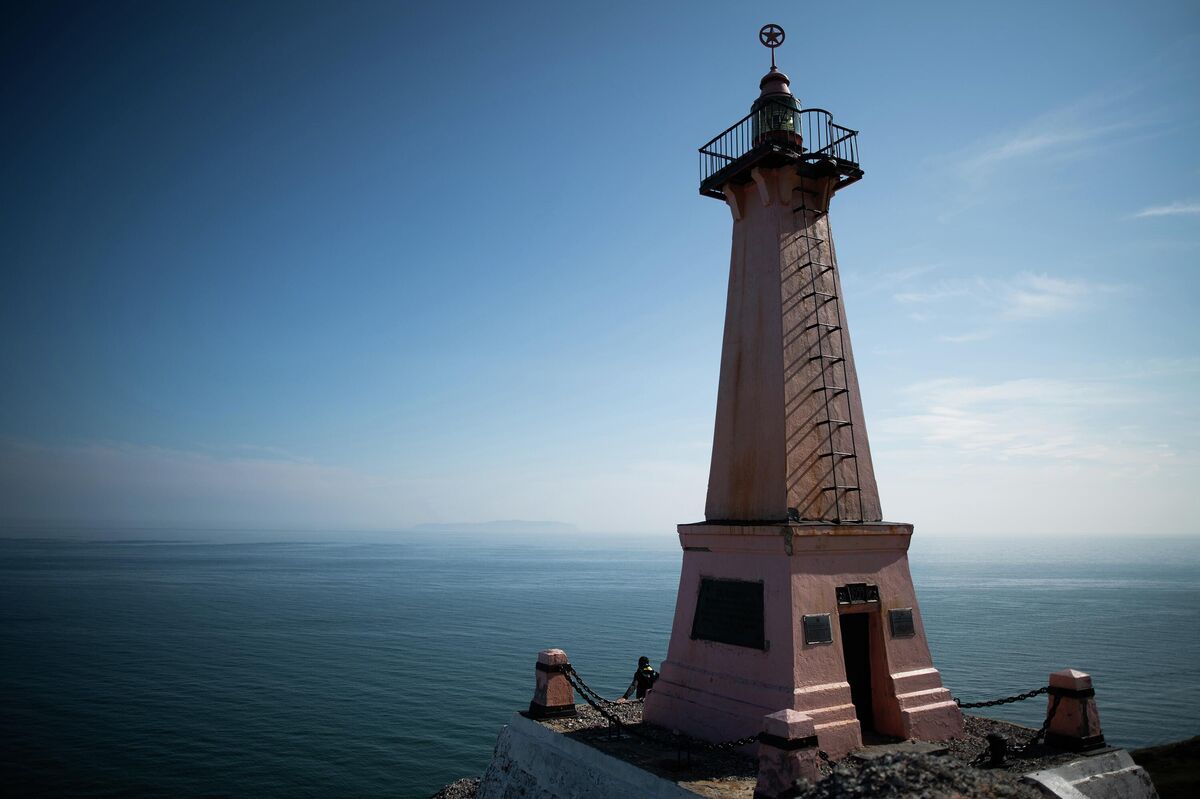
Lighthouse at Cape Dezhnev. The easternmost point of mainland Russia and Eurasia
© RIA Novosti / Vladimir Astapkovich
We have not yet mentioned Ivan Krusenstern and the island named after him which, as if deliberately, rises from the water almost in the middle of the Bering Strait between Russia and the United States next to Ratmanov Island. No more than four kilometers separate them, and both of these small but storied pieces of land - along with the smaller rocks scattered around them - form part of the Gvozdev Islands. Military surveyor Mikhail Gvozdev, who was the first to reliably and thoroughly observe North America from our shore, earned that honor.
The islands also have another name - the Diomede Islands. This was the doing of Vitus Bering. Upon discovering land in the strait that would later bear his name, he decided to dedicate it to a saint. Saint Diomede, an ascetic and healer from the early centuries of Christian history, is venerated by both the Orthodox and Catholics which in this context may be seen as symbolic as these islands are located on the boundary of worlds, civilizations, and continents. I’m sure you know what I mean.
Thus Ratmanov Island is also Big Diomede, while Krusenstern Island is Little Diomede. Together they make Gvozdev Islands. On old maps one can also find the inscription “Gvozdev’s Islands.” It has a nice ring to it, hasn’t it?
Lev Berg, a scholar with pre-revolutionary experience and a decorated academician and Stalin Award laureate in the Soviet times once wrote:
“The first to discover the strait between Asia and America was neither Dezhnev nor Bering, but Fyodorov, who not only saw the Gvozdev Islands and the opposite shores of Asia and America, but was also the first to put them on the map.”
The eminent professor was referring to navigator’s assistant Ivan Fyodorov, for whom surveyor Gvozdev served as assistant. Their expedition took place in the 1730s. Fyodorov died young, and it fell to Gvozdev to sum up the results of the voyage. In the Russian capital, by the way, they found this out many years after the expedition, and even then, just by chance.
As a result, the whole world knows who Bering is. His name is on maps marking the strait in various languages. All of Russia knows Dezhnev, because he was a brave Cossack and his name is also marked on the map. Gvozdev is known to some in Russia… but only specialists know who Fyodorov was. How about that?
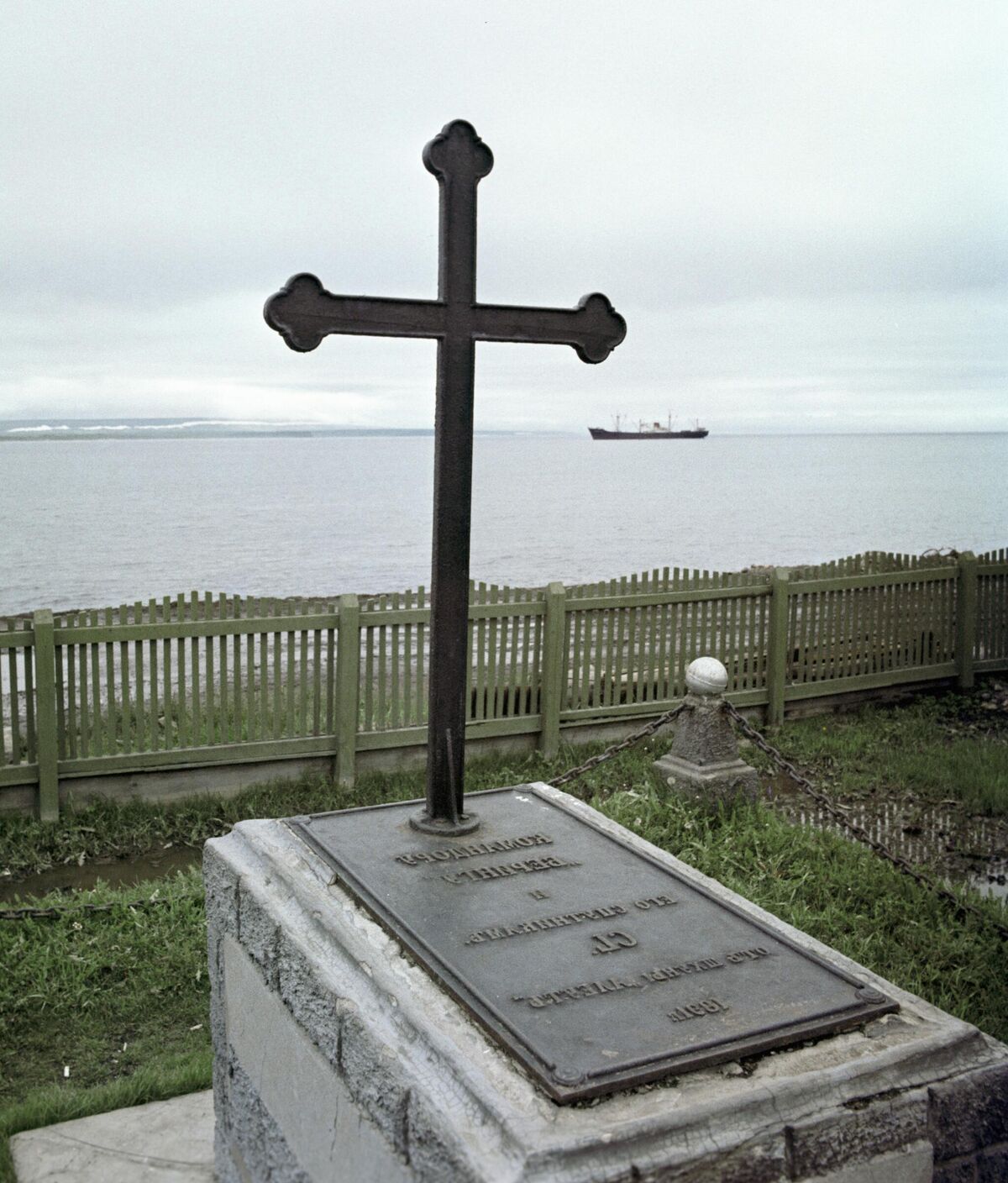
Grave monument to Commander Vitus Bering and his companions on Bering Island
© RIA Novosti / Yury Abramochkin
Roughly, that’s how things are every step of the way in these harsh yet incredibly fascinating places at the edge of the Russian oecumene on Kamchatka, in Alaska, and on Aleutian Islands. Native names, roots, legends, stories - some just, some less so - genuine feats on land and at sea - there’s no counting them.
Although, of course, the distances, each step of which bears the weight of Russian presence, are enormous and impressive in those latitudes. When you look at the map, it seems that Alaska is just a stone’s throw away from Chukotka. Literally, on a map, you could cover the Bering Strait with a teabag to get an illusion of unity and indivisibility of Eurasia and North America.
In reality, the distance from Cape Dezhnev, Russia, to Cape Prince of Wales, United States, is about 86 km. Not much, but not so little either.
By the way, what’s the prince got to do with this? With Dezhnev it’s more or less clear: the Cossack risked his life daily in his adventures, and whether he actually discovered the strait is another question. But the Prince of Wales, a Welshman (by the way, the future King George IV before whom the navigator James Cook bowed down when naming the place) how often has he visited Alaska to gaze at the Bering Strait?
Okay, it’s not our concern. I juxtaposed the British prince with the Yakut Cossack simply to illustrate that differences in worldview between neighboring civilizations do indeed occur and can be quite significant. No less significant than the Bering Strait itself, which reaches depths of up to 90 meters.
Dmitriev’s Trial Balloon
“Remember to take your personal belongings when leaving the train. Mind the closing doors. Next station is Cape Dezhnev,” a familiar voice with a pleasant mechanical rasp is coming from the loudspeakers. The message is replayed in English, Hindi, and Mandarin. The train begins moving smoothly through the tunnel from Ratmanov Island toward Eurasia. We will soon reach mainland Russia. Thank God. Home at last…
Now we are carefully approach our main subject today: how to connect Eurasia with America in the area of the Bering Strait and whether it should be done at all. How to connect them? Not mentally. Not hypothetically, but with a brick-and-mortar tunnel. A tempting idea, which is not exactly new which, however, did not prevent it until recently from remaining, if not a refined utopia, but something very close to being one.
On August 15, 2025, President Vladimir Putin met with US President Donald Trump in Alaska. This was no ordinary event, but a kind of a fantastical event in its own right, suddenly becoming reality for many around the world.
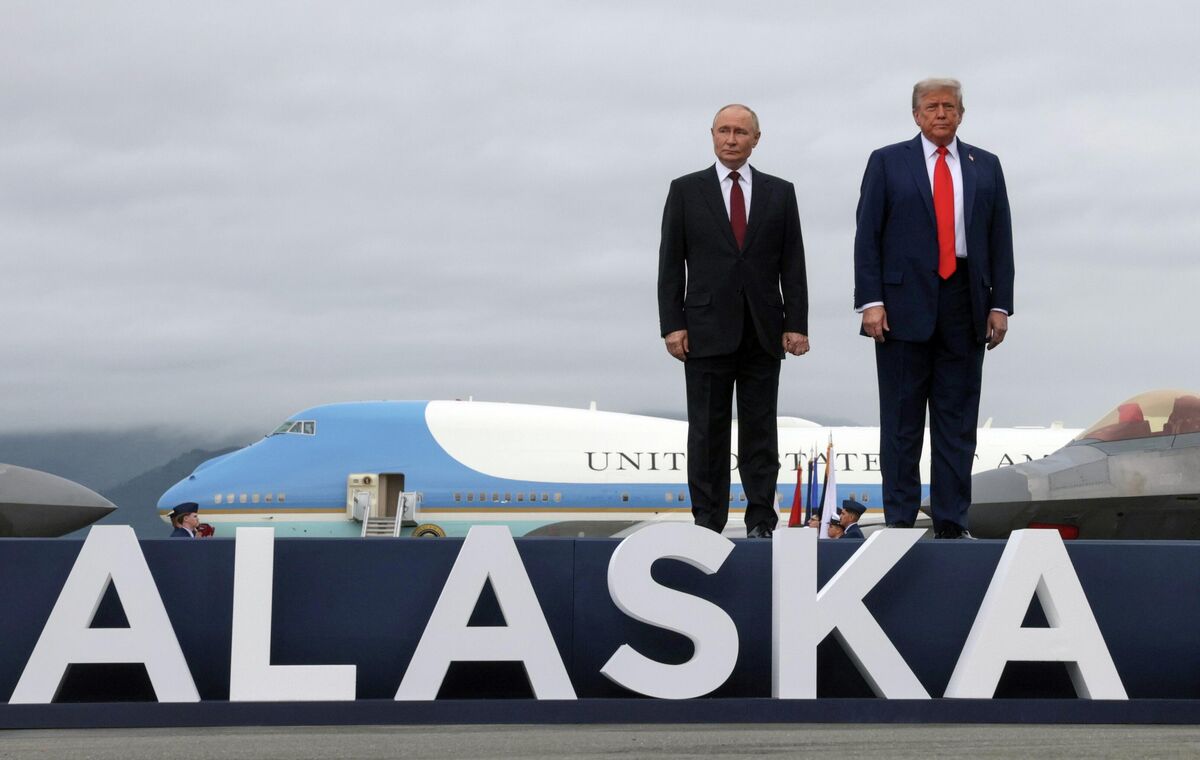
August 15, 2025. President of the Russian Federation Vladimir Putin and President of the United States Donald Trump during a meeting at Elmendorf Air Force Base, Alaska
© RIA Novosti / Gavriil Grigorov
Much was said around the time of that summit by everyone from armchair analysts to respected global experts. With a nudge from Russian Special Envoy Kirill Dmitriev, the topic of a tunnel beneath the Bering Strait began circulating widely in the media once again, taking on fresh colors.
You have probably come across the term “Overton window.” It has become quite popular in recent years. Most likely because modern life keeps presenting humanity with such surprises that one can hardly help but feel dizzy about.
The Overton window refers to a range of ideas considered acceptable in public policy, media, and social debate at any given moment. In other words, anything outside that window is treated as radical nonsense, something deserving a taboo. Yet with sufficient effort, something from the category of “impossible, because it could never be” can easily move into a folder labeled “why not?” and from there it is only a short step to becoming “a common fact of life.”
With his clearly deliberate remark, Kirill Dmitriev significantly shifted the Overton window, or, if you will, moved the Bering Tunnel from the shelf of scientific (or even quasi-scientific) fantasy closer to tangible reality. Of course, the project of a passage dug between Russia and the United States still remains somewhat illusory. But it can no longer be called a fairy tale, can it?
Under certain circumstances, and with the political will of the stakeholders, the tunnel could begin to materialize rapidly before our very eyes. Even now, the number of skeptics seems to be shrinking, while the number of optimists confident in both the economic expediency and the technical feasibility of such a project is steadily growing.
That was only a trial balloon launched by Dmitriev. Serious efforts to shape public opinion, to carry out engineering calculations, or to secure financial flows have not yet begun. Or have they? Who knows… For now, such information is for official use only. That happens, too.
It should also be understood that Kirill Dmitriev’s words did not fall on a monolithic wall and echo into nothingness. Rather, they landed comfortably in soil long prepared, loosened, and enriched by previous generations of dreamers and realists. As I said earlier, the idea is not new.
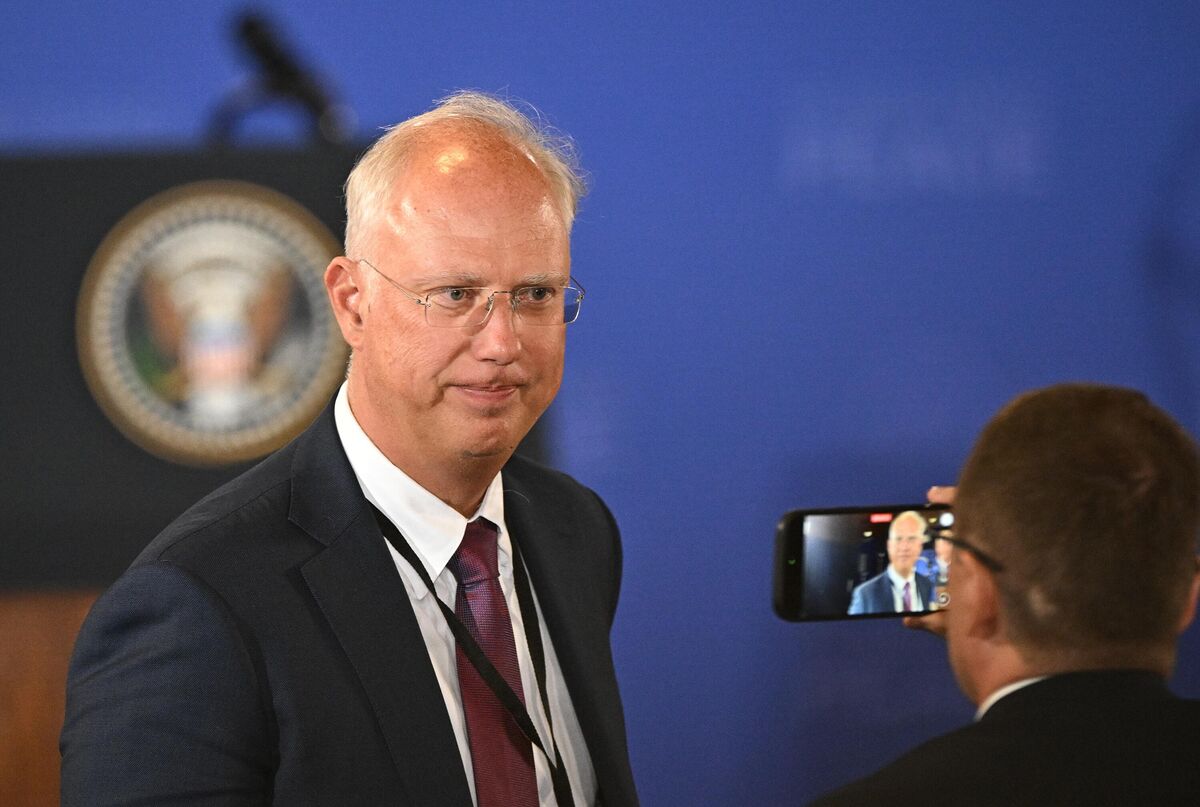
Special Representative of the President of Russia Kirill Dmitriev
© RIA Novosti / Sergey Bobylev
Icebreaker Ferries and Other Adventures of Bering
At the outset, the expeditions that gave us a precise understanding of the point where Eurasia comes closest to America did not entirely ignore America but to a large extent placed it outside the main equation. If America was of interest for the Old World, it had far weightier and more promising objectives in mind.
For example, “when drafting instructions for Bering, Peter the Great was guided by the idea of finding the aforementioned passage through the Arctic Ocean to China and India.” The quote comes from the book by Lev Berg, Report on the Bering Strait and Its Shores before Bering and Cook, published in Moscow in 1920.
In other words, yes, it was worth finding out whether Asia and America were connected by land or separated by a strait but only in order to reach China and India.
Here is another statement, from the second half of the 19th century by Swedish polar explorer Baron Adolf Erik Nordenskiöld:
“Rounding the eastern cape of Asia… we celebrated the event by raising flags and firing a Swedish salute. At last the goal toward which so many nations had striven was achieved. We were entitled to a certain pride when our flag flew at the masthead and the guns sounded in that strait where the Old World stretches out its hand to the New World. Of course, the route we have now traversed cannot serve trade between China and Europe; yet our expedition… has succeeded in opening yet another world sea to navigation.”
There is a chasm of posturing here that is plentifully seasoned with self-admiration like “the Old World stretches out its hand to the New World,” and so on. But the target is obvious. It’s China. There is a note of regret that reaching it via the “Siberian Arctic Sea” would be as difficult, expensive, and dangerous as sailing around Africa. The opening of the Suez Canal in 1869 simplified matters somewhat, but not to the point of turning commercial voyages to the East into a leisurely walk in the park.
When Americans came to appreciate the undeniable advantages of trade expansion into Eurasia, they did not conceal their ambitions and quickly outlined possible solutions. Their first idea for a permanent transport corridor across the Pacific, however, was not tied to digging a tunnel. In 1890, American military officer and statesman William Gilpin proposed linking the railroads of the United States and the Russian Empire with an icebreaking ferry across the Bering Strait.
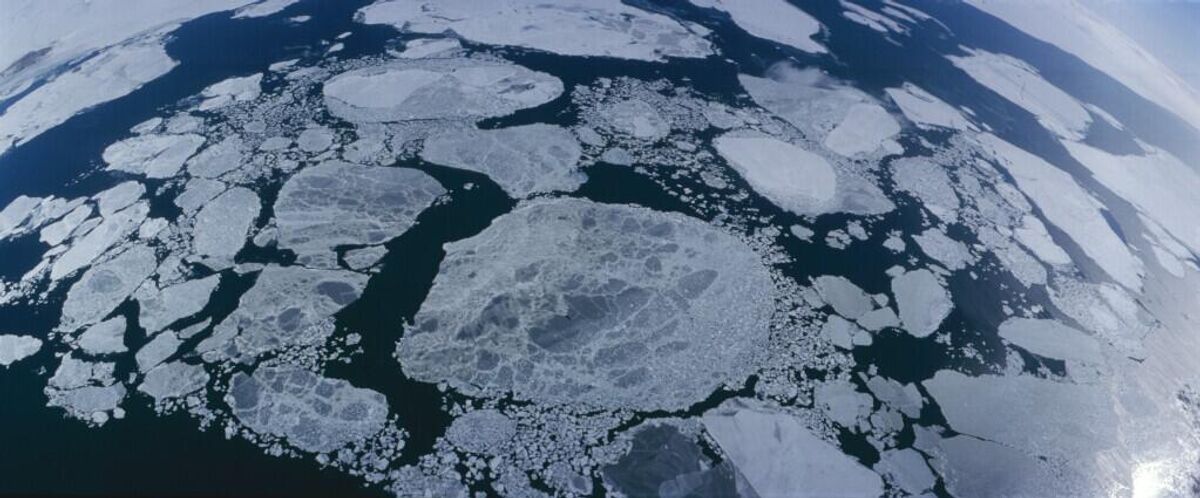
Ice in the Bering Strait. The ferry service across it was never launched
© RIA Novosti / Alexander Lyskin
A Trans Alaska-Siberia joint-stock company was even established, but the Russian government was unimpressed and refused to allocate land for railway construction. The company went bankrupt. The effect of that particular Overton ferry proved weak. It quickly played its part and collapsed just as swiftly.
Each Klondike dances to its own balalaika
The Bering Tunnel is quite another matter. Its image has steadily occupied the human imagination since the late 19th century, flaring up or fading in accordance with the international situation and the intensity of geopolitical passions.
If we take the Overton window as a visual metaphor this time again, then in relation to the project of building a tunnel between Eurasia and America it sometimes swings wide open, and at other times leaves only a tiny crack between frame and sash. But it never shuts completely.
The list of assorted Bering Tunnel projects that have surfaced over the years and, as you are aware, have never been implemented, could be fairly extensive. We shall quickly mention just a few.
Back in the 19th century, an American engineer conceived a transcontinental railway intended to link the United States, Russia and Europe by rail with an option to go as far as tracks and sleepers might stretch. At the time it was pure fantasy. In truth, the project remained just that.
At the beginning of the 20th century, something similar was energetically promoted by the French Arctic traveler, whether baron or count (more likely a daydreamer with a streak of adventurism), Pierre Loicq de Lobel. He was, in his own way, a popular figure and even a member of the Geographical Society of France. Assuring the public that connecting America to Eurasia by rail was entirely feasible, he cited his own travels in Alaska, the Klondike, and Siberia. That, of course, sounded like a weighty argument.


1/2
Map of the travels of de Lobel across North America, 1898
© Public domain
2/2
1904 newspaper clipping with de Lobel’s arguments in favor of игшвштп a tunnel under the Bering Strait
© Public domain
“The New York Times reported on August 2, 1906, ‘The Tsar of Russia has issued a decree authorizing an American syndicate, represented by Baron Loicq de Lobel, to begin work on the project of a Trans-Siberian-Alaskan Railway. The plan provides for the construction of a railway from Siberia to Alaska, with bridges and tunnels across the Bering Strait. Reportedly, the capital of the enterprise will amount to between $250,000,000 and $300,000,000 and that financial centers in Russia, France, and the United States will issue bonds.’”
It looked like the show finally got on the road. Yet, in 1907 Russia withdrew its permit.
There are various opinions as to why. The strengthening of American and French influence in Russia’s Far East may not have looked particularly appealing. Besides, the country was unsettled: the dispiriting outcome of the Russo-Japanese War and the invigorating rebellious events of 1905 across the vast empire compelled attention to focus on matters more pressing at that moment than a tunnel beneath the Bering Strait.
Oh you, brazen fellow, your fame reaches even to Cherepovets!
There were, of course, homegrown dreamers casting interested glances toward the Bering Strait, who were far more inventive in their schemes than de Lobel.
History has preserved for us the rather audacious, almost crazy initiative of Labardin, a resident of Cherepovets, Novgorod Province, who in 1910 managed to convey his bold ideas to Russian Prime Minister Pyotr Stolypin. This energetic fellow did not dwell on the idea of a tunnel; instead he insisted on damming the Bering Strait and, while he was at it, the Strait of Tartary as well.
In Labardin’s view, warm currents would then do their work, especially since the ice would remain in the Arctic. The climate of the Far East would become milder; the Ussuri Region would become a veritable French Riviera. The isthmus between Eurasia and America would in this case be a nice bonus, but the main point was climate improvement with all the ensuing benefits, such as year-round ports.
He generously assigned the task of covering the cost of building the dam from local hard stone to the government of the United States of America, since their northwestern coast, Alaska, would “gain improved climatic conditions and a new geographical position, as bays and gulfs would remain free from ice year round.”
Here’s a fun fact. This Cherepovets-style Bering Dam project was sent for review to a number of highly regarded Russian polar explorers, including the famous Georgy Sedov. They did not disappoint him: unanimously, they exposed the impracticality and danger of such an approach. Their reviews can now be found in the Russian State Naval Archive.
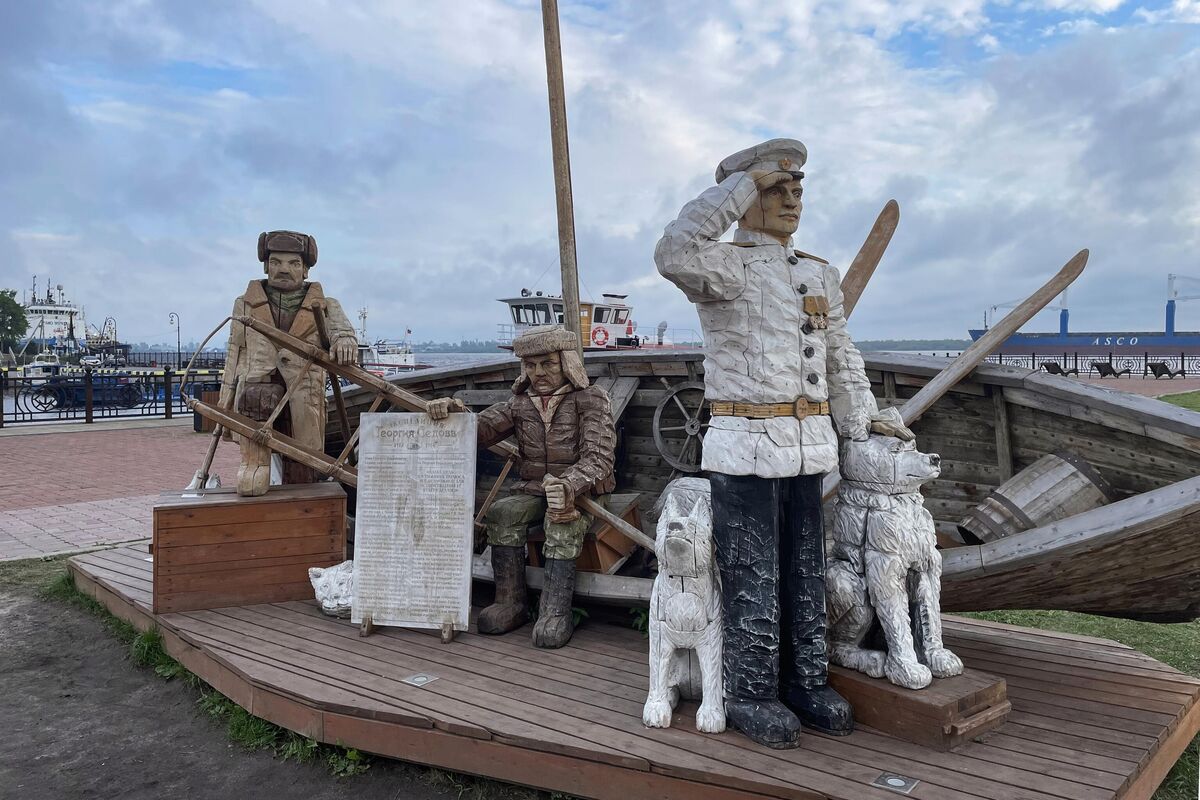
Wooden sculptural composition dedicated to Georgy Sedov’s expedition on the banks of the Northern Dvina River in Arkhangelsk. Sedov was strongly opposed to the idea of damming the Bering Strait
© Ruslan Marmazov
Incidentally, in the Soviet times, the subject of a dam in the Bering Strait was discussed again, though at a new level of technological progress. There were proposals to build it by carrying out a series of directed and carefully calibrated nuclear explosions. Thankfully, that never came to pass.
In any case, dams, bridges and ferries are merely derivatives of the all-pervading idea of a tunnel. After all, that is what we have been reflecting upon in this piece.
Too Plain for a Novel
I digress, but I will remain entirely focused on the idea of a tunnel. The passage beneath the Bering Strait, which for more than a century and a half has stirred the imagination of the interested public has still, broadly speaking, remained in the realm of fantasy and secured its niche in world literature, admittedly in the genre of fantasy.
In 1913 the German writer Bernhard Kellermann published his novel The Tunnel, which became a bestseller of its time. Two years later, it was adapted for the screen. The silent film of the same name boasting impressive sets captivated audiences and garnered favorable reviews.


1/2
Cover of The Tunnel by Bernhard Kellermann, 1913
© Public domain
2/2
Poster for the film based on The Tunnel by Bernhard Kellermann, 1915
© Public domain
Kellermann was an outstanding author with an unusual biography; he lived and worked in the German Empire, the Third Reich, and the GDR. Yet he never created anything more powerful than The Tunnel. At the centre of the novel stood a structure far more formidable and even today entirely fantastical:
“The tunnel is to begin one hundred kilometers south of New York, off the coast of New Jersey, pass beneath the Bermudas and the Azores, touch northern Spain and emerge on the French coast of the Bay of Biscay… Both ocean stations, the Bermudas and the Azores, are a technical necessity. Together with the American station and the two European ones, they would form five starting points for the tunnel shafts. Moreover, the ocean stations would be of enormous importance for the tunnel’s profitability: the Bermuda station would capture all passenger traffic and mail from the Mexican basin, the West Indies, Central America and the Panama Canal, while the Azores station would take over all transport from South America and Africa. The ocean stations would become hubs of the world’s transport routes, no less important than New York and London. Without further comment it is clear what role the American and European stations would play on the globe. Individual nation states would be compelled to give their consent to the construction of the tunnel. More than that, he - Mac Allan - would force them to list the securities of the tunnel syndicate on the stock exchange, if they did not wish to inflict billion-dollar losses on their own industry.
To be sure, Mac Allan is the novel’s protagonist, an engineering genius, a titan of technical thought, who created super-strong steel called “allanite,” enabling machines to chew through the ocean floor. He is also adept at extracting investment from capitalist sharks.
“The brains of those thirty slave-owners, into which Allan was driving his ideas and arguments like a wedge, began to stir. Money was thinking; iron, steel, copper, timber and coal were thinking as well. Allan’s proposal was no ordinary one. It was worth considering and weighing. Projects like this did not lie in the street every day. And Allan’s undertaking was no simple matter. It was not about a few million bushels of wheat or bales of cotton, nor about a thousand shares in King Edward mines in Australia. It was about something far greater. For some, Allan’s venture promised heaps of money with little risk for iron, steel and coal. For others it meant money fraught with major risk. But a position had to be taken.”
And here the author of the colossal transatlantic project mentions the point of interest to us:
‘The tunnel under the Bering Strait, the construction of which started three years ago,” said Allan, “and the Dover-Calais tunnel to be completed this year, have demonstrated in sufficient measure that the construction of underwater tunnels presents no difficulty for modern technology. The length of the Dover-Calais tunnel is about fifty kilometers. The length of my tunnel is about five thousand kilometers. My task therefore consists merely in repeating the work of the English and the French on a hundredfold scale.”
Does it make sense? Embarking on his grandiose scheme, Allan cited the Bering tunnel as proof of concept, as if to say it’s a cinch. Dover-Calais? It’s hardly even worth mentioning, it’s a breeze. But driving shafts and galleries beneath the Atlantic is a challenge, but one that will pay back nicely.
In his novel he effectively builds his giant tunnel, sacrificing his talent and entire creative career on the altar of technical progress. He changes the planet, naturally for the better.
By the way, when, according to Kellermann, did construction of the Bering Tunnel begin? Judging by the publication date of the novel it was around 1910. In Russia at that very time, Labardin was proposing to dam the strait between Eurasia and America, officer Sedov was tearing his project to shreds, and Prime Minister Stolypin was probably thinking, “Do I really have nothing more important to do?”
In novels, of course, things turn out more simply than in reality.
Mid-Strait Good Fortune Islands
The re-emergence of the intercontinental tunnel idea in the first quarter of the 21st century has not only triggered a look back at tales of old times. Relatively recent and highly intriguing data that were not coated in the dust of centuries, or data that have been freshly repackaged, have made it into the news feed. They can and should be discussed with living witnesses and even the initiators of certain initiatives which, as it turns out, are quite clearly formulated, and have been mothballed for better times.
Quite recently, in historical terms, the tunnel concept was not merely discussed by Russian and American specialists but was rapidly taking on concrete form. This was in the 1990s, practically yesterday.
After a timely intervention in the media space by Kirill Dmitriev, the newspaper Komsomolskaya Pravda drew out engineer Viktor Razbegin, a remarkably interesting and highly qualified interlocutor. He is the one who is convinced that the tunnel is not a utopian project. In 1993, Razbegin co-founded the Russian-American Interhemispheric Bering Strait Tunnel & Railroad Group.
“We’ve put together a strong team on both sides, with the participation of the American Railway Engineering and Maintenance-of-Way Association and Russian Railways. We worked with representatives of all core ministries and design research institutes,” he said.
According to Razbegin’s estimates, the construction of the tunnel itself would cost about $8 billion to $10 billion. If you add to this the railway line connecting the Russian network with the US network, the figure rises to $60 billion-$65 billion.
To be fair, other specialists cite figures of $100 billion or even $250 billion. Much depends on options and extras which the prospective tunnel will come with. Secondly, these amounts are hardly terrifying. Do you want to know why?
If you think of the amounts of money that the collective West had sank into the drawn-out Ukrainian crazefest, these amounts appear quite moderate. Funds equivalent to building several such tunnels have already been buried in that conflict, and more continue to be thrown into the fire of war. Russia, too, was forced into spending heavily in response. So, the money and the capabilities to bring this project to fruition can be found. What remains is the will to see it through.
There are, of course, complications without removing which the Bering project will lose much of its meaning. On the Russian side, around 4,000 kilometers of railway from Yakutsk to Cape Uelen in Chukotka need to be built. Yet, it is not only Russia that faces such tasks: the counterpart would need to build about 2,000 kilometers of track to connect Alaska to Fort Nelson, British Columbia.
For the record, British Columbia is a Canadian province, and Canada is, after Greenland, Donald Trump’s favored target, which he would like to see as part of the United States. Is that a coincidence?
Still, there are encouraging aspects to this whole story. Viktor Razbegin points to them directly:
“In the Bering Strait, the soils are sufficiently solid and convenient for excavation. They lie at depths of no more than 40 to 50 meters. We conducted serious geological surveys to find out that 95 percent of the tunnel would run through formations considered good for boring.
“With the strait’s width at 83 to 85 kilometers, the tunnel itself would be 95 to112 kilometers long, depending on the option. There are two small islands - our Ratmanov Island (Big Diomede) and the American Little Diomede (Krusenstern Island) in the middle of the strait, which greatly simplifies matters.
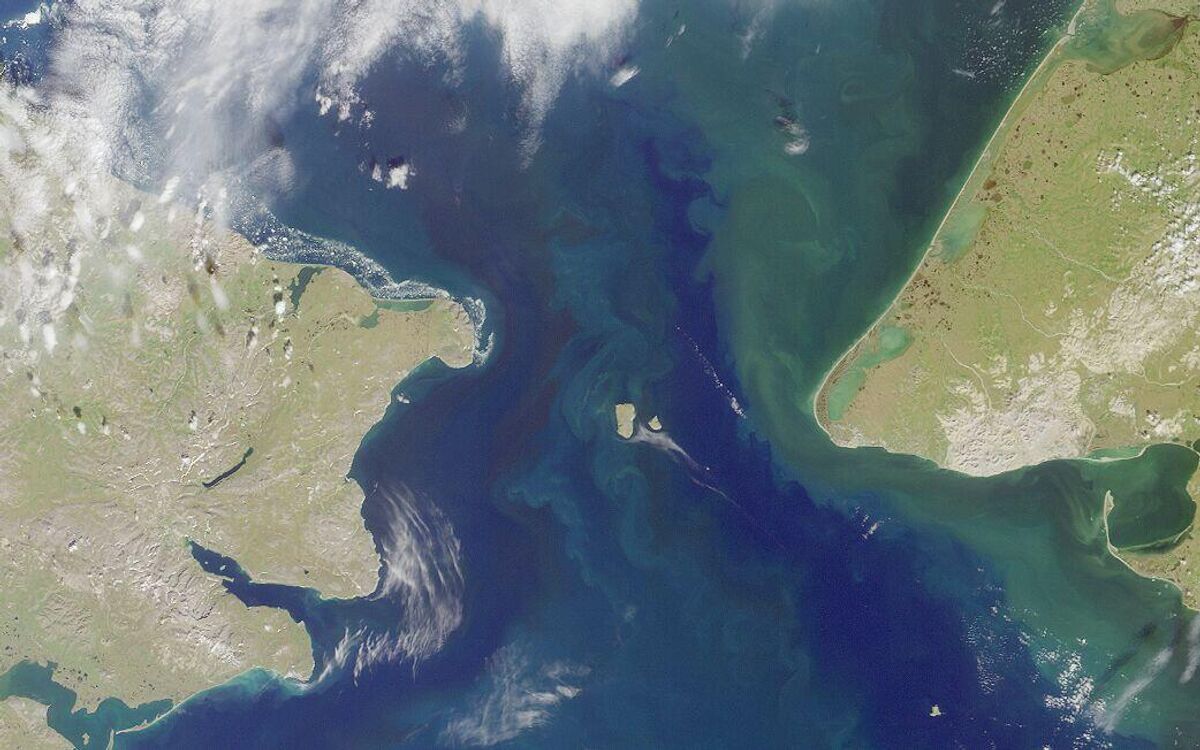
View from outer space. Eurasia on the left, America on the right. Between them are the Diomede Islands (Gvozdev Islands). Big Diomede Island (Ratmanov Island, Russia) and Little Diomede Island (Krusenstern Island, United States). These may become key stations for a future tunnel under the Bering Strait
© Public domain
“Each section between them and the mainland is comparable in length to the English Channel Tunnel. Moreover, the islands make it possible to carry out excavation simultaneously from six points, and they could also serve as ventilation shafts.”
So, it all looks feasible and the islands of Saint Diomede would be on our side.
True, the location is by far not too convenient. The climate is harsh, and seismic activity occasionally unsettles nerves and crust alike. Yet, humanity has sufficient experience and technology to overcome such challenges. What is required is political will, stable relations between superpowers, and substantial - though not excessive for a worthy cause - funding, and a creative approach. When ambitious projects are being devised, creativity is seldom in short supply.
That brings us to the central question: what is all of that for?
A Tunnel into a Brighter Future
The author’s free-flying fantasy at the beginning of this piece where the next stop was Cape Dezhnev was inspired solely by the grandeur and global scale of the subject and by an alluring prospect of boarding a train in Moscow and riding non-stop to New York for business or pleasure, perhaps for an ice hockey or a basketball match. About the same trip could be made from Paris, Berlin or Rome via Moscow straight to New York. The route will work just as well in the opposite direction, no doubt about it.
But with all due respect to tourism, it would not be the main point of the project. The distances are considerable; for business travel, aircraft remain a faster and more comfortable option.
Freight flows, however, are another matter. Oil and gas pipelines and power transmission lines will benefit greatly if this project were to become a reality.
One need not be a narrow specialist to figure out that transporting goods by rail is faster and cheaper than by sea. The Bering Tunnel could become a key hub in a new global logistics system for truly worldwide cargo transport. It seems made for this role. Or will be, if everything comesto pass.
After all, the issue is not merely about a fundamentally new link between Chukotka and Alaska, between Russia and the United States, though that alone would be a significant accomplishment. I see an extensive unified railway network covering North America and Eurasia, including India and China. As we know, it was difficult enough to do without these two countries in earlier centuries; in the modern-day economy it is plain and simple unthinkable.
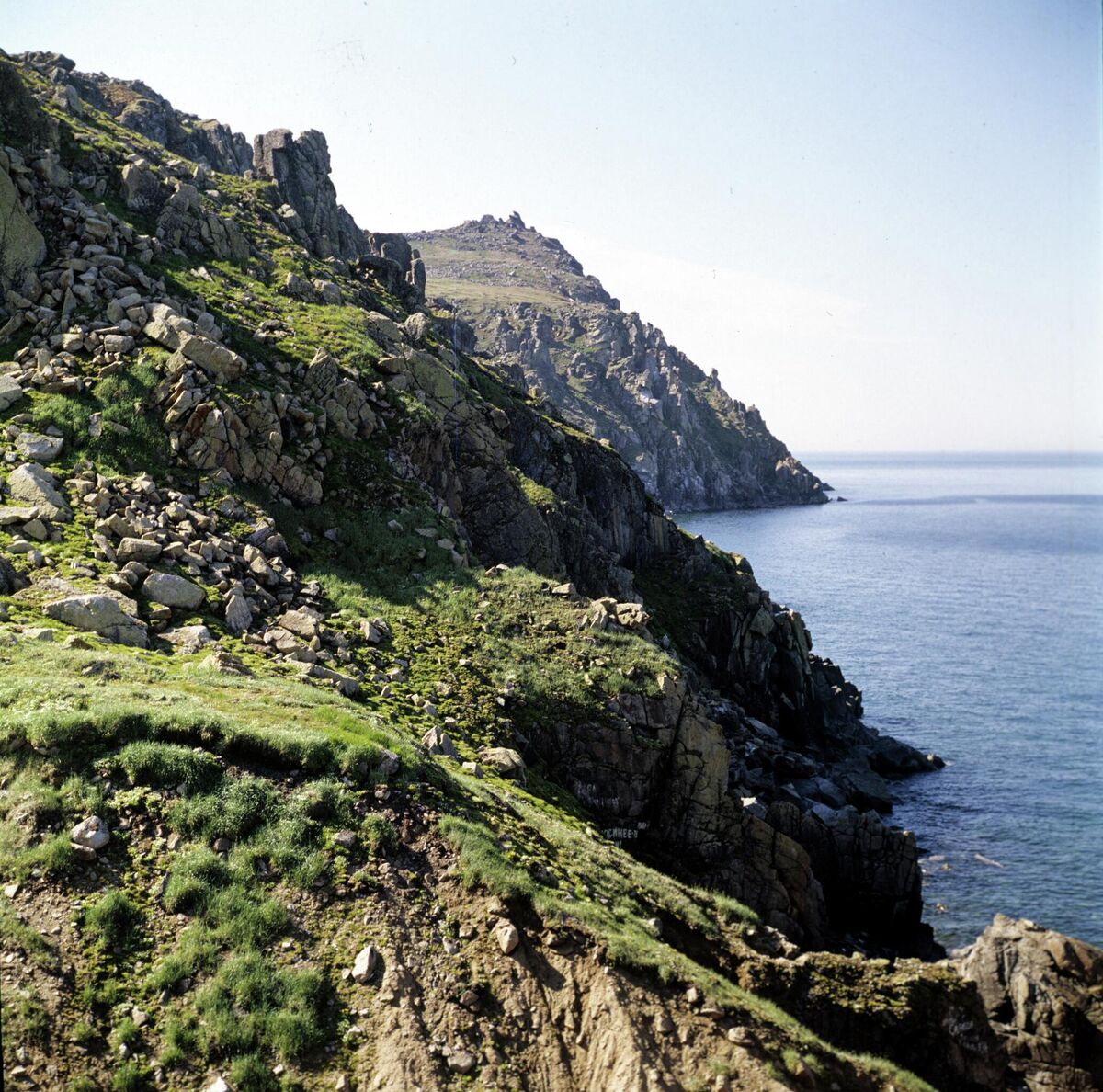
Ratmanov Island, Russia’s easternmost point, awaits its moment. It will be the starting point of the Russian section of the Bering Strait tunnel, if God wills
© RIA Novosti / V. Gritsyuk
The author once travelled through the Gotthard Tunnel from northern Switzerland to Lugano, the canton of Ticino. That tunnel runs through a mountain, not beneath a strait. Local residents spoke of how difficult life had been, not just yesterday but for centuries, without this tunnel. When snow blocked the St. Gotthard Pass - a common occurrence in the Alps - Ticino was effectively cut off from the rest of Switzerland. Communication with northern Italy, Milan, for instance, was disrupted. Those problems have now vanished.
Switzerland is tiny by comparison. In the case of the Bering Strait we are dealing with far greater territories and peoples, addressing major challenges and, most importantly, creating optimistic prospects.
In short, one is left to rely on divine blessing, good will and the switching of the political toggle from “Confrontation” to “Cooperation.”
What if the project succeeds? We may be witnessing its launch, or at least its pre-launch preparations. Is that not something?
I was about to place a full stop when I came across expert assessments suggesting that the costs of building a Bering Tunnel could be recouped within fifteen years which is an instant in historical terms. That is if the experts ran their numbers correctly. Naturally, this can only be confirmed through practical experience.