11:50 02.03.2026
Yury Trutnev: The Arctic accounts for over 70 percent of national gas deposits and 30 percent of oil deposits
© Government of the Russian Federation
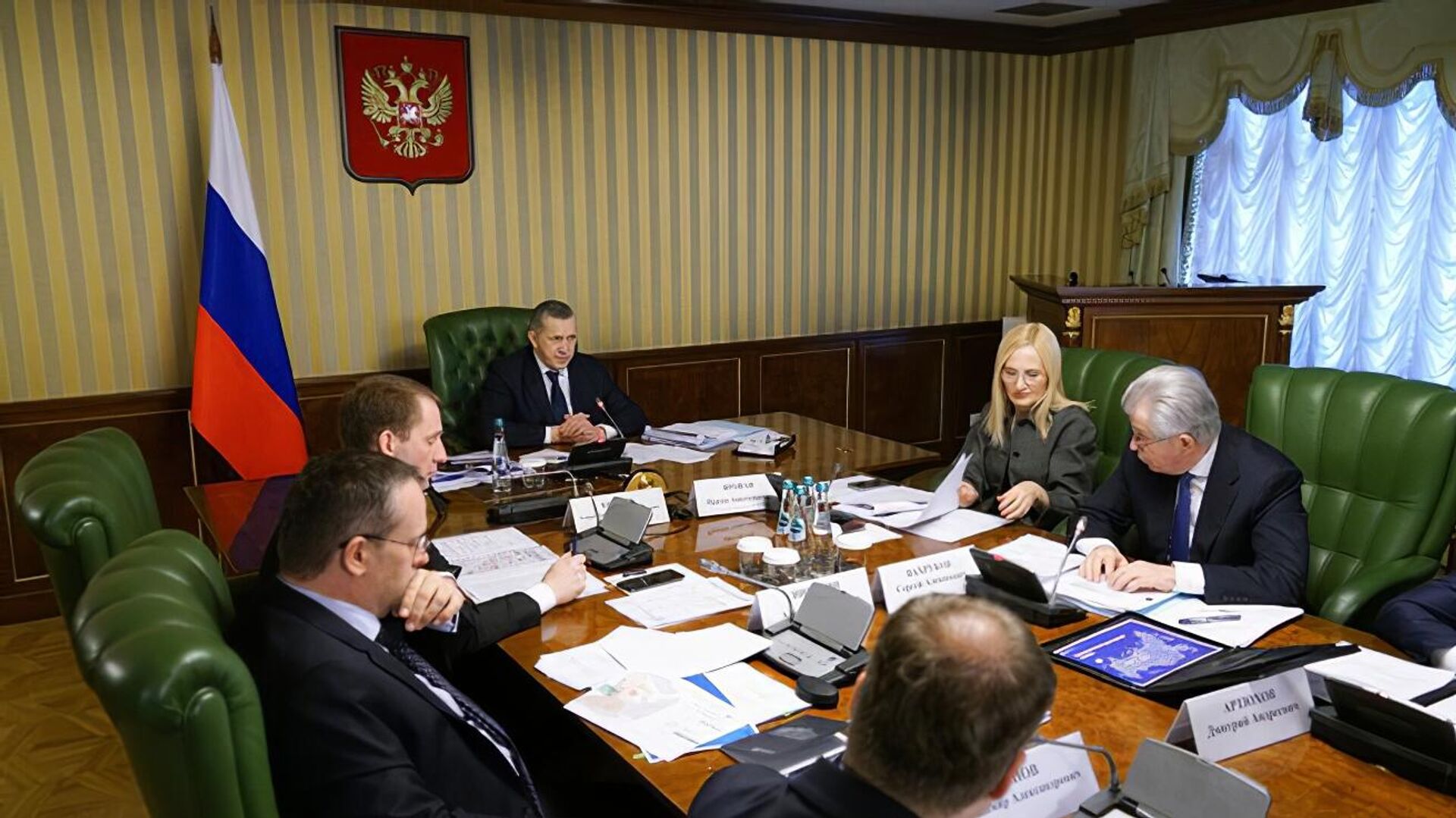
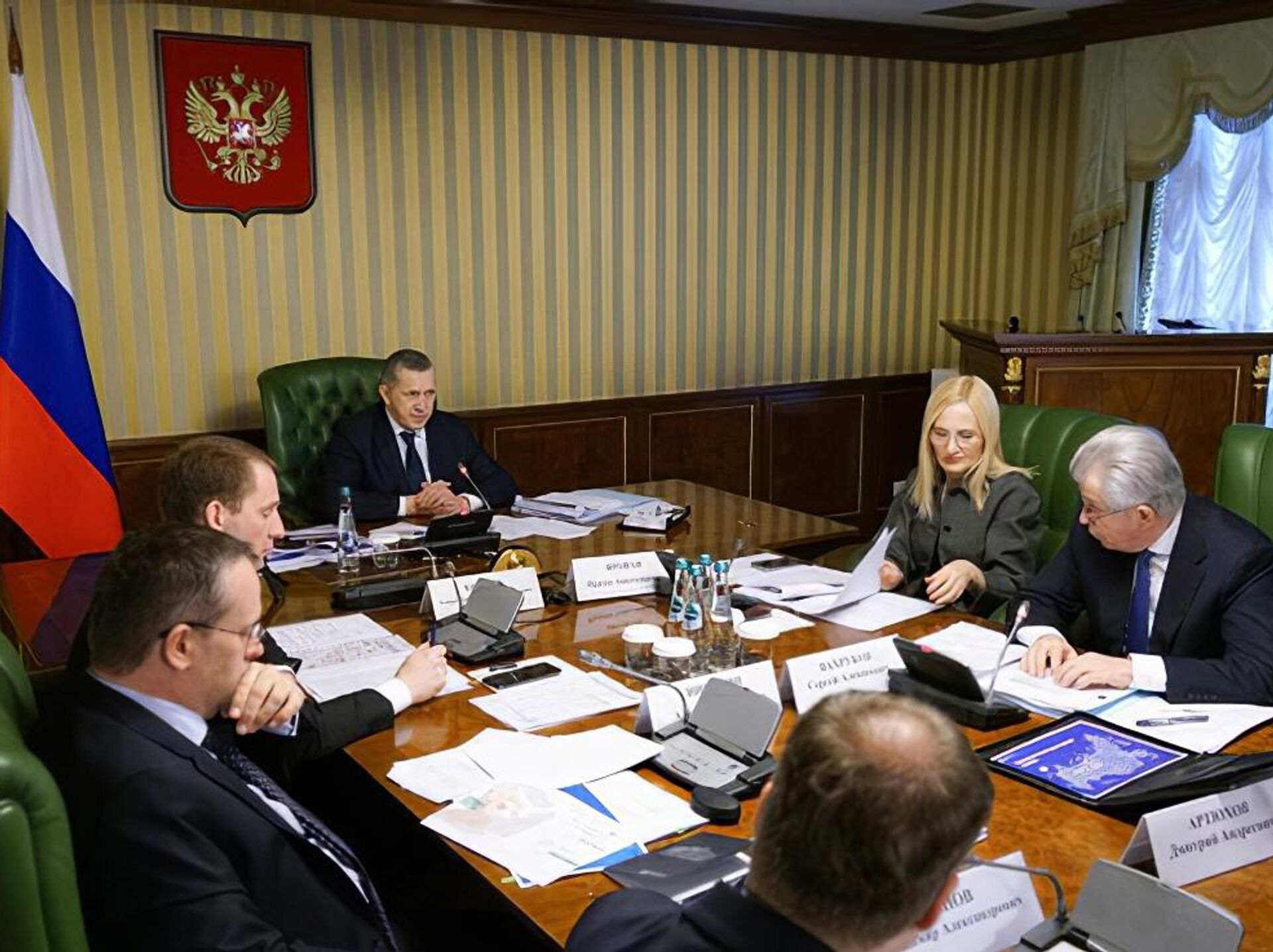
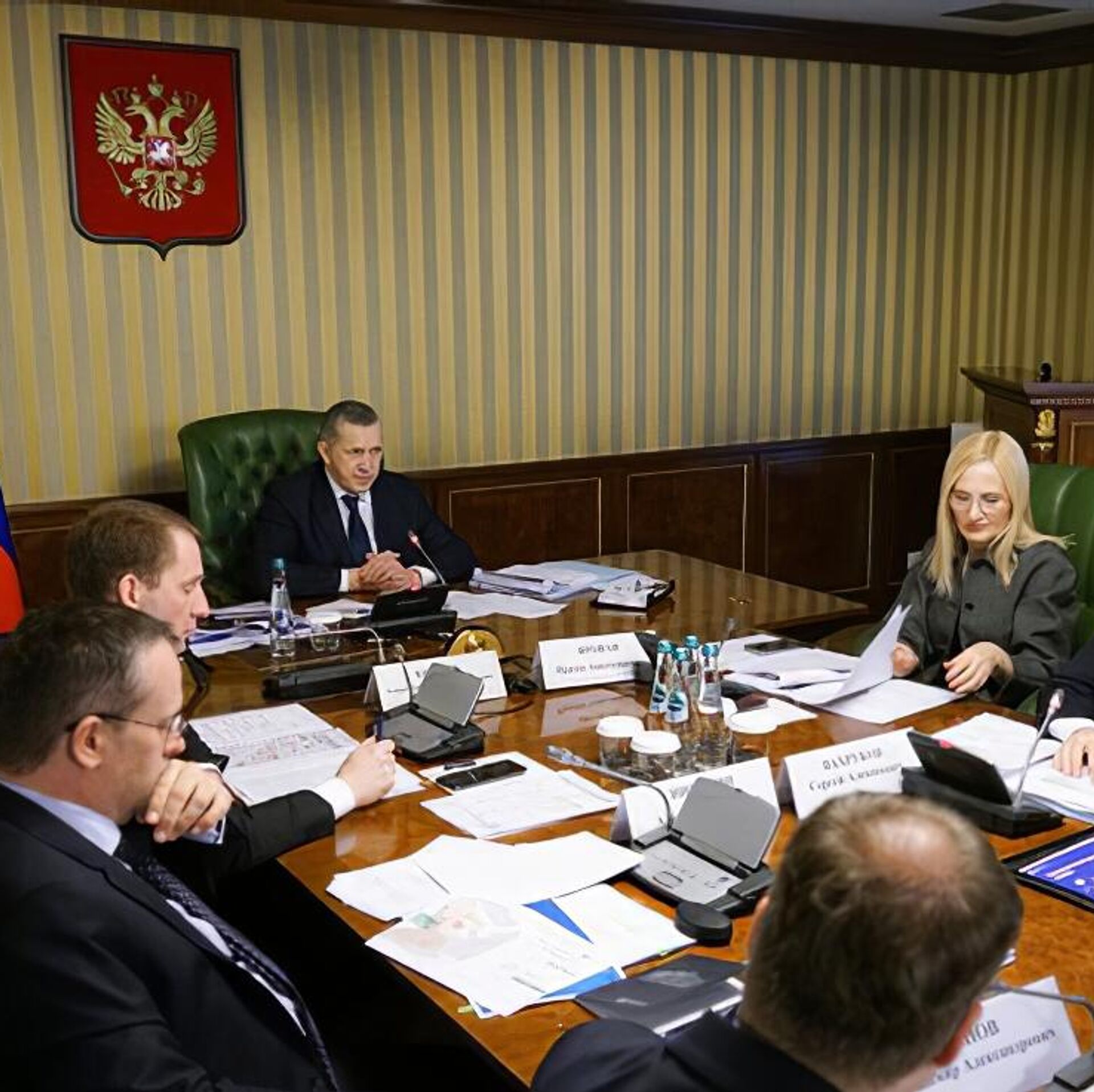
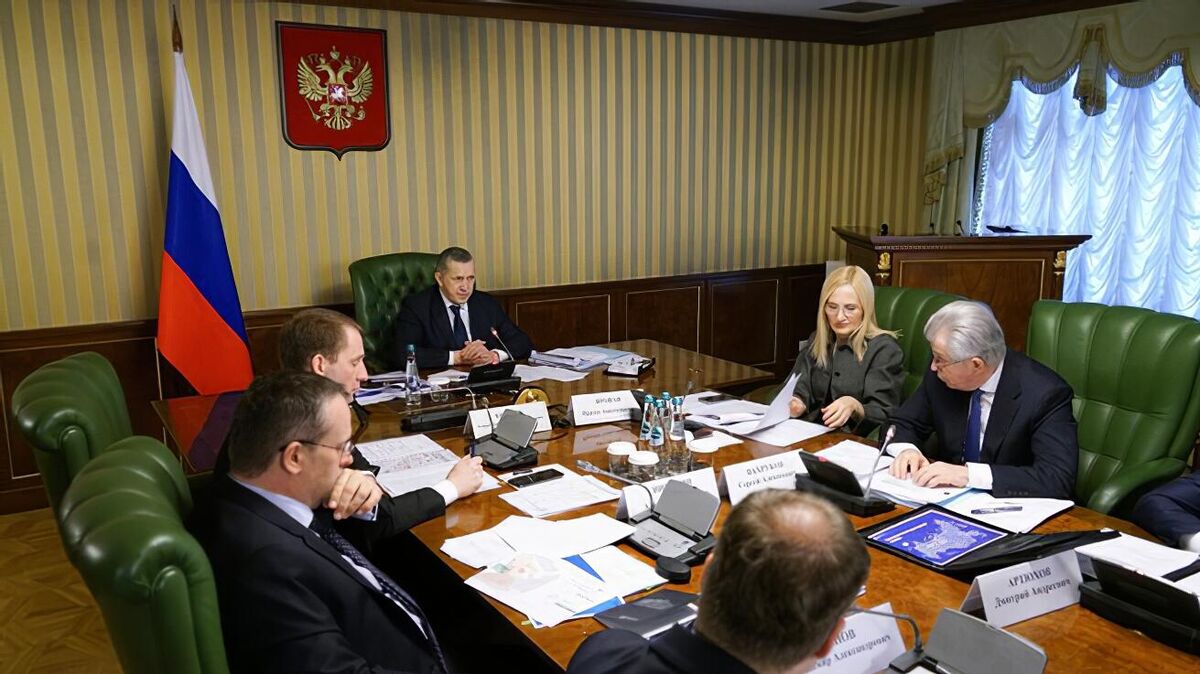
A comprehensive project for the development of the Arctic Zone and the Trans-Arctic Transport Corridor will serve as the main tool for implementing the Arctic Zone’s development strategy until 2050, Presidential Plenipotentiary Envoy to the Far Eastern Federal District Yury Trutnev noted at a meeting of the State Commission for Arctic Development.
The project will link current and planned infrastructure projects, coordinate the Trans-Arctic Transport Corridor’s development with mineral production volumes as well as with international traffic and transit volumes, and will also help attain specific targets. According to Minister for the Development of the Russian Far East and Arctic, Alexei Chekunkov, measures of the comprehensive plan will be under discussion until late April 2026.
The meeting participants also focused on licensing the use of minerals deposits in the Arctic Zone of the Russian Federation.
“The Arctic accounts for more than 70 percent of national gas deposits and almost 30 percent of the country’s oil deposits. Yet, Arctic geology remains a relatively little-studied sphere. All of us realize that greater knowledge of the Arctic and more efforts to develop new deposits will allow for the accelerated development of the Arctic Zone,” Yury Trutnev emphasized.
The state mineral resources’ balance lists 83 types of minerals, as well as 1,958 mineral deposits, in the Arctic Zone of the Russian Federation. Last year, the Northern Sea Route handled 32.7 million metric tons of raw materials, or 88 percent of its overall capacity. Allocated deposits, covered by 58 licenses, provide the bulk of all freight.
“As of now, 1,736 licenses have been issued in the Arctic Zone, including 928 licenses for solid-state minerals and 758 for hydrocarbons. The licenses cover the production of 100 percent of rare-earth metals, platinum-group metals, nickel and apatite ores, 96 percent of cobalt, and 82 percent of gas,” Minister of Natural Resources and Environment Alexander Kozlov said.
Today, 74 hydrocarbon deposits have been discovered on the continental shelf, three Arctic shelf projects have been launched, and 151 licenses have been issued. The Ministry of Natural Resources and Environment has made it easier to access coastal mineral deposits, making it possible to own them for geological prospecting operations in accordance with a notifying procedure, rather than tenders. As instructed by Yury Trutnev, the Ministry of Natural Resources and Environment, jointly with the Ministry of Industry and Trade, will submit proposals on developing shelf deposits and using the required technologies for this purpose.
The meeting participants also discussed the creation of access routes for the Trans-Arctic Transport Corridor, including plans for expanding inland waterways and seaports, as well as constructing and reconstructing motorways and railways. Inland waterways are developing in the direction of the Northern Sea Route, with their total length of nearly 22,000 kilometers. In 2020-2025, work was carried out to eliminate limiting factors in sectors extending across some 4,000 kilometers, which resulted in their capacity reaching three million metric tons. Annual dredging operations move ten million cubic meters of earth annually.
European Russia and the Trans-Arctic Transport Corridor are linked via the Volga–Baltic waterway as well as the White Sea–Baltic Canal; their hydro-technical structures are currently being reconstructed in order to meet preset depth standards.
Multimodal logistic centers are established using operational river ports and through building new ones. These centers are listed for Yakutia, the Krasnoyarsk Territory, the Yamal-Nenets Autonomous Area, and other regions. The Ministry of Transport, the Ministry of Economic Development, and the Ministry for the Development of the Russian Far East and Arctic will analyze freight traffic via inland waterways in order to submit plans for their advancement.
By 2027, the Lavna coal transshipment facility is to be constructed at the seaport of Murmansk, with a capacity of 18 million metric tons, as well as the Murmansk LNG facility for manufacturing liquefied natural gas, with a capacity reaching 6.8 million metric tons after 2030. Work has commenced to build ten search-and-rescue vessels. There are also plans to construct a container terminal and a specialized container terminal in Sukhodol Bay (part of the Free Port of Vladivostok) in the Russian Far East, with piers No. 7 and No. 8 to be reconstructed.
Efforts are underway to modernize the railway infrastructure for accessing Baltic seaports, as well as those of the Barents Sea and the Pacific Ocean. There are plans to boost the capacity of railways servicing Russia’s Northwestern Basin sea and river ports to 175.6 million metric tons, while the capacity of the Eastern Operating Domain is expected to reach 210 million metric tons by 2030.
Work is also underway at four major artificial structures during the third stage of modernizing the Baikal-Amur Mainline: the Second Severomuisky, Second Kodarsky and Second Kuznetsovsky tunnels, as well as a bridge across the Amur River. This year, additional routes for accessing the Murmansk transport hub will be expanded. Specialists continue to work on a feasibility study regarding construction of the Skovorodino–Reinovo railway section as the first stage of a project for building the Dzhalinda–Mohe bridge.
During the development of the Arctic Zone’s core localities until 2035, there are plans to implement a total of 30 projects on expanding motorways, and to extensively upgrade 25 airports in the Russian Far East, 12 airports in Siberia, and six airfields in the Arctic territory.