
10:00 27.07.2026
Strengthening river banks, deepening rivers: Far Eastern Regions brace for flood season
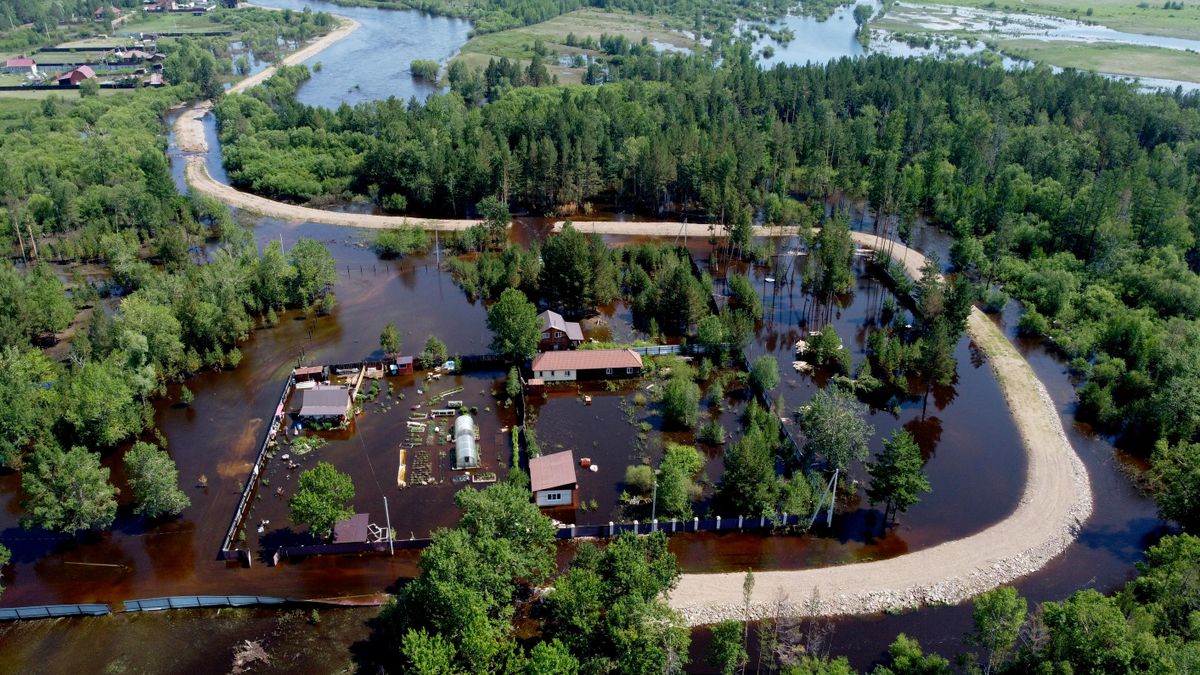
© RIA Novosti / Evgeny Yepanchintsev
The Russian Far East is ramping up preparations for rain floods with high water levels. The Transbaikal, Khabarovsk, and Primorye territories, as well as the Amur and Jewish autonomous regions, are at risk.
The press service of the Russian Emergencies Ministry told the Development of the Far East and the Arctic portal about measures being taken ahead of the impending floods and about cooperation with colleagues from China.
Ahead of the flood-prone period in the Amur River basin, the Federal Service for Hidrometeorology and Environmental Monitoring (Rosgidromet) has issued a warning about a challenging typhoon and cyclone season. Difficult conditions are expected in five regions of the Far Eastern Federal District: the Transbaikal, Khabarovsk, and Primorye territories, as well as the Amur and Jewish autonomous regions.

An Emergencies Ministry helicopter being loaded at Blagoveshchensk Airport before departing for the flood zone in the Amur Region
© RIA Novosti / Mikhail Voskresenskiy
In these regions, emergency prevention and response commissions are holding meetings to coordinate flood preparations, plan evacuations, and review the readiness of equipment for rescue operations.
“Practical measures include constructing dams and reinforcing coastlines, clearing and dredging riverbeds, clearing storm drains and drainage systems, and testing the readiness of facilities and their resilience to flooding,” the Emergencies Ministry press service reported.
A helping hand from across the border
Security issues are an area of close cooperation between the Far Eastern regions of Russia and their Chinese counterparts. As the Emergencies Ministry source noted, Russian-Chinese relations have long since transcended traditional diplomatic ties, with joint work underway in all areas of life between the two countries.
“Cooperation with China maintains strong momentum, including the exchange of experience in emergency prevention and response, cross-border cooperation, and assistance in the event of major disasters,” the ministry emphasized.
At the border level, active cooperation on navigation safety has been established on the Amur River, and joint rescue service exercises are conducted.

Operational duty shifts also regularly collaborate to exchange information on the current situation. The most flood-prone period runs from March to October, and to provide forecasts for this period, the parties exchange hydrological information.
“Such measures contribute to improving public safety in both countries, preventing major accidents and disasters, and minimizing environmental and economic damage,” the Emergencies Ministry reported.
Furthermore, the Ministry participates in the working group on flood control cooperation of the Joint Russian-Chinese Commission on the Rational Use and Protection of Transboundary Waters. This facilitates the exchange of information on water bodies in the Amur River basin for the preparation of hydrological forecasts.
This information is promptly transmitted to the authorities in the Far Eastern regions, the central offices and territorial branches of Rosgidromet, the Emergencies Ministry, and the Federal Agency for Water Resources – including through the Hydrology and Meteo DV information systems, the press service added.
Situation under control
The standing rain flood warning remains in effect for the period from July to September 2026. Facilities located in flood-prone zones are at risk. Natural dams are the first to bear the brunt of the storm and protect these facilities from flooding.
“All measures to minimize the risks of rain floods are already being implemented. The Emergencies Ministry, the Natural Resources Ministry, and the Presidential Plenipotentiary Envoy to the Far Eastern Federal District are monitoring the situation,” the ministry noted.
If it becomes impossible to protect a residential community from flooding, the Emergencies Ministry evacuates residents, property, and pets to safer locations.
“In such cases, temporary accommodation centers are set up, where citizens are provided with housing and food. The decision to evacuate is made in advance when rising water levels are predicted,” the ministry’s press service explained.

Russian Emergencies Ministry rescuers are evacuating residents from the ground floors of three apartment buildings in Ussuriysk
© RIA Novosti / Vitaliy Ankov
Furthermore, the Ministry noted that the impending flood could delay the construction of the international bridge linking the Amur Region and China’s Heilongjiang Province.
“The season of rain floods could definitely negatively impact the construction schedule of the Dzhalinda-Mohe bridge due to the complications in the delivery of construction materials. There is no immediate threat to the structures already erected,” the ministry added.