
10:00 07.07.2026
The Legacy of Kolarctic: How Russia Can Apply the Experience of Joint Projects Without Western Countries

© Russian Arctic and Far East Development
The cross-border cooperation program between Russian regions and European partners covered eight territories across four countries. Kolarctic funded projects in the fields of the environment, infrastructure, healthcare, and security. Following the start of the Special Military Operation, Western representatives unilaterally withdrew from this partnership. Read about how the program's best practices can be applied and who currently holds the rights to them in this article by Arctic.ru.
Not so long ago, Finland, Norway, and Sweden actively collaborated with Russian Arctic regions and jointly implemented projects—in today's realities, this sounds surreal. However, partnership programs with European counterparts in the Arctic used to develop quite dynamically. In particular, the Kolarctic cross-border cooperation initiative had been active since 2014.
The program placed its primary focus on supporting economic and social development on both sides of the shared border. In particular, Kolarctic addressed challenges in environmental protection, healthcare, security, and the development of transport networks.

A section of the Kola–Verkhnetulomsky–Lotta Border Crossing road, connecting Russia and Finland, in the Murmansk Region
© RIA Novosti / Pavel Lvov
As experts point out, the program intended to utilize cutting-edge practices in green innovation aimed at solving a variety of issues: providing the population with drinking water, waste management, and the preservation of biodiversity in specially protected natural areas. The vision of collaborative work for the benefit of the Arctic was partially realized. However, with the onset of the SMO, foreign countries unilaterally withdrew from Kolarctic and ceased funding for the program.
Kolarctic is Closed, but the Technologies Remain
Dmitry Bazegsky, Deputy Head of the Department for Multidisciplinary Scientific Research at the Karelian Research Centre of the Russian Academy of Sciences (KarRC RAS), discussed this specific program and how Kolarctic's legacy can be utilized without foreign partners in his report. Addressing "The Arctic — Our Common Home" forum in Petrozavodsk, the expert noted that one of the program's conditions was the application of the latest best practices. These technologies remain relevant to this day, meaning they can still be highly beneficial.

"The collaborative best practices and technologies obtained through the project are genuinely new. And, at the time, they were state-of-the-art. Under the program's conditions, a project could only be funded if the proposed collaborative practices had not been previously applied within the program's territory," Dmitry Bazegsky stated.
In his presentation, he also pointed out that Kolarctic's primary focus was on the environment. This emphasis is due to the anthropogenic impact on the Arctic, primarily driven by the active economic development of the northern territories.
"There was also a range of problems left over from the Soviet era, when large industrial enterprises had a rather severe impact on the environment, primarily on soil and water resources. These issues are still being addressed today," the expert pointed out.
Furthermore, Dmitry Bazegsky provided concrete examples of what was accomplished thanks to the cross-border cooperation program. Notably, solar panels were installed for the first time in several national parks and nature reserves in Karelia. Additionally, the water supply system in the city of Sortavala was modernized.

Outskirts of the city of Sortavala in Karelia
© RIA Novosti / Ilya Timin
“This remains the most advanced structure providing the people of Sortavala with clean drinking water that meets all standards,” the expert noted."Today, this is an advanced facility providing the residents of Sortavala with clean drinking water that complies with all standards," the expert noted.
No Legal Obstacles
In his presentation, the researcher emphasized that despite the abrupt withdrawal of the European partners, the planned projects were successfully completed through funding from the Russian side.
"Unfortunately, because the European Commission unilaterally froze the funding for these projects and withdrew from them, roughly 10 percent of the projects were left unfinished from a financial standpoint. However, the project developers themselves saw them through to the end. In other words, Russian organizations invested their own funds to ensure these projects were completed," Dmitry Bazegsky remarked.
The expert expressed confidence that many of the solutions utilized can continue to be applied and scaled up across other Arctic regions. At the same time, he clarified that despite the withdrawal of Western countries from the program, there are no legal restrictions preventing Russia from utilizing these best practices.
"Everything that was piloted within the program under the conditions of the northern regions can be replicated across other regions of the Arctic zone without any hurdles. Having examined the legal side of the issue, we came to the conclusion that the rights to the joint developments achieved within the framework of these projects belong precisely to the Russian projects. Therefore, there are no obstacles per se. No one is going to court over this," the expert stated.
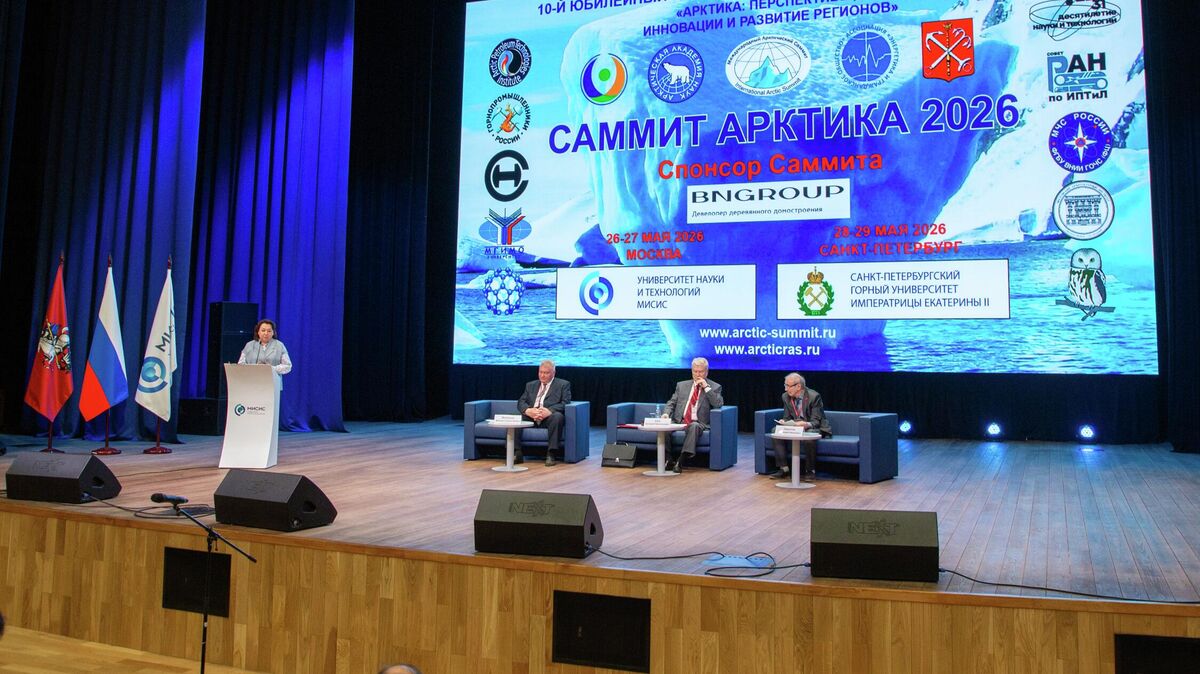
Dmitry Bazegsky also noted that the application of green technologies fully aligns with the current goals for the exploration and development of the Arctic.
"The utilization of cross-border cooperation best practices corresponds to today's objectives for the exploration and development of the Arctic, which are enshrined in the strategic documents of the Russian Federation. Furthermore, they can accelerate the fulfillment of the set objectives for environmental protection," he concluded.