In the past few years, the Kola area of the Polar region has risen in popularity so significantly that not only Russians but also numerous guests from China, Thailand, India and other countries come to experience the genuine Arctic tourism.Correspondents of the Development of the Arctic and the Far East portal ventured out to the Murmansk Region to find the most scenic northern lights, to learn what makes the polar day on the Kola Peninsula different from the white nights in St. Petersburg, and why the Polar region is not the land’s end but rather its beginning.Perhaps the first surprise that Murmansk Region guests encounter as they open the region’s map are the jaw-breaking and mysterious geographical names such as the Vudyavryok River or the Takhtarvumchorr Mountain. These unpronounceable names come from the Saami language. To learn more about the Saami people, we visited the small village of Tuloma located 30 km from Murmansk.Local residents carefully preserve the culture of the people that has inhabited the Kola Peninsula since the old times. Only recently, in 2022, an ethnographic Saami center opened in the village, funded by a governor’s grant. The center comprises a small museum and a spacious event hall, where Saami craftswomen pass on their knowledge to the youth, and conduct guided tours and workshops.The methodologist also spoke about the interior of a traditional Saami house called kaavas (also known as “lavvu”): it is decorated with wolverine, fox and reindeer hide.“You can sit down here next to a working furnace. On holidays, we use it to make fish soup. Tuloma children often visit us and ask when we’re going to serve tea with pies,” Irina Pavlenko smiles.A northern resort and an old schoonerIn recent years, the Kola Peninsula has been widely associated with Teriberka travel. Tourists come here to see mighty humpback whales and aurora borealis – the biggest symbol of the Polar region. Guide Sergei Litvinov says that almost 3,000 tourists can visit a small village of 500 people in a day.The Khibiny Mountain Range is another popular tourist destination. Sergei Litvinov also recommends stopping by Kirovsk, the ‘capital’ of the Khibiny that he considers a gem for alpine skiers. Local slopes are in no way inferior to famous ski resorts. The Apatit Museum and Exhibition Center is also located here. Gardeners will certainly like the Polar and Alpine Botanical Garden and Institute.What other destinations are worth visiting? For active leisure off the beaten track, Sergei suggests visiting Lovozero Lake and the White Sea – namely, the villages of Umba and Varzuga. His tip for fascinating sights is Seidozero Lake that was considered sacred by the Saami people.Sergei Litvinov’s colleague, guide Yulia Koreyeva, suggests taking a look at Kandalaksha area. Although not frequented by tourists, this spot can amaze even sophisticated travelers.“One can encounter skerries, beautiful rocks, cliffs and numerous sea animals. Kovdor is another location I love. This place is located in actual taiga, with unique woods and plenty of reindeer moss,” she shares.Local Assol and the yummy treats of the Kola PeninsulaThe next popular attraction of the tourist Murmansk is the statue of a waiting woman, known as “our Assol” among the locals. In the 1970s, local women randomly picked this spot to greet calling ships, according to guide Sergei Litvinov.“It is a collective image of all women – mothers, wives, daughters and sisters. A Waiting Woman’s gaze is directed straight to Severomorsk in the north. It is from there, the Barents Sea, that ships call at our commercial and fishing ports.”The capital of the Arctic has a wealth of unusual landmarks. For example, the longest residential building in Russia is located here. It stretches for 1,488 meters and has nine floors. The building was constructed as a neighborhood and has 2,200 apartments in 52 blocks.“Most modern residential complexes look like this but in Soviet times, it was an innovation. In the North, this type of design protected the area from winds that could easily reach 25 m/s in winter,” says Sergei Litvinov.On the square outside the sea terminal, where the legendary Lenin icebreaker is docked, an impressive crowd lines up at a food truck. Local historian and entrepreneur Yevgeny Yevdokimov and brand chef Irina Baklova are offering locals and guests some authentic Pomor food.The team of this Arctic kitchen on wheels finds recipes and quaint names for these culinary delights from historical books. Poberezhnik (“a north-western wind from the shore”), Polunoshnik (“a strong northern or north-eastern wind”) and Kildin Stretch (the stretch in the Kildin Strait) all refer to the history of North exploration.“We have breaded ‘codling’ – that was the name that Pomors gave to this staple food. We also have Matitsa fish soup of cod and salmon, served with cod liver and kelp. ‘Matitsa’ was the Pomors’ name for new land that fed them,” says Yevgeny Yevdokimov.Land’s end or beginning?One of the most frequently asked questions is, when is a better time to visit the Murmansk Region if tourist websites offer tours for any season? Sergei Litvinov says that the best time for a polar trip is between mid-August and mid-September.The white nights end around this pre-winter season. This phenomenon, often sought-after in St. Petersburg, is also known as ‘civil twilight’ – a time when the sun sinks 6 degrees below the horizon. When it sinks further to 6–12 degrees below, the twilight is called ‘nautical twilight,’ and when it sinks to 12–18 degrees below, it is called ‘astronomical twilight.’ Anything further below is polar night.“Polar nights on the Kola Peninsula set in from December 2 to January 11, when we don’t even see a glimpse of sunshine for days on end. On the night of April 15, civil twilight or white nights begin, and starting from late May, it is polar day for the next 62 days. The sun doesn’t set below the horizon. The further north you go, the longer the polar day and polar night,” Sergei Litvinov explains.The Murmansk Region is often called “the land’s end.” This phrase is commonly seen on souvenirs and often repeated by tour guides. However, Sergei Litvinov completely disagrees with this definition.
In the past few years, the Kola area of the Polar region has risen in popularity so significantly that not only Russians but also numerous guests from China, Thailand, India and other countries come to experience the genuine Arctic tourism.
Correspondents of the Development of the Arctic and the Far East portal ventured out to the Murmansk Region to find the most scenic northern lights, to learn what makes the polar day on the Kola Peninsula different from the white nights in St. Petersburg, and why the Polar region is not the land’s end but rather its beginning.
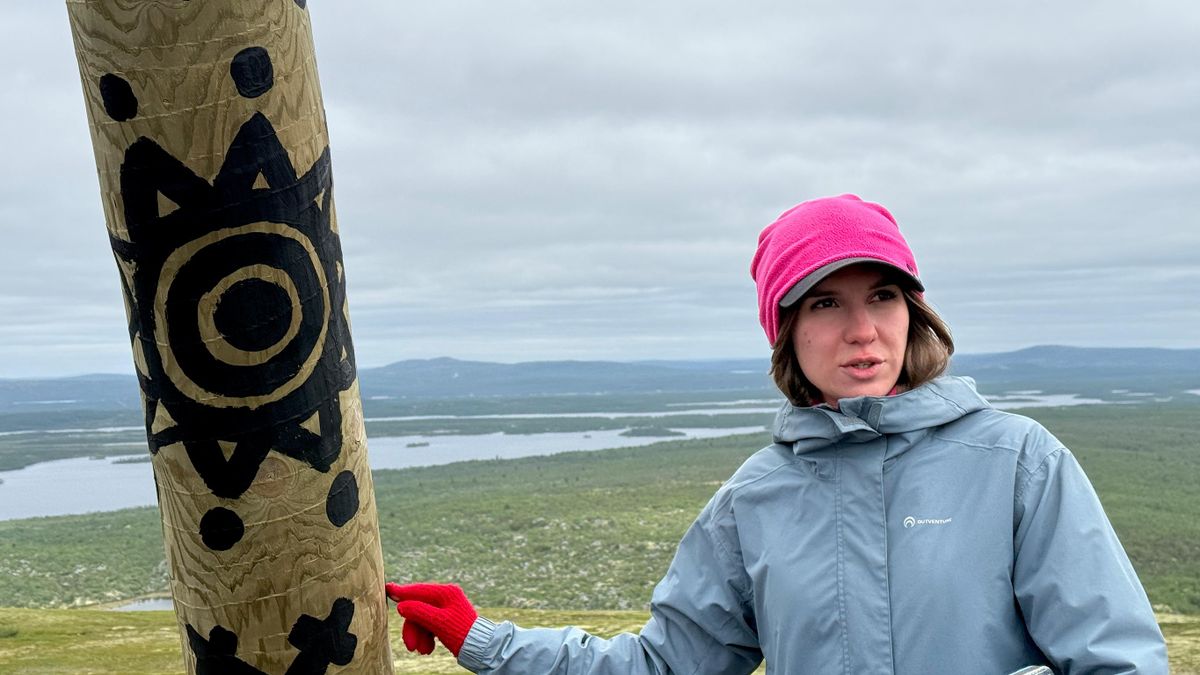
Perhaps the first surprise that Murmansk Region guests encounter as they open the region’s map are the jaw-breaking and mysterious geographical names such as the Vudyavryok River or the Takhtarvumchorr Mountain. These unpronounceable names come from the Saami language. To learn more about the Saami people, we visited the small village of Tuloma located 30 km from Murmansk.
1/3
The Saami Ethnographic Center in Tuloma, Murmansk Region
Local residents carefully preserve the culture of the people that has inhabited the Kola Peninsula since the old times. Only recently, in 2022, an ethnographic Saami center opened in the village, funded by a governor’s grant. The center comprises a small museum and a spacious event hall, where Saami craftswomen pass on their knowledge to the youth, and conduct guided tours and workshops.
“It’s not as enjoyable to sew on your own. When you share the results of your work, it is something different. A common activity brings people together,” notes the center’s methodologist Irina Pavlenko.
The methodologist also spoke about the interior of a traditional Saami house called kaavas (also known as “lavvu”): it is decorated with wolverine, fox and reindeer hide.
“You can sit down here next to a working furnace. On holidays, we use it to make fish soup. Tuloma children often visit us and ask when we’re going to serve tea with pies,” Irina Pavlenko smiles.
A northern resort and an old schooner
In recent years, the Kola Peninsula has been widely associated with Teriberka travel. Tourists come here to see mighty humpback whales and aurora borealis – the biggest symbol of the Polar region. Guide Sergei Litvinov says that almost 3,000 tourists can visit a small village of 500 people in a day.
“In winter, foreigners prevail among tourists and they travel to Teriberka as they have this stereotype that it is the ‘home region’ of northern lights. The coolest northern lights that I’ve seen was in Kandalaksha, around 250 km to the south of Murmansk. In summer, Russian tourists come here to watch whales from the sea,” the guide comments.
The Khibiny Mountain Range is another popular tourist destination. Sergei Litvinov also recommends stopping by Kirovsk, the ‘capital’ of the Khibiny that he considers a gem for alpine skiers. Local slopes are in no way inferior to famous ski resorts. The Apatit Museum and Exhibition Center is also located here. Gardeners will certainly like the Polar and Alpine Botanical Garden and Institute.
What other destinations are worth visiting? For active leisure off the beaten track, Sergei suggests visiting Lovozero Lake and the White Sea – namely, the villages of Umba and Varzuga. His tip for fascinating sights is Seidozero Lake that was considered sacred by the Saami people.
“If tourists are willing to put on swampers, I will take them to Retinskoye on the western shore of the Kola Bay. During low tide, one can walk into the bay and see up to 12 trapper schooners of the late 18th and early 19th centuries.”
Sergei Litvinov’s colleague, guide Yulia Koreyeva, suggests taking a look at Kandalaksha area. Although not frequented by tourists, this spot can amaze even sophisticated travelers.
“One can encounter skerries, beautiful rocks, cliffs and numerous sea animals. Kovdor is another location I love. This place is located in actual taiga, with unique woods and plenty of reindeer moss,” she shares.
Local Assol and the yummy treats of the Kola Peninsula
The next popular attraction of the tourist Murmansk is the statue of a waiting woman, known as “our Assol” among the locals. In the 1970s, local women randomly picked this spot to greet calling ships, according to guide Sergei Litvinov.
“It is a collective image of all women – mothers, wives, daughters and sisters. A Waiting Woman’s gaze is directed straight to Severomorsk in the north. It is from there, the Barents Sea, that ships call at our commercial and fishing ports.”
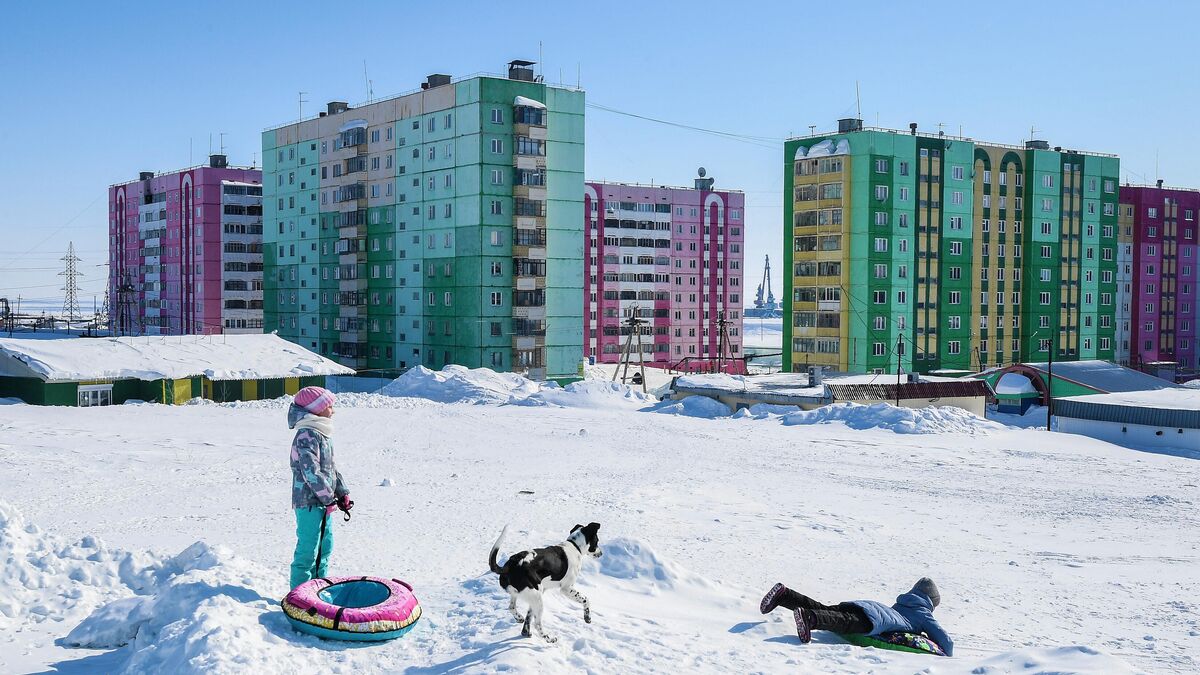
The capital of the Arctic has a wealth of unusual landmarks. For example, the longest residential building in Russia is located here. It stretches for 1,488 meters and has nine floors. The building was constructed as a neighborhood and has 2,200 apartments in 52 blocks.
“Most modern residential complexes look like this but in Soviet times, it was an innovation. In the North, this type of design protected the area from winds that could easily reach 25 m/s in winter,” says Sergei Litvinov.
On the square outside the sea terminal, where the legendary Lenin icebreaker is docked, an impressive crowd lines up at a food truck. Local historian and entrepreneur Yevgeny Yevdokimov and brand chef Irina Baklova are offering locals and guests some authentic Pomor food.
The team of this Arctic kitchen on wheels finds recipes and quaint names for these culinary delights from historical books. Poberezhnik (“a north-western wind from the shore”), Polunoshnik (“a strong northern or north-eastern wind”) and Kildin Stretch (the stretch in the Kildin Strait) all refer to the history of North exploration.
“We have breaded ‘codling’ – that was the name that Pomors gave to this staple food. We also have Matitsa fish soup of cod and salmon, served with cod liver and kelp. ‘Matitsa’ was the Pomors’ name for new land that fed them,” says Yevgeny Yevdokimov.
Land’s end or beginning?
One of the most frequently asked questions is, when is a better time to visit the Murmansk Region if tourist websites offer tours for any season? Sergei Litvinov says that the best time for a polar trip is between mid-August and mid-September.
“It is my favorite time with unbelievably beautiful views. We call it ‘pre-winter.’ It is a time when nature realizes that it’s about to go under snow for ten months, and tundra turns into a colorful patchwork full of mushrooms and berries. The nights are dark again, and one can see northern lights.”
The white nights end around this pre-winter season. This phenomenon, often sought-after in St. Petersburg, is also known as ‘civil twilight’ – a time when the sun sinks 6 degrees below the horizon. When it sinks further to 6–12 degrees below, the twilight is called ‘nautical twilight,’ and when it sinks to 12–18 degrees below, it is called ‘astronomical twilight.’ Anything further below is polar night.
“Polar nights on the Kola Peninsula set in from December 2 to January 11, when we don’t even see a glimpse of sunshine for days on end. On the night of April 15, civil twilight or white nights begin, and starting from late May, it is polar day for the next 62 days. The sun doesn’t set below the horizon. The further north you go, the longer the polar day and polar night,” Sergei Litvinov explains.
The Murmansk Region is often called “the land’s end.” This phrase is commonly seen on souvenirs and often repeated by tour guides. However, Sergei Litvinov completely disagrees with this definition.
“Imagine that in Moscow, you open the map of the Russian Federation and find the capital. Your eyes go up to Murmansk, and then it’s just water. It does seem like the land’s end because there’s nothing else in sight. And now imagine that a native of Murmansk opens the same map and sees themselves in Murmansk and realizes that Murmansk is the beginning of the Russian land.”