
10:00 13.07.2026
From Excessive Details to Strategic Priorities: Strategy for the Russian Far East
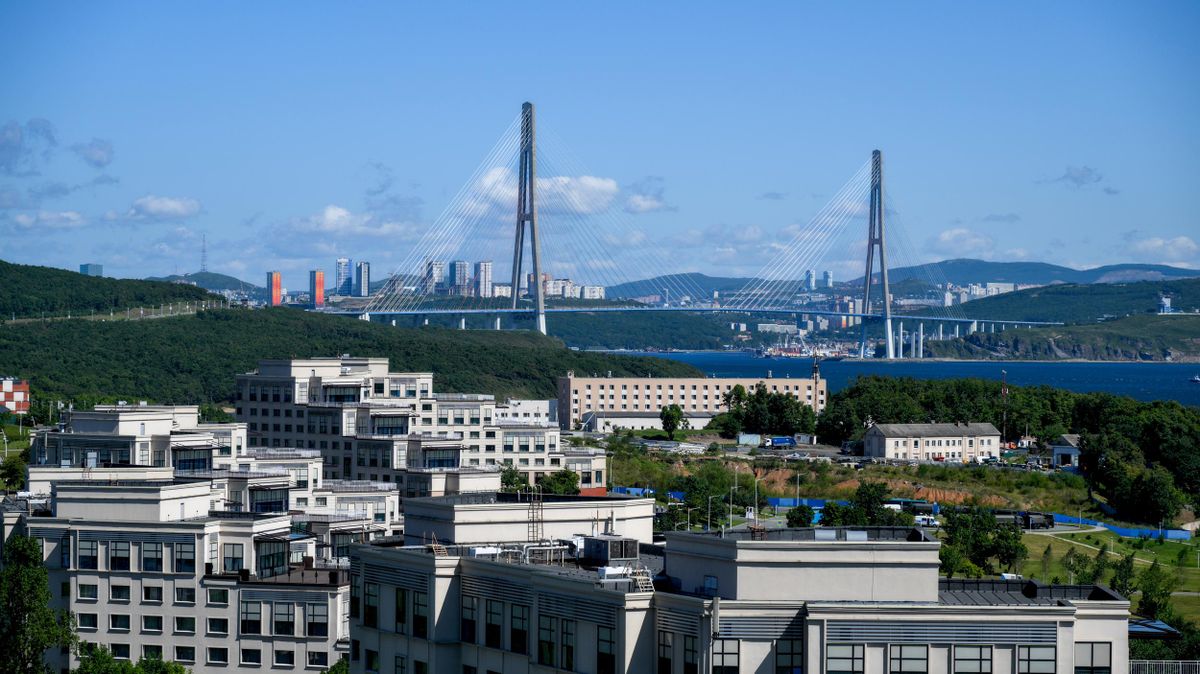
© RIA Novosti / Alexandr Kryazhev
This spring, a draft strategy for the socioeconomic development of the Far Eastern Federal District to 2030 with a forecast extending to 2036 was presented to the public and submitted to the State Duma. The Arctic.ru editors reviewed the draft and familiarized themselves with expert assessments to get a better sense of the government’s plans for the future of this macro-region and the specific priority areas of the Russian Far East which will be developed over the next decade.
The new strategy will replace the previous socioeconomic development strategy, which expired in 2025. According to Minister for the Development of the Russian Far East and the Arctic Alexei Chekunkov, its principal objective over the decade ahead is to build a diversified high-tech economy and to develop modern infrastructure which, in turn, will create proper conditions for sustainable population growth and strengthen the Far Eastern Federal District’s key role in establishing cooperation with the countries across the Asia-Pacific region.
“Over the past decade, the Russian Far East has outperformed the national average in terms of key economic growth indicators. However, the region’s cumulative infrastructure shortfall and harsh natural conditions continue to affect quality of life. The new strategic document, together with our broader efforts, is designed to overcome these constraints and address these challenges,” Alexei Chekunkov said during parliamentary hearings at the State Duma.

The strategy’s principal priorities include the creation of a future-oriented economy through a dramatic improvement of living conditions, the training of in-demand specialists, and the implementation of high-tech projects.
The minister pointed out specifically that the document is designed to address five strategic objectives. The first is overcoming infrastructure constraints. To achieve this, the Far East is expected to commission approximately 13 GW of new generating capacity, to increase the gas infrastructure development rate to over 50 percent, and to expand the carrying capacity of the Baikal-Amur Mainline (BAM) and the Trans-Siberian Railway to 270 million tonnes annually, as well as to create an additional 136 million tonnes of port capacity, to renovate 25 airports, and to bring annual passenger traffic within the Far Eastern Federal District to 4 million people.
The launch of a new investment and technology cycle envisages that by 2036 the Far Eastern Federal District’s investment potential will reach 15.8 trillion roubles in production industries, 13.6 trillion roubles in processing industries, and 4.8 trillion roubles in innovative technologies. Investment is expected to get a boost from the introduction of a unified preferential regime combining the incentive mechanisms currently in place in the Russian Far East and the Arctic Zone of the Russian Federation.
The scientific and technological advances are expected to strengthen the Far Eastern region’s own capabilities in manufacturing high-value-added products. In addition to deep processing of mineral resources, priority sectors include aircraft manufacturing, shipbuilding, and unmanned aerial systems, as well as robotics, new radio electronics centers, biotechnology, and biomedicine.

Construction of the shipbuilding complex production workshops in Primorye Territory
© RIA Novosti / Sergey Mamontov
With regard to improving local living conditions, the Ministry for the Development of the Russian Far East and the Arctic made it clear that the strategy is based on the assumption that economic growth must improve quality of life. Under the master plans launched during the previous planning cycle, more than 1,000 projects are currently being implemented across 25 urban agglomerations, representing total investment of 3.6 trillion roubles; 200 projects have been completed and another 315 are under construction. The new strategy proposes extending this effort to an additional 189 second-tier hub communities, each of which will receive its own comprehensive development plan.
Particular attention will be devoted to adapting the macro-region’s economy to changing climate. This includes reducing the environmental impact of industrial and infrastructure development through lower emissions, upgrading wastewater treatment facilities, promoting alternative fuels, reforestation, and a range of other measures, including monitoring and mitigating climate-related natural hazards.
The target indicators include increasing the Far Eastern Federal District’s (FEFD) share in Russia’s gross regional product to 7.3 percent, raising labor productivity by 50 percent, improving housing availability to 38 square meters per person, increasing life expectancy to 81 years, and raising the birth rate to nearly 2. The population, however, is projected to remain broadly unchanged at around 7.9 million.
All these figures assume implementation of the strategy under a targeted rather than an inertia scenario. Director of the Eastern Center for State Planning Mikhail Kuznetsov said the work would be carried out according to an ambitious and optimistic scenario. The conservative scenario merely demonstrates what would happen if no action were taken.
According to him, the overarching goal of the document is to achieve population growth over the next 10 years by creating highly productive jobs with decent pay, developing a comfortable urban environment through the implementation of master plans, and introducing targeted measures to support birth rates in the region and encourage internal migration to the FEFD.

Women walking with children in Birobidzhan
© RIA Novosti / Igor Onuchin
“People are increasingly choosing the Far East as a place to live. It is no longer a place where you come to work and then go back to the Krasnodar Territory; it is a place where I choose to live and to grow together with my children. This is probably the main thing we wanted to preserve and to strengthen in the strategy. In recent years, we have seen a small but positive migration inflow, and we need to reinforce this trend in every possible way,” Mikhail Kuznetsov said.
He considers the inclusion of plans for advancing the post-industrial economy to be a key difference from the previous strategy. The high-tech sectors already operating in the FEFD, such as aircraft manufacturing, shipbuilding, innovative energy, and the space industry, will be supplemented by new sectors such as IT, AI, and unmanned technologies, as well as the expansion of processing industries.
“We want the new strategy to help us move away from the old industrial tracks toward new ones, relying on cooperation with our partners in neighboring countries. A resource-based economy is neither good nor bad; it’s just how things are. More than 30 percent of the entire Far Eastern economy is based on mineral extraction. But perhaps we can produce something more sophisticated than raw ore, moving up along the value chain into processing. This is essentially the main idea behind the new strategy,” the head of the Eastern Center for State Planning said.
Small businesses should also drive economic growth and diversification which the strategy addresses separately. Currently, small businesses account for around 20 percent of the FEFD’s GRP, and there is significant potential for growth with the proper support. This should primarily be achieved through reducing taxes and administrative burdens, improving access to financial resources, and helping small and medium-sized enterprises enter new markets in Asia-Pacific countries.

Employees of the greenhouse complex
© RIA Novosti / Vitaliy Ankov
“We used to grow through large-scale mega-projects, but that growth is now losing momentum. There are not so many new major projects, and the ones that have already been put in place need to generate momentum for new suppliers and contractors around them. In addition, small businesses are, of course, part of the service economy in urban areas, but also part of the innovation-driven economy. They are agile, risk-tolerant, and diversified. If we have a thousand small companies growing by 20 to 30 percent a year, our economy in the Far East will grow by trillions,” Mikhail Kuznetsov noted.
According to the architects of the strategy, these measures should not only create an additional momentum for the economic development of the FEFD as a whole but also put in the financial foundation for implementing the strategy proper. Mikhail Kuznetsov said that while the previous document focused on resource-based and infrastructure projects, the key objective of the new strategy is to bring in investment and extrabudgetary funding to expand businesses and to improve the quality of life in the Far East.
A new approach to drafting the strategy has been adopted to achieve this end. The developers sought to involve the maximum possible number of stakeholders - federal and regional authorities, businesses, experts, academics, and local residents - in the process so that everyone could come up with their own proposals.
“We prepared a draft that was immediately presented for broad discussion, and we are holding strategic sessions in each region of the Far East so that every region can be heard. We used the reciprocal planning principle where national goals coming from above are coupled with ideas, such as specific initiatives and investment projects, coming from the regions,” the head of the Eastern Center for State Planning said.

During the public consultations, he said, hundreds of comments and proposals had been submitted ranging from local initiatives for improving public spaces to large-scale transport and construction projects, as well as education- and healthcare- related issues. A significant portion of the feedback concerned the development of residential infrastructure and improving quality of life.
There have also been critical remarks, many of them dealing with the way the document was structured where regional priorities were given just 10 pages. While the plans of some of the Far Eastern Federal District regions are sufficiently specific and clear, others, the residents say, are worded too vaguely or are out of sync with the actual state of affairs and expectations.
However, Mikhail Kuznetsov argues that the strategy is a document covering all of the Far East, its connectivity, and the common problems and solutions for the entire macro-region. The sections dedicated to individual regions have been drafted in close cooperation with them but contain only backbone projects.
“Each region has a dedicated section outlining its priorities, where we included matters that will be overseen by the federal authorities. However, each region has its own strategy and its own plans, and we do not want to replace them with our own. There will also be a separate plan for implementing the strategy, in which the priorities of every region will be addressed,” he stressed.
In addition, the drafters were tasked with making the foundational document more streamlined, so that it contains just the overall concept and defines the key areas of focus. The detailed work will be carried out based on the action plan for implementing the strategy.
“The previous document was fairly detailed, in some sections excessively so. The strategy has been largely implemented, but this excessive level of detail worked against it in several instances. In other words, trying to move forward in all directions at once can be difficult, so this time we focused on key priorities,” the head of the Eastern Center for State Planning said.