https://en.arctic.ru
Scientists create local earthquake recognition method for the Arctic
Scientists create local earthquake recognition method for the Arctic
Arctic.ru: Discover how Russia implements its development goals in the Arctic and the Far East
2026-05-05T14:03
2026-05-05T14:03
2026-05-05T18:06
news
arkhangelsk region
science and technology
/img/07ea/05/05/1457275_0:160:3072:1888_1920x0_80_0_0_2e47cee351f03bbf63f4e16bf03278ac.jpg
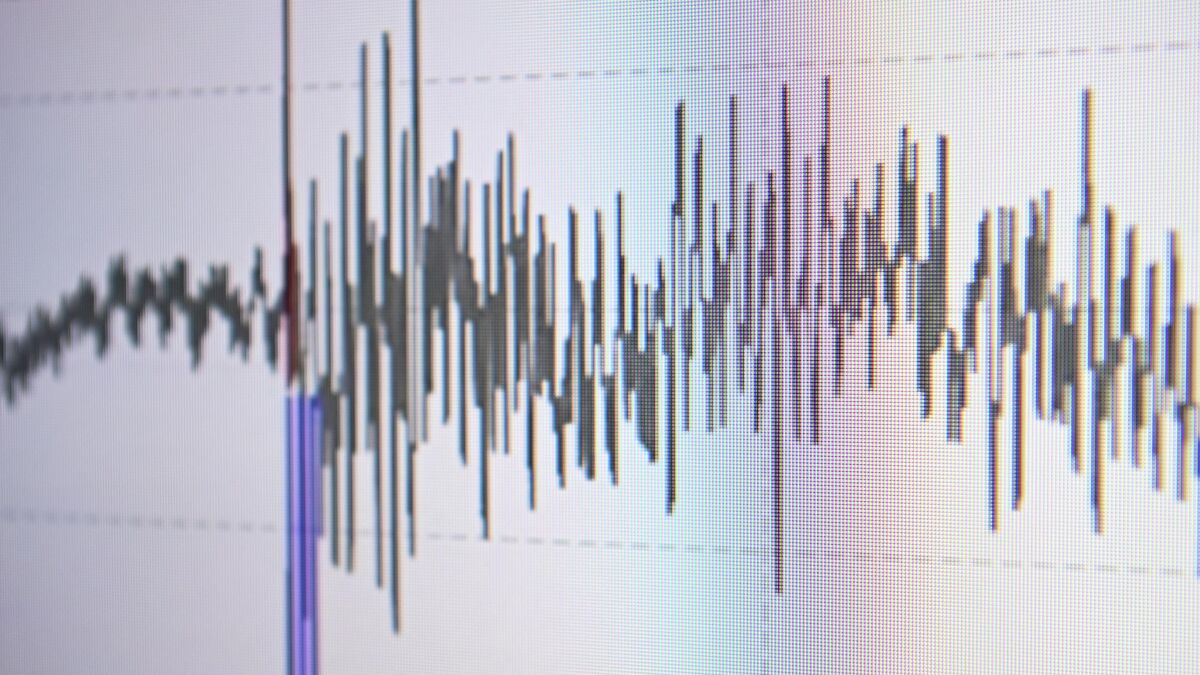
Arkhangelsk scientists have patented a method to differentiate between ice-related and seismic events, that is, between earthquakes and the collapse of ice caps. According to the press service of the Laverov Federal Center for Integrated Arctic Research of the Ural Branch of the Russian Academy of Sciences (RAS), the new method is based on statistical data acquired at a station installed on bedrock rather than ice on Severnaya Zemlya Archipelago.Broadband seismometers are traditionally used to register events of different origin and magnitude, namely tremors caused by natural and man-made phenomena. However, seismographs in the Arctic also register ice cap disintegration and cryoseism events (ice quakes).“Seismographs register all incoming signals, and it is our task to distinguish between them. We make a time-frequency analysis to get an objective picture, analyzing spectra and frequencies of the registered events. These diagrams have specific features,” Yana Konechnaya, a leading seismology lab researcher, said.Galina Antonovksya, head of the seismology lab at the Laverov Center and a corresponding member of the RAS, explained that seismic events have been divided into local earthquakes and ice quakes.“We analyzed the phenomena that are recorded by seismographs as body waves, which allows determining their location. Corner frequency indicates the size of the source area. The earthquake focus is much larger than the source of an ice quake. We also analyzed the frequencies of these phenomena. Overall, we have studied a large mass of data, divided them into groups, identified patterns, and analyzed the location of the phenomena – the fault zone or the glacier edge. Ultimately, we have detected and established these differences,” Antonovksya said.This method is being used to analyze phenomena registered on Franz Josef Land Archipelago.
https://en.arctic.ru/20260422/1428897.html
2026
Новости
ru-RU
https://en.arctic.ru/docs/about/copyright.html
https://xn--c1acbl2abdlkab1og.xn--p1ai/
/img/07ea/05/05/1457275_171:0:2902:2048_1920x0_80_0_0_a1d3f4580ad34aacae8f44a1b4573a88.jpgnews, arkhangelsk region, science and technology
Scientists create local earthquake recognition method for the Arctic
Arkhangelsk scientists have patented a method to differentiate between ice-related and seismic events, that is, between earthquakes and the collapse of ice caps. According to the press service of the Laverov Federal Center for Integrated Arctic Research of the Ural Branch of the Russian Academy of Sciences (RAS), the new method is based on statistical data acquired at a station installed on bedrock rather than ice on Severnaya Zemlya Archipelago.
Broadband seismometers are traditionally used to register events of different origin and magnitude, namely tremors caused by natural and man-made phenomena. However, seismographs in the Arctic also register ice cap disintegration and cryoseism events (ice quakes).
“Seismographs register all incoming signals, and it is our task to distinguish between them. We make a time-frequency analysis to get an objective picture, analyzing spectra and frequencies of the registered events. These diagrams have specific features,” Yana Konechnaya, a leading seismology lab researcher, said.
Galina Antonovksya, head of the seismology lab at the Laverov Center and a corresponding member of the RAS, explained that seismic events have been divided into local earthquakes and ice quakes.
“We analyzed the phenomena that are recorded by seismographs as body waves, which allows determining their location. Corner frequency indicates the size of the source area. The earthquake focus is much larger than the source of an ice quake. We also analyzed the frequencies of these phenomena. Overall, we have studied a large mass of data, divided them into groups, identified patterns, and analyzed the location of the phenomena – the fault zone or the glacier edge. Ultimately, we have detected and established these differences,” Antonovksya said.
This method is being used to analyze phenomena registered on Franz Josef Land Archipelago.